
What to Wear to an X-Ray: Clothing Tips That Work
- T. Armstrong

- 4 days ago
- 7 min read
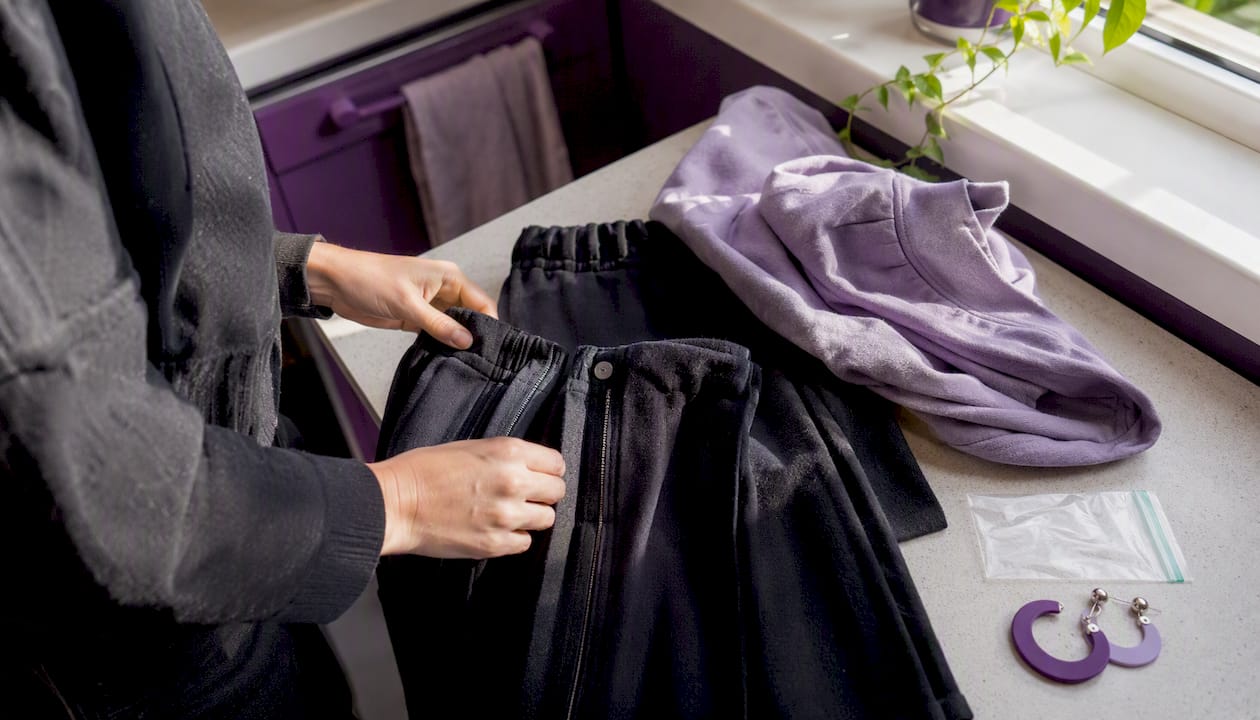
Wear loose, comfortable clothing with no metal, and you may not need a gown at all. Metal objects — zippers, underwire, snaps, sequins — block the X-ray beam and create bright white streaks called artifacts that can obscure the image. When that happens, the scan has to be repeated, which means more time and more radiation exposure. The Cleveland Clinic recommends loungewear, pajamas, or loose cotton and linen garments as the safest choices for most X-ray visits.
Before you leave home, two quick actions cover most situations:
Remove all jewelry, watches, and hair accessories before you arrive.
Wear a two-piece outfit or easy-to-remove layers so the imaging area stays accessible.
Pro Tip: If you have permanent piercings or wear adaptive garments with magnetic closures, call the radiology department ahead of time. Staff can tell you exactly what to expect so there are no surprises on the day.
Key Takeaways
Wearing loose, metal-free clothing to your X-ray appointment is the single most effective step you can take to avoid repeat imaging and unnecessary radiation exposure.
Point | Details |
Wear metal-free clothing | Choose loose cotton or linen with no zippers, snaps, underwire, or metallic decoration. |
Dress for easy access | A two-piece outfit lets staff reach the imaging area without a full gown change. |
Disclose devices and pregnancy | Tell staff about pacemakers, IUDs, surgical hardware, or pregnancy before the scan begins. |
Skip shimmer products | Metallic makeup, glitter deodorant, and reflective lotions can create artifacts near the face and chest. |
Fracture-club adaptive wear | Metal-free magnetic closures and side openings keep you covered while giving technologists clear access. |
Table of Contents
Your X-ray appointment clothing checklist: dos and don’ts
Getting your outfit right before you leave home takes about two minutes. Here is what works and what to skip.
Wear:
Loose cotton or linen tops with no metal fasteners
Two-piece outfits (top and bottom separately) for easy access
Shorts or skirts for lower-body imaging, so you can often stay dressed
Slip-on shoes you can remove quickly if asked
Empty pockets before you walk in
Avoid:
Zippers, metal snaps, or metal buttons anywhere near the imaging area
Underwire bras or bras with metal fasteners
Sequins, glitter, or metallic decorative threads — even small decorative elements can visibly distort images
Thick denim (the fabric density plus rivets often requires removal)
Compression garments with metal boning or stays
Wet diapers for infants (the absorbent material shows up on film)
The reason behind every “don’t” is the same: metal and dense materials absorb X-rays differently than soft tissue, creating artifacts that make anatomy hard to read.
Pro Tip: Metallic shimmer in makeup, glitter deodorant, and lotions with reflective mica can also cause artifacts near the face and chest. Skip those products on appointment day and bring a small zip bag to store any jewelry you remove on arrival.
Area-specific clothing guidance for your scan
The body part being imaged changes what you need to wear or remove. Here is a quick breakdown by area.
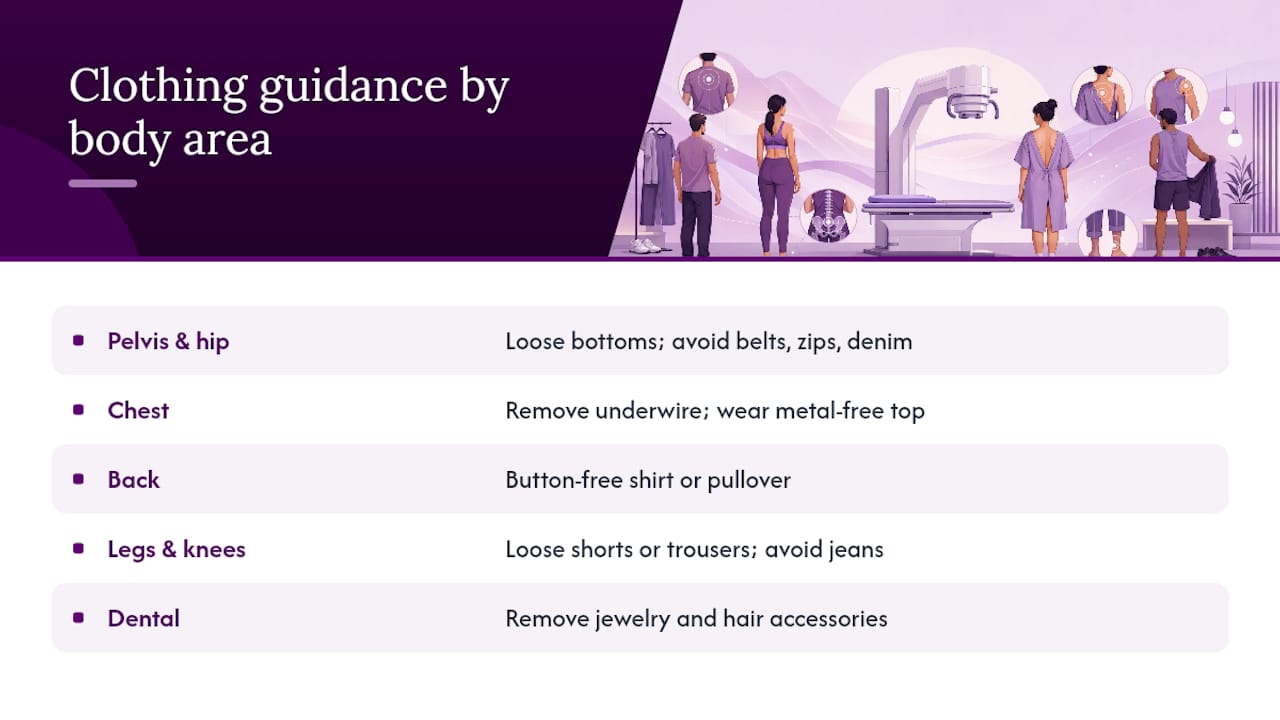
Pelvis and hip: Avoid belts, zippers, and thick denim across the waistband. Hospital guidance specifically recommends loose trousers, skirts, or shorts so many patients can stay clothed throughout the exam.
Chest: Bras with underwire or metal fasteners almost always need to come off. A soft bralette or sports bra without metal is fine. Choose a top without zips or metal buttons down the front.
Back (thoracic and lumbar spine): Shirts with back zippers or a row of metal buttons down the center are the main problem here. A plain cotton pullover or a loose button-free top works well.
Legs and knees: Loose trousers or shorts that pull up above the knee are ideal. Jeans usually need to be removed because of fabric thickness and metal rivets, so wearing them to a knee or leg X-ray almost guarantees a wardrobe change.
Dental X-rays: Remove all jewelry and hair accessories near the head. Some dental clinics follow slightly different protocols, so confirm with your provider when you book.
When the clinic will ask you to change into a gown
A gown is not always required, but certain situations make it the fastest path to a clear image. Staff will typically ask you to change when:
Clothing contains metal that cannot be removed without fully undressing
The fabric is too dense for the beam to pass through cleanly
The imaging area overlaps with clothing that would obscure anatomy
You are having a full-body or multi-area scan
Clinics provide private changing areas and assistance for patients who need it. If you have mobility limitations or cognitive needs, mention that when you schedule so staff can prepare. On arrival, expect a brief screening conversation, a request to remove jewelry, and directions to a changing room if needed.
Wearing a two-piece outfit helps reduce the chance of a full gown change. If only your hip is being imaged, you keep your top on. If it is your shoulder, your bottoms stay.
Pro Tip: Ask staff about same-day storage for your belongings. Most radiology departments have a secure spot for your bag and jewelry while you are in the room.
Pregnancy, implants, and medical devices: what to tell the team
Always tell radiology staff if you are pregnant, possibly pregnant, or breastfeeding. Staff will adjust positioning and add shielding as needed. This is not a reason to skip a necessary scan; it is information that helps the team protect you.
Report any of the following before your appointment:
Pacemakers or cardiac devices
Joint prostheses or surgical hardware
Intrauterine devices (IUDs)
Spinal rods, plates, or screws
Cochlear implants
These devices do not always prevent imaging, but they do affect technique. The technologist documents them and adjusts accordingly. Mayo Clinic advises removing all metal objects and clothing that could affect the image, and staff will guide you through anything that cannot be removed.
Radiology experts are clear on the goal: avoiding artifacts from the start prevents repeat imaging and the additional radiation exposure that comes with it. Disclosing devices and wearing the right clothing are the two most direct ways you can help.
Practical steps to take before your appointment
A little preparation the morning of your scan keeps things moving smoothly.
Pack a small zip bag for jewelry and accessories you will remove on arrival.
Wear a two-piece outfit, or put shorts on under loose pants so you have options.
Choose slip-on shoes in case your feet or ankles are part of the exam.
Skip metallic makeup, glitter deodorant, and shimmer lotions on appointment day.
Call ahead if you have permanent piercings, implanted devices, or adaptive clothing with magnetic fasteners — the technologist can advise before you arrive.
Pro Tip: Arrive five minutes early. That buffer gives you time to empty pockets, answer screening questions, and get settled without feeling rushed before the scan.
Clothing for casts, braces, and adaptive needs
Casts and bulky dressings create a real challenge for X-ray appointment attire. Standard clothing often will not fit over a cast, and improvised solutions like cutting seams or wearing oversized shirts can still leave metal hardware in the imaging field.
Adaptive recovery clothing addresses this directly. Features that work well for clinic visits include:
Side openings or split seams that allow access without removing the garment
Magnetic closures instead of metal zippers or snaps
Two-piece designs that isolate the injured area
Fabrics without metallic threads or moisture-wicking finishes that contain reflective elements
If bandages or wraps are medically required, the technologist will adjust imaging technique around them. Unnecessary wraps, however, should be removed to avoid obscuring anatomy. The key is keeping the imaging area accessible while staying comfortable and covered everywhere else.
When choosing adaptive garments for clinic visits, ask specifically whether fasteners are metal-free and whether the design allows the injured limb to be exposed without undressing fully. Fracture-club’s hospital-to-home clothing post covers why these design details matter beyond just the imaging room. For lower-body injuries, recovery pants with side openings are worth considering before your next appointment.
[

Pro Tip: Always mention adaptive garments with magnetic closures to the technologist on arrival. Magnets are generally low-field, but the team will confirm whether any adjustment is needed before imaging begins.
What recovery clothing taught us about dignity and imaging
Getting dressed for a medical appointment when you are in a cast or brace is genuinely hard. You are already managing pain, limited mobility, and the emotional weight of recovery. The last thing you need is to arrive at a radiology department and realize your only option is a paper gown that does not close properly.
What we have learned from working with injury patients is that the clothing problem and the imaging problem are the same problem. When garments are designed with metal-free fasteners, side access, and easy-on/off construction, patients can stay dressed longer, feel more like themselves, and give the technologist clear access to the area that matters. Fracture-club donates a portion of proceeds to the Bone Health & Osteoporosis Foundation because bone health does not end at the imaging room door.
Clinic-ready adaptive clothing from Fracture-club
Recovery wear that works in a radiology department needs three things: no metal at the fasteners, easy access to the injured area, and a fit that does not require a full wardrobe change on arrival.
[

](fracture-club.com)
Fracture-club’s adaptive recovery pants use side magnetic zippers that open wide enough to expose a leg or hip without removing the garment. The easy-on/off sweatshirt keeps the chest and upper limbs accessible for imaging while preserving coverage everywhere else. Both are designed for patients with casts or braces who need to move between home, clinic, and imaging appointments without changing outfits three times. Have questions about sizing, implants, or cast compatibility? Reach out through the inquiry page and the team will help you find the right fit before your next scan.
Sources
This article is general information, not a substitute for advice from a qualified doctor. Consult a qualified healthcare professional about your own circumstances before acting on anything here.
Recommended
Comments