
4–8 Week Clinician Backed Hospital Discharge Clothing Checklist


The three things to prioritize for a safe hospital discharge are easy-on/off tops, adaptive pants with side openings, and cast-friendly footwear that fits over a boot or brace. None of that matters, though, if you skip the one non-negotiable step: follow your provider’s device instructions and check color, warmth, and feeling around the injury every day. This checklist was built around those priorities.
TL;DR:
Use clothing with magnetic closures or zippers to simplify dressing around casts and braces, especially for limited mobility or swelling.
Pack multiple sizes of key garments, such as pants and socks, to accommodate swelling and avoid tight fits during recovery.
Wear moisture-wicking, loose fabrics in warm weather and layered, wide-arm clothing in cold months to prevent skin irritation and promote comfort.
Check the injured limb daily for color, warmth, capillary refill, and movement to detect circulation issues early and prevent complications.
Select adaptive clothing that opens easily, moves with swelling, and allows skin and device checks, minimizing the need for assistance and reducing injury risk.
Table of Contents
Your prioritized discharge clothing checklist
Packing for discharge feels different than packing for a hospital stay. You’re not just bringing comfort items anymore, you’re choosing clothing that has to work around a cast, a brace, or a body that suddenly can’t move the way it used to. Here’s what actually earns a spot in your bag.
Easy-on/off tops. Look for front openings, wide necklines, or magnetic and zip closures. These matter most if you’re dealing with an arm cast or sling, since pulling a shirt overhead is often impossible and always uncomfortable.
Adaptive pants. Side zips, elastic waistbands, and roll-up hems let you dress without bending, twisting, or fighting a stiff leg brace.
Underlayers. A snug, seamless cotton tee under a back brace prevents chafing. Moisture-wicking materials help too, but avoid anything with bulky seams or buttons that press against the device.
Footwear. If you have a lower-limb cast or boot, you’ll likely need a cast shoe rather than a regular sneaker. For your uninjured foot, choose a supportive slip-on so you’re not hopping around trying to tie laces.
Small accessories. A shoehorn, a dressing stick, a long-handled sponge, and a waterproof cast cover solve problems you won’t think of until you’re standing in your bathroom at 7 a.m.
A few specific notes make a real difference:
Bring at least two sizes of the same garment if swelling is unpredictable, since a snug fit on day one can feel tight by day three.
Pack extra socks. Socks get filthy fast when you’re maneuvering around a cast, and clean feet matter for hygiene and comfort.
Keep your first two weeks of clothing within easy reach, ideally on a low shelf or the arm of a chair, so you’re not stretching or twisting to grab something.
Choose shoes with wide openings or Velcro straps if you’re wearing any kind of boot, since standard shoes rarely accommodate the extra bulk.
Design research backs up why these features matter beyond comfort. A study of adaptive clothing preferences found that safety, comfort, and ease of use topped the list of what patients want, with zippers and hook-and-loop closures rated as the most usable fastening types.
Pro Tip: Buy pants one size larger than usual if you’re expecting a cast or brace on your leg, swelling can add real bulk in the first two weeks.
[

How to dress safely with a cast, sling, or back brace
Dressing around a medical device isn’t intuitive the first time. A little strategy prevents pain, protects the device, and keeps your skin healthy underneath it.
Arm or hand casts. Choose front-open shirts and slide the injured arm in first, then the unaffected arm. Keep the cast dry when washing, plastic wrap or a purpose-made cast cover works better than a trash bag taped at the elbow.
Slings. Fit the sling over your clothing, not under it, and adjust the strap so your elbow sits slightly higher than your wrist. Check it doesn’t dig into your neck by the end of the day.
Leg or ankle casts and boots. Side-zip or wide-leg elastic pants slide over a cast without forcing your knee into an awkward angle. When fitting a cast shoe, sit down, guide your toes in first, and secure straps snugly but not tight enough to restrict circulation.
Back braces. Wear a smooth, wrinkle-free cotton layer underneath, any fold or seam under the brace can cause pressure sores over time. VA guidance on spinal orthoses recommends this cotton layer specifically to protect skin during longer wear periods.
Follow whatever wear-time schedule your provider gives you. Some braces start at an hour a day and build up gradually, and skipping that schedule to “get it over with” tends to backfire on your skin.
Pro Tip: Two hands are easier than one, if a caregiver is helping, have them stabilize the limb while you guide the clothing over the cast rather than pulling fabric and limb in opposite directions.
Bathroom and hygiene needs after discharge
The bathroom becomes the hardest room in the house after an injury, and it’s worth planning for that before you’re standing in it one-handed.
Side-zip bathroom pants let you manage toileting independently without asking for help every time.
A waterproof cast cover makes showering possible again, follow your provider’s specific instructions on how long your cast can tolerate any moisture exposure.
A long-handled sponge and a couple of easy-to-reach towels cut down on the twisting and reaching that strains a healing joint.
Keep a few spare dry garments nearby in case a cover leaks, and choose clothing that keeps any wound dressing visible and accessible for provider checks.
What caregivers need to check every single day
If you’re caring for someone recovering from a fracture or surgery, your daily checks matter as much as any clothing choice.
Color. Compare the injured limb’s skin tone to the uninjured side, look for pale, blue, or unusually dark coloring.
Temperature. A cold limb compared to the rest of the body can signal reduced blood flow.
Capillary refill. Press a fingernail or toenail briefly, color should return within a couple of seconds.
Movement and sensation. Ask them to wiggle fingers or toes, and note any numbness or tingling.
Swelling typically peaks in the first few days and gradually eases, though MedlinePlus notes that many fractures stay immobilized for 4 to 8 weeks, so clothing sizing needs to flex with that timeline, not just the first week.
Follow-up visits commonly happen every 2 to 3 weeks, and bringing photos of any skin changes helps your clinician assess things faster. Contact a provider immediately for increasing pain, numbness, a cast that feels too loose or tight, or dark-colored toes or fingers.
How Fracture Club designs for every item on this list
The recovery wear is designed around the exact problems this checklist addresses, not just aesthetics.
Magnetic zip closures replace buttons and standard zippers, allowing tops to be put on more easily without straining a shoulder or a cast-bound arm.
Side-zip bathroom pants help preserve independence during challenging moments like toileting or showering alone.
Stretch fabrics accommodate swelling, reducing the need for multiple wardrobe sizes.
A portion of purchases supports the Bone Health & Osteoporosis Foundation, linking clothing choices to broader bone health efforts.
Beyond the garments themselves, our community shares real recovery stories, the kind that remind you this stretch of feeling stuck between patient and yourself is temporary.
Compression garments and provider-recommended supports
Compression sleeves, wraps, and stockings show up often in recovery, particularly after joint surgery or when swelling needs active management. They work by applying steady, gentle pressure that supports circulation in the healing limb, but the right level of compression and the right duration depend entirely on your specific injury and provider’s plan.
Never choose a compression garment on your own initiative if surgery is involved. Fit matters enormously here: too tight and you risk restricting circulation exactly when you’re already worried about numbness or color change, too loose and it does nothing useful. Ask your care team whether compression is part of your plan, how many hours a day to wear it, and when to remove it for skin checks.
If a provider does recommend compression, pair it with clothing that doesn’t add extra pressure on top. Bulky waistbands or tight sleeves layered over a compression garment can create the same pinch points you’re trying to avoid, so stick to soft, stretchy outer layers that don’t fight the support underneath.

Dressing around IV lines, catheters, or wound dressings
Medical devices don’t stop mattering once you’re home. If you’re discharged with an IV line, a catheter, or a wound dressing still in place, your clothing needs to accommodate access without constant undressing.
Snap or Velcro openings near the relevant area let a caregiver check a dressing or manage a line without removing an entire garment. Loose, soft waistbands avoid pressing on a catheter site, and button-front tops keep an IV port easy to reach for home health visits.
Keep the surrounding fabric soft and seam-free. A device site under constant friction from a rough seam or tag is one more source of irritation on top of what your body is already managing. If a caregiver is helping change a dressing, clothing that opens flat, rather than only overhead, makes the whole process faster and less painful.
Adjusting your wardrobe for the season you’re recovering in
Recovery doesn’t pause for weather, and the season you’re discharged in changes what actually works. A cast in July needs breathable, lightweight fabric that doesn’t trap heat against skin that’s already sensitive. A cast in January needs layers that can go over a bulky brace without cutting off circulation at the wrist or ankle.
In warmer months, prioritize moisture-wicking cotton blends and looser cuts that let air circulate around the device. Sweat trapped under a cast for hours creates skin irritation and odor that’s hard to manage.
In colder months, skip anything that has to be pulled tightly over a cast, like a fitted sleeve, and instead look for wide arm openings or zip-front jackets that layer easily. A blanket or throw draped over a leg cast at home often works better than trying to force a pant leg over bulky bracing.
Layering strategies that flex with changing swelling
Swelling rarely follows a straight line during recovery. It often spikes in the first few days, eases, then flares again after activity or at the end of a long day. Clothing that only fits one version of that swelling becomes useless fast.
Layering solves this better than any single garment can. A soft, seamless base layer against the skin protects from friction, while a looser outer layer, one with side zips or elastic panels, can expand or loosen depending on how the day goes.
Keep at least one layer easily removable without help, since caregivers aren’t always available the moment swelling spikes. Avoid anything with a fixed, non-adjustable waistband or cuff near the injury, since that’s exactly where a snug fit turns into real discomfort within hours.
What this checklist gets right that generic advice misses
Most discharge advice treats clothing as an afterthought, a note buried under medication schedules and follow-up appointments. That’s backward. What you wear in the first weeks after a fracture or surgery directly affects how well you can care for a wound, monitor your own circulation, and stay independent in your own bathroom.
The conventional wisdom oversells “loose and comfortable” as the whole answer. Loose fabric that bunches under a cast or catches on a brace strap creates its own problems, ease of use matters as much as room to move. The design research backing this checklist confirms that people prioritize safety and function over anything cosmetic, and that’s the order this list follows too.
If you take one thing from this, prioritize clothing that lets you or a caregiver check your skin and your device without a struggle. Comfort matters, style matters, but access to your own healing tissue matters most.
— Fracture
Where to find adaptive clothing built for this exact list
Every item on this checklist points toward the same conclusion: clothing needs to open easily, move with swelling, and stay out of the way of healing. This is the basic premise behind the recovery wear offered.
[
](fracture-club.com)
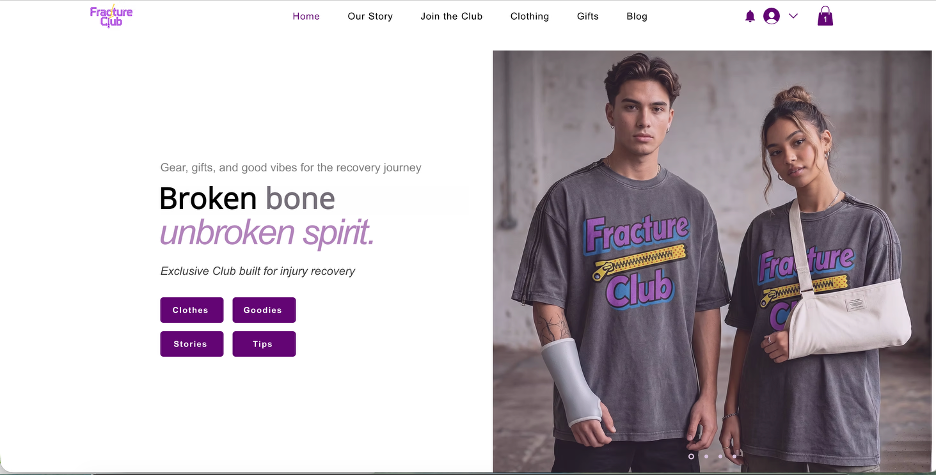
Tops with magnetic front closures can ease dressing during arm cast recovery.
Side-zip pants adjust for swelling.
A portion of purchases supports the Bone Health & Osteoporosis Foundation.
Start with our recovery wear collection, where you’ll find adaptive pants with side magnetic zippers built for exactly the leg-cast scenarios covered above. Before buying, confirm sizing and device compatibility with your provider, especially if you’re still waiting to learn your final brace or cast dimensions.
Sources
FAQ
How long will I need adaptive clothing after a fracture?
Most fractures stay immobilized for 4 to 8 weeks, though your specific timeline depends on the injury and your provider’s assessment. Plan your clothing needs around that full window rather than just the first week or two.
What clothing features help most with an arm cast?
Front-opening tops with magnetic or zip closures let you dress without lifting your arm overhead, and wide sleeve openings accommodate the cast’s bulk. Design research on adaptive clothing preferences found zippers and hook-and-loop closures rated highest for usability among patients with limited mobility.
Can I shower normally with a cast on?
Only with a provider-approved waterproof cast cover, and even then, follow your clinician’s specific instructions on exposure time. Cast care guidance recommends keeping the cast fully dry unless you’re using a device designed for water exposure.
What are the warning signs I should never ignore?
Contact your provider immediately for increasing pain, numbness, a cast that feels too tight or too loose, or dark-colored fingers or toes. These signs can indicate reduced circulation and need prompt attention rather than a wait-and-see approach.
Does Fracture Club make clothing for leg casts too?
Yes, Fracture Club’s recovery wear includes adaptive pants designed with side openings for leg casts and braces, sized to accommodate swelling during recovery. Check the recovery wear collection for current options and sizing guidance.
Recommended
Comments