
Look Sharp at Work in Outfits That Fit a Cast, No New Clothes

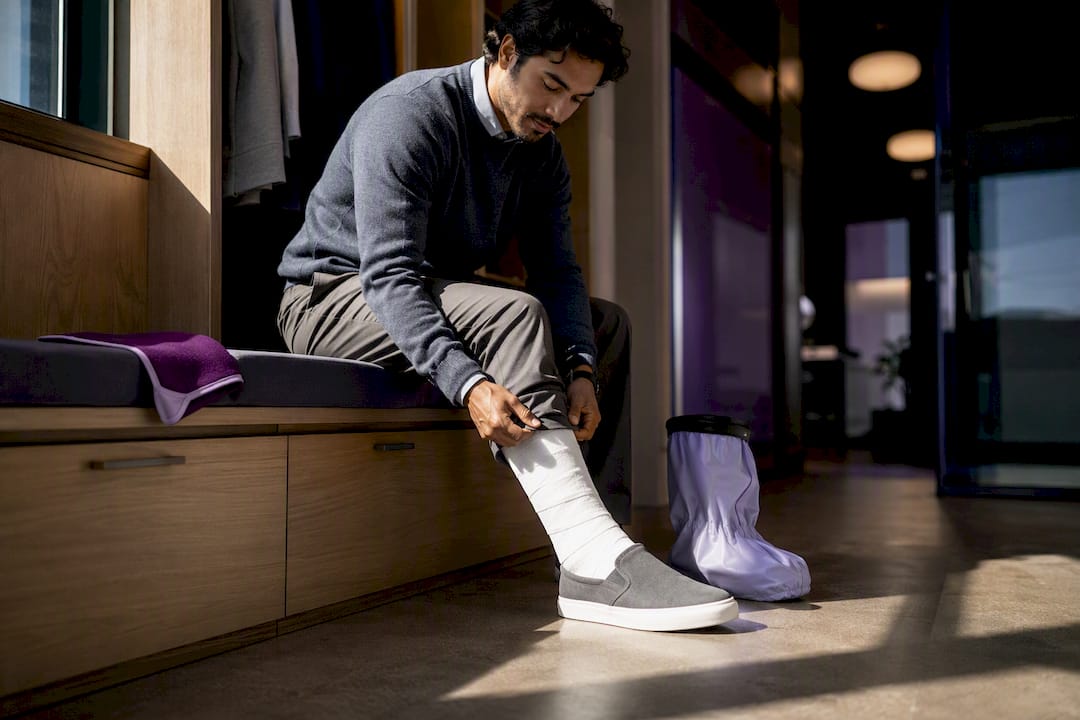
Getting dressed for work with a cast is solvable without a new wardrobe. Pair stretch-forward bottoms, wrap dresses, or side-zip adaptive pants with a structured blazer, and you get an instantly professional look. Small tailoring fixes (a slit calf, a re-hemmed leg) and pieces like adaptive clothing or Fracture Club’s recovery wear close the gap between comfort and looking put together.
TL;DR:
The most effective work outfits with a cast include blazer and stretch trousers, wrap dresses with slipshorts, or culottes with long tops to accommodate the injury comfortably.
Adaptive pants with side magnetic zippers or adjustable tailoring allow easy dressing over a leg cast, reducing the need for extensive wardrobe changes.
Front-opening tops, blazers with roomy sleeves, and easy closures for undergarments help prevent shoulder strain when dressing an arm or shoulder injury.
Using dressing tools like long-handled shoehorns, reachers, and button hooks simplifies dressing and minimizes pain during daily routine.
Protecting a cast from moisture, managing skin care, and adjusting workspace ergonomics improve comfort and hygiene during the healing process.
Table of Contents
Work Outfits With Cast: Leg and Ankle Solutions That Look Polished
If your cast is on your leg, ankle, or foot, your bottoms are doing all the work. The goal is finding pieces that clear a boot or cast without swallowing your whole silhouette in fabric.
Three templates cover most office settings:
The blazer formula: a structured blazer over stretchy leggings or knit straight-leg trousers. The blazer signals “professional” even when the bottoms are pure comfort.
The wrap dress formula: a wrap or midi dress with slipshorts underneath, so you have coverage and mobility whether you’re seated or standing at a desk.
The culottes formula: a long tunic or blouse over tailored culottes, which give you the drape of a dress with the ease of wider-leg pants.
For actual pants, wide-leg trousers, elastic-waist styles, and knit fabrics stretch to accommodate a boot or cast without a tailor’s help. When your existing pants won’t cooperate, a tailor can slit the calf or adjust the hem so the leg passes over the cast cleanly, and this is one of the most common community-tested fixes for anyone dressing professionally on crutches. Buying one size up and slitting the seam is another low-cost route people rely on regularly.
Footwear matters as much as the pants. Choose slip-on shoes or supportive flats on your uninjured foot. Skip anything with an unstable heel since your balance is already compromised. If you’re commuting in the rain, a removable cast cover keeps things dry without adding bulk under a pant leg.
When you’re seated at your desk with an elevated leg, a longer tunic or a midi skirt naturally covers the cast better than fitted trousers ever will.
Pro Tip: Ask your tailor for a “calf slit with a hidden snap” rather than a full seam re-do. It costs less, takes less time, and closes back up once the cast comes off.
Work Outfits With Cast: Dressing an Arm or Shoulder Injury
An arm cast or sling changes your dressing priorities entirely. Front-opening pieces beat anything you have to pull over your head, and roomy sleeves matter more than tailored ones right now.
Look for:
Button-down shirts and wrap tops that open flat instead of requiring you to raise your arm overhead
Blazers with dropped armholes or slightly oversized sleeves, so the cast has room to move
Ponchos and longline cardigans layered over a simple top, since they skip tight sleeves altogether
Scarves or statement earrings, which pull the eye upward and away from the sling without hiding it
Front-opening tops and easy closures reduce how often you need to lift an injured arm overhead, which is exactly the motion that tends to hurt most in the first few weeks. That same principle applies to undergarments: an easy-on bra with front closures or wide stretch bands preserves both modesty and comfort when one arm is out of commission.
Dress in order, too. Put the injured arm through its sleeve first, then bring the garment around your body before finishing with the unaffected arm. Undress in reverse. It sounds small, but this sequence alone prevents a lot of unnecessary shoulder strain during a normal workday.
What Dressing Tools and Adaptive Features Actually Help?
A handful of low-cost tools make dressing faster and noticeably less painful, whether the injury is above or below the waist.
Long-handled shoehorn: slides shoes on without bending toward a casted leg.
Sock puller: gets socks over a foot or ankle without twisting an injured joint.
Button hook: threads buttons one-handed when a cast or splint limits finger dexterity.
Dressing stick: helps pull up pants or push down zippers from a distance.
Reacher: grabs items on high shelves or the floor so you never have to bend or overreach.
These aids come from occupational therapy practice, and tools like these turn a ten-minute struggle into a two-minute routine.
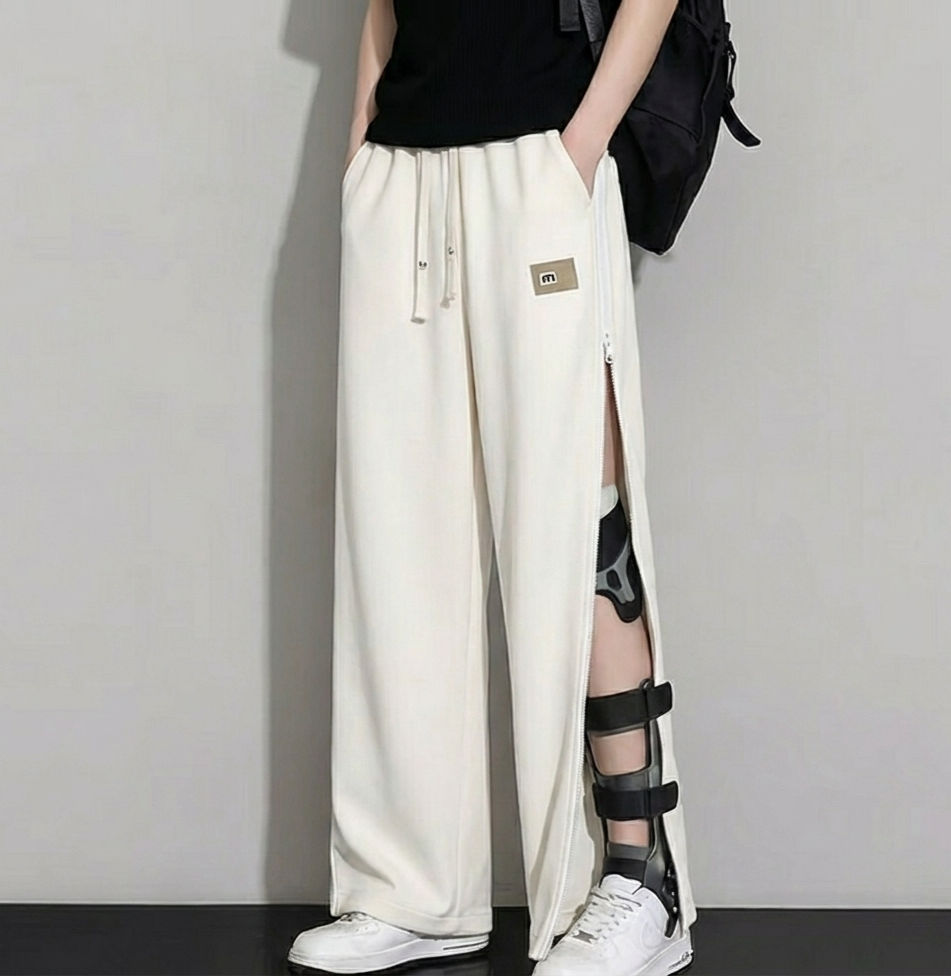
Beyond tools, prioritize clothing with side zips, magnetic closures, Velcro tabs, or elastic panels. Each one removes a step that would otherwise require two working hands or a full range of motion, which is exactly the independence adaptive design is built around.
[
Dress your injured limb first, always, and never force a sleeve or pant leg over a fresh cast if it feels tight. Compression from clothing that’s too snug can restrict circulation, so when in doubt, size up rather than squeezing into your regular fit.
Pro Tip: Keep a button hook and a reacher in your desk drawer at work, not just at home. Mornings are rushed enough without hunting for tools you left in the bathroom.
Making the Workday Itself Easier
Your outfit is only half the equation. The other half is how your actual workspace and commute treat your cast.
Ask for a footstool or extra cushion to elevate a leg cast under your desk, and check that your chair height doesn’t force awkward bending.
Protect against wet weather with a removable cast cover, and keep a backup slip-on shoe or thick sock in your bag in case swelling changes over the course of the day.
Watch your footing on stairs, elevators, and uneven flooring, especially if you’re using crutches alongside dress shoes that offer less grip than sneakers.
Talk to HR or your manager early and keep it simple: explain the temporary need, suggest one or two outfit adjustments, and ask directly whether the dress code can flex for a few weeks.
Most managers say yes quickly when you come with a solution already in hand instead of just a problem.
How Do You Keep a Cast Clean While Getting Dressed for Work?
Keeping a cast dry and clean during a workday takes more planning than most people expect, especially with fiberglass casts that shouldn’t get wet at all.
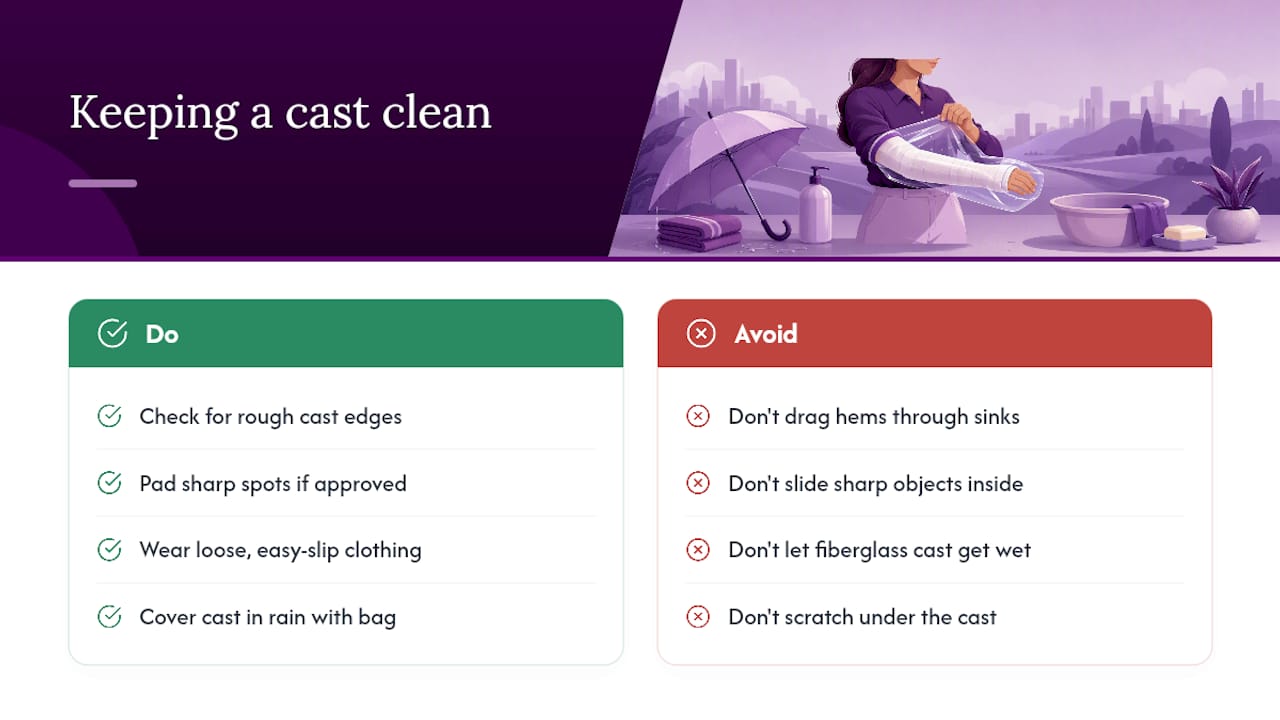
Before dressing, check your cast for rough edges that could snag hosiery or fabric, and pad any sharp spots with soft tape if your doctor has approved it. Loose clothing that slides on easily protects both the cast and your skin from friction, which matters more the longer you wear the same cast.
At the office, avoid letting sleeves or pant hems drag through sinks or spilled drinks around a shared break room. If you’re commuting in rain or snow, a plastic cast cover or a large produce bag secured with a rubber band works in a pinch over a leg cast, though a purpose-made cover is sturdier for daily use.
Watch for itching, which is common under a cast and gets worse when trapped moisture builds up from sweat during a long workday. Never slide anything sharp under the cast to scratch, since that can break skin you can’t see or reach. A hairdryer on the cool setting, aimed briefly under the cast edge, offers relief without the risk.
Finally, check your skin around the cast edges each evening for redness or breakdown, since a workday spent on your feet or at a desk can put pressure in places you don’t notice until you sit still.
Why Fracture Club Designs for Real Workdays, Not Just Recovery at Home
Adaptive clothing often gets designed for the couch, not the conference room. Adaptive recovery wear is designed around the fact that most people healing from a fracture still have somewhere to be, whether that’s an office, a client meeting, or just the grocery store on the way home.
Side magnetic zippers and easy-on construction help with the difficulty of bending over a cast to pull up pants. For deeper how-tos, our posts on leg cast clothing solutions and styling with confidence walk through more specific scenarios than any general guide can.
— Fracture
Fracture Club’s Adaptive Pants for the Office
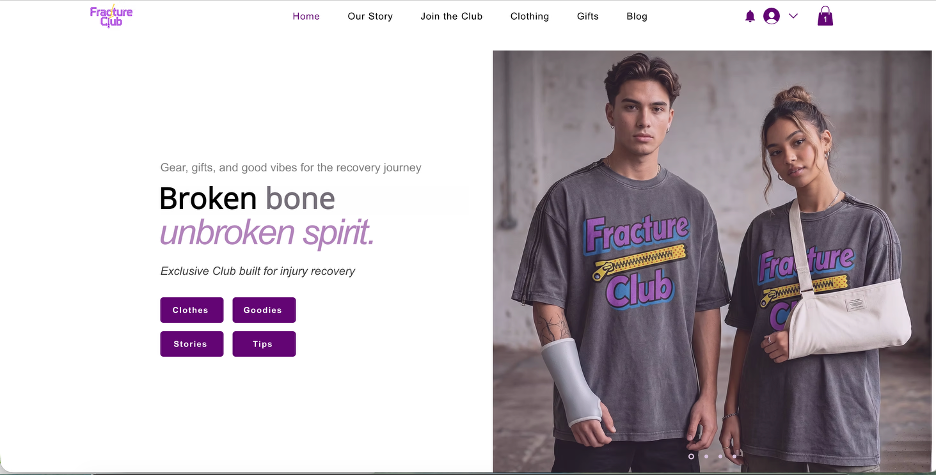
Bending, tugging, and hopping into pants over a cast isn’t just inconvenient. It’s a real barrier to getting to work on time looking like yourself. Fracture Club’s Recovery wear line was built around exactly this problem.
[
](fracture-club.com)
Unisex easy-on/off adaptive pants often use side magnetic zippers that open the entire leg seam, so one can step in rather than pull up pants over a cast. That single design choice solves the two biggest complaints from anyone dressing for work with a leg injury: no more forcing a pant leg over a bulky boot, and no more bending down to wrestle with a hem. When you’re sizing, go up if you’re between sizes and lean toward the side-zip style over an elastic waist whenever the cast sits below the knee, since the zipper gives you more room to adjust throughout the day as swelling changes.
Check fit details and sizing on the adaptive recovery pants product page, or reach out through our inquiry page if you need styling help. Some adaptive clothing brands donate a portion of proceeds to health-related foundations, adding a social responsibility aspect to purchases.
Sources
FAQ
What Are the Best Work Outfits With a Cast?
A structured blazer paired with stretch trousers, wide-leg pants, or a wrap dress works for most offices, since the blazer keeps things professional while the bottoms accommodate the cast. Side-zip adaptive pants or a tailored calf slit solve fit issues without a full wardrobe overhaul.
How Do I Dress for the Office With an Arm Cast?
Choose front-opening shirts, wrap tops, and blazers with roomy sleeves so you never have to lift the injured arm overhead. Dress the injured arm first and finish with the unaffected side, and layer with a poncho or open cardigan for extra warmth without tight sleeves.
Can I Get My Work Pants Altered to Fit Over a Cast?
Yes. A tailor can slit the calf seam or adjust the hem so an existing pair of pants slides over a leg cast or boot. This is typically a quick, low-cost fix compared to buying an entirely new wardrobe.
Does Fracture Club Make Clothing for Work With a Cast?
Fracture-club offers adaptive Recovery wear, including easy-on/off pants with side magnetic zippers designed to fit over a cast without bending or forcing a pant leg into place. Pricing and sizing details are available on the product page.
What Shoes Should I Wear to Work With a Leg Cast?
Slip-on shoes or supportive flats on your uninjured foot are safest, since unstable heels increase your fall risk while you’re already off balance. Pack a spare slip-on or thick sock in your bag in case your foot swells during the day.
Recommended
Comments