
Why Fracture Risk Increases with Age: 2026 Guide
- T. Armstrong

- Jul 4
- 8 min read
Fracture risk increases with age because bones weaken and physical function declines, making breaks far more likely from minor falls or everyday stress. This is the clinical reality of osteoporosis and age-related bone loss, conditions that affect millions of adults over 50 in the United States. Approximately 50% of women over 50 and 33% of men over 60 will experience a low-trauma fracture in their lifetime. That statistic means a trip on a rug or a stumble off a curb carries real consequences. Understanding the biology behind this shift is the first step toward doing something about it.
Why fracture risk increases with age: the biology of bone loss
Bone is living tissue. Your body constantly breaks it down and rebuilds it through a process called remodeling, managed by two types of cells: osteoclasts, which remove old bone, and osteoblasts, which build new bone. After midlife, this balance tips. Osteoclasts become more active while osteoblast activity slows, meaning your body removes more bone than it replaces.
This imbalance accelerates sharply after menopause. Estrogen plays a direct role in keeping osteoclast activity in check, so when estrogen levels drop, bone breakdown speeds up. Approximately 25% of US women over 65 have osteoporosis as a result. Men experience a slower but equally real decline tied to falling testosterone levels and rising inflammatory markers.

What makes this especially tricky is that osteoporosis shows no symptoms until a fracture occurs. Bone loss is silent. You cannot feel your skeleton thinning. By the time a fracture happens, significant density may already be gone.
Early warning signs that often go unnoticed include:
A noticeable loss of height over several years
A stooped or rounded upper back, called kyphosis
Back pain that appears without a clear cause
Teeth that feel looser, which can signal jaw bone loss
Pro Tip: If you have lost more than an inch of height since your 40s, mention it to your doctor. It may indicate vertebral compression fractures that occurred silently.
Aging also drives chronic low-grade inflammation through a process called immunosenescence, where the immune system ages and shifts toward a pro-inflammatory state. This inflammation directly promotes bone breakdown. Gut microbiome changes and cellular senescence add to this effect, creating what researchers describe as a triangle of aging factors working against bone health.
How does muscle weakness raise your fracture risk?
Bone density alone does not determine whether you fracture. Physical function matters just as much. Muscle weakness, slow walking speed, and poor balance all increase your risk of falling, and falls are the direct cause of most fractures in adults over 50.
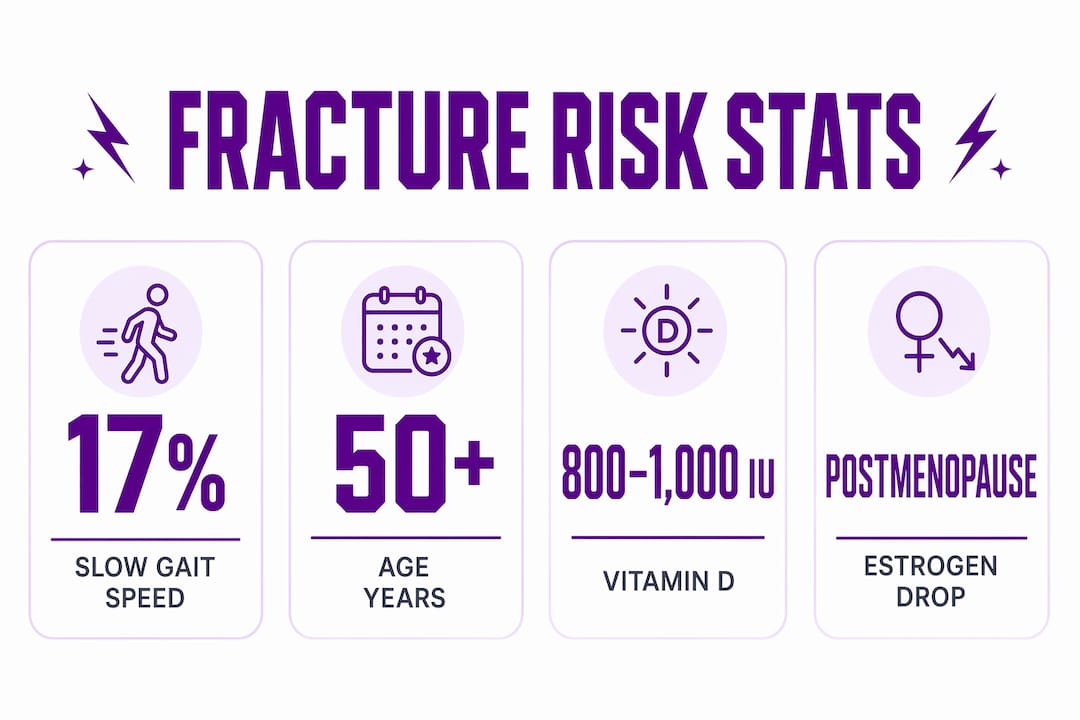
Research shows that slow gait speed raises fracture hazard by 17%. That finding is striking because gait speed is something you can measure and improve. Weak grip strength carries a similar predictive weight. These physical function markers tell clinicians how likely you are to fall and how well your body can absorb impact when you do.
Frailty affects approximately 24% of older adults and independently raises fracture risk beyond what bone density scans reveal. Sarcopenia, the gradual loss of muscle mass that begins in your 40s, feeds directly into frailty. Less muscle means less stability, slower reflexes, and a harder landing when you lose your footing.
The good news is that physical function responds to training. Current guidelines recommend:
At least 150 minutes of moderate aerobic activity per week, such as brisk walking or swimming
Muscle-strengthening exercises on two or more days per week, targeting legs, hips, and core
Balance training such as tai chi or single-leg standing exercises, which directly reduce fall risk
Flexibility work to maintain range of motion and coordination
Pro Tip: Tai chi has strong clinical evidence behind it for fall prevention. Even two sessions per week can meaningfully improve balance in adults over 60.
Exercise is therapeutic, not just preventive. Resistance training can reverse some of the muscle loss that comes with aging, which means it is never too late to start. You can find specific weight-bearing exercise options that are safe and effective for adults over 50.
What other factors raise fracture risk as you age?
Bone health does not exist in isolation. Several chronic conditions, medications, and lifestyle habits accelerate bone loss on top of the normal aging process. Understanding these types of fracture risk factors helps you have a more complete conversation with your doctor.
Risk factor | Effect on bone health |
Type 2 diabetes | Impairs bone quality even when density appears normal |
Inflammatory diseases | Chronic inflammation accelerates bone breakdown |
Corticosteroid medications | Suppress osteoblast activity and accelerate bone loss |
Smoking | Reduces estrogen levels and impairs calcium absorption |
Heavy alcohol use | Disrupts bone remodeling and increases fall risk |
Celiac disease | Reduces calcium and vitamin D absorption from food |
Chronic conditions and steroid use are among the most underappreciated drivers of fracture risk. Many people take corticosteroids for asthma, arthritis, or inflammatory bowel disease without realizing the long-term effect on their skeleton. If you take steroids regularly, ask your doctor about bone protection strategies.
Estrogen deficiency after menopause creates a pro-resorptive environment in bone tissue. This is not just about density. It changes the microstructure of bone, making it more brittle even when scans look acceptable. Smoking compounds this by lowering estrogen levels further and reducing the gut’s ability to absorb calcium.
How do doctors assess fracture risk today?
The standard bone density scan, called a DXA scan, measures bone mineral density at the hip and spine. It is a useful tool, but it tells only part of the story. Many fractures occur in people whose bone density does not meet the clinical threshold for osteoporosis. Relying on DXA alone misses a significant portion of people at real risk.
Clinicians now use the FRAX tool, developed by the World Health Organization, to calculate a person’s 10-year probability of a major fracture. FRAX integrates age, sex, body weight, family history, smoking status, alcohol use, steroid use, and prior fracture history into a single risk score. It gives a far more complete picture than bone density alone.
A thorough fracture risk assessment starting around age 50 should include:
A DXA scan to measure bone mineral density at the hip and spine
A FRAX calculation using your full clinical history
Gait speed and grip strength measurements to assess physical function
A review of medications that may affect bone health
A fall risk evaluation, including home environment and footwear
Pro Tip: Ask your doctor to calculate your FRAX score at your next appointment, even if your DXA results look normal. It takes less than five minutes and can change the conversation entirely.
Bone health screening guidelines recommend that postmenopausal women and men over 60 receive formal risk assessments, especially if they have additional risk factors. Early assessment means earlier intervention, and earlier intervention is consistently more effective.
Practical steps to reduce fracture risk after 50
Lifestyle changes are the most modifiable tools you have. They do not replace medical treatment when it is needed, but they slow bone loss, build muscle, and reduce the chance of a fall that leads to a fracture.
Nutrition: Current 2026 guidelines recommend 800–1,000 IU of vitamin D daily for adults over 50. Calcium intake from food sources like dairy, leafy greens, and fortified products supports bone density. Supplements can fill gaps, but food-first is the preferred approach.
Exercise: Weight-bearing activities like walking, hiking, and dancing stimulate bone formation. Resistance training builds the muscle mass that protects you in a fall. Both types of exercise belong in your weekly routine.
Fall prevention at home: Most falls happen indoors. Simple changes make a real difference:
Remove loose rugs and clutter from walkways
Install grab bars in the bathroom near the toilet and shower
Improve lighting in hallways and stairwells
Wear supportive, non-slip footwear indoors and out
Footwear deserves more attention than it typically gets. Proper shoes for older adults reduce fall risk by improving stability and proprioception, your body’s sense of where your feet are in space. Slippers with no heel support are one of the most common contributors to indoor falls.
Building daily habits that support bone health does not require a complete lifestyle overhaul. Small, consistent changes compound over months and years into meaningful protection.
Key Takeaways
Fracture risk after 50 is driven by bone density loss, declining muscle function, and systemic factors that compound each other, making early assessment and consistent lifestyle habits the most effective defense.
Point | Details |
Bone remodeling imbalance | After midlife, osteoclasts outpace osteoblasts, silently reducing bone strength before any fracture occurs. |
Physical function matters as much as density | Slow gait speed raises fracture hazard by 17%, making muscle and balance training non-negotiable. |
FRAX beats DXA alone | The FRAX tool integrates age, history, and function to predict fracture risk more accurately than a bone scan alone. |
Chronic conditions accelerate loss | Diabetes, steroid use, and inflammatory diseases compound age-related bone loss and require targeted management. |
Lifestyle changes work | Vitamin D, weight-bearing exercise, and fall-proofing your home are proven tools that reduce fracture risk at any age. |
What I have learned about fracture risk that most people miss
Most people over 50 think about fractures only after they happen. That is the pattern I see repeatedly, and it is the one worth breaking. The biology is clear: bone loss starts quietly in your 40s, accelerates after menopause or andropause, and reaches a tipping point before most people have had a single conversation with their doctor about it.
The part that surprises people most is how much physical function matters. Bone density gets all the attention, but your walking speed and grip strength predict fracture risk with equal or greater accuracy. A person with moderate bone loss who walks briskly and has strong legs is often safer than someone with better density who shuffles and holds walls for balance. That distinction changes what prevention actually looks like.
The other common pitfall is waiting for symptoms. Osteoporosis gives you none until a fracture occurs. Height loss, a rounding back, or a sudden bout of back pain are signs that something has already happened, not warnings that something might. Treating those as normal aging is a costly mistake.
The most encouraging thing I can tell you is that the tools to change your trajectory exist right now. Exercise, nutrition, screening, and medication when needed can slow bone loss, rebuild muscle, and dramatically reduce fall risk. You do not need to accept fracture as an inevitable part of getting older. You need a plan, and you need to start it before a fracture forces the conversation.
— Fracture
Fracture-club: support for your recovery and bone health
Dealing with a fracture, or working to prevent one, is not something you should have to navigate alone. Fracture-club was built for exactly this moment.
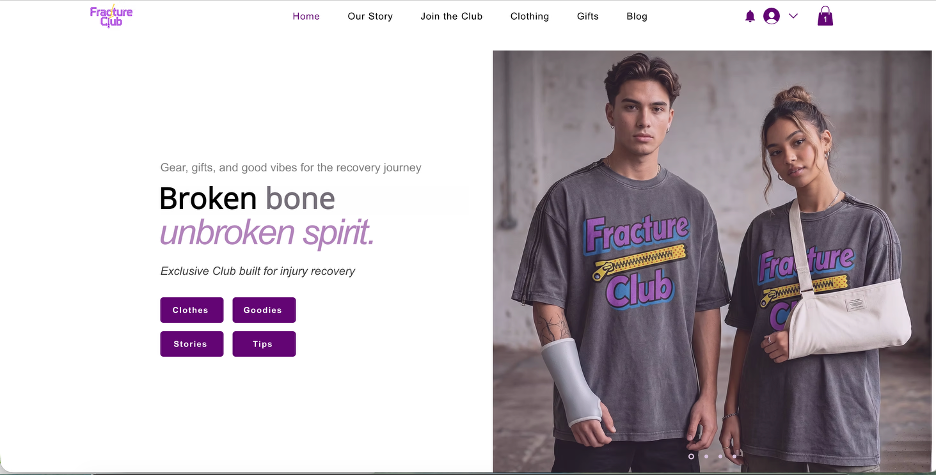
Whether you are recovering from a break or taking steps to protect your bones, Fracture-club offers practical support. The adaptive recovery pants with magnetic side zippers make dressing easier when a cast or brace is in the way, so you can stay comfortable and maintain your independence. A portion of every purchase supports the Bone Health & Osteoporosis Foundation, connecting your recovery to a larger mission. Visit Fracture-club to find recovery wear, educational resources, and personalized inquiry support designed for people who are healing with purpose.
FAQ
Why do bones get weaker after age 50?
After 50, osteoclasts remove bone faster than osteoblasts can rebuild it, reducing bone density and strength. Hormonal changes, especially estrogen loss after menopause, accelerate this process significantly.
What is the most common fracture in older adults?
Hip, spine, and wrist fractures are the most common low-trauma fractures in adults over 50. Hip fractures carry the highest risk of serious complications and loss of independence.
Does muscle weakness really increase fracture risk?
Yes. Poor physical function, including slow gait speed and weak grip strength, predicts fracture risk as reliably as low bone density because it directly increases fall risk.
When should I get a fracture risk assessment?
Postmenopausal women and men over 60 should receive a formal fracture risk assessment, including a FRAX calculation and DXA scan. Adults over 50 with additional risk factors like steroid use or a family history of fractures should ask earlier.
Can lifestyle changes actually prevent fractures?
Yes. Weight-bearing exercise, adequate vitamin D and calcium intake, fall-proofing your home, and quitting smoking all reduce fracture risk. Exercise in particular can reverse some age-related muscle loss and improve balance at any age.
Recommended
Comments