
The Role of Community in Injury Recovery

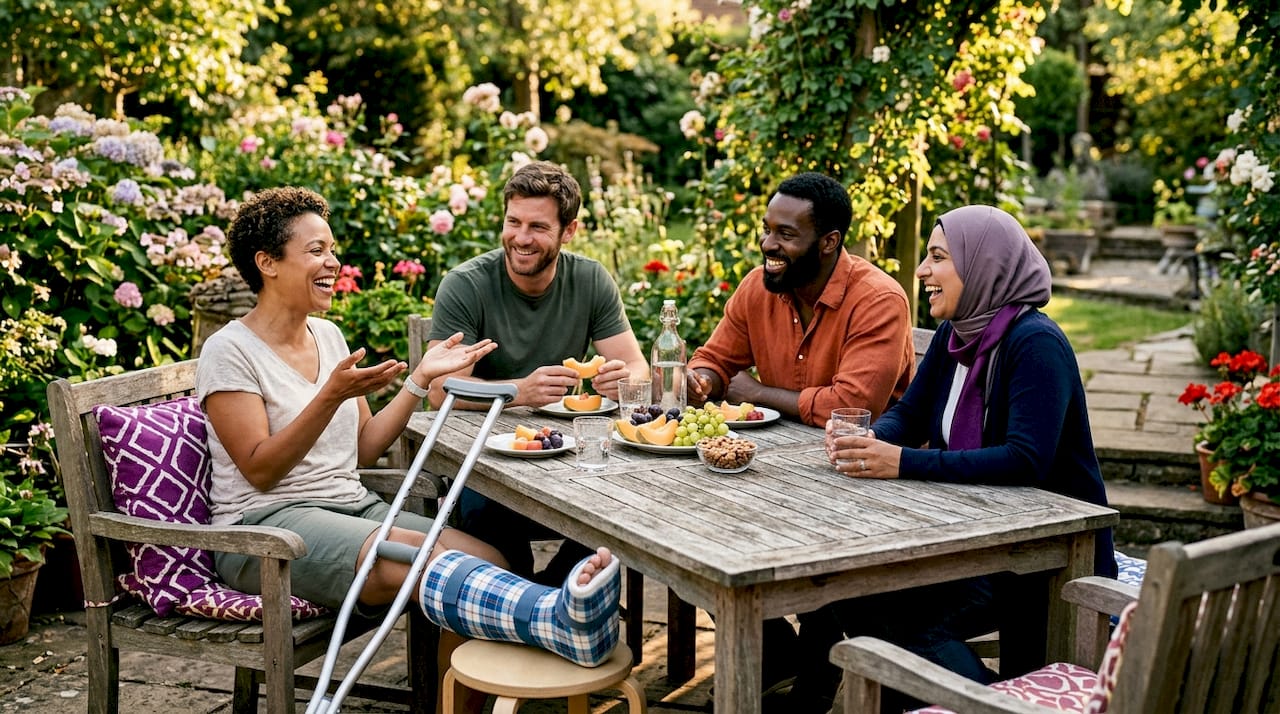
Community is defined as the network of people, groups, and relationships that actively support an individual’s healing after injury. Research consistently shows that social support improves rehabilitation outcomes by increasing motivation, reducing depression, and improving adherence to treatment plans. The role of community in injury recovery extends well beyond emotional comfort. It shapes how quickly you return to daily life, how well you manage pain, and how resilient you become long after the cast comes off. Recognized frameworks like the SAMHSA peer support model and the Ubuntu-based Community-Based Social Healing approach confirm that belonging accelerates recovery in ways that clinical care alone cannot replicate.
How does community support improve physical and psychological recovery?
Community support improves recovery through three clear mechanisms: emotional encouragement, practical assistance, and reduced isolation. Each one directly affects how well you heal and how consistently you follow your rehabilitation plan.
Emotional encouragement keeps you showing up when recovery feels slow. When people around you acknowledge your pain without trying to fix it, you feel seen. That sense of being witnessed reduces anxiety and builds the mental stamina required for long rehabilitation timelines.
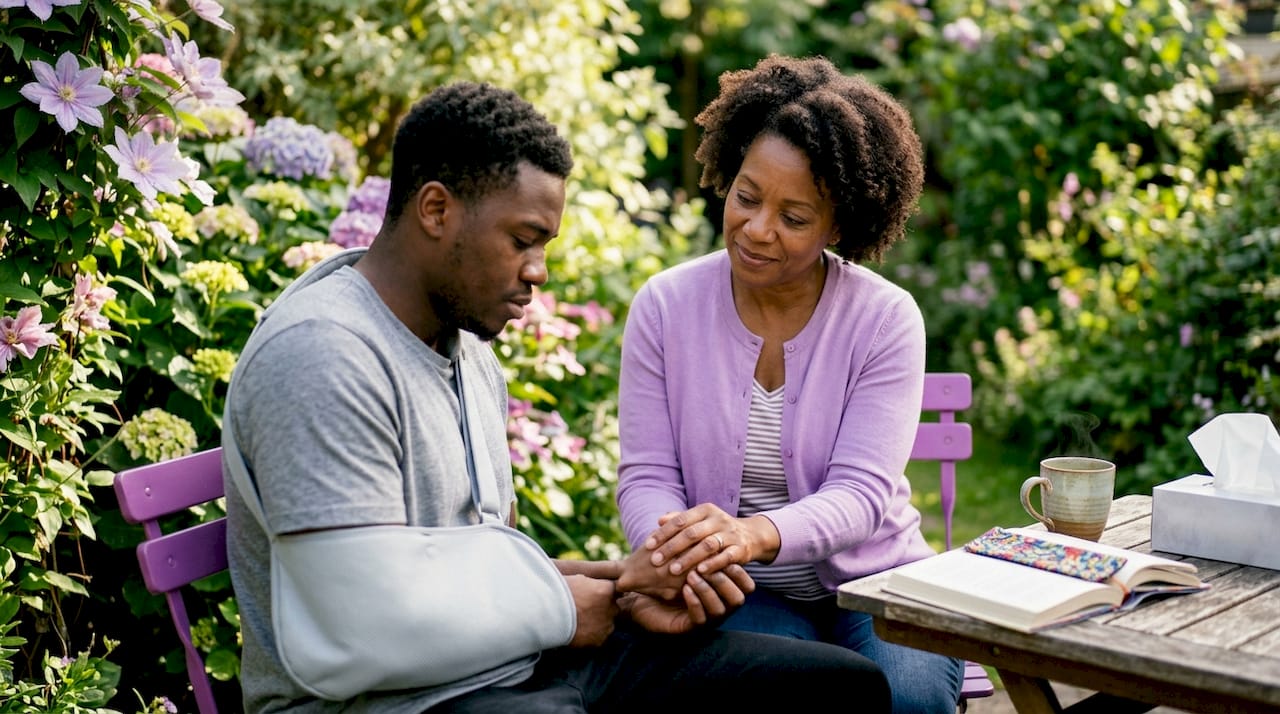
Practical assistance removes barriers that derail recovery. A neighbor driving you to physical therapy, a coworker picking up groceries, or a friend helping you dress removes the daily friction that exhausts people who are already depleted. These acts free your energy for healing.
Reduced isolation protects your mental health. Social isolation during recovery is linked to higher rates of depression and lower rehabilitation participation. Digital platforms that offer tailored features like anonymous participation and experience sharing reduce isolation and improve engagement for people who cannot attend in-person groups.
Community involvement increases the likelihood you will complete your rehabilitation program
Peer encouragement reduces feelings of shame around asking for help
Shared experiences normalize the emotional difficulty of recovery
Practical help from your network reduces physical and mental fatigue
Social connection lowers perceived pain intensity over time
Pro Tip: Tell one specific person one specific thing you need this week. “Can you drive me to my appointment Thursday at 2 PM?” gets a yes far more often than “I could use some help.” Specific requests work because they give people a clear, manageable way to contribute.
Research confirms this. Explicit requests for help increase the likelihood of receiving relevant, meaningful support. Vague pleas like “I just need people around me” leave helpers unsure how to act. Specificity is the skill that turns goodwill into real assistance.
What types of community support exist during injury recovery?
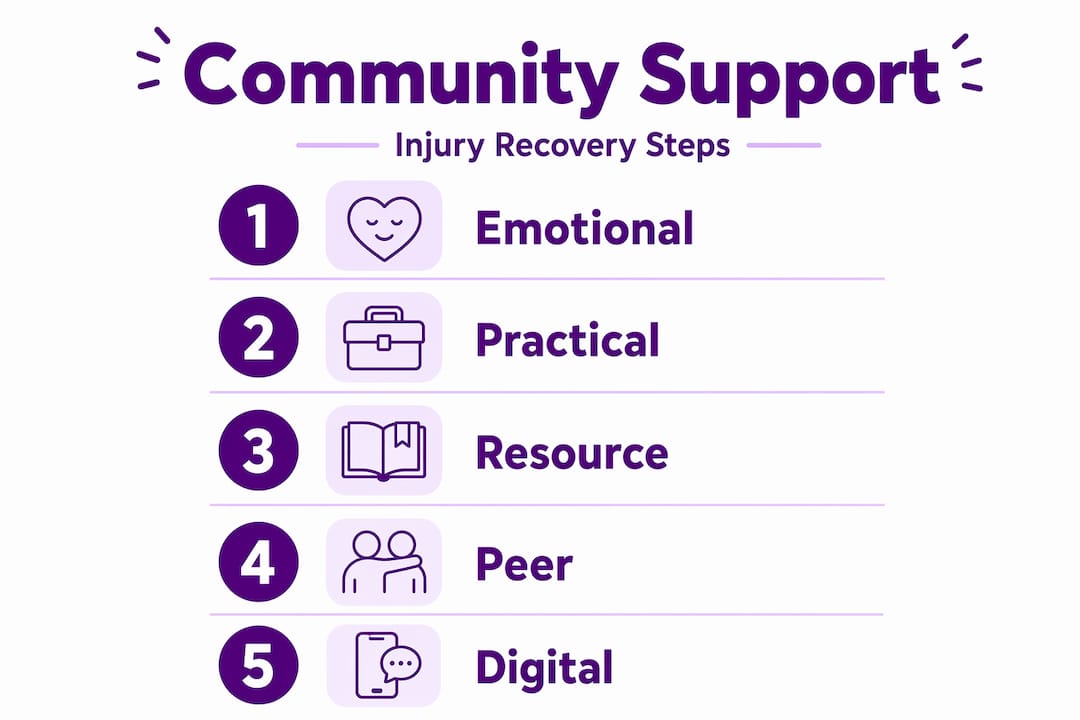
Support systems in recovery take many forms. Knowing which type fits your situation helps you access the right help at the right time.
Peer support workers. Peer support workers are people with lived recovery experience who help others through advocacy, mentoring, resource sharing, and group leadership. SAMHSA recognizes their role as extending recovery well beyond clinical settings. They serve as proof that recovery is possible and as guides through systems that can feel confusing.
Healing circles and community groups. The Ubuntu model, developed through community healing programs in Rwanda, operates on the principle that community members are the healing thing itself. These groups focus on witnessing pain together rather than solving it. Healing circles reached over 30,320 trauma survivors at approximately $24 per person, proving that relational healing scales affordably.
Online and digital platforms. Digital communities offer flexibility for people with mobility limitations. They work best when platforms prioritize personalized feedback and emotional experience rather than generic content. The caveat is that passive scrolling does not build connection. Active participation, even anonymously, produces better outcomes.
Workplace and sports club networks. Colleagues and teammates often want to help but do not know how. A January 2026 study found that many grassroots sports clubs lack formal programs for injured players, despite community involvement being essential for long-term ACL injury adaptation. This gap represents an opportunity. Asking your club or employer to create a simple check-in structure can formalize support that already exists informally.
Family and close friends. This network is often the most available and the most underutilized. Family members need guidance on how to help. Without direction, they default to hovering or withdrawing. Clear communication from you sets the tone for how they show up.
Support type | Best for | Key strength |
Peer support workers | Navigating systems and sustaining motivation | Lived experience builds trust quickly |
Healing circles | Emotional processing and shared pain | Relational depth over time |
Digital platforms | Mobility-limited or geographically isolated individuals | Flexible, low-barrier access |
Sports and workplace groups | Maintaining identity and social roles | Familiar relationships and shared context |
Family and friends | Daily practical tasks | Immediate availability |
What evidence supports community’s effectiveness in rehabilitation?
The evidence for community support in injury rehabilitation is strong and growing. Studies from 2026 document measurable outcomes across multiple recovery populations and settings.
The Rwanda healing circles program, built on the Ubuntu philosophy of collective humanity, reached thousands of trauma survivors at a cost that most health systems can afford. Structured healing programs reached over 30,320 participants at roughly $24 per person. That cost-effectiveness matters because it shows community healing is not a luxury. It is a scalable public health tool.
Long-term peer support groups show benefits that outlast the program itself. Bi-weekly peer sessions held over three years maintained a strong sense of community that positively influenced recovery years after the group ended. The implication is clear. Investing time in a peer group during recovery pays dividends long after your injury heals.
“Healing through community is a process of empathy and shared pain rather than clinical therapy. The community does not fix the wound. It sits with you while you heal. That presence, sustained over time, is what makes the difference between surviving an injury and genuinely recovering from one.”
Sports injury research adds another dimension. ACL recovery, which typically takes nine to twelve months, depends heavily on psychological adaptation alongside physical rehabilitation. A 2026 study confirmed that community involvement is essential for long-term adaptation after ACL injury. Yet most grassroots clubs have no formal structure to support injured players. The gap between what research recommends and what clubs actually provide is wide.
Different demographic groups benefit from community models in different ways. Younger people respond well to digital peer communities and social media groups. Older adults benefit more from in-person circles and structured peer support programs. People recovering from sports injuries often need their team identity preserved during recovery, which requires active inclusion rather than passive sympathy. Recognizing which model fits your situation helps you choose the right entry point. Proper footwear support also plays a role in physical recovery, particularly for lower limb injuries where community sports reintegration is the goal.
How can you build an effective support system during recovery?
Building a support system during recovery is a skill, not a personality trait. You do not need to be naturally social or emotionally open. You need a few practical habits.
Start before you feel ready. Low-threshold participation options like anonymous online groups or observer roles in healing circles lower the psychological barrier to entry. Waiting until you feel “ready” often means waiting indefinitely.
Make specific requests. Specific, actionable requests like “Can you sit with me during my first PT session?” outperform general ones. They give helpers a concrete role and reduce the awkwardness of not knowing what to do.
Use digital tools intentionally. Join a recovery-focused online group with a clear purpose. Contribute one comment or question per week. Passive membership does not build connection. Active participation, even small, does.
Maintain contact with your identity communities. Your sports club, workplace, or neighborhood group is part of who you are. Staying connected to those groups, even in a reduced capacity, protects your sense of self during recovery.
Plan for the long term. Recovery does not end when the cast comes off. Schedule regular check-ins with your support network for at least three months after your clinical discharge. Peer support benefits persist long after formal programs end.
Pro Tip: If you feel uncomfortable asking for help, reframe it. You are not burdening people. You are giving them a specific, meaningful way to contribute to something that matters. Most people want to help. They just need direction.
Reading about identity during injury recovery can also help you understand why staying connected to your community feels so important. Your sense of self does not disappear when you are injured. It needs tending.
Key Takeaways
Community support is the single most underutilized resource in injury recovery, delivering measurable physical, psychological, and social benefits at every stage of healing.
Point | Details |
Community accelerates healing | Social support improves rehabilitation adherence and reduces depression during recovery. |
Specific requests get results | Asking for a concrete task (“drive me Thursday”) produces more help than vague appeals. |
Start before you feel ready | Low-threshold options like anonymous groups lower barriers and increase recovery success. |
Peer support has lasting impact | Bi-weekly peer sessions over three years produced benefits that persisted long after the program ended. |
Multiple support types exist | Peer workers, healing circles, digital platforms, and workplace networks each serve different needs. |
What I’ve learned about community and recovery
Recovery has a way of revealing who is actually in your corner. I have seen people with strong clinical care plans struggle because they had no one to call on a hard day. I have also seen people with modest medical resources recover remarkably well because they were surrounded by people who showed up consistently.
The most common mistake I see is waiting. People wait until they feel ready to join a group. They wait until they feel “bad enough” to ask for help. They wait until someone offers. That waiting costs weeks of progress and deepens the isolation that makes recovery harder.
The research on healing circles taught me something I did not expect. The goal is not to fix the pain. The goal is to witness it together. That shift in framing changes everything. You stop feeling like a burden and start feeling like a person going through something real, with real people beside you.
The other thing I have noticed is that community support does not end when the injury heals. The peer groups that work best are the ones that stay connected. They check in. They celebrate milestones. They normalize the fact that recovery is not linear. That ongoing connection is what separates people who fully return to their lives from those who quietly shrink back.
If you are in recovery right now, you do not need a perfect support system. You need one person, one group, or one online community where you can be honest. Start there. Build from there. The rest follows.
— Fracture
Recovery wear that supports your independence and community
Healing is easier when getting dressed is not a battle. Fracture-club designs adaptive recovery apparel specifically for people with casts, braces, and limited mobility. The magnetic side-zip pants and easy-on recovery sweatshirt let you get dressed independently, which matters when you are trying to show up to a peer group, a physical therapy session, or a friend’s house.
Fracture-club also connects you to a community of people who understand what recovery actually feels like. A portion of every purchase benefits the Bone Health & Osteoporosis Foundation. Visit the inquiry services page to find the right product for your recovery stage and get personalized guidance from people who have been there.
FAQ
What is the role of community in injury recovery?
Community provides emotional support, practical assistance, and social connection that improve rehabilitation adherence and mental health outcomes. Research shows peer support and healing circles produce measurable benefits that persist long after clinical treatment ends.
How does peer support help during injury rehabilitation?
Peer support workers with lived experience offer mentoring, advocacy, and resource sharing that extend recovery beyond clinical settings. SAMHSA recognizes peer support as a formal recovery role that builds trust and sustains motivation over time.
Can online communities help with injury recovery?
Digital platforms reduce isolation and improve engagement, especially for people with mobility limitations. Features like anonymous participation and experience sharing lower psychological barriers and support sustained recovery progress.
How do I ask my community for help without feeling like a burden?
Make specific, concrete requests rather than general ones. Asking for a ride to a Thursday appointment is easier for helpers to act on than a vague request for support, and research confirms specific requests produce more meaningful help.
When should I join a recovery support group?
Join as early as possible, even before you feel ready. Low-threshold options like observer roles or anonymous online participation reduce the pressure of early engagement and increase the likelihood of long-term recovery success.
Recommended
Comments