
Sending Care Package Long Distance: Recovery Kits That Help
- T. Armstrong

- Aug 6
- 8 min read
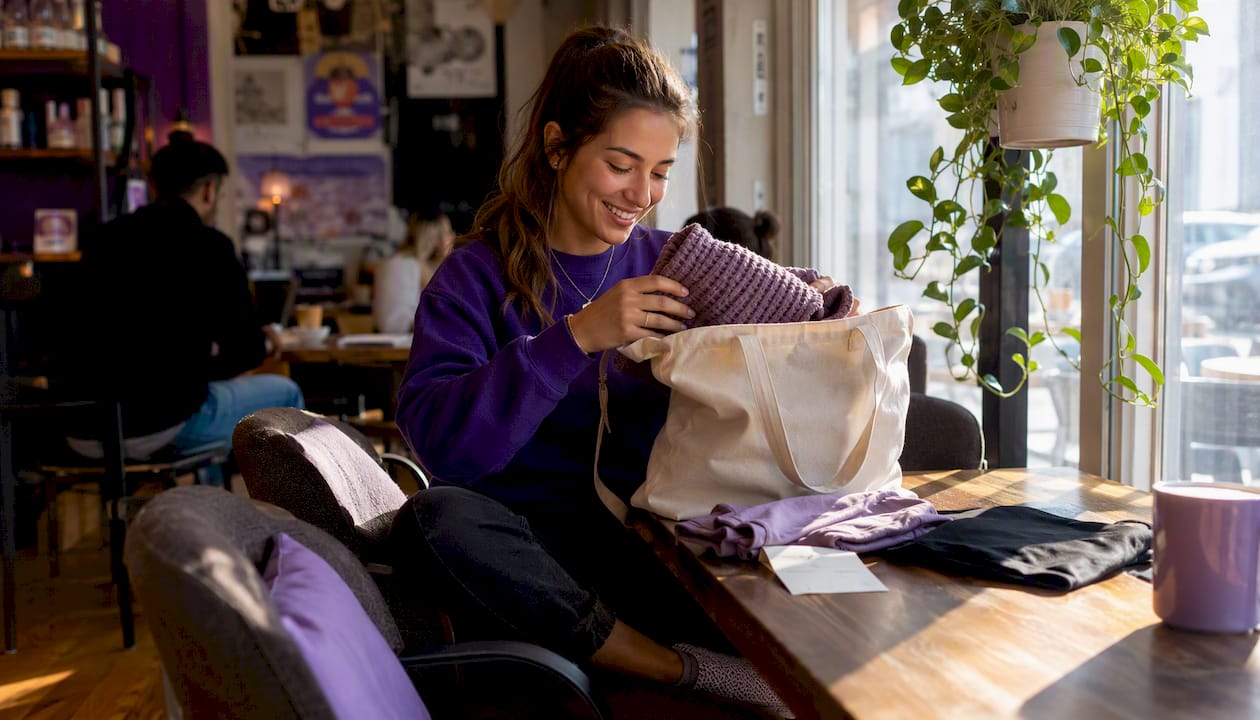
The most effective long-distance recovery care package follows a two-window strategy: send a home-ready kit timed to arrive at discharge, then a smaller follow-up box 2–3 weeks later when the initial wave of support fades and isolation sets in. Skip the flowers and fruit baskets. What actually helps is a compact set of items that reduce movement, restore a small sense of independence, and ask nothing of the recipient in return.
Your first package should include:
A 10-foot charging cable — the single most-cited practical item by patients, because it eliminates the frustrating reach to a far outlet
Dry shampoo and unscented wipes — quick hygiene when a full shower isn’t possible
A soft, lightweight 100% cotton blanket — breathable, washable, and gentle on sensitive skin
Pre-portioned microwavable meals or a meal-delivery gift card — removes the need to plan, cook, or stand
Adaptive clothing — easy-on/off pants or a sweatshirt designed for casts and slings
A short handwritten note with a contents list so caregivers can find things fast
Ship to the home address, not the hospital. Include a “no reply needed” line in your note. That one small detail removes more pressure than most people realize.
Pro Tip: Order the discharge package to arrive the day your person gets home, not the day of surgery. They won’t be able to enjoy it in the hospital, and home is where the real recovery begins.
Table of Contents
What goes in a long-distance recovery care package?
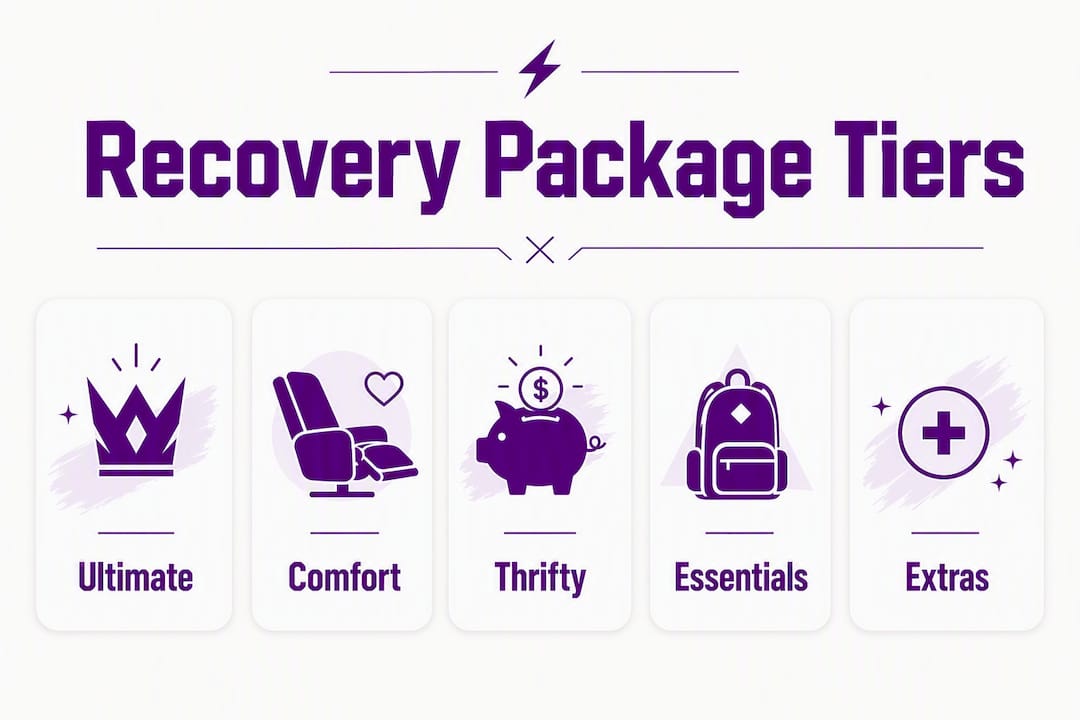
The care package checklist for orthopedic recovery below is organized into three budget tiers so you can pick a level and move fast without second-guessing every item.
Category | Thrifty (budget tier) | Comfort (mid-tier) | Ultimate (premium tier) |
Comfort | Lightweight cotton blanket | Blanket + wedge pillow | Blanket + wedge pillow + eye mask |
Practical/Adaptive | 10-ft charging cable, non-slip socks | Add grabber/reacher tool | Add adaptive pants or sweatshirt |
Hygiene | Dry shampoo, unscented wipes | Add gentle lip balm | Add full travel hygiene kit |
Food/Meals | meal-delivery gift card | meal card | Meal card + pre-portioned snack set |
Entertainment | Audiobook or podcast app gift card | Add noise-canceling earplugs | Add streaming subscription card |
Personal touch | Handwritten note + contents card | Same | Same + small framed photo |
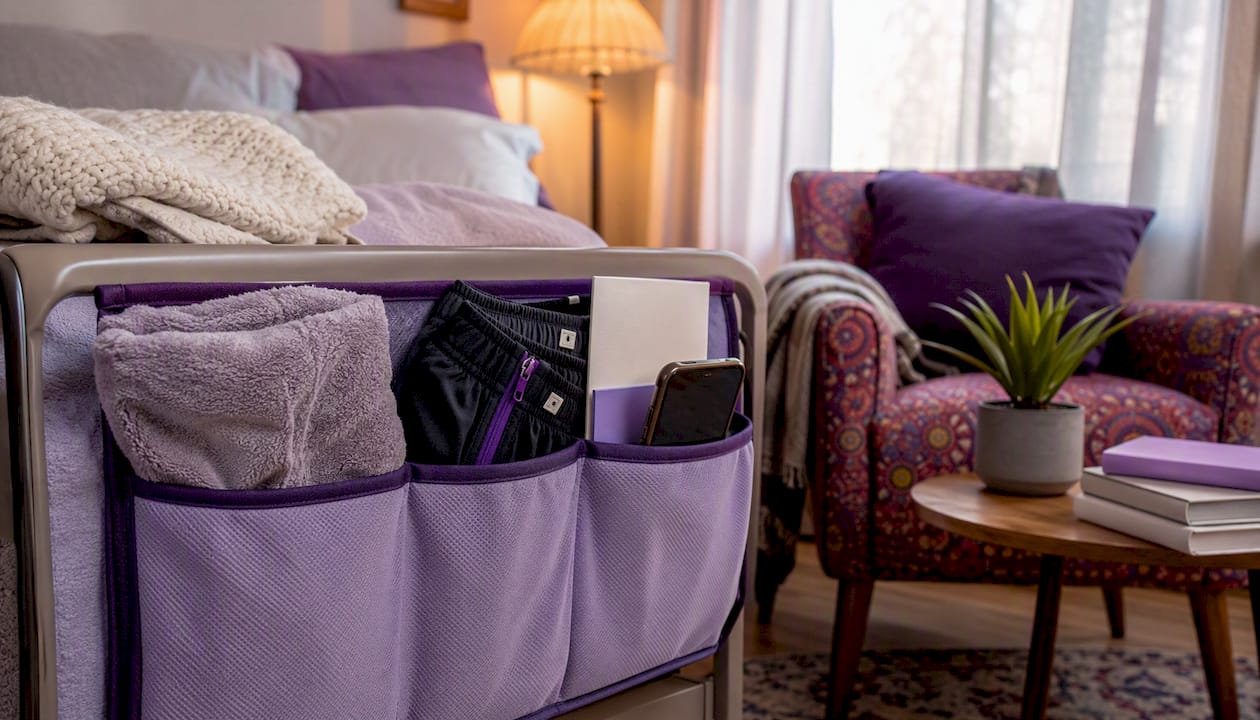
Pack everything inside an open-top tote or bedside caddy rather than a sealed box. Items stay visible, reachable from bed, and don’t require the recipient to dig through packing material with one hand.
Why each item actually helps during recovery
Recovery isn’t one long rest. It’s a series of small, exhausting tasks: reaching for a phone, figuring out what to eat, getting dressed without help. The best long distance care packages solve those specific frustrations.
Comfort items
Lightweight 100% cotton blankets are breathable and machine-washable, which matters when someone is spending most of the day in bed. A wedge pillow elevates an injured limb without requiring constant repositioning. Both items work because they reduce the need to call for help with small adjustments.
Practical and adaptive items
Apply the “one-hand rule” to everything you choose: if it can’t be opened, used, or adjusted with one hand, leave it out. A 10-foot charging cable passes easily. So do flip-top water bottles, squeeze-top containers, and grabber tools that extend reach without bending. Adaptive clothing with magnetic or side-zip closures passes too, because it removes the daily frustration of dressing with a cast or sling.
Nutrition and low-effort meals
Meal-delivery gift cards eliminate two burdens at once: the physical effort of cooking and the cognitive load of deciding what to eat. Pre-portioned microwavable meals work well for the first week when energy is lowest. A gift card gives flexibility for the weeks that follow.
Entertainment and hygiene
Hands-free entertainment matters more than most people expect. Audiobook subscriptions and podcast apps require no screen-holding and no fine motor control. Noise-canceling earplugs or a sleep mask help with rest in a noisy or bright environment. For hygiene, dry shampoo and unscented face wipes offer a quick refresh when showering is difficult, and travel-size formulas keep things simple.
When should you send a recovery package?
Timing matters as much as the contents. The two-window approach works because it matches the actual shape of recovery: a burst of support at the start, then a quiet drop-off around week two or three when most people have gone back to their own lives.
Window 1 — Discharge day: Order the first package to arrive at the home address on the day your person leaves the hospital or clinic. This is when they need practical items most and have the least energy to go get anything themselves.
Window 2 — Two to three weeks later: Send a smaller, lighter package. A streaming gift card, a new audiobook, a favorite snack, or a short note. This second gesture often lands harder emotionally than the first, because it arrives when the silence has set in.
Avoid sending packages to the hospital unless a family member has confirmed it’s allowed. Many floors restrict flowers and gifts for infection control, and the patient may not have the energy or space to manage a delivery.
Before you ship, confirm the home address, the best delivery day, and any mobility limitations or dietary restrictions with a local contact. A neighbor, family member, or caregiver who can receive the package if the recipient can’t answer the door is worth identifying in advance.
Pro Tip: Add delivery instructions at checkout: “Leave at door, do not require signature.” Someone healing from a leg or hip injury shouldn’t have to navigate stairs or a heavy door to retrieve a package.
How to pack and ship a recovery care package
Pack the most-used items on top: the charging cable, dry shampoo, and the handwritten note should be visible the moment the tote is opened. Wrap anything fragile or hygiene-sensitive in tissue paper or a small zip pouch. Avoid loose liquids entirely; they can leak in transit and ruin everything else.
Key packing steps:
Pre-wash all soft goods (blankets, socks, clothing) in unscented detergent before packing
Include a printed contents card inside the package and a brief label on the outside (“Charging cable & bedside kit on top”)
Use a carrier with real-time tracking and the option to add insurance for packages containing adaptive clothing or electronics
Coordinate delivery timing with a local contact and build in two to three extra days for transit delays
For international shipments, check customs rules for clothing and food items before shipping; duties and restrictions vary by destination country
If the package is delayed or lost, contact the carrier immediately and use your tracking number to open a claim. Having insurance on the shipment makes that process straightforward.
Pro Tip: If you’re sending adaptive clothing, include the retailer’s return or exchange instructions inside the package. Sizing can be tricky to judge from a distance, and the recipient shouldn’t have to hunt for a return policy when they’re already managing recovery.
What to write in the note — and what to leave out
Short is better. Specific is better than generic. The goal is to remind the recipient of who they are outside of this injury, not to comment on the injury itself.
That kind of note works because it restores identity, not just sympathy. A shared memory or an unrelated anecdote signals that you see the whole person, not just the patient.
What to avoid in the note:
Recovery timelines (“You’ll be back on your feet in no time!”)
Comparisons (“My cousin recovered from the same thing in two weeks”)
Requests for updates or responses
Long lists of questions or tasks
Always close with a clear “no reply needed” line. It removes social pressure and lets the recipient simply receive the care without feeling obligated to perform gratitude.
Where to buy trusted recovery items in the U.S.
For adaptive clothing specifically, Fracture-club is the most focused option available. Their products are designed from the ground up for people healing from fractures and upper-limb injuries, not adapted from generic athletic wear.
Unisex Easy-On/Off Adaptive Recovery Pants with Side Magnetic Zippers — side magnetic zippers allow dressing without bending or removing a cast; machine-washable and sized to fit over bandaging
Unisex Easy-On/Off Sweatshirt (Upper Limb Injury/Bone Fracture Recovery) — designed for patients with arm slings or limited shoulder mobility; no overhead pulling required
T. Armstrong Recovery Support Stuffed Animal — a lighthearted, morale-boosting gift that fits the Fracture-club community spirit and works well as a second-window surprise
A portion of Fracture-club’s proceeds goes to the Bone Health & Osteoporosis Foundation, so the purchase supports bone health research beyond the individual recipient.
For the rest of the package, prioritize retailers with fast domestic shipping and clear return policies. When ordering a 10-foot charging cable, wedge pillow, dry shampoo, or bedside caddy, check that the item ships within two days and that sizing or fit details are clearly listed. For bone fracture recovery gifts, read product descriptions carefully for fabric content and closure type before ordering.
Key Takeaways
The most effective long-distance recovery care package uses a two-window timing strategy, prioritizes low-effort items that pass the one-hand rule, and always includes a “no reply needed” note.
Point | Details |
Two-window timing | Send a home-ready kit at discharge and a smaller follow-up 2–3 weeks later when support drops off. |
One-hand rule | Every item should be usable with one hand; apply this test before adding anything to the package. |
Ship to home, not hospital | Home delivery is more reliable; hospital gift policies often restrict items for infection control. |
Note without pressure | Keep it short, memory-based, and close with “no reply needed” to remove social obligation. |
Fracture-club adaptive wear | Easy-on/off pants and sweatshirts with magnetic closures reduce dressing effort for cast and sling wearers. |
What most people get wrong about long-distance recovery support
The instinct when someone you care about is injured is to send something big, fast, and visible. A giant fruit basket. A massive flower arrangement. Something that signals effort. The problem is that those gestures are designed for the sender’s comfort, not the recipient’s recovery.
What patients consistently describe as most helpful is the opposite: small, practical, low-effort items that solve a specific daily frustration and ask nothing in return. The 10-foot charging cable that means they don’t have to scoot to the edge of the bed. The meal card that means they don’t have to think about dinner. The adaptive sweatshirt that means they can get dressed without calling for help.
The second window matters for the same reason. Most people send something in the first week and then assume the support is handled. But the hardest stretch of recovery is often weeks two through four, when the initial attention has faded and the person is still not mobile. A small, well-timed second package during that window does more for morale than a large first one ever could.
Long-distance support isn’t about compensating for distance with volume. It’s about precision: the right item, at the right time, with no strings attached.
Fracture-club recovery wear for care packages
[
](fracture-club.com)
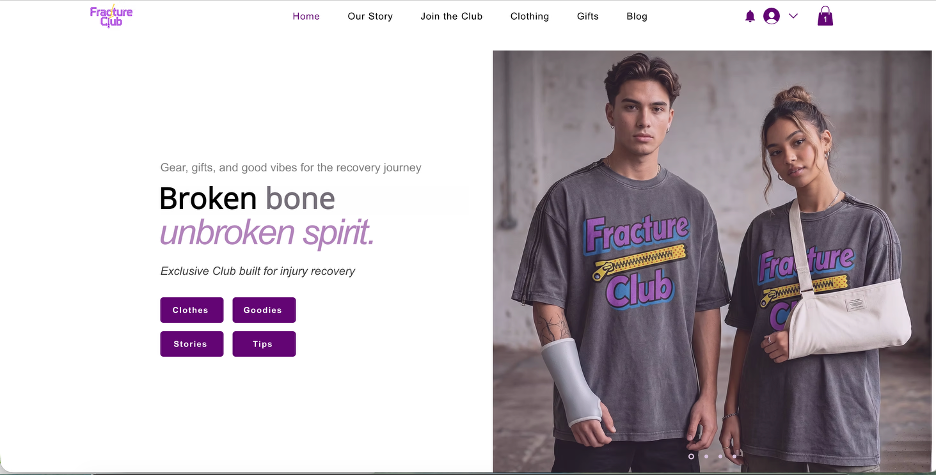
When you’re putting together a recovery care package from across the country, the hardest items to get right are clothing. Generic sweatpants don’t account for a hip cast. Standard hoodies don’t work with a shoulder sling. Fracture-club’s adaptive recovery wear solves that directly.
The Unisex Easy-On/Off Adaptive Recovery Pants open fully at the side with magnetic zippers, so they go on and off without bending, stepping, or removing a cast. The Unisex Easy-On/Off Sweatshirt is built for upper-limb injuries, with a design that eliminates the overhead pull that makes standard tops impossible with a sling. Both are machine-washable and sized to fit over bandaging and bracing.
A portion of every purchase goes to the Bone Health & Osteoporosis Foundation. If you need help with sizing, a custom gift note, or a bulk order for a care package, the Fracture-club inquiry page is the fastest way to get answers before you order.
Useful sources
Recommended
Comments