
Pajamas for Arm Cast: Easy-On Sleepwear for Recovery

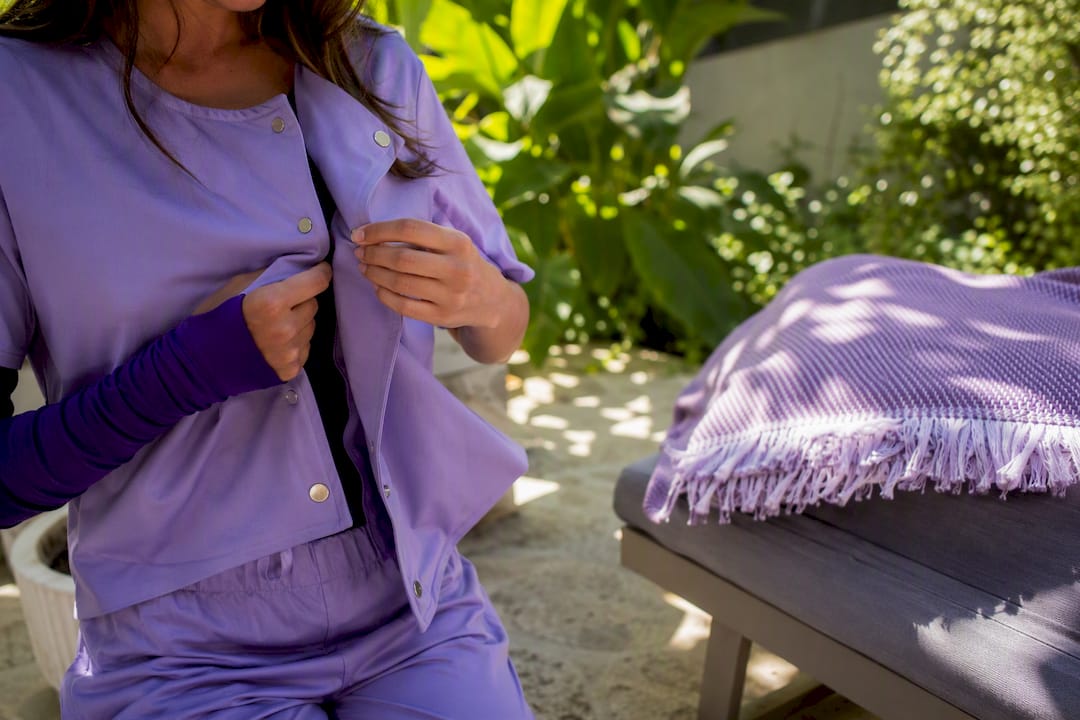
Front-opening pajamas, wrap-style tops, and oversized pullovers with elastic-waist bottoms are the best pajamas for arm cast comfort, whether you’re two days or two weeks into recovery. They skip the overhead-reach struggle entirely.
The fastest route to a good night’s sleep is a front-opening top plus a firm pillow to prop the cast so it isn’t taking pressure all night. The fastest route to getting dressed is simple: injured arm in first, easy closures (magnetic or Velcro) instead of buttons you can’t manage one-handed.
For anything beyond the first few nights, adaptive sleepwear built specifically for casts saves you the daily fight. Fracture-club’s easy-on/off sweatshirt is designed around exactly this problem.
Fastest sleep fix: front-opening top + pillow under the cast, arm slightly elevated
Fastest dressing fix: injured arm goes in first, always
Pro Tip: Keep a soft cardigan or wrap top by your bed for middle-of-the-night bathroom trips. You won’t have to fumble with buttons half-asleep.
Key Takeaways
Front-opening tops with easy closures and elastic-waist bottoms solve both dressing and sleeping problems for arm cast recovery better than standard pajamas.
Point | Details |
Dress injured arm first | Always slide the casted arm into a sleeve first, and remove it last when undressing. |
Prioritize closures over buttons | Magnetic, Velcro, or zip closures work far better than buttons for one-handed dressing. |
Support the cast while sleeping | Prop the cast on a pillow and avoid rolling pressure onto it overnight. |
Size up, not down | Choose sleepwear with room for swelling and the cast itself, especially in the first week. |
Fracture-club adaptive sleepwear | Offers magnetic-zip pants and an easy-on/off sweatshirt designed specifically for arm cast recovery. |
Additional reading on cast care and adaptive dressing
Cast and splint care guidance covers circulation checks and general cast safety.
Adaptive clothing basics for a broken arm walks through more outfit-building ideas.
Fracture-club’s recovery clothing guide expands beyond sleepwear into daytime dressing with casts, slings, and braces.
Check the circulation guidance first if you’re newly casted, then browse the adaptive shopping resources once you know what to look for.
Table of Contents
How Do You Put On a Pajama Top With an Arm Cast?
The rule that governs everything: injured arm goes in first when dressing, and comes out last when undressing. This single habit prevents most of the twisting, tugging, and cast-snagging that makes getting dressed painful in the first place, according to guidance from Nationwide Children’s Hospital.
For a front-opening top or shirt:
Drape the garment open on your lap or a flat surface.
Slide the casted arm into its sleeve first, guiding gently from the shoulder.
Bring the fabric around your back and slip your free arm into the other sleeve.
Fasten from the bottom up if the closures are within easy reach.
For a pullover (when it’s your only option):
Gather the neck and hem in your good hand.
Ease the casted arm through its sleeve first, working slowly.
Pull the fabric over your head, then finish with your free arm.
For a wrap-style top:
Slide the casted arm through its opening first.
Wrap the fabric around and tie or fasten with your uninjured hand.
Pro Tip: Sit down while dressing. Stabilizing your arm against your body or a table reduces strain, and a dressing stick or button hook can help if your fingers are stiff or your other hand is unsteady.
If you feel tingling, numbness, or your fingers change color while dressing, stop and check with your provider. That’s not normal cast discomfort. It’s a circulation flag.
What Features Matter Most in Pajamas for a Cast?
Look for front openings, easy closures, soft stretch fabric, roomy armholes, and a size that leaves room for swelling. Everything else is secondary.
Closures: magnetic snaps, Velcro, or zippers beat buttons every time when you’re working one-handed. Magnetic zipper systems in particular are built to close with minimal grip strength or dexterity.
Openings: full front openings or side panels let you dress without threading a cast through a tight sleeve.
Fabric: breathable, soft, low-friction materials reduce chafing where the cast rubs against clothing, which matters more overnight than most people expect since breathable fabric also helps regulate temperature during sleep.
Fit: size up rather than down. A cast doesn’t shrink, and swelling in the first week is common.
Care: machine-washable, quick-dry fabric saves you effort during a period when laundry already feels harder.
On price, basic front-opening pajama sets run affordable, while adaptive specialty pieces with magnetic closures cost more upfront. The extra cost usually buys better durability and closures that hold up to daily one-handed use, which matters if you’re wearing this same set for six to eight weeks.
Which Sleepwear Styles Actually Work With an Arm Cast?
Front-opening pajamas, wrap tops, zip-front sleep shirts, oversized pullovers, and adaptive separates cover almost every recovery scenario. Which one fits you depends on where your break is and how much your arm needs to move.
Front-opening pajama tops work for nearly everyone and are the easiest for one-handed dressing.
Wrap-style tops or kimonos are ideal for shoulder injuries, since they avoid any overhead reaching.
Zip-front sleep shirts offer a snugger fit than wrap tops if you tend to get cold at night.
Oversized pullovers work fine as a short-term fix if you already own something loose enough to clear the cast.
Adaptive separates (a front-opening top paired with elastic-waist or magnetic-zip pants) give you the most flexibility. Sleeveless, dolman, and poncho-style tops with wide armholes are also worth considering since they’re some of the easiest styles to slip on over a cast.
Separates beat a matched pajama set once your sling use starts changing week to week, since tops and bottoms sold independently let you swap pieces without needing the whole outfit to match your current mobility.
A sock puller and slip-on slippers round things out if bending is also limited. For the first week or two, don’t hesitate to let a caregiver help with anything still hard on the injured side.
How Should You Sleep With Your Arm in a Cast?
Support the cast with pillows and keep pressure off it entirely. That’s the single most effective approach, and most sleep problems during recovery come from skipping this step.
Side sleepers: place a pillow along your injured side to keep the cast from rolling and pressing into the mattress.
Back sleepers: prop the cast slightly above heart level on a pillow to reduce overnight swelling.
Either position: keep a light blanket loose over the cast rather than tucked tight, so it isn’t trapping heat against your skin all night.
Before you settle in, check your fingers for numbness or color change, and make sure the cast is dry. Damp casts break down faster and can irritate skin underneath.
Pro Tip: A soft cast sleeve or lightweight cover between the cast and your sheets prevents fraying on both the cast padding and your bedding, and it’s a cheap fix for a problem you’ll notice fast otherwise.
Do You Need a Cast Cover for Sleeping?
Yes, if you want to protect both your bedding and the cast itself. Options include neoprene or fleece covers for warmth and softness, waterproof covers for showering, and padded sleeves specifically for nighttime bedding contact.
Fleece or neoprene sleeves: soft against skin, good for sleep, but not waterproof.
Waterproof covers: essential for showers, overkill for bed.
Padded night sleeves: designed to protect sheets and reduce friction while you sleep.
To size one, measure from your wrist to elbow (or elbow to shoulder for a long arm cast) and the widest circumference point. Go slightly roomy. A cover that’s snug will press on the cast and cause pressure spots by morning.
How Do You Wash Pajamas and Cast Covers Safely?
Pre-treat stains before washing rather than scrubbing near the cast opening.
Use a mesh laundry bag to protect magnetic snaps and zippers from snagging on other items.
Never soak the cast itself. A waterproof cover during showers and spot-cleaning around the cast opening keeps things clean without getting the cast wet.
Dry flat or on low heat to protect elastic and closures.
How Does Fracture-club Adaptive Sleepwear Help With Recovery?
Fracture-club designs sleepwear around one problem: reducing the strain of one-handed dressing. Magnetic zippers, full front openings, and roomy armholes exist because standard pajamas simply weren’t built for a cast.
Magnetic or zip closures mean you’re not fighting buttons with your non-dominant hand.
Elastic-waist bottoms eliminate the need to fasten anything below the waist one-handed.
Breathable, machine-washable fabrics hold up to nightly wear and frequent laundering.
Roomy cuts leave space for swelling and the cast itself, so nothing pulls or pinches overnight.
Sizing guidance is available on each product page, and Fracture-club’s dressing tips guide walks through the same injured-arm-first sequence covered earlier in this piece, adapted to specific garment types.
Fracture-club was built around a simple idea: recovery clothing should give you back independence, not take more of it away. A portion of every purchase supports the Bone Health & Osteoporosis Foundation, so getting dressed with less pain also does some good beyond your own closet.
What Are the Best Brands for Arm Cast Pajamas?
Adaptive clothing brands built specifically for injury recovery outperform standard sleepwear brands for one simple reason: standard pajama companies aren’t designing around a cast, a sling, or swelling.
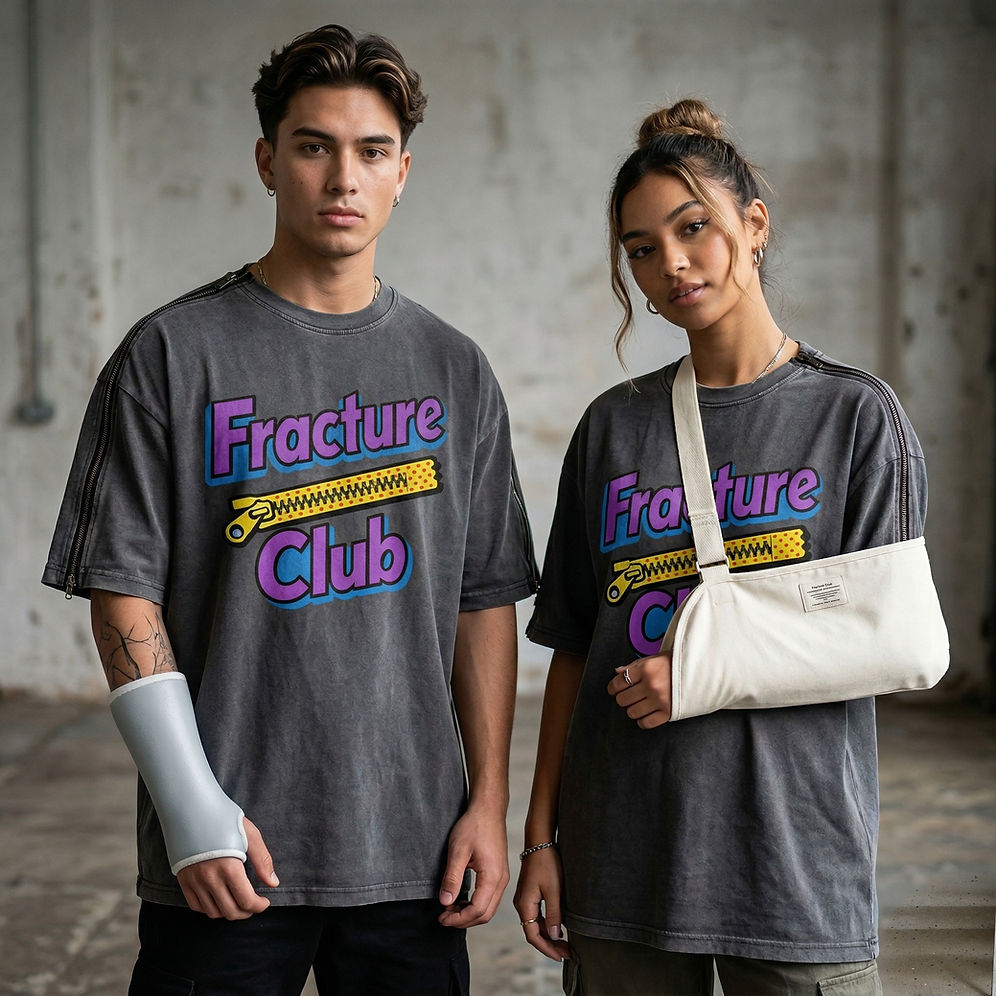
Fracture-club focuses specifically on recovery apparel, which shows up in details general retailers miss. Its magnetic-zip adaptive pants use side openings so you never have to step into a pant leg with a cast in the way, and the easy-on/off sweatshirt is cut specifically for upper-limb injuries rather than just sized larger.
[
](https://fracture-club.com/product-page/fracture-club-magnetic-shoulder-zip-tee-injury-recovery-wear)
Outside of dedicated adaptive brands, general “loungewear” companies sometimes carry button-front pajama sets that work reasonably well in a pinch, since button-front shirts (even without adaptive features) still beat pullovers for injured-arm dressing. The tradeoff is durability. Standard buttons wear out faster under the twice-daily strain of one-handed fastening than magnetic or Velcro closures built for that exact use.
[

If your break involves the shoulder or upper arm specifically, prioritize brands offering wrap-style or kimono tops over front-button styles, since wrap tops reduce the need to reach behind the back entirely. That’s the difference between a top you can put on in thirty seconds and one that leaves you stuck and in pain.
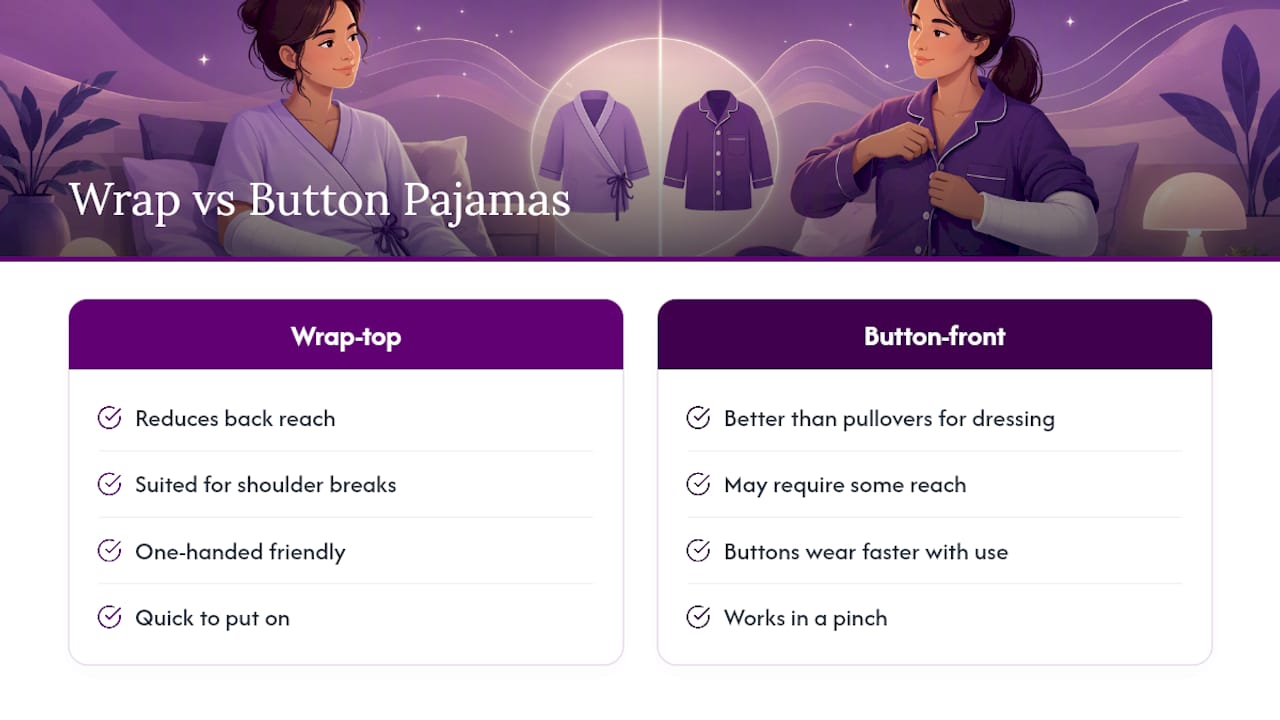
For most people, mixing an adaptive top with adaptive bottoms works better than hunting for a single “perfect” pajama set. Recovery timelines shift, swelling changes week to week, and separates give you room to adjust without buying new sleepwear every time your situation changes.
Where Can You Buy Adaptive Pajamas for an Arm Cast?
Online adaptive clothing retailers are the most reliable source, since they carry the widest selection of front-opening, magnetic-zip, and wrap-style pieces built specifically for casts. Fracture-club’s product pages list sizing, fabric, and closure details upfront, which matters when you can’t try something on with a cast already in place.
Big-box retailers occasionally carry loose-fitting or button-front pajama sets that work as a stopgap, but staff usually can’t tell you which garments accommodate a cast. If you’re shopping in person, look for button-front or zip-front styles in a size larger than usual, and check the armhole width before buying.
Medical supply stores sometimes stock basic cast covers and slings, but rarely carry full adaptive sleepwear lines. For pajamas specifically, online adaptive brands remain the more complete option since they design the whole garment around the injury rather than adapting an existing product.
If you’re buying for someone else, whether a partner, parent, or friend recovering from surgery, look for gift-friendly options. Adaptive sleepwear paired with a supportive card or recovery gift acknowledges the situation without being clinical about it. That combination tends to matter more to the recipient than people expect.
A note from the design side
We built Fracture-club’s sleepwear around one goal: comfort and dignity, not just function. Every closure went through one-handed testing before it shipped, because a magnetic zipper that looks good on paper but still frustrates you at 2 a.m. isn’t solving anything. If you’re stuck between feeling like a patient and feeling like yourself, that’s exactly the gap we’re trying to close.
Sleep Better Tonight With Adaptive Recovery Sleepwear
You’ve read the dressing sequence, the sleep positioning tips, and the feature checklist. The next step is simpler: get sleepwear that already solves these problems instead of working around a standard pajama set every night.
[
](fracture-club.com)
Fracture-club’s adaptive recovery pants with side magnetic zippers pair naturally with the easy-on/off sweatshirt for a full sleep set that skips buttons, overhead reaching, and tight sleeves entirely. Unlike a standard pajama set you’re forced to modify or size up, these pieces are cut around a cast from the start, with roomy armholes and elastic waists built in rather than improvised.
If you’re not sure which size or style fits your specific injury, Fracture-club’s inquiry page connects you directly with someone who can help you choose. Order tonight, and you could be dressing and sleeping with less pain by the time your next cast checkup rolls around.
Frequently Asked Questions
Can I wear a regular pajama set with an arm cast? You can, but pullover tops usually mean stretching the neck and shoulder to force the cast through, which strains the injury. Front-opening tops avoid that entirely.
What’s the best sleeping position with a broken arm? Back sleeping with the cast propped on a pillow, slightly above heart level, generally causes the least swelling and pressure overnight.
Do I need a special cast cover just for sleeping? Not always, but a soft fleece or neoprene sleeve protects both your cast padding and your sheets, and it’s inexpensive enough to be worth it for a multi-week recovery.
How do I wash pajamas without damaging the closures? Use a mesh laundry bag for anything with magnetic snaps or zippers, wash on a gentle cycle, and avoid high heat unless the care label allows it.
Where should I start if I only buy one adaptive piece right now? A front-opening top solves the biggest daily pain point: getting dressed. Add adaptive bottoms once you know how long you’ll be in the cast.
Sources
Recommended
Comments