
1–3 cm Risk: Magnetic Closures Safety for Recovery Wear Users

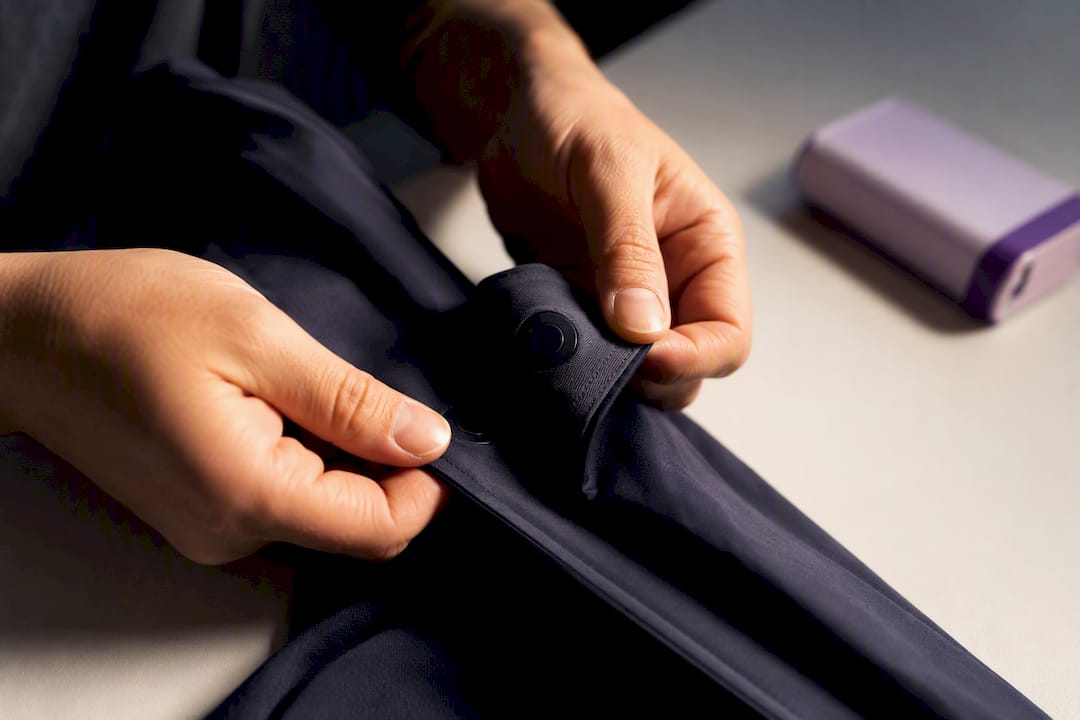
Magnetic closures are safe for the vast majority of people using adaptive clothing, but two groups need real caution: anyone with a pacemaker or implantable defibrillator, and anyone heading into an MRI machine. For everyone else, the risk from a shirt or pants closure is close to zero. The fix is simple either way: know your device status, keep magnets a few inches from a chest implant, and take magnetic clothing off before you get near an MRI scanner.
TL;DR:
Magnetic closures in clothing pose minimal risk for most users, but can interfere with pacemakers and ICDs within approximately 3 centimeters.
Device sensitivity varies by model, so users with implants should keep magnets away from the chest area and consult their healthcare provider for specific guidance.
MRI procedures require removing magnetic clothing and accessories, as the strong magnetic fields can heat or attract metal, creating serious safety hazards.
Small detachable magnets in garments are a choking hazard for children and pets, necessitating secure housing and diligent household safety practices.
Adaptive clothing placement, such as zippers at the hips instead of the chest, helps reduce risks for people with medical implants while maintaining ease of dressing.
Table of Contents
Understanding Magnetic Closures Safety: How Magnets and Distance Interact
Most adaptive clothing brands use small neodymium magnets (often called NdFeB magnets, for neodymium iron boron) in zippers and closures. They’re popular for one reason: they’re strong enough to hold a seam shut with a light touch, which matters when a hand is in a cast or a shoulder can’t rotate.
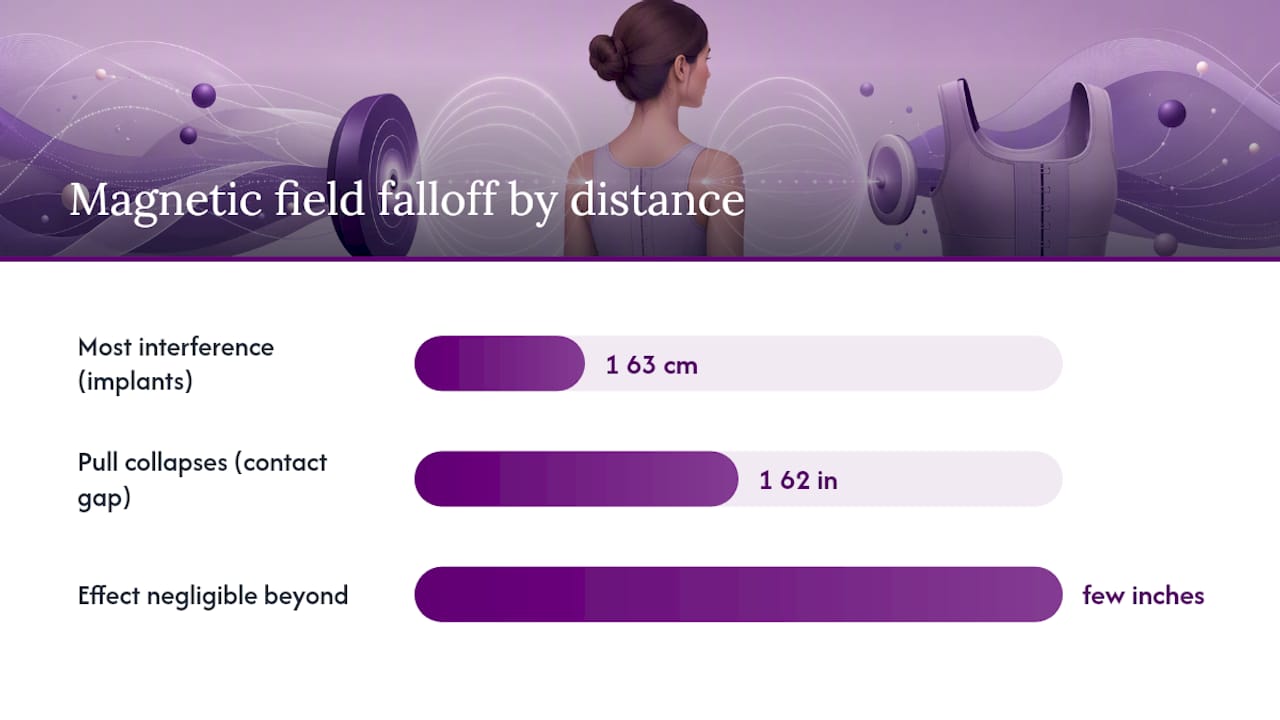
Here’s the part that matters for magnetic closures safety: magnetic field strength doesn’t decline gently with distance. It collapses.
A neodymium magnet that feels strong at contact loses most of its pull within an inch or two.
Most documented interference with electronics or implants happens within 1 to 3 centimeters of the magnet.
Beyond a few inches, these magnets are essentially inert to anything around them.
A garment magnet at your hip is not the same hazard as one at your chest. That’s why a magnetic zipper on adaptive pants is a different safety conversation than a magnetic closure on a shirt collar or shoulder seam.
For phones, laptops, and modern credit cards, this falloff means clothing magnets are a nonissue in ordinary use, according to research on consumer devices and magnet exposure. Implanted medical devices are a different story, because they sit inside the body at a fixed, sometimes shallow, depth, and their sensors are built to react to magnetic fields on purpose.
Pacemakers and ICDs: What the Research Actually Shows
Pacemakers and implantable cardioverter defibrillators, known as ICDs, are engineered with a magnet-sensitive failsafe. Hold a strong enough magnet close enough, and the device can shift into a test mode or, for an ICD, temporarily suspend its shock therapy. That’s true whether the magnet comes from a hospital wand or a jacket zipper.
Clinical testing on small NdFeB magnets found interference in many cases at distances up to about 3 centimeters, with pacemakers responding at a slightly longer average range than ICDs, according to a Swiss study published in NEJM Clinician. Published case reports have also documented clothing magnets disabling or interfering with cardiac devices until the item was removed, a pattern confirmed in case analyses on PubMed.
The American Heart Association advises keeping magnets a safe distance from the implant site and checking device-specific guidance, since sensitivity varies by manufacturer and model.
Watch for:
Dizziness, lightheadedness, or a skipped-beat sensation near a magnetic closure
A sudden change in heart rhythm you can feel
Any device alert or unusual sound from the implant itself
Pro Tip: If you feel off near a magnetic garment and you have a CIED, move away from it immediately. Most magnet-related effects reverse the moment the magnet is removed, but call your cardiology team the same day to confirm.
MRI Safety: Why Magnetic Clothing Needs Extra Attention
An MRI machine isn’t a stronger version of a garment magnet. It’s a different category of hazard entirely. A standard 1.5 tesla scanner produces a field thousands of times stronger than Earth’s, strong enough to pull loose metal across a room or heat metal threads until they burn skin, according to RadiologyInfo.org’s MRI safety guidance.
That’s why facilities screen clothing before every scan, flagging metallic threads, zippers, snaps, and magnetic closures as items to remove, per UCSF Radiology’s safety protocols. Here’s how to prepare if you own magnetic-closure recovery wear:
Tell the front desk when you book. Mention any magnetic clothing, jewelry, or implants before your appointment, not at check-in.
Plan for a gown. Most facilities will ask you to change regardless, so pack accordingly.
Bring a note on your garment if you’re unsure. If a product page doesn’t specify MRI compatibility, ask before you assume.
Never try to “test” a garment near a scanner. Screening happens outside the scan room for a reason.
Our guide on what to wear to an X-ray appointment covers similar prep steps for imaging visits generally.
Everyday Safety Checklist for Magnetic Closure Users
Safe magnetic closures come down to habit, not paranoia. Here’s what daily use should look like:
Keep magnetic zippers and snaps away from your chest if you have any implanted cardiac device, even one you consider “old” or low-risk.
Store magnetic-closure garments away from credit cards, hotel key cards, and mechanical watches, since prolonged direct contact can affect magnetic stripes.
Before an MRI, surgery, or any procedure involving imaging, remove magnetic clothing and mention it to staff, don’t assume they’ll notice.
If you’re a caregiver dressing someone with limited mobility, position magnetic closures at the hip or limb rather than the torso whenever the garment design allows it.
Do a quick visual check for cracked or loose magnet housings periodically. A magnet that’s shifted inside its casing can behave differently than it did new.
Caregivers dressing someone with a shoulder immobilizer or limited range of motion can find more specific technique tips in our guide to dressing safely with a shoulder immobilizer.
When to Call a Clinician or Device Manufacturer
Some situations are worth a phone call before you worry your way through it alone. Reach out to your cardiology team or device manufacturer if:
You have a known pacemaker or ICD and you’re unsure of its exact model or magnet sensitivity.
You felt dizzy, had palpitations, or noticed anything unusual near a magnetic closure.
You have an MRI, surgery, or other imaging procedure scheduled and haven’t confirmed your device’s MRI compatibility.
You don’t know what type of implant you have, only that you have “some kind of device.”
Bring your device’s make and model, its implant date, and the exact question you need answered, whether that’s a safe distance, an MRI protocol, or a reprogramming recommendation. Clinicians often give individualized answers here, since device response to magnetic fields varies by manufacturer even within the same device category.
How Fracture-club Designs Around These Risks
Adaptive clothing exists to solve a real problem: getting dressed with a cast, brace, or fresh surgical site shouldn’t be a daily fight. That’s the whole reason magnetic zippers exist in pieces like Fracture-club’s Magnetic Shoulder Zip Tee and its Easy-On/Off Adaptive Recovery Pants. A magnetic closure means you’re not forcing a stiff limb through a sleeve or wrestling a button with one working hand.
Closure placement matters here. Shoulder and hip zippers sit away from the chest by design, which is worth checking on any product page before you buy. If you have a CIED, read the closure location, not just the product description, and confirm with your clinician if anything’s unclear. Recovery clothing should make healing easier, not add a variable you have to think about twice.
Do Magnetic Closures Pose a Risk to Children and Pets?
Yes, and the risk here has nothing to do with implants. It’s about swallowing. Small, powerful magnets that detach from a garment closure are a genuine choking and ingestion hazard for young children and pets, especially if more than one magnet is swallowed and they attract each other through intestinal walls.
This is a well-documented pediatric safety concern separate from the CIED and MRI issues covered above, and it’s worth taking seriously in any household with small kids or curious dogs and cats.
Practical prevention steps:
Check magnetic closures periodically for looseness, especially after machine washing, which can weaken adhesive or stitching over time.
Store garments with detachable or loose-feeling magnets out of reach of toddlers and pets rather than on the floor or a low chair.
Choose closures that are sewn into a fabric channel or securely encased, rather than magnets glued to a surface, when buying adaptive wear for a household with young children.
Treat any missing magnet from a closure as a “find it now” situation, the way you would a dropped button battery.
If you suspect a child or pet has swallowed a magnet, treat it as urgent. Multiple swallowed magnets can pinch tissue together internally, and that’s not something to wait out at home. A same-day call to a pediatrician, vet, or poison control is the right move, not a “let’s watch and see.”
Are Magnetic Closures Regulated in Consumer Products?
Yes, though the rules focus almost entirely on the swallowing hazard rather than the implant-interference question. In the United States, magnet safety in consumer products, particularly toys and items marketed to children, falls under Consumer Product Safety Commission oversight, which has set specific limits on small, high-powered magnets in items intended for kids after years of ingestion injuries tied to magnetic toy sets.
Adult clothing with magnetic closures isn’t subject to those same toy-specific magnet strength limits, since it’s not marketed as a children’s product. That means the safety burden shifts to design choices, secure encasement, appropriate magnet strength for the task, clear labeling, rather than a specific regulatory ceiling on magnet power for apparel.
There’s no dedicated federal standard specifically governing magnetic closures in adaptive or recovery clothing for adults. That’s part of why checking a product’s construction and closure placement matters more than assuming a garment has been tested against some formal benchmark. Reputable adaptive wear brands build in safety through placement and secure housing voluntarily, not because a specific magnetic-apparel regulation requires it.
Beyond Pacemakers: Other Medical Devices to Consider
Cardiac implants get most of the attention, but they’re not the only devices sensitive to magnetic fields. Cochlear implants use an external magnet to hold the processor in place against the skull, and a nearby competing magnetic field can, in rare cases, cause discomfort or displacement, though the risk profile differs from cardiac devices since the implant’s own magnet is doing intentional work.
Insulin pumps and some neurostimulators (used for chronic pain or Parkinson’s symptom management) also carry manufacturer warnings about magnetic field exposure, largely tied to MRI environments rather than everyday clothing magnets. The same general principle from the electromagnetic compatibility research on modern CIEDs applies broadly here: newer devices include shielding and filtering that reduce sensitivity, but device response is model-specific.
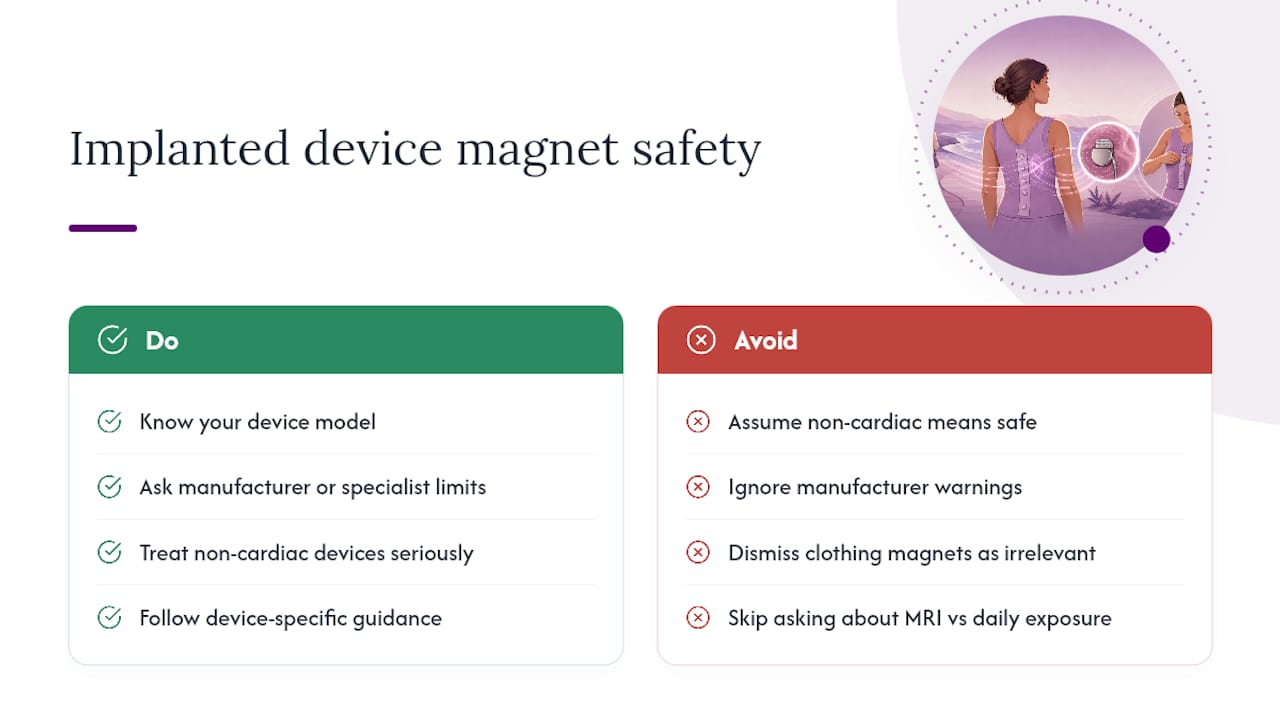
If you have any implanted electronic medical device, not just a pacemaker or ICD, the same core habit applies: know the model, ask the manufacturer or your specialist about magnetic field exposure limits, and don’t assume a device is immune just because it’s not a cardiac implant. Clothing magnets are weak compared to industrial or medical field sources, but “weak” isn’t the same as “irrelevant” when a device is designed to respond to any field in the first place.
Do Magnetic Closures Weaken or Become Riskier Over Time?
Neodymium magnets do lose some strength over time, but slowly, typically around 1% or less per decade under normal conditions. The bigger everyday concern isn’t the magnet’s core strength fading. It’s the housing around it failing first.
Repeated washing, drying, and stretching can loosen the fabric channel or adhesive holding a magnet in place well before the magnet itself weakens meaningfully. A magnet that shifts inside its casing can create an uneven pull, which sometimes shows up as a closure that no longer seals flush or clicks into place the way it used to.
Heat is the other factor worth knowing. High dryer heat and, in rare cases, exposure to strong external fields can accelerate demagnetization faster than normal wear would. Following the garment’s specific care instructions protects the magnet’s function, not just the fabric.
A practical habit: check magnetic closures every few months the way you’d check a zipper pull or button thread, looking for looseness, rattling, or a magnet that feels like it’s moved inside its pocket. Catching that early prevents both a functional failure and, per the swallowing-hazard concerns covered earlier, a detached magnet ending up somewhere it shouldn’t.
Our Take: Precision Beats Panic
The conventional advice on magnetic closures tends to swing to one of two extremes: either “magnets are basically harmless” or breathless warnings that make anyone with a cast avoid magnetic clothing altogether. Neither holds up against the actual research. The evidence points to a narrow, well-defined risk window, roughly 1 to 3 centimeters for implant interference, that’s tied to specific device types and specific proximity, not to magnetic clothing in general.
What gets underestimated is placement. A magnet at the hip and a magnet at the collarbone are not equivalent risks, yet most general safety advice treats “magnetic clothing” as one category. It isn’t. Where the magnet sits relative to your chest matters more than whether the garment has a magnet at all.
If you take one thing from this: know your own device status before you worry about your closures. Someone with no implanted cardiac device and no MRI scheduled has essentially nothing to manage here. Someone with a pacemaker has a specific, answerable question to bring to their cardiologist. That distinction should drive every decision that follows.
— Fracture
Adaptive Clothing Built With Closure Placement in Mind
Getting dressed shouldn’t be the hardest part of your recovery day, and it doesn’t have to involve fighting a zipper with one hand or asking someone to help you into pants every morning. Fracture-club’s adaptive recovery pants with side magnetic zippers put the closure at the hip, not the chest, so dressing gets easier without adding a new variable to think about if you have an implanted device.
[
](fracture-club.com)
The same design thinking applies to the Easy-On/Off Sweatshirt built for upper limb and fracture recovery, which uses a magnetic shoulder zip to eliminate the overhead reach that a cast or sling makes impossible. If you have a pacemaker, an ICD, or any other implanted device and you’re not sure how a specific garment’s closure placement affects you, our inquiry page is the fastest way to get a straight answer before you order. Check the product page for closure location, then reach out if anything’s unclear. That’s a five-minute step that can save you a bigger headache later.
Where This Information Comes From
The safety guidance in this article draws on cardiology and radiology sources, not general wellness advice, because implant and imaging risk deserves that level of rigor.
American Heart Association: devices that may interfere with ICDs and pacemakers, for cardiac device precautions.
NEJM Clinician study on magnet interference with cardiac devices, for distance thresholds.
RadiologyInfo.org’s MRI safety overview and UCSF Radiology’s MRI hazards guidance, for imaging protocols.
PubMed case report on magnetic clothing and pacemaker disruption, for documented real-world incidents.
This article is general information, not a substitute for advice from a qualified doctor. Consult a qualified healthcare professional about your own circumstances before acting on anything here.
Sources
FAQ
How close can a magnet be to a pacemaker before it’s risky?
Clinical testing found interference at distances up to roughly 3 centimeters for small NdFeB magnets, with the American Heart Association recommending several inches of separation as a safer margin.
Do I need to remove magnetic clothing before an MRI?
Yes. MRI facilities require removal of clothing with magnetic or metallic fasteners because the scanner’s field can attract or heat them, according to Radiologyinfo.
Can magnetic closures damage credit cards or phones?
Modern chip and contactless cards, along with phones and laptops, are typically unaffected by clothing-strength magnets under normal use, though older magnetic-stripe cards can be affected at very close range.
Are magnetic zippers on adaptive clothing safe for daily use?
For most people without cardiac implants, yes. Some adaptive clothing places closures like magnetic side zippers at the hip rather than the chest specifically to minimize any proximity concern for the small subset of users who do have implanted devices.
What should I do if a garment magnet detaches near a child or pet?
Treat it as urgent. Locate the magnet immediately, and if you suspect a child or pet swallowed it, call a pediatrician, vet, or poison control the same day rather than waiting to see what happens.
Recommended
Comments