
48 Hour Checklist: Insurance for Adaptive Clothing, US Caregivers

Standard health insurance rarely pays for adaptive clothing on its own, since Medicare and most private plans classify it as apparel, not durable medical equipment. Workers’ comp, VA benefits, and HSA/FSA accounts are your realistic paths to coverage or reimbursement. Your fastest next move: ask your clinician for a Letter of Medical Necessity and get an itemized invoice from the retailer before you file anything.
TL;DR:
Medicare and private insurers typically deny adaptive clothing claims because they classify these items as apparel rather than medical devices or equipment.
Workers’ compensation, VA benefits, and employer-sponsored plans are more likely to approve adaptive clothing when a proper medical necessity letter and detailed invoice are provided.
Submitting a specific, diagnosis-linked Letter of Medical Necessity and an itemized invoice significantly increases chances of insurance approval.
HSA or FSA accounts often reimburse these purchases quickly if documented correctly, making them a preferable option over insurance for immediate need.
Prices range from around $8 for simple accessories to over $110 for full outfits with specialized hardware, with key features like magnetic closures and side zips reducing dressing effort.
Table of Contents
Insurance Coverage for Adaptive Clothing: What Medicare, Medicaid, and Private Insurers Actually Do
Workers’ Comp, VA Benefits, and Employer Plans: Where Approval Gets Easier
How to Request Insurance Coverage for Adaptive Clothing: A Step-by-Step Checklist
What Adaptive Clothing Actually Costs, and What to Buy First
How Fracture Club Supports Documentation and Community During Recovery
Getting Fracture Club Recovery Wear and the Paperwork to Back It Up
Insurance Coverage for Adaptive Clothing: What Medicare, Medicaid, and Private Insurers Actually Do
Medicare draws a hard line between apparel and durable medical equipment, and adaptive clothing almost always lands on the wrong side of it. Standard Medicare and most private plans treat adaptive clothing as apparel rather than durable medical equipment, which means the everyday easy-on pants, magnetic-zip tops, and open-back gowns you’d buy for recovery usually get denied automatically, regardless of how badly you need them.
Medicaid is messier, because it’s really 50 different programs wearing one name. Coverage for adaptive wear varies by state, and some Medicaid programs will approve specific items when a clinician documents a functional limitation tied to a diagnosis. Others won’t touch clothing claims at all. If you’re on Medicaid, call your state program directly and ask specifically about “durable medical equipment exceptions for clothing” rather than asking a general coverage question that will get you a flat “no.”
Private insurers deny adaptive clothing claims for a few recurring reasons:
The item is classified as apparel, not a covered medical device or supply.
The claim lacks a Letter of Medical Necessity connecting the garment to a specific diagnosis.
The invoice doesn’t itemize what was purchased clearly enough for a claims reviewer to evaluate it.
The condition described doesn’t meet the plan’s threshold for “medically necessary.”
That said, insurers occasionally approve garments that cross into genuine medical function. Open-back garments used for wound care access, or clothing built to accommodate a wound vac or feeding tube, sometimes get approved because they’re doing a clinical job, not just a styling one. This matters because adaptive clothing exists specifically to reduce the number of movements a person needs to get dressed, which cuts injury risk for both the patient and the caregiver assisting them, according to research from UCP on adaptive fashion. That functional argument, spelled out clearly, is what turns a denial into an approval.
Workers’ Comp, VA Benefits, and Employer Plans: Where Approval Gets Easier
Standard health insurance is the hardest door to open. These three payers open more easily, because each one has a built-in reason to say yes.
Workers’ compensation. When an injury happens on the job, workers’ comp can cover adaptive clothing needed for recovery, but approval typically requires an itemized invoice and a Letter of Medical Necessity submitted directly to the claims adjuster. The employee, a case manager, or sometimes the retailer’s support team files this paperwork. Because workers’ comp already recognizes the injury as job-related, adjusters are generally more receptive to recovery-support purchases than a standard health plan would be.
VA benefits for service-connected conditions. If the injury or condition is service-connected, veterans can pursue coverage through the VA’s prosthetic and sensory aids service, which handles adaptive equipment requests separately from general medical claims. Contact your VA case manager or the prosthetics department at your VA medical center directly. Trying to route this through a general VA helpline usually adds weeks to the process.
Employer-sponsored plans with occupational health involvement. Some employer plans carve out exceptions when an occupational health nurse or case manager is already managing a workplace injury. If your employer has an occupational health department, loop them in early. They often know which internal forms speed things up.
Timelines vary widely: workers’ comp claims can move in one to two weeks with clean paperwork, while VA requests often take longer depending on your regional office’s backlog. The most common pitfall across all three payers is submitting a claim with an invoice that isn’t itemized. Adjusters and case managers can’t approve what they can’t clearly evaluate, so a vague receipt gets kicked back every time.
How to Request Insurance Coverage for Adaptive Clothing: A Step-by-Step Checklist
Getting a claim approved is less about luck and more about paperwork sequencing. Here’s the order that actually works.
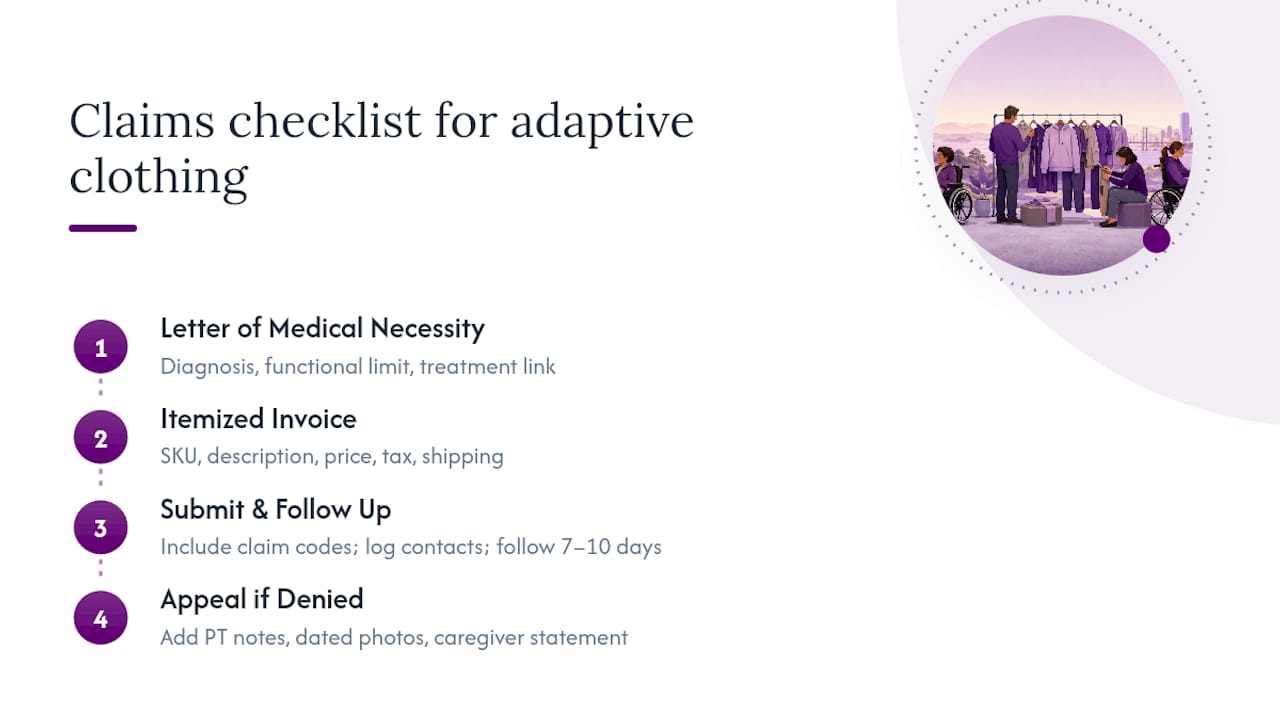
First, get the Letter of Medical Necessity right. Ask your clinician to include three specific things: the diagnosis, the functional limitation it causes (limited shoulder rotation, one-handed dressing, wound access needs), and a direct statement connecting the adaptive garment to managing that limitation. A vague note that just says “patient needs assistance” gets rejected far more often than one with these three elements spelled out.
Second, secure an itemized invoice. It needs the SKU or product name, a clear description of the item, the price, tax, and shipping charges broken out separately. Vendor reimbursement resources, like the case manager guidance from LS Adaptive, show how much faster claims move when this documentation arrives already formatted the way adjusters expect.
Third, submit and follow up. Include any claim codes your insurer or adjuster requests, note who you spoke with and when, and follow up every 7 to 10 days if you haven’t heard back. Silence from an insurer rarely means approval is coming; it usually means the file is sitting untouched.
Fourth, if you’re denied, appeal with stronger evidence. Add physical therapy notes, dated photos showing the functional problem (a cast that prevents pulling on pants, for instance), and a short caregiver statement describing the daily dressing challenge. This partner guide on claims-processing best practices covers general submission habits worth borrowing regardless of your payer.
Pro Tip: Keep a single folder, digital or physical, with every invoice, letter, and note from day one. Appeals succeed far more often when you can hand over a complete file instead of scrambling to reconstruct one after a denial.
Paying for Adaptive Clothing Without Waiting on an Insurer
If your insurer says no, or you don’t want to wait weeks for an answer, you still have real options.
Your HSA or FSA is usually the fastest one. Adaptive clothing tied to a documented medical need often qualifies for HSA/FSA reimbursement, though you’ll typically need a receipt and sometimes a letter connecting the purchase to your condition. Some vendors have made this easier by partnering with HSA/FSA facilitators or telehealth services so you can use your card right at checkout and walk away with the documentation already in hand, instead of chasing it down afterward.
Grant programs are worth checking next, especially for higher-cost wardrobes. Runway of Dreams offers wardrobe grants to help people access adaptive clothing they might not otherwise afford, and similar nonprofit programs pop up regionally, so it’s worth a search specific to your state or condition.
A practical order of operations:
Try HSA/FSA first, since it requires the least waiting and the most straightforward paperwork.
Check nonprofit grant programs next if the cost is significant.
Ask the retailer about seasonal discounts or payment plans last, since these stretch your dollar but don’t reduce the actual cost.
Workers’ Comp Workflow: From Purchase to Payment
For an injured worker, this process usually runs cleanly if you follow it in order.
Order the item and request an itemized invoice immediately, before you file anything with the adjuster.
Have your treating clinician draft a Letter of Medical Necessity tying the garment to your recovery plan.
Submit both documents to the adjuster or case manager, then follow up within a week if you haven’t heard back.
When this goes smoothly, the payer often pays the vendor directly by check or ACH, so you never front the cost yourself. When it doesn’t, the most common reason is a missing or incomplete Letter of Medical Necessity. If you’re denied, ask the adjuster specifically what’s missing rather than resubmitting the same file and hoping for a different result.
What Adaptive Clothing Actually Costs, and What to Buy First
Prices for adaptive recovery wear typically run from around $8 for simple accessories to $110 or more for full outfits with specialized hardware, and a detailed breakdown of adaptive clothing prices walks through what drives that range. Magnetic hardware, reinforced seams, and custom sizing all push cost up; basic elastic-waist designs sit at the lower end.
If your budget is tight, prioritize the features that cut dressing effort the most:
Magnetic closures on shirts and pants reduce the fine-motor work a cast or brace makes difficult.
Side zips let you avoid pulling anything over your head or down past a healing limb.
Open-back designs matter most if you have a wound, drain, or device that needs regular access.
Beyond the item itself, stretch your dollars with the same tools covered earlier: use HSA/FSA where eligible, request an itemized invoice for reimbursement purposes even if you’re paying out of pocket now, and watch for seasonal sales. Design features like magnetic closures and side zips exist specifically to accommodate swelling, medical devices, and reduced dexterity, so they’re rarely just a comfort upgrade. They’re often the difference between dressing independently and needing help every single day.
How Fracture Club Supports Documentation and Community During Recovery
Fracture Club builds recovery wear specifically for people healing with a cast or brace, including easy-on/off pants and magnetic-zip tops designed to solve the exact dressing problems this article covers. That focus shows up in how the brand supports customers through the paperwork side of recovery, too.
Customers can request itemized invoices and additional documentation to support reimbursement or workers’ comp claims. Fracture Club’s blog also breaks down practical topics like assisted dressing for caregivers and how adaptive clothing compares to regular clothes for caregivers managing someone else’s recovery.
A portion of proceeds goes to the Bone Health & Osteoporosis Foundation, and the community shares recovery stories that remind you that feeling stuck between “patient” and “yourself” is temporary, even when it doesn’t feel that way in week two.
When to Fight for Coverage and When to Just Buy It
Pursuing insurer coverage makes sense for expensive items, active workers’ comp claims, or clearly documented medical needs where a Letter of Medical Necessity has real teeth. For smaller purchases, or when you need something this week, buy it and pursue reimbursement afterward. Your 48-hour checklist: order the item, request the itemized invoice immediately, and ask the clinician for the letter before the appointment ends.
— Fracture
Getting Fracture Club Recovery Wear and the Paperwork to Back It Up
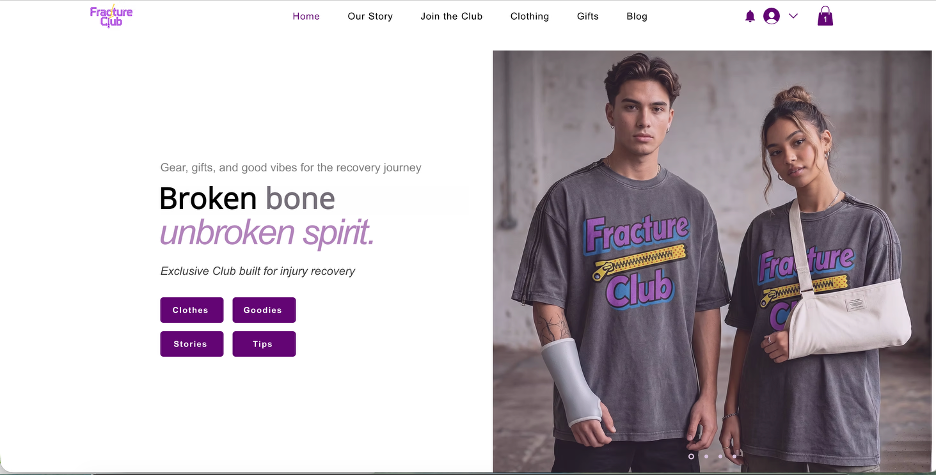
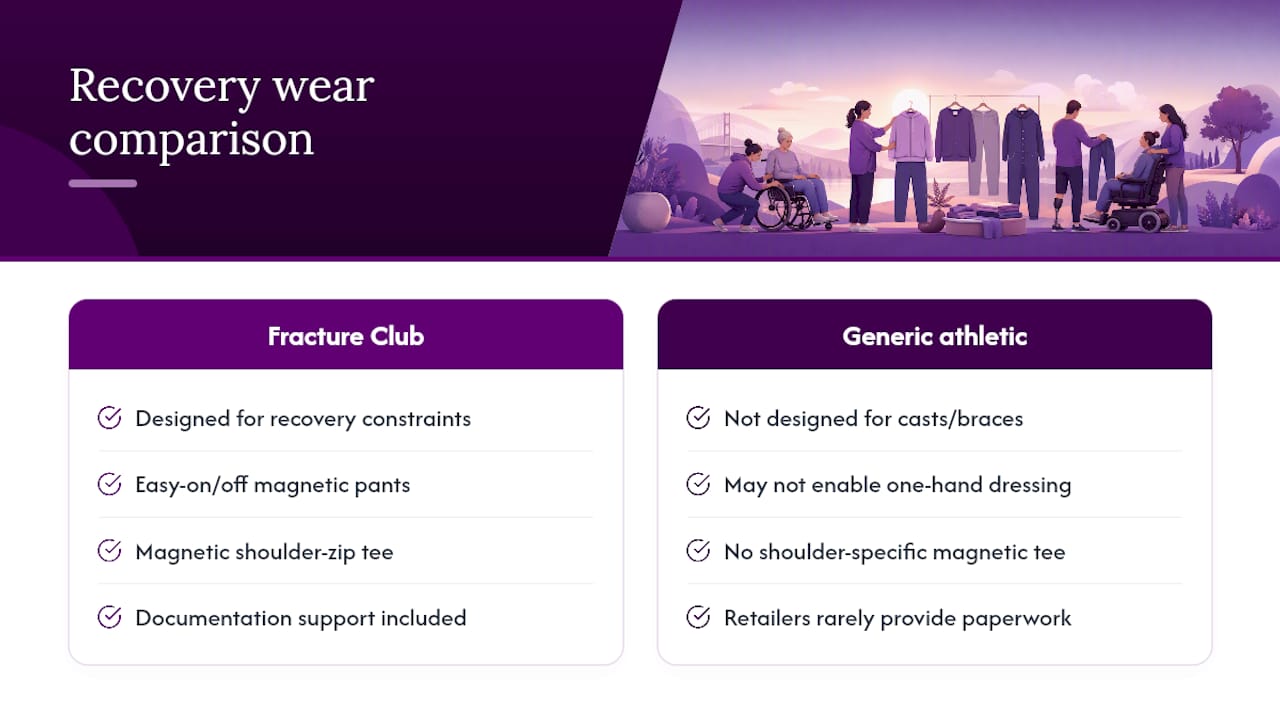
You’ve got the checklist. Now here’s where it gets easier: Fracture Club builds the specific products this whole process revolves around, and hands you the paperwork to back them up without a separate fight to get it. The easy-on/off adaptive recovery pants with side magnetic zippers solve the exact one-handed dressing problem a cast creates, and the magnetic shoulder zip tee does the same for shoulder and arm injuries where lifting your arm overhead just isn’t happening yet.
[
](fracture-club.com)
Unlike buying generic athletic wear and hoping it works around a brace, Fracture Club designs every piece around real recovery constraints from the start, then backs the purchase up with documentation support most retailers won’t bother offering. If you need an itemized invoice for a workers’ comp adjuster or your HSA administrator, the inquiry services page is where to request it, and the payment request page handles third-party billing arrangements for case managers working a claim on your behalf.
Browse the full recovery wear and gift collection and pick the pieces that match your specific injury, then request your invoice the same day so your paperwork trail starts strong instead of playing catch-up later.
Sources
Keep these on hand for verification and templates: the CDC’s disability prevalence data for context on how many Americans may need adaptive supports, and LS Adaptive’s case manager resources for invoice and Letter of Medical Necessity templates. Save every invoice and letter you receive; you’ll want them if you ever need to appeal.
FAQ
What companies offer adaptive clothing?
Several U.S. retailers specialize in adaptive clothing, including Fracture Club, which focuses specifically on recovery wear for people healing with casts or braces, using magnetic and zip closures for easier dressing. Other companies serve broader adaptive markets like seniors or permanent disabilities, so it’s worth matching the retailer to your specific recovery timeline and needs.
What happened to Limbits after Shark Tank?
Limbits appeared on Shark Tank pitching adaptive clothing for people with limb differences and disabilities, and the brand continued operating in the adaptive apparel space afterward. Details on its current operations aren’t consistently documented in public sources, so check the company’s own site for its latest status.
How much does adaptive clothing cost?
Adaptive clothing typically ranges from about $8 for simple accessories to $110 or more for full outfits with magnetic hardware or custom fit, according to a detailed breakdown of adaptive clothing prices. Cost climbs with specialized hardware like magnetic zippers and drops for simpler elastic-waist designs.
Where can I buy adaptive clothing for seniors and injury patients?
You can buy adaptive clothing directly online through specialty retailers like Fracture Club, which sells recovery-specific pants and tops designed around casts and braces. Look for retailers that also offer itemized invoices on request, since that documentation matters if you plan to pursue HSA/FSA reimbursement or a workers’ comp claim.
Is adaptive clothing covered by insurance?
Standard Medicare and most private insurance plans generally do not cover adaptive clothing, since it’s classified as apparel rather than durable medical equipment. Workers’ compensation, VA benefits for service-connected conditions, and HSA/FSA accounts are your more realistic paths to coverage or reimbursement.
Recommended
Comments