
How Storytelling Supports Injury Healing and Recovery


Storytelling supports injury healing by helping you process emotions, reconstruct your identity, and build resilience when physical recovery alone cannot address the full weight of what you are going through. Narrative therapy, the recognized clinical term for structured storytelling as a therapeutic tool, has demonstrated significant psychological benefits for people recovering from injuries of all kinds. Research shows that reframing how you tell your own recovery story can improve mental health more than the factual details of what happened to you. Whether you are six weeks into ACL rehabilitation or months into healing from a fracture, your story matters and it actively shapes how you heal.
How storytelling supports injury healing: what the research shows
Narrative interventions produce real, measurable improvements in psychological well-being. A systematic review of 20 randomized controlled trials found that 18 out of 20 trials showed significant improvement in psychological symptoms, with effect sizes ranging from Cohen’s d 0.5 to 1.6. That range reflects outcomes from moderate relief to near-complete symptom resolution across diverse age groups and injury types.
The psychological symptoms most affected by narrative therapy include:
Anxiety and depression linked to loss of physical function and independence
Post-traumatic stress following sudden or severe injuries
Low self-efficacy, meaning reduced belief in your own ability to recover
Social isolation caused by reduced mobility and changed routines
Narrative therapy’s mental health benefits extend beyond symptom reduction. Studies show storytelling strengthens emotional regulation, which is your ability to manage difficult feelings without being overwhelmed by them. People who engage in structured narrative practices during recovery report higher quality of life and stronger belief in their own progress. That shift in self-perception directly supports the motivation needed to stay consistent with physical rehabilitation.
Pro Tip: You do not need a therapist to start. Writing three sentences about how today felt, physically and emotionally, is a legitimate narrative practice with documented benefits.
How do personal narratives evolve during physical recovery?
Your recovery story does not stay the same from week to week. A longitudinal narrative study analyzing four patients through ACL reconstruction recovery found that identity, trust, and confidence shifted significantly over months. Recovery is a complex, non-linear negotiation of emotions and meanings, not a straight line from injury to return.
Early in recovery, many people tell a story centered on loss. You lost your routine, your physical capability, and sometimes your sense of who you are. That story is valid. But research shows that the narrative shifts as you accumulate small wins, rebuild trust in your body, and find new ways to define belonging in your sport, workplace, or daily life.
The concept of maintaining your identity during recovery is directly tied to how you narrate your experience. People who actively reframe their story from “I am broken” to “I am healing” report better coping and more realistic goal-setting. Reframing is not denial. It is a deliberate choice to include progress, meaning, and future possibility in the story you tell yourself and others.
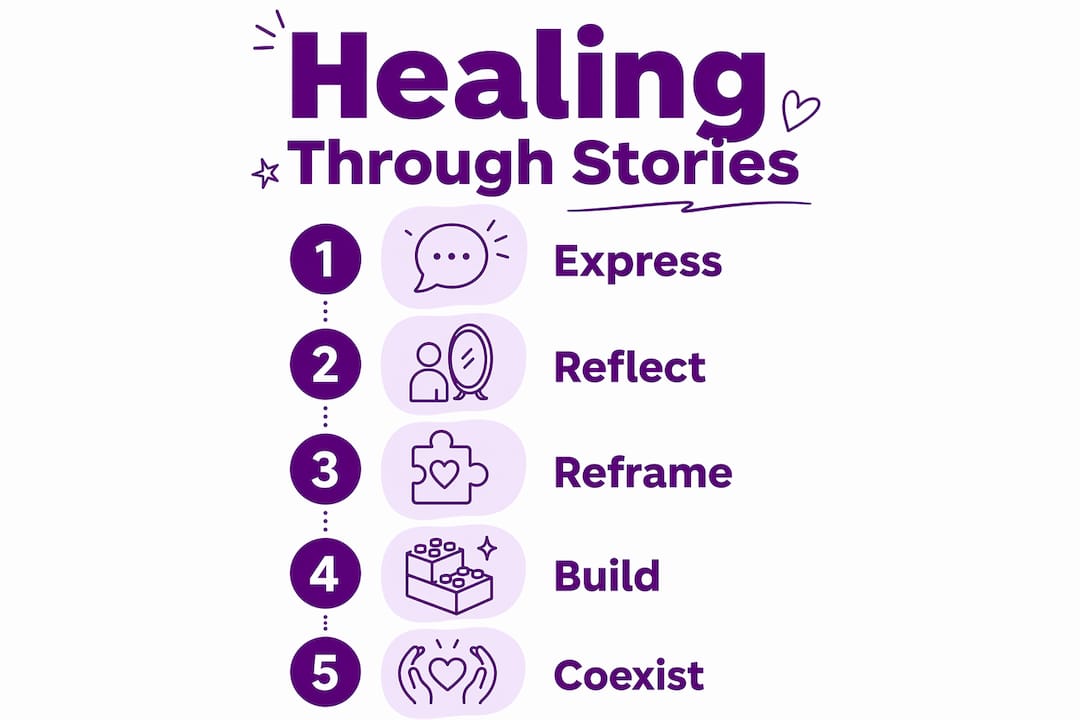
Narrative adjustments also help you live with the non-linear nature of recovery. A bad week does not have to mean the story ends badly. When you treat setbacks as chapters rather than conclusions, you preserve the emotional energy needed to keep going.
Pro Tip: After a difficult therapy session or a painful day, write one sentence about something your body did manage to do. That single sentence shifts the narrative arc forward.
What psychological mechanisms make storytelling effective?
Narrative therapy works through several specific mechanisms, each of which addresses a different layer of how injury affects your sense of self.

Externalization is the practice of separating your identity from your injury. Rather than saying “I am disabled,” narrative therapy encourages “I am a person dealing with a disability.” That shift is not semantic. Externalization in narrative therapy creates critical distance between you and the problem, giving you room to reconnect with your strengths and values rather than being defined by your physical limitations.
Re-authoring is the process of rewriting the dominant story. Narrative psychology experts emphasize that changing your health story improves mental health more than the factual content of the story itself. The structure and meaning you assign to events matter more than the events themselves.
Narrative coherence refers to how well your story holds together across time. When injury disrupts your life, your internal story can fragment. Storytelling rebuilds that coherence by connecting your past self, your current experience, and your future goals into a single, continuous narrative.
Emotional catharsis through lived experience storytelling connects you to something larger than your own pain. Speakers at storytelling events describe cathartic transformations that link directly to post-traumatic growth, a recognized psychological outcome where people report becoming stronger or more purposeful after trauma.
“Lived experience storytelling connects speakers to a primal humanity, alleviating shame and igniting post-traumatic growth. It acts as a turbo form of therapy, fostering emotional unburdening and renewed purpose.”
Neuroscience supports all of this. Reflective writing for 15–20 minutes a day over just four days can deactivate brain regions associated with distress and painful emotions. That is a low-effort, high-return intervention available to anyone with a pen and paper.
How can you actively use storytelling to heal?
You have more options than you might realize. Storytelling for recovery does not require a formal therapy setting, though that is one excellent path. The key is choosing a format that feels safe and sustainable for where you are right now.
Start a recovery journal. Write daily or every few days. Focus on meaning, not just events. Ask yourself: what did today teach me? What am I still capable of? Story-driven journaling is a structured approach that guides you toward self-discovery rather than simple event logging.
Identify redemptive moments. A redemptive narrative is one where something difficult leads to growth, connection, or new understanding. Look back at your recovery so far and find one moment where something hard produced something good. Write it down in detail.
Share with a trusted person. Telling your story out loud to someone who listens without judgment accelerates the emotional processing that writing begins. Support groups, whether in person or online, provide this kind of witness.
Work with a narrative therapist. A trained narrative therapist guides you through externalization and re-authoring in a structured, paced way. This is especially valuable if your injury involved trauma or if your story feels too heavy to carry alone.
Create a digital story. Short video or audio recordings of your recovery experience serve as both personal archives and community contributions. Sharing your story publicly, when you feel ready, can benefit others while reinforcing your own sense of agency.
Recovery is cyclical, and storytelling helps patients reach what researchers call “coexistence balance,” a state where you live constructively with injury consequences rather than fighting them at every turn. That balance is not giving up. It is a mature, sustainable form of healing.
What are the challenges of using storytelling for recovery?
Storytelling is powerful, and that power requires care. Not every moment is the right moment to go deep into your story, and not every listener is the right person to hear it.
Key considerations to keep in mind:
Emotional overwhelm is real. Revisiting traumatic injury experiences can trigger distress if done without proper pacing or support. Start with lower-stakes memories before moving to the most difficult parts of your story.
Trauma-informed facilitation matters. Effective storytelling therapy requires skilled practitioners who understand how to manage emotional risk and prevent re-traumatization. If you feel destabilized after a storytelling session, that is a signal to slow down and seek professional guidance.
Some narratives resist easy resolution. Not every injury story has a clean redemptive arc, and forcing one can feel dishonest. Allow your story to be incomplete. Healing does not require a tidy ending.
Choose your audience carefully. Sharing with someone who minimizes your experience or offers unsolicited advice can set back the emotional progress you have made. Trusted listeners are not optional. They are part of the practice.
Combining storytelling with other supports, such as physical therapy, mental wellness practices, and community connection, produces the strongest outcomes. No single tool does everything.
Key Takeaways
Storytelling actively heals injury survivors by reshaping how they process emotions, define identity, and build resilience alongside physical recovery.
Point | Details |
Research backs narrative therapy | 18 of 20 randomized trials showed significant psychological improvement from narrative interventions. |
Identity shifts are normal | Recovery narratives evolve non-linearly; reframing from loss to progress supports better coping and goal-setting. |
Externalization creates agency | Separating your identity from your injury restores your sense of control and reconnects you with your strengths. |
Short writing sessions work | Just 15–20 minutes of reflective writing over four days can reduce brain activity linked to emotional distress. |
Pacing and safety are required | Trauma-informed facilitation and trusted listeners are necessary for storytelling to heal rather than overwhelm. |
What I have seen storytelling do that nothing else could
Recovery wear and physical comfort matter enormously. But after years of watching people move through injury recovery, the shift I find most striking happens in the story, not the body.
People who start telling their recovery story, even imperfectly, even just to themselves in a notebook, carry themselves differently. They stop describing themselves as patients waiting to get back to real life. They start describing themselves as people in the middle of something meaningful. That is not a small change. It is the difference between enduring recovery and actually living through it.
What I have also noticed is that isolation is the silent enemy of healing. Injury pulls you out of your routines, your social circles, and your sense of purpose. Storytelling pulls you back in. It gives you something to say when people ask how you are doing. It gives you a way to connect with others who understand. And it gives you evidence, written or spoken, that you are more than your injury.
The resilient self does not emerge automatically from rest and physical therapy. It gets built through the stories you tell about who you are and who you are becoming. Start telling yours. You do not need to wait until you feel better to begin.
— Fracture
Recovery wear that supports the whole person
Healing is physical and emotional, and what you wear during recovery affects both.
[
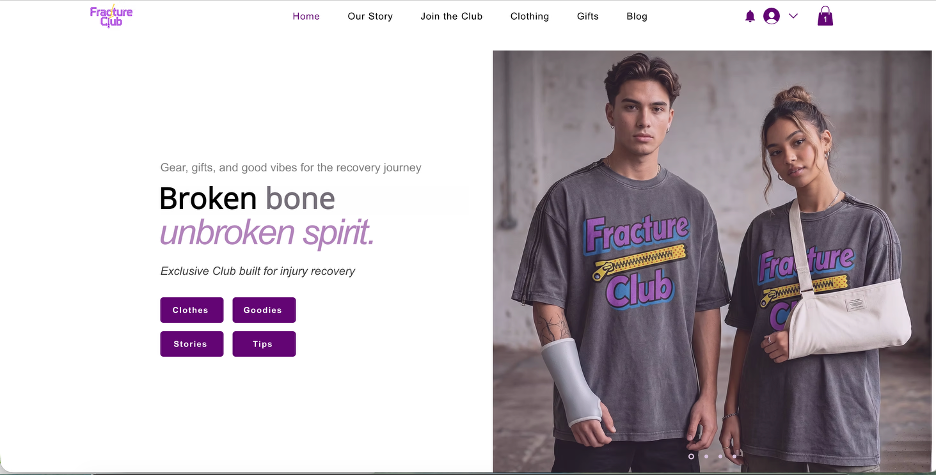
Fracture-club designs adaptive recovery clothing specifically for people with casts, braces, and limited mobility. The adaptive recovery pants feature side magnetic zippers that make dressing possible without assistance, which preserves the independence that storytelling and narrative therapy work so hard to rebuild emotionally. The easy-on recovery sweatshirt is built for upper limb injuries and bone fracture recovery, offering comfort without the daily frustration of standard clothing. When your body feels cared for, your mind has more room to heal. Visit Fracture-club to find recovery wear that meets you where you are.
FAQ
What is narrative therapy and how does it help injury recovery?
Narrative therapy is a structured therapeutic approach that helps people separate their identity from their injury and rewrite the meaning of their experience. Research shows it significantly reduces anxiety, depression, and post-traumatic stress in people recovering from physical injuries.
How long does it take for storytelling to show results?
Reflective writing for as little as 15–20 minutes a day over four days has been shown to reduce brain activity linked to emotional distress. Longer-term narrative therapy produces moderate to large improvements in psychological symptoms across weeks to months.
Can I practice healing through storytelling without a therapist?
Yes. Journaling, sharing with trusted friends, and joining support groups are all effective starting points. A narrative therapist adds structure and safety for deeper work, especially if your injury involved trauma.
What is a redemptive narrative in injury recovery?
A redemptive narrative is a story where a difficult experience leads to growth, new understanding, or connection. Narrative psychology research shows that building this kind of story structure improves mental health more than the factual details of what happened.
Is storytelling safe for everyone in recovery?
Storytelling is beneficial for most people, but pacing and support matter. Trauma-informed facilitation is recommended for anyone whose injury involved significant trauma, as revisiting difficult experiences without proper guidance can cause emotional overwhelm rather than relief.
Recommended
Comments