
Encouraging Words for Someone Recovering from an Injury
- T. Armstrong

- Aug 8
- 11 min read

The right words can genuinely shift someone’s recovery experience. When a friend or family member is healing from a broken bone or dealing with a cast or brace, what you say and how you say it matters. Here are phrases you can send right now, organized by tone.
Hopeful lines:
“You’re doing better than you think. Every day counts.”
“This is temporary. You’re going to get through it.”
“I’m so proud of how you’re handling this.”
Validating lines:
“I’m so sorry you’re going through this. It’s genuinely hard.”
“How are you feeling today? I really want to know.”
“It makes complete sense that you’re frustrated right now.”
Practical lines:
“I’m here. What’s one thing I can take off your plate today?”
“I’ll be by Thursday. What do you need most?”
“You don’t have to figure this out alone.”
Quick dos and don’ts:
✅ Validate feelings before offering advice
✅ Offer one specific, concrete action (not a vague “let me know”)
✅ Check in more than once, especially weeks into recovery
❌ Avoid “at least it wasn’t worse” or “you’ll be fine in no time”
❌ Don’t ask how the injury happened unless they bring it up first
UC Health guidance confirms that effective emotional support validates feelings and pairs naturally with consistent actions like companionship, meals, and help with daily tasks.
Pro Tip: Pair your message with a micro-offer. “I’m thinking of you” lands better when followed by “I can drop off dinner Wednesday” than when it stands alone.
Key Takeaways
Consistent, specific encouragement paired with practical support is the most effective way to help someone heal from a fracture or injury.
Point | Details |
Match words to the stage | Early recovery needs validation; rehab milestones need specific praise, not generic “you’ve got this.” |
Pair words with one concrete action | A specific offer (“dinner Thursday at 6”) lands better than an open-ended “let me know.” |
Watch for red-flag symptoms | Numbness, burning, swelling, or worsening pain need same-day medical attention, not a wait-and-see approach. |
Personalize every message | Use their name, a shared memory, and one named offer of help to make any template feel real. |
Fracture-club adaptive clothing | Easy-on/off recovery wear with magnetic closures gives patients independence and dignity during healing. |
Table of Contents
What encouraging messages work best at each recovery stage?
The right line depends on where your person is in their healing. A message that fits week one can feel tone-deaf by week six.
Early recovery (hospital or first days home):
“I’m right here. You don’t need to say anything.” (best as a text or in-person)
“Rest. I’ve got the rest covered.” (text)
“I’m so sorry. I’m not going anywhere.” (voice note)
Resting days (fatigue is high, movement is limited):
“You’re doing the hardest work right now, even when it doesn’t feel like it.” (card)
“Healing is happening, even on the quiet days.” (text)
“No pressure to respond. Just wanted you to know I’m thinking of you.” (text)
Small wins and rehab milestones:
“That’s huge. Seriously.” (text or in-person)
“Look how far you’ve come since week one.” (card)
“Every step forward counts, no matter how small.” (voice note)
Lighthearted (use only when you know the relationship well):
“You’ve officially earned the right to demand snacks for at least another month.”
“Cast or no cast, you’re still the most stubborn person I know. That’s a compliment.”
Milestone celebrations:
“Cast off! You did it. I knew you would.” (card)
“This is worth celebrating. I’m bringing something over.” (text)
How do you deliver encouragement so it actually lands?
Medium matters as much as message. A quick text works for a daily check-in. A voice note carries warmth that text can’t replicate, especially when someone is too tired to read. A handwritten card becomes a keepsake they can return to on harder days.
Timing guidance:
First 48–72 hours: Keep it short. They’re overwhelmed. One sentence is enough.
Medical milestones (surgery, cast removal, first PT session): Reach out the day before and the day after, not just the day of.
Weeks 3–8: This is when most people stop checking in. Don’t be that person. A brief “still thinking of you” text takes ten seconds.
Tone cues to follow:
Match their energy. If they’re venting, listen first.
Be specific. “You handled that appointment like a champ” beats “you’re so strong.”
Use humor carefully. Only if it’s already part of your dynamic.
Three short examples by medium:
Text: “Hey. No need to reply. Just wanted you to know I’m thinking of you today.”
Voice note: “I just wanted to hear my own voice say this: you’re doing an incredible job. Call me whenever.”
In-person opener: “I’m not here to fix anything. I just wanted to be here.”
Pro Tip: Make one specific offer, not an open-ended one. “I can bring dinner Thursday at 6” is far easier to say yes to than “let me know if you need anything.”
Practical actions that pair with your words
Words mean more when they’re backed by something real. According to RCP guidance for family carers, celebrating small rehab milestones and encouraging without pressuring directly improves a patient’s adherence and morale.
What to offer and when:
Weeks 1–2 (immediate): Meals, pharmacy pickup, laundry, grocery runs, help getting dressed
Weeks 2–8 (short-term): Rides to appointments, companionship during PT, help with household tasks
Months 2 onward (ongoing): Regular check-ins, help rebuilding routine, social visits to reduce isolation
Dressing is one of the most frustrating daily tasks during fracture recovery. Offering to help someone get dressed, or gifting them clothing designed for cast or brace wear, removes a real barrier. Pair that action with something like: “I found something that might make mornings a little easier.”
Safety note: AHRQ guidance notes that post-injury fatigue is normal and that supervised movement should begin early to reduce complications. Encourage activity, but always defer to the patient’s medical team on timing and type.
What gifts actually help someone recovering from a fracture?
The best recovery gifts solve a real problem and signal that you see what they’re going through. Fracture-club curates recovery-focused gifts and adaptive clothing designed specifically for people healing from injuries, with easy-on/off designs built for casts and braces.
Gift categories worth considering:
Adaptive clothing: Easy-on/off shirts and pants with magnetic or zip closures let someone dress independently without pain or frustration. This is one of the most practical gifts you can give.
Comfort items: A weighted blanket, neck pillow, or soft throw addresses the long hours of rest that recovery demands.
Entertainment: Audiobook subscriptions, streaming gift cards, or a puzzle set keep the mind engaged during weeks of limited mobility.
Care packages: Combine a few small items (lip balm, hand lotion, a good snack, a heartfelt card) into a basket that says “I thought about what you actually need.”
Fracture-club’s adaptive recovery pants and easy-on/off sweatshirt are designed for exactly this. A portion of every purchase supports the Bone Health & Osteoporosis Foundation, so the gift does double good.
Pro Tip: When gifting adaptive clothing, include a gift receipt and note the sizing. Frame it as “I thought this might make getting dressed easier” rather than leading with the medical angle. Dignity matters.
Templates and scripts you can personalize right now
The principle is simple: be specific, validate feelings, offer something concrete, and close with warmth. Here are templates organized by relationship.
Short card (from a friend): “I’m so sorry you’re going through this. You’re tougher than you know, and I’m here for every step. Love you.”
Longer card (from a partner): “Watching you handle this with so much grace has reminded me why I love you. I know the hard days feel endless. I’m not going anywhere. We’ll get through this together, one day at a time.”
Voicemail script: “Hey, it’s [name]. I just wanted to check in. No need to call back unless you want to. I’m thinking of you and I’ll be by [day] with [specific thing]. You’ve got this.”
In-person visit opener: “I’m not here to give advice or fix anything. I just wanted to sit with you for a bit. How are you really doing?”
From a coworker: “The whole team is thinking of you. We’ve got things covered here. Focus on healing. We’ll catch you up when you’re ready.”
From a child: “I made this for you because I miss you and I want you to feel better. I love you so much.”
Personalization checklist:
Use their name at least once
Reference one specific shared memory or inside joke if appropriate
Name one concrete thing you’re offering to do
Avoid timelines (“you’ll be better by summer”) unless they’ve said so themselves
Phrases to avoid and how to reframe them
Some well-meaning lines land badly. Here’s what to skip and what to say instead.
❌ “It could be worse.” (minimizes their pain) → ✅ “This is genuinely hard, and your feelings make sense.”
❌ “At least you can rest now.” (dismisses frustration) → ✅ “Forced rest is its own kind of tough. I get it.”
❌ “You’ll be fine in no time.” (rushes the process) → ✅ “Take all the time you need. I’m not going anywhere.”
❌ “How did it happen?” (shifts focus to blame) → ✅ “I’m just glad you’re okay. How are you feeling today?”
❌ “You just need to stay positive.” (dismisses hard emotions) → ✅ “It’s okay to have bad days. I’m here for those too.”
❌ “I know exactly how you feel.” (centers you, not them) → ✅ “I can only imagine. Tell me more about what it’s been like.”
If you realize mid-conversation that you said something minimizing, a quick pivot works: “I’m sorry, that came out wrong. What I meant to say is: this is hard, and I’m here for you.”
What should you watch for during fracture recovery?
Rest and medical guidance are both non-negotiable during recovery. NHS guidance on broken legs recommends rest, elevation, and gentle exercises while in a cast, alongside monitoring for symptoms that need prompt attention.
Red-flag symptoms to watch for:
Increased or worsening pain that doesn’t ease with rest
Numbness, tingling, or burning in the limb
Visible swelling that grows rather than subsides
Discoloration or a bad smell from the cast area
Below-knee cast guidance specifically warns against putting weight on the cast, getting it wet, or inserting objects inside it. Daily toe and foot exercises are recommended to reduce stiffness.
If any red-flag symptom appears, contact a medical provider the same day. Don’t wait to see if it improves.
Safety reminder: Encourage movement and rehab, but always follow the medical team’s timeline. Supervised early movement reduces complication risk; unsupervised rushing does the opposite.
How do emotional challenges differ between injury and illness recovery?
Fracture recovery and illness recovery share some emotional terrain, but they’re not the same. A broken bone usually has a visible timeline: cast on, cast off, rehab, done. That structure can be reassuring, but it also creates pressure to “be better” by a certain date.
Illness recovery, by contrast, often lacks that clear endpoint. Uncertainty is the dominant emotional experience. Encouraging words for someone navigating a longer or less predictable recovery need to lean harder on presence and less on progress. Swap “you’re almost there” for “I’m here no matter how long this takes.” Swap “you’re so strong” for “you’re allowed to not be okay today.”
The core principle from UC Health applies to both: talk about the person’s interests and life beyond the injury. Seeing them as a whole person, not just a patient, is one of the most powerful things you can do.
Why cultural sensitivity shapes how encouragement lands
Not everyone receives encouragement the same way. In some cultural contexts, expressing vulnerability openly is uncomfortable, and a direct “how are you feeling?” can feel intrusive rather than caring. In others, physical presence and acts of service communicate care more clearly than words ever could.
Before defaulting to your own communication style, consider what you know about the person. Some people want to talk through their feelings; others prefer distraction and normalcy. Some families rally loudly around a sick member; others keep things private. Ask rather than assume: “Would it help to talk, or would you rather I just come over and watch a movie?”
Individual preferences matter just as much as cultural background. One person finds motivational phrases energizing; another finds them hollow. When in doubt, a simple “I’m here” and a specific offer of help crosses almost every cultural and personal line safely.
How community and support groups amplify what you can offer
You don’t have to be someone’s only source of support. Community resources extend what any one person can realistically provide, especially during long recoveries.
Organizations like the Bone Health & Osteoporosis Foundation offer patient resources and community connections for people healing from fractures. Local caregiver support groups, hospital social work departments, and online communities built around specific injury types all provide spaces where patients can hear from others who genuinely understand what they’re going through.
Your role as a friend or family member is to encourage the person to use those resources, not to replace them. Something like “I found a group that might be worth checking out, no pressure” is a low-stakes way to open that door.
How to keep encouragement going over the long haul
The first week of an injury gets a flood of messages. By week four, most people have gone quiet. That’s exactly when consistent check-ins matter most.
A few habits that sustain long-term encouragement:
Set a recurring calendar reminder to send a short text every week or two
Rotate your offers so they don’t feel scripted (“this week I can do groceries; next week let’s try a short walk together”)
Mark medical milestones in your calendar and reach out around them
Ask open-ended questions that invite real answers: “What’s been the hardest part this week?”
Consistency beats intensity. A brief “thinking of you” every ten days does more than one elaborate gesture followed by silence.
What words actually made a difference during my recovery
The messages that stayed with me weren’t the grand ones. They were the specific ones. A friend who texted every Tuesday, not to ask for updates, but just to say she was thinking of me. A family member who showed up with dinner and didn’t ask a single question about the injury. A coworker who sent a card that said, simply, “You don’t have to be brave for us.”
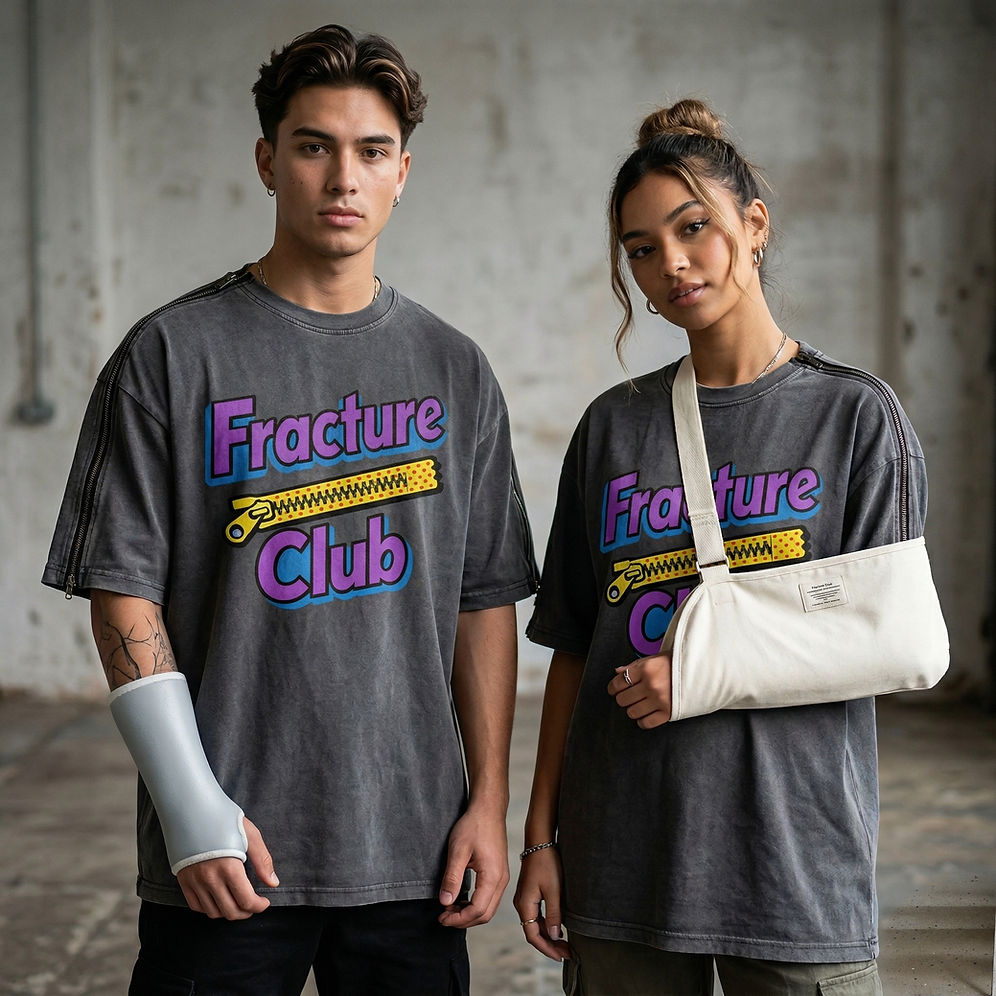
What also helped, practically, was receiving clothing I could actually get on and off without help. Feeling like myself again, even in small ways, mattered more than I expected. Fracture-club’s adaptive recovery wear gave me back a little of that independence, and the community around the brand reminded me I wasn’t alone in this.
[
](https://fracture-club.com/product-page/fracture-club-magnetic-shoulder-zip-tee-injury-recovery-wear)
If you’re supporting someone right now: listen more than you speak, show up more than once, and don’t underestimate the power of a small, specific gesture.
Recovery gifts that combine function and heart
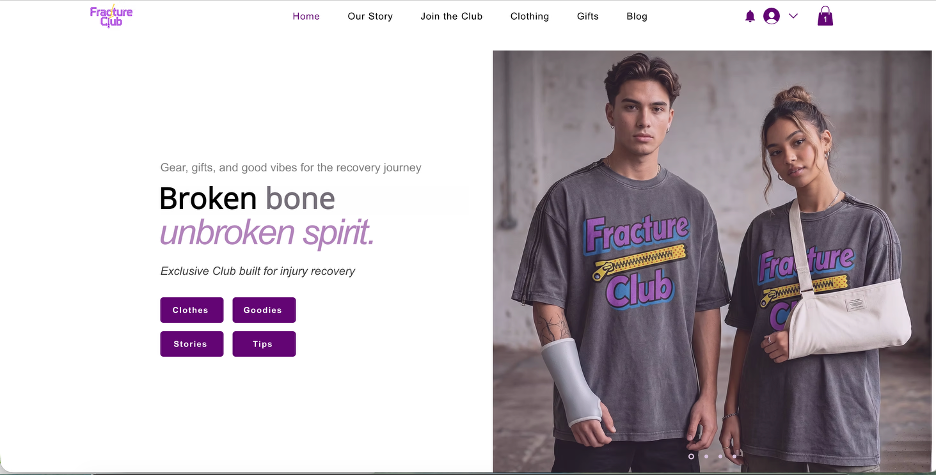
Fracture-club was built for exactly this moment. Their adaptive recovery pants feature side magnetic zippers that make dressing possible with a cast or brace, no struggle required. The easy-on/off sweatshirt is designed for upper-limb injuries and gives back the simple dignity of getting dressed independently.
[
](fracture-club.com)
Every purchase contributes to the Bone Health & Osteoporosis Foundation, so you’re supporting both the person in front of you and a broader community of people healing from fractures. Have questions about sizing or which product fits the injury type? Visit the Fracture-club inquiry page for personalized guidance.
Sources
This article is general information, not a substitute for advice from a qualified doctor. Consult a qualified healthcare professional about your own circumstances before acting on anything here.
Recommended
Comments