
Dress One Handed After Elbow Surgery: OT Steps and Adaptive Clothing

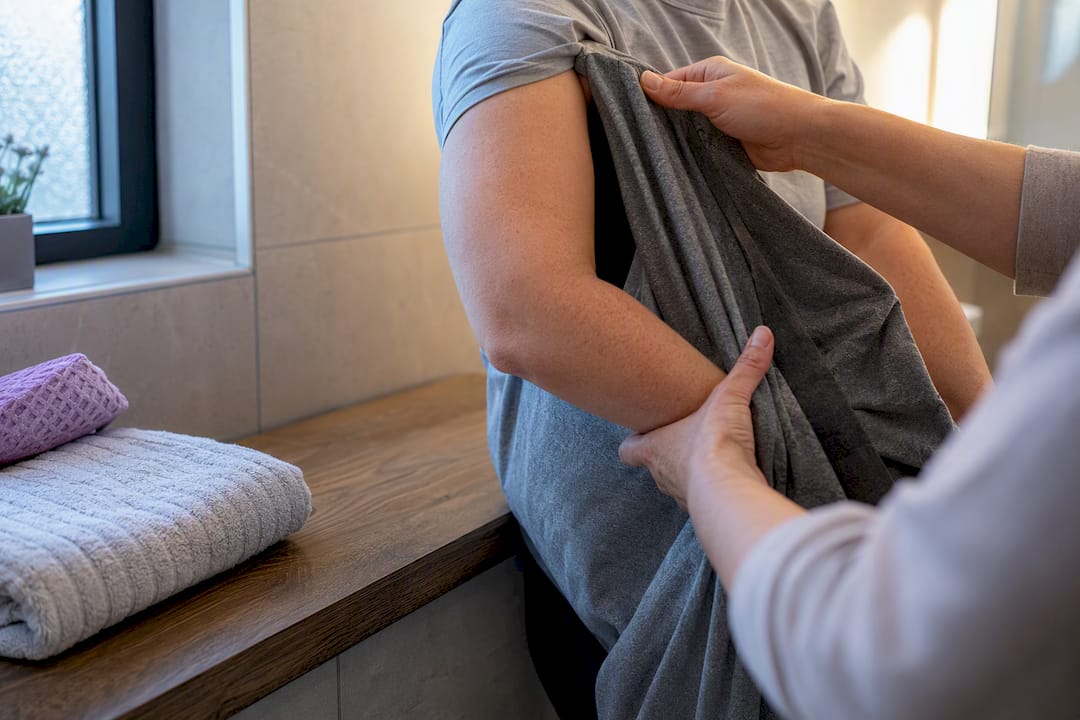
The best elbow surgery clothing includes side-snap shirts, front-closure or magnetic tops, and loose raglan-sleeve garments that never require pulling fabric over the operated arm. These pieces let you dress independently, protect your splint or dressing, and skip the painful overhead reach that ordinary shirts demand. If you want a ready-made option, some brands build adaptive pieces specifically for this stage of recovery.
TL;DR:
Wearing side-snap or magnetic closure shirts reduces the need for overhead arm movement and eases dressing during early recovery with a splint.
Fabrics like breathable cotton blends with adjustable closures help accommodate swelling and flexible sizing across the recovery weeks.
Dressing procedures should focus on first putting on the operated arm while seated, with slow, guided movements to prevent dislodging the splint.
Sleeveless or loose-fitting clothing, including elastic-waist pants and slip-on shoes, minimizes fabric manipulation and promotes independence.
Adaptive clothing brands offer specialized garments with wide openings and magnetic fastenings, reducing frustration and supporting easier daily dressing routines.
Table of Contents
Best Clothing for Elbow Surgery Recovery
The first week after elbow surgery, your closet becomes a minefield. A shirt you’ve worn a hundred times suddenly feels impossible because your arm won’t bend the way it used to, and your splint has doubled the bulk of your forearm overnight. The fix isn’t buying an entirely new wardrobe. It’s understanding which four or five garment features actually solve the problem, then shopping (or altering what you own) around those features.
Side-snap and full-side-open shirts solve the biggest issue first: they eliminate the need to lift your arm overhead or twist your elbow to get dressed. Instead of threading your arm through a sleeve, you lay the garment open, slide your arm in from the side, and snap it closed. This matters more than it sounds. Post-op guidance on splint bulk warns that forcing fitted clothing over a splint risks pain and accidental brace displacement, and a side-open design removes that risk entirely.
Front-closure and magnetic shirts are the next tier, especially useful once you regain some hand function but still can’t manage buttons or a zipper with your dominant hand out of commission. Magnetic closures snap shut with light pressure. That single design detail turns a two-handed task into a one-handed one, which is exactly the kind of adaptive feature that reduces dressing frustration and supports independence during recovery.
[
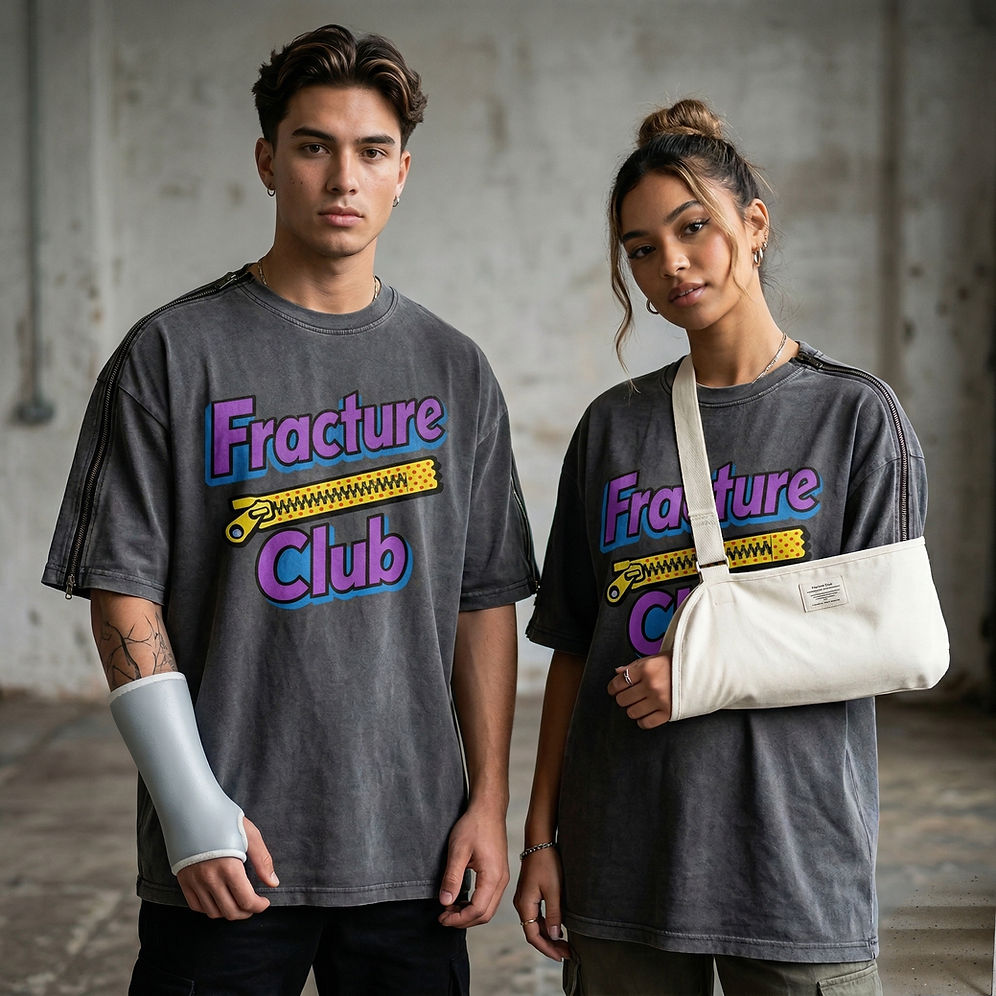
](https://fracture-club.com/product-page/fracture-club-magnetic-shoulder-zip-tee-injury-recovery-wear)
Open-back or gown-style tops matter most in the first 48 to 72 hours, particularly if you’re still in a hospital gown mindset or your surgical team needs frequent wound checks. These aren’t glamorous, but they’re practical for early post-op days when someone else may be helping you dress.
Loose sleeves, raglan cuts, and drop-shoulder tees are your everyday workhorses once you’re a week or two out. A raglan sleeve runs diagonally from the collar to the underarm instead of forming a tight seam at the shoulder, which gives your splint room to move through the sleeve without catching. Drop-shoulder tees work on the same principle: extra fabric at the shoulder means no tugging.
Don’t overlook what’s happening below the waist, either. Elastic-waist pants and slip-on shoes cut down the number of tasks you need two hands for, which matters more than people expect when one arm is temporarily out of service.
Here’s a quick reference for matching garment type to your recovery stage:
Days 1 to 3 (hospital and immediate post-op): Open-back gowns or oversized button shirts worn loosely, unbuttoned enough to allow wound checks.
Week 1 to 2 (splint or heavy dressing): Side-snap shirts or magnetic-closure tops that avoid any overhead motion.
Week 2 onward (reduced swelling, more hand function): Front-zip or button shirts, raglan-sleeve tees, and elastic-waist bottoms for daily wear.
Anytime, for lower body: Elastic-waist pants, joggers with side snaps, and slip-on shoes or sandals.
Fabric choice deserves its own mention. Soft, breathable cotton blends or bamboo fabrics reduce irritation where a splint edge meets skin, and machine-washable materials matter more than usual since you’ll be changing clothes frequently to manage swelling and, in some cases, drainage. Skip anything with rough interior seams, tags that sit near the incision line, or heavy synthetic blends that trap heat under a cast or splint.
How Do You Choose the Right Elbow Surgery Recovery Clothing?
Shopping for elbow surgery clothing is different from ordinary shopping because your body is changing week to week. What fits comfortably on day three might feel tight by day five once swelling peaks, and what works with a bulky splint might feel loose once you transition to a smaller brace. A few decision points make this process faster.
Check the closure type first. Side snaps and full-side openings are best if you have little to no use of your operated hand. Magnetic closures are best once you regain light grip strength and want more independence. Front-open gowns are the fallback for the earliest days when someone else is helping you dress.
Size up, don’t size down. Splints and heavy dressings add real bulk, and swelling from surgery can persist for weeks. A garment cut for adjustability, rather than a snug fit, tends to outlast the fluctuations. Swelling changes day-to-day, so adjustable closures like snaps or magnets let one garment work across your entire early recovery window instead of forcing you to buy multiple sizes.
Read the fabric and care label before you buy. Look for machine-washable, low-seam, breathable materials, and confirm the return policy in case sizing guesses don’t land.
Decide how much independence you actually have. If a caregiver will be dressing you for the first week or two, an open-back or full-side-open gown may serve you better than a magnetic shirt you can’t yet operate with a limited grip.
Study the product photos, not just the description. Photos showing the garment worn over a brace or splint tell you far more than a flat product shot ever could. If a retailer doesn’t show that, check the size chart twice before ordering.
Pro Tip: Buy one size larger than your usual fit for your first two post-op garments. Splints shrink and swap out over the weeks, but a slightly loose shirt with adjustable closures accommodates almost every stage without needing a second purchase.
How Do You Dress Yourself After Elbow Surgery?
Dressing technique matters just as much as garment choice. Get the sequence wrong and you risk twisting the repair, dislodging your splint, or simply hurting more than you need to.
The rule occupational therapists teach first: dress the operated arm before anything else. Lay the shirt flat on your lap or a bed, open every closure completely, and guide your injured arm into the sleeve first, feeding it in slowly past the elbow before you bring the garment over your head or your other arm. This sequence protects the repair because it minimizes how far you need to reach or rotate the healing joint, and it mirrors the dressing guidance NHS shoulder and elbow teams give patients for the exact same reason.
A few practical setup steps make this easier:
Sit down while dressing rather than standing, ideally on a stable chair without wheels.
Use a non-slip mat under your feet if you’re getting dressed in the bathroom, where surfaces get wet.
Keep the garment fully open before you start; don’t try to thread a partially buttoned shirt.
Move slowly at the elbow and let your shoulder do more of the work than usual.
If you’re using a caregiver, ask them to support the garment while you guide your own arm in, rather than letting them pull the fabric onto you.
Caregivers should never yank fabric quickly over a splint or apply pressure near the incision, even when trying to help. Slow, guided movement beats speed every time here.
Occupational therapy resources also point to small warm-up movements before dressing: gentle wrist circles and finger flexes (only if your surgeon has cleared hand movement) can loosen the area just enough to make sleeve entry smoother. Fracture Club’s own step-by-step guide to dressing one-handed breaks these micro-movements down further if you want visual walkthroughs.
Sleeping and Sling Care with the Right Clothing
Sleep is where most people underestimate how much clothing choice matters. A shirt that felt fine during the day can bunch uncomfortably under a sling once you’re lying on your back with extra pillows propping your arm up.
Look for a lightweight, non-binding top with a loose neckline and no tight cuffs, since you’ll likely be adjusting pillow height multiple times a night without wanting to fully redress. Most surgeons instruct patients to wear their sling both day and night for the first one to two weeks and to keep the arm elevated above heart level to control swelling, so your sleepwear needs to work around a sling that never comes off during that window.
Choose sleep tops without shoulder seams that dig in when you’re side-lying with the sling still on.
Skip anything with a tight, high neckline. It fights the sling strap and gets uncomfortable fast.
Pick fabric that won’t overheat, since icing is typically recommended in 20-minute intervals and you don’t want thick sleepwear trapping heat right after removing an ice pack.
Keep a robe or button-front layer near the bed for quick coverage on trips to the bathroom, so you’re not fumbling with sleeves half-asleep.
Two weeks is the sling-wear duration cited most often in post-op instructions, which gives you a concrete window to plan sleepwear around rather than guessing week to week.
Showering deserves a mention here too. A loose, quick-on robe or oversized zip-front top makes the transition from shower to dressed far less painful than reaching for a fitted shirt with wet skin and a tender arm.
What Clothing Should You Avoid After Elbow Surgery?
Some clothing choices actively work against your recovery, and most of them share the same underlying problem: they demand movement your elbow isn’t ready for yet.
Skip tight sleeves and fitted cuffs. Anything that requires stretching fabric over a bent elbow risks pain and can shift your splint out of position.
Avoid clothing that requires an overhead pull. Standard crew-neck shirts almost always demand it, which is exactly why side-open alternatives exist.
Don’t layer heavy sweaters or jackets that press against the surgical site. Bulk adds pressure exactly where you need the least.
Never force a garment over a splint that clearly doesn’t fit. Modify it with a quick lengthwise cut and safety pins, or switch to an adaptive option instead of pushing through pain.
If you’re stuck with limited options, a temporary fix works better than forcing a bad fit: snip the underarm seam of a button-front shirt and pin it loosely, or simply wear a shirt unbuttoned and draped over your shoulders like a cape until you can get proper adaptive clothing.
Why Fracture Club Understands Elbow Surgery Clothing
Some brands build recovery wear around exactly the problems this guide covers, focusing on adaptive clothing for injury patients rather than treating it as a side category. The step-by-step guide to dressing one-handed after hand surgery and the broader what to wear during injury recovery guide walk through the same OT-informed techniques described above, written by a team that thinks about this problem daily.
Two products line up directly with what this guide recommends:
The Unisex Easy-On/Off Sweatshirt for upper limb injury recovery uses wide openings and soft fabric to slide over a splint without any overhead reach.
The Unisex Easy-On/Off Adaptive Recovery Pants with side magnetic zippers apply the same magnetic-closure logic to lower-body dressing, useful when balance is also compromised.
Beyond the garments, Some adaptive clothing companies emphasize that recovery is hard enough without fighting your own clothes. Some also donate a portion of proceeds to bone health foundations, and facilitate communities sharing real recovery stories from people navigating similar challenges.
Which Stores Specialize in Post-Elbow Surgery Clothing?
Most mainstream clothing retailers still design for two functioning arms and full range of motion, which leaves a real gap for anyone recovering from elbow surgery. Adaptive clothing brands fill that gap by building garments around medical realities like slings, splints, and swelling rather than treating those as an afterthought.
When comparing options, look specifically for retailers whose product descriptions mention casts, braces, or slings by name, not just generic “comfort” language. That’s a strong signal the brand actually designed for this use case rather than repurposing loungewear. Check whether the retailer shows garments modeled over a brace or splint in product photos, since that single detail tells you more about real-world fit than a size chart alone.
Certain niche brands specialize in garments built around magnetic and side-snap closures rather than generic loose-fit basics. Such focus tends to solve smaller details, like seam placement relative to typical splints, that general adaptive-wear lines may overlook.
If you also need adaptive undergarments, particularly bras that avoid straps over the injured shoulder, it’s worth checking specialty options like one-shoulder bra styles built for post-surgical wear, which solve a related but distinct dressing problem this guide doesn’t cover in depth.
Combining Clothing with Compression Wraps and Ice Packs
Clothing doesn’t operate in isolation during recovery. It has to work alongside compression wraps, ice packs, and slings without adding friction to any of them.
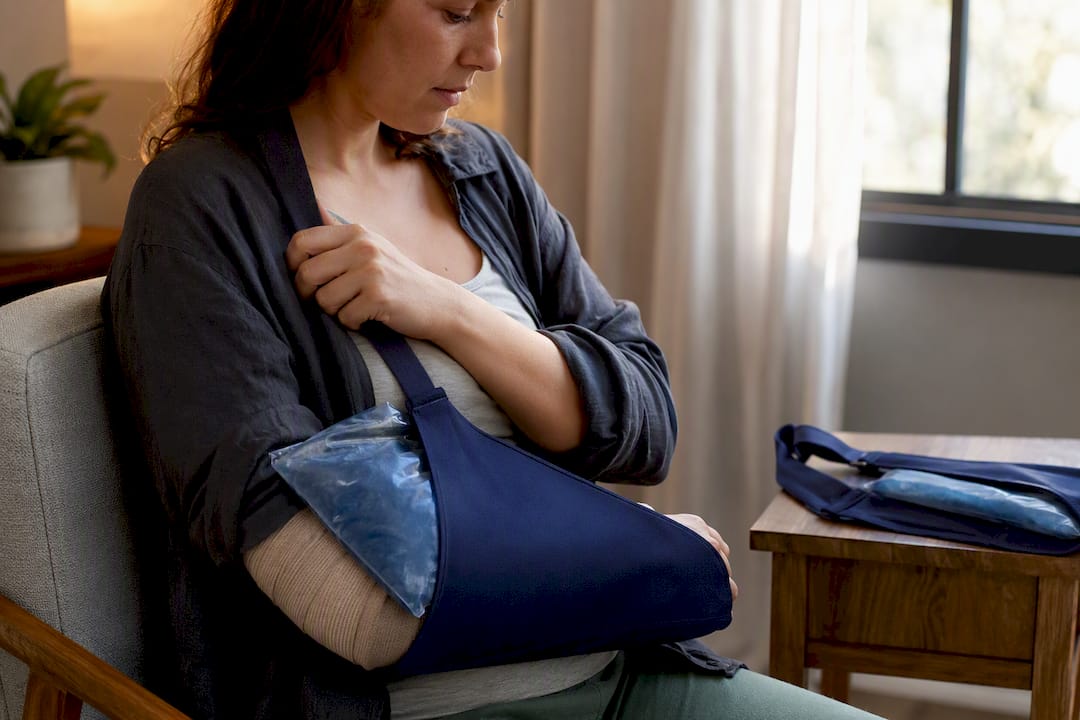
Choose garments with wide sleeve openings if you’re wearing a compression wrap underneath, since a tight sleeve over a wrap doubles the pressure on your arm and can worsen swelling instead of controlling it. Side-open or front-zip shirts also make icing far easier. Discharge instructions commonly call for icing in 20-minute intervals, and you don’t want to be wrestling with a sleeve every time you need to reposition an ice pack.
A few pairing habits help:
Wear button-front or magnetic-closure tops so you can open just the section covering the ice pack, rather than removing the whole shirt.
Choose slightly looser sleeves on the operated side specifically to leave room for a compression wrap without bunching.
Keep a spare set of easy-on bottoms nearby for after showers, since ice packs and wraps often need reapplying right after drying off.
If your sling sits over your clothing, pick tops with minimal shoulder seams so the sling strap doesn’t dig into a seam line all day.
Getting this combination right early on saves you from repeatedly getting undressed and redressed just to manage swelling, which sounds minor until you’re doing it five times a day.
An Editorial Perspective on Adaptive Clothing After Surgery
People underestimate how much dignity has to do with recovery. Watching a customer go from struggling to button a shirt with one hand to snapping a magnetic closure shut in seconds isn’t just a convenience story. It’s the difference between feeling like a patient and feeling like yourself again on a random Tuesday morning. Adaptive clothing doesn’t replace physical therapy or good surgical care, but it removes one daily fight that has nothing to do with healing and everything to do with frustration. If you want more of these stories, Fracture Club’s community shares them regularly, written by people who’ve been exactly where you are now.
— Fracture
Shop Fracture Club’s Adaptive Recovery Clothing
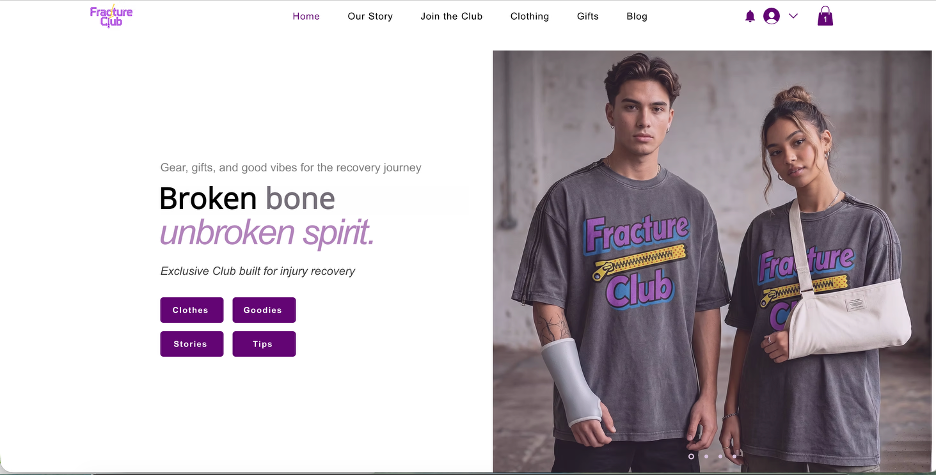
Some companies offer adaptive recovery clothing designed specifically around closures and openings recommended for injury recovery, avoiding the need for home alterations or workarounds.
[
](fracture-club.com)
The lineup solves the exact problems covered above: magnetic zippers that need only light hand pressure to close, wide side openings that skip the overhead reach entirely, soft breathable fabric that won’t irritate skin under a splint, and easy-care laundering for the frequent changes early recovery demands. To pick the right piece, match your current mobility to the closure type: if you have little grip strength yet, start with the adaptive recovery pants with side magnetic zippers for lower-body dressing, since the magnets require almost no hand strength. Size up if you’re still swollen or wearing a bulky splint, and check the product page’s sizing notes before ordering. If nothing on the site answers your specific situation, Fracture Club’s inquiry services page is the fastest way to ask before you buy.
Sources
The clinical guidance behind this article’s dressing timelines and care recommendations comes from real post-op instructions and rehabilitation literature. For direct reference:
FAQ
What Clothes Should You Wear After Elbow Surgery?
Choose side-snap or front-closure shirts with loose, raglan-style sleeves, plus elastic-waist bottoms, so you never need to pull fabric over your splint or reach overhead.
How Should You Sleep After Elbow Surgery?
Sleep on your back with your arm elevated on pillows and your sling on, wearing a loose, non-binding top with no tight cuffs or high neckline, since most patients keep the sling on day and night for the first one to two weeks.
Is Elbow Surgery Hard to Recover From?
Recovery difficulty varies by procedure, but many patients return to light activity around 7 days and see fuller recovery over 3 to 6 weeks, with clothing and dressing technique playing a real role in how comfortable that window feels.
How Long Do You Wear a Sling After Elbow Surgery?
Most patients wear their sling continuously, day and night, for about one to two weeks after surgery, though your surgeon’s specific instructions always take priority over general timelines.
What Elbow Surgery Clothing Works Best with a Caregiver’s Help?
Open-back or full-side-open tops tend to work best when a caregiver is assisting, since they avoid overhead motion and let the caregiver guide the operated arm in without pulling fabric over the splint.
Recommended
Comments