
OT Tested: When Adaptive Clothing Beats Dressing Aids for Caregivers

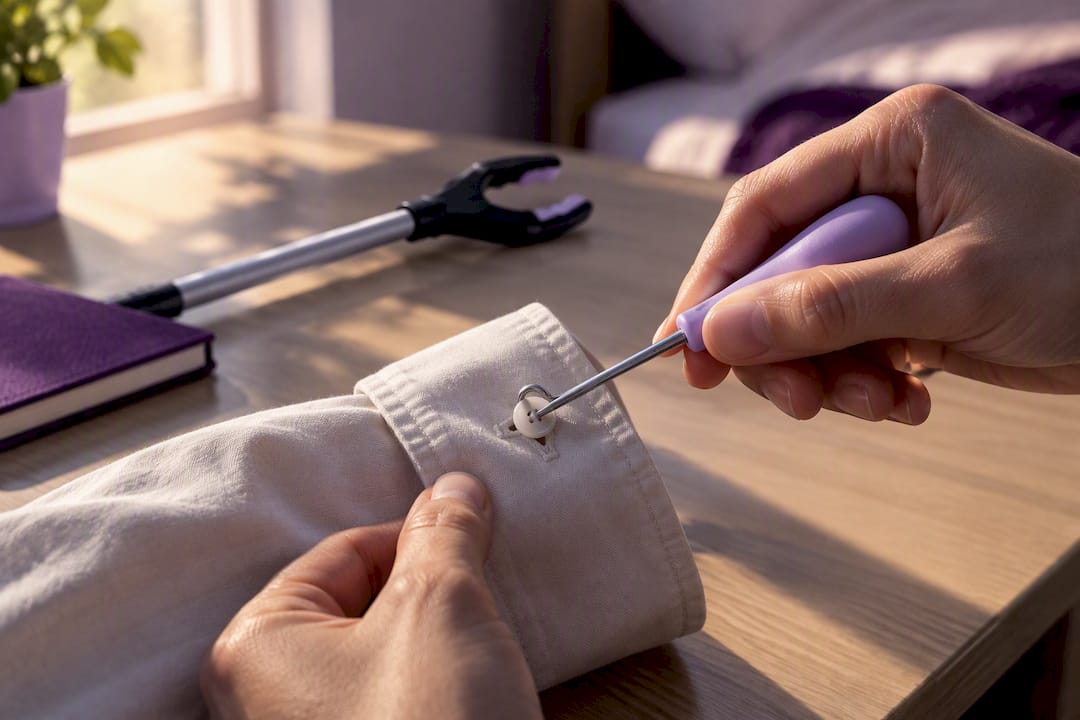
Dressing aids are inexpensive tools that solve reach and grip problems, like a sock aid or a button hook. Adaptive clothing solves closure and seated-dressing problems, using magnetic fasteners, side openings, or elastic waists. The quick rule: start with a low-cost aid if the barrier is reach or hand strength, and switch to adaptive clothing when the real obstacle is closures or dressing while seated.
TL;DR:
Using a button hook, zipper pull, or sock aid can quickly address grip, reach, or bending issues at low cost before switching to adaptive clothing.
Adaptive clothing with magnetic fasteners or side openings provides a permanent fix for seated dressing and fine-motor challenges that tools cannot solve.
Pairing even small aids with adaptive garments tailored to specific barriers reduces dressing time and caregiver effort, especially during recovery or for mobility limitations.
If multiple barriers overlap, involving an occupational therapist helps identify the most effective combination of tools and clothing, avoiding trial-and-error.
Most dressing challenges respond to targeted tools initially, but persistent issues with closures or seated dressing usually require a switch to adaptive clothing strategies.
Table of Contents
What Are Dressing Aids vs Adaptive Clothing?
Dressing aids are handheld tools you use with regular clothes to work around a physical limitation. Think of them as a workaround, not a wardrobe change: a button hook slides through a buttonhole and pulls the button back for you, a reacher grabs a shirt off the floor without bending. These dressing aids target one mechanical problem at a time, usually reach, grip, or the ability to bend.
Adaptive clothing is different. It is the garment itself, redesigned so the barrier never comes up. A shirt with magnetic buttons instead of real ones. Pants with an elastic waist instead of a zipper fly. Both categories share the same finish line: getting dressed on your own, without asking for help every morning. Independence in daily tasks like dressing is tied to better mental health outcomes in older adults, so this isn’t a small convenience question. It’s about staying yourself.
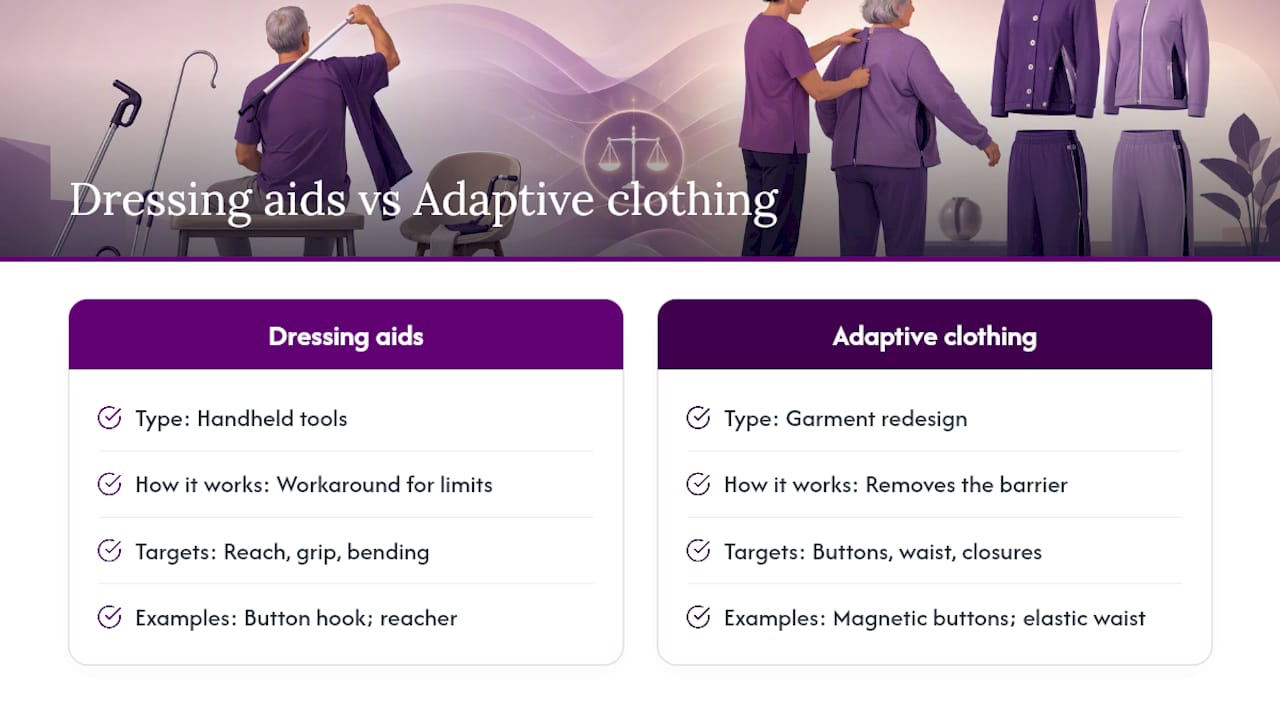
What Dressing Aids Solve, One Tool at a Time
Each dressing aid exists because one specific movement got hard. Match the tool to the movement, and most of these problems disappear overnight.
Button hooks and zipper pulls help when fingers can’t pinch or grip small fasteners, common with arthritis or nerve injuries.
Sock aids and stocking donners let you pull on socks without bending at the hip or knee, useful after hip or knee surgery.
Dressing sticks and reachers extend your reach for pants, shirts, or dropped items when one arm is weak or immobilized.
Long-handled shoehorns and no-tie laces solve footwear without bending over or fumbling with laces one-handed.
Most of these tools are low cost and typically available at pharmacies or medical supply sites with quick delivery. A dressing stick built with a lightweight shaft and a non-snag hook is a common first recommendation for someone recovering from a hip replacement or wearing a shoulder immobilizer. That’s the appeal: no lifestyle change, no new wardrobe, just a $10 tool doing the job your hand or shoulder can’t right now.
When Adaptive Clothing Solves What Tools Can’t
Some problems don’t respond to a tool, no matter how clever it is. If you’re dressing while seated in a wheelchair, or a caregiver is doing most of the work, the garment itself needs to change.
Magnetic buttons, snap-fronts, and side-open shirts remove the fine-motor step entirely for one-handed or limited-dexterity dressing.
Open-back and side-opening garments make caregiver-assisted dressing faster and far less awkward for both people involved.
Elastic or pull-on pants with a higher back rise stay comfortable and covered for someone dressing seated all day.
Slip-on or no-tie footwear removes the last fussy step for anyone who can’t reach their feet.
These design choices, especially higher back rises and side openings, specifically target barriers that no gadget can fix because the problem lives in the seams, not in your grip. The tradeoff is real: adaptive shirts and pants cost more than standard basics, and building out a full wardrobe takes time and a bit of a learning curve on new closures. But for seated dressing or daily caregiver assistance, it’s often the only fix that actually works.
How Do You Match the Barrier to the Right Solution?
Don’t guess. Identify what’s actually stopping you, then pick the smallest fix that solves it.
Name the barrier. Is it reach, grip and hand strength, seated dressing, or the fact that a caregiver is spending 20 minutes every morning on buttons? Occupational therapists consistently recommend matching the specific mechanical barrier rather than treating “arthritis” or “stroke recovery” as one-size-fits-all categories.
Try the low-cost fix first. Reach problems usually respond to a dressing stick or reacher. Grip problems respond better to a button hook, zipper pull, or magnetic-closure shirt. Bending limitations point straight to a sock aid.
Escalate to adaptive clothing when closures or seated dressing are the core issue, or when a caregiver is doing the dressing themselves. If a $15 tool hasn’t solved it after a week or two, or the person is dressing entirely from a seated position, that’s your signal to shop garments instead of gadgets. When barriers stack (weak grip plus limited reach plus fatigue), an occupational therapist can build a plan faster than trial and error at home.
Pro Tip: Buy one tool at a time and give it a real week of use before adding another. Layering three new gadgets at once makes it hard to tell which one is actually helping.
How Aids and Adaptive Clothing Work Together
These two categories aren’t competitors. In practice, most people end up using both, paired to the situation.
Hip replacement recovery: a sock aid handles socks, pull-on elastic-waist pants handle everything else without bending.
One-sided weakness (hemiplegia): magnetic-closure shirts remove the buttoning problem, and a dressing stick helps guide the weaker arm into a sleeve.
Arthritis: a zipper pull manages jackets, while elastic-waist pants and slip-on shoes skip the fine-motor fasteners entirely.
Caregiver-assisted dressing: open-back garments paired with minimal-fastening clothing cut dressing time and reduce strain for both people involved.
Pairing a small aid with the right garment often cuts caregiver time significantly while keeping the process dignified instead of clinical.
Your Next-Step Checklist
Here’s the short version, in the order to act on it.
Buy one or two starter tools now: a button hook, a zipper pull, or a sock aid covers most early grip and bending problems for under $30 combined.
Prioritize adaptive clothing when the barrier is a closure or seated dressing, not a grip or reach issue a tool can fix.
Bring in an occupational therapist if barriers overlap (weak grip and limited reach and fatigue) or if you’re not sure which category fits your situation.
Involve the person getting dressed in every choice. Comfort and personal style matter as much as function, and buy-in makes the new routine stick.
Fracture-club’s Take on Getting Dressed Again
We built Fracture-club around one idea: recovery gear should never feel like a hospital gown. Our team designs adaptive clothing with occupational-therapy principles in mind, magnetic and zipped closures that respect real mobility limits, because getting dressed on your own is worth protecting. A portion of every purchase supports the Bone Health & Osteoporosis Foundation, because recovery is bigger than one wardrobe.
— Fracture
How Fracture-club Fits Into Your Dressing Plan
If your decision framework points to a closure problem, casts, braces, one-handed dressing, or a caregiver doing most of the work, that’s exactly where Fracture-club’s recovery wear was built to help.
[
](fracture-club.com)
Our adaptive pieces use magnetic and zipped closures instead of buttons or ties, so getting dressed doesn’t turn into a ten-minute wrestling match every morning. If a cast or brace is the barrier, our adaptive recovery pants with side magnetic zippers skip the fly and waistband fight entirely. For upper-limb injuries or one-handed dressing, the easy-on/off sweatshirt opens flat instead of forcing an arm through a tight sleeve. Beyond function, every piece is designed to look like real clothing, not medical wear, because recovery is hard enough without feeling like a patient in your own living room. Browse the full recovery wear collection and find the piece that matches your barrier today.
Sources
FAQ
What Are Some Examples of Dressing Aids?
Common dressing aids include button hooks, zipper pulls, sock aids, dressing sticks, long-handled shoehorns, and reachers. Each one targets a specific movement problem, like limited reach or reduced grip, rather than replacing the garment itself. Most dressing aids cost under $20 and are available at pharmacies or medical supply retailers.
What Is Considered Adaptive Clothing?
Adaptive clothing is any garment redesigned with easier fasteners or openings, including magnetic buttons, Velcro closures, side or open-back seams, and elastic pull-on waists. These features remove fine-motor and mobility barriers that a hand tool can’t solve on its own. Adaptive clothing often uses magnetic and zipped closures designed to assist those with casts, braces, or post-surgery dressing needs.
What Is the Difference Between an Assistive Device and Adaptive Equipment?
An assistive device, like a button hook or sock aid, is a tool you use alongside your existing clothes to work around a limitation. Adaptive equipment is a broader term that includes both those tools and adaptive clothing itself, meaning the garment is modified instead of the routine.
What Are Good Dressing Aids for Seniors?
A sock aid, long-handled shoehorn, and button hook cover the most common age-related barriers: limited bending, reduced grip, and fine-motor difficulty with fasteners. Occupational therapists often recommend starting with a small kit of these tools before adding adaptive clothing, since they’re cheap and solve reach or grip problems immediately. If seated dressing or caregiver assistance is the bigger issue, adaptive clothing tends to help more than tools alone.
Recommended
Comments