
Collagen for Bone Health: What Adults Over 50 Need to Know
- T. Armstrong

- 4 days ago
- 13 min read

Hydrolyzed collagen supplementation can meaningfully support bone health in older adults, particularly postmenopausal women with low bone density — and the evidence is strong enough to discuss with your clinician today. The clearest signal comes from changes in bone-turnover markers (P1NP rising, CTX falling) and, in some trials, modest gains in spine and femoral neck bone mineral density (BMD). Collagen is not a standalone fix, but paired with resistance exercise, adequate calcium, and vitamin D, it becomes a genuinely useful part of your bone-health strategy.
Your immediate next steps:
Talk to your clinician about whether collagen fits your current bone-health plan, especially if you have osteopenia, a prior fragility fracture, or low dietary protein intake.
Pair any collagen regimen with weight-bearing and resistance exercise — the mechanical signal is what tells your bones to use those extra building blocks.
Confirm your calcium and vitamin D levels are adequate before adding collagen; supplementing on top of deficiencies in those two nutrients limits what collagen can do.
Key Takeaways
Hydrolyzed collagen supplementation offers real but modest bone benefits for older adults, and those benefits depend on pairing it with exercise, adequate micronutrients, and consistent monitoring.
Point | Details |
Who benefits most | Postmenopausal women and older adults with low bone density or low dietary protein show the strongest response. |
Effective dose range | Trials used 5–20 g/day of hydrolyzed type I collagen peptides for 8–52 weeks; discuss your specific dose with your clinician. |
Exercise is required | Resistance and weight-bearing exercise provides the mechanical signal that directs collagen building blocks to bone. |
Safety checks before starting | Flag kidney disease, fish or shellfish allergies, anticoagulant use, and pregnancy with your clinician before beginning. |
How to monitor progress | Check P1NP and CTX at 3–6 months for early signals; repeat DXA at 12 months or as clinically advised. |
Table of Contents
What does the research actually show about collagen and bone strength?
How collagen may affect bone biology and which biomarkers track change
Who is most likely to get measurable bone benefits from collagen?
Side effects, interactions, and when to seek clinician approval
A step-by-step plan for using collagen as part of a complete bone-health strategy
What experts stress and the remaining uncertainties in the evidence
What does the research actually show about collagen and bone strength?
The clinical picture for collagen supplementation and bone density is promising but nuanced. A scoping review published in the Clinical Journal of Sport Medicine found that collagen peptides were associated with favorable changes in bone-turnover markers and some BMD increases, particularly in postmenopausal women. A separate systematic review (PMC11842160) reported increased spine and femoral neck BMD in some postmenopausal trials after hydrolyzed collagen supplementation, though the authors were careful to flag baseline group differences and methodological limits.
Doses across trials ranged from 5 g/day to 20 g/day, and treatment durations ran from 8 weeks to 52 weeks. The outcomes that showed the most consistent movement were biomarkers: P1NP (a marker of bone formation) tended to rise, while CTX (a marker of bone resorption) tended to fall. BMD changes were less consistent and generally modest, which is expected — bone density shifts slowly, and most trials were not long enough to capture the full structural effect.
What the evidence shows: Bone-turnover marker improvements appear more reliably than BMD gains across trials, and the strongest effects cluster in postmenopausal women and older adults with low baseline protein intake.
The honest limitation is heterogeneity. Trials used different peptide formulas, different doses, different populations, and different outcome measures. That makes it hard to draw a single clean conclusion. What the research does support is cautious optimism, especially for the groups most likely to respond.
Outcome measured | Typical finding across trials | Population showing strongest effect |
P1NP (bone formation marker) | Increased in multiple RCTs | Postmenopausal women, older adults |
CTX (bone resorption marker) | Decreased in several trials | Postmenopausal women |
Spine BMD | Modest increases in some trials | Postmenopausal women with osteopenia |
Femoral neck BMD | Modest increases in select trials | Postmenopausal women |
Younger/healthy adults | Mixed or minimal effects | Not a consistent responder group |
How collagen may affect bone biology and which biomarkers track change
Bone is roughly 30% organic matrix by weight, and type I collagen makes up about 90% of that matrix. It provides the flexible scaffold onto which calcium phosphate crystals are deposited. Without a healthy collagen framework, mineralization becomes structurally compromised — think of it like trying to reinforce a building whose steel frame is already weakened.
When you take hydrolyzed collagen, the peptides are broken into small fragments (primarily dipeptides and tripeptides) that are absorbed through the gut and reach circulation intact. These fragments are rich in glycine and proline, the two amino acids most critical for collagen synthesis. Research from UC Davis, including commentary from exercise physiologist Keith Baar, confirms that hydrolyzed collagen raises circulating levels of procollagen N-terminal peptide (P1NP), a direct marker of new collagen synthesis.
Key biological steps:
Absorbed collagen peptides stimulate osteoblasts (bone-building cells) to produce more type I collagen.
P1NP rises as a measurable signal that new bone matrix is being laid down.
CTX, which reflects how fast old bone is being broken down, tends to fall — suggesting a shift toward net bone formation.
Biomarkers change within weeks; BMD changes take months to years, because bone remodeling is a slow process.
One point that experts consistently emphasize: collagen provides the raw material, but your bones only deposit it where mechanical stress signals them to. Without resistance or weight-bearing exercise, the body has less reason to direct those building blocks to bone specifically. Exercise is not optional — it is the trigger.
Who is most likely to get measurable bone benefits from collagen?
Not everyone responds equally, and knowing where you fall helps you set realistic expectations.
Groups with the strongest evidence for benefit:
Postmenopausal women with low bone density or osteopenia — the most studied group, with the most consistent marker and BMD improvements across trials.
Older adults (generally 60+) with low dietary protein or collagen intake; those who rarely eat meat, fish, or bone-broth-based foods tend to show larger responses to supplementation.
People in active fracture recovery or early rehabilitation, where bone remodeling is already elevated and nutritional support has a clear role.
Groups where evidence is weaker or mixed:
Younger adults with normal bone density and adequate dietary protein — the baseline is already sufficient, so supplementation adds less.
People who regularly consume collagen-rich foods (slow-cooked meats, bone broth, skin-on fish) may see smaller effects because their baseline intake is already higher.
Athletic populations show some joint-related benefits, but bone-specific outcomes in this group are less consistent.
Triggers to discuss with your clinician before starting:
A prior fragility fracture (wrist, hip, or vertebra from a low-impact event).
An existing osteoporosis diagnosis or a T-score below -2.5 on DXA.
Long-term corticosteroid use, which accelerates bone loss.
Malnutrition or significant unintentional weight loss.
In any of these situations, collagen may still be appropriate, but it should be part of a clinician-supervised plan rather than a solo decision.
How much collagen should you take, and for how long?
Trials used doses ranging from 5 g/day to 20 g/day, with most bone-focused studies landing in the 10–15 g/day range. Duration varied from 8 weeks to 52 weeks, and the longer trials generally showed more meaningful BMD shifts.
Practical dose guidance (to discuss with your clinician):
5–10 g/day is a reasonable starting point for general bone maintenance or if you already have a moderate protein intake from food.
10–20 g/day was used in several osteopenia trials and may be more appropriate if you have documented low bone density or are in active recovery.
Expect biomarker changes (P1NP, CTX) within 8–12 weeks. BMD changes, if they occur, typically require at least 6–12 months of consistent use.
Timing and practical tips:
Take collagen with a meal that contains vitamin C — ascorbic acid is a required cofactor for the hydroxylation of proline and lysine, two steps that are necessary for stable collagen formation.
If you also use whey protein, collagen and whey serve different amino-acid profiles and can complement each other; they do not need to be taken at the same time.
Split larger doses (above 10 g) across two servings if GI tolerance is a concern.
Pro Tip: Add up your total daily protein from food before choosing a collagen dose. If you are already hitting 1.0–1.2 g of protein per kilogram of body weight from meals, a 5–10 g collagen supplement is usually sufficient. Exceeding total protein needs does not add bone benefit and adds unnecessary load for people with borderline kidney function.
Which collagen types and product features actually matter?
The supplement market is crowded, and label claims vary wildly. Here is what genuinely matters for bone health.

Form matters most:
Hydrolyzed collagen peptides (also called collagen hydrolysate) are what virtually every clinical trial used. The hydrolysis process breaks collagen into small, bioavailable fragments that absorb efficiently. Gelatin is partially hydrolyzed and absorbs less predictably. Whole-food sources like bone broth contain collagen precursors but in highly variable amounts — useful as a dietary habit, not as a reliable therapeutic dose.
Type I is the priority for bone:
Type I collagen is the dominant structural protein in bone. Most bovine and marine collagen supplements are predominantly type I, which makes them the most relevant for bone-health goals. Type II collagen (found in chicken sternum extracts) is more relevant for cartilage and joint applications.
Source considerations:
Bovine (cow hide/skin): widely available, predominantly type I, well-studied, and generally affordable. Avoid products sourced from bone meal rather than hide, as bone-derived products carry a higher risk of heavy-metal contamination.
Marine (fish skin/scales): type I, often cited for slightly smaller peptide size and good absorption; suitable for people avoiding beef but not appropriate for fish allergies.
Chicken: primarily type II; less relevant for bone density goals.
What to check on the label:
Dose per serving clearly stated (look for at least 5 g of collagen peptides per serving, not “collagen blend” with undisclosed amounts).
Hydrolyzed peptides listed as the primary ingredient, not gelatin or whole collagen.
Third-party testing certification (NSF International, Informed Sport, or USP) — this is the most reliable indicator that the product contains what it claims and has been screened for contaminants.
Vitamin C included or noted as a recommended cofactor.
No proprietary blends that obscure individual ingredient amounts.
A note on sourcing: Experts recommend choosing skin-derived collagen peptides over bone-derived products to reduce the risk of heavy-metal exposure. Bone meal can concentrate lead and other metals; skin-derived peptides carry a lower contamination risk.
For a broader look at reading supplement labels and avoiding contaminants, the bone health supplements checklist at Fracture-club walks through each category in detail.
Side effects, interactions, and when to seek clinician approval
Hydrolyzed collagen has a strong safety record in clinical trials. Most participants tolerate it well, and serious adverse events are rare. That said, a few specific situations warrant attention.
Common mild effects:
Mild GI upset (bloating, fullness, or loose stools), particularly at higher doses or when starting.
Taste or texture issues with unflavored powders — easily managed by mixing into smoothies or warm drinks.
Situations requiring extra caution:
Allergies: Marine collagen is contraindicated for fish or shellfish allergies. Some bovine products are processed in facilities that also handle soy or egg — check allergen statements carefully.
Kidney disease: Collagen is a protein, and high-protein loads can stress compromised kidneys. Anyone with chronic kidney disease (CKD) or reduced GFR should discuss total daily protein intake, including collagen, with their nephrologist before starting.
Pregnancy and lactation: There is insufficient safety data for high-dose collagen supplementation during pregnancy or breastfeeding. Discuss with your OB or midwife before use.
Bone-derived products: As noted above, these carry a heavier-metal risk. Stick to skin-derived, third-party-tested products.
Drug interactions to flag with your clinician:
Some collagen products include added vitamin K2 (to support bone mineralization). Vitamin K can interact with warfarin and other anticoagulants — always check the full ingredient list and flag this with your prescriber.
Products with added calcium can affect absorption of certain antibiotics (tetracyclines, fluoroquinolones) and thyroid medications if taken at the same time.
Stop use and contact your clinician if you experience: an allergic reaction (hives, swelling, difficulty breathing), significant GI distress that does not resolve within a week, or any new or worsening symptoms after starting a new supplement.
The Institute of Medicine’s dietary reference intake guidance provides useful context on safe upper limits for calcium and protein, which is worth reviewing alongside any collagen regimen.
A step-by-step plan for using collagen as part of a complete bone-health strategy
This is a practical framework you can bring to your next clinician appointment. It is not a replacement for medical advice, but it gives you a structured starting point.
Get a baseline assessment. Request a DXA scan if you have not had one in the past two years, and ask your clinician about bone-turnover markers (P1NP and CTX). These give you a starting point to measure against.
Correct nutrient gaps first. Cleveland Clinic guidance and most clinical protocols prioritize calcium and vitamin D before adding supplements. Adults over 50 generally need 1,000–1,200 mg of calcium daily and 600–800 IU of vitamin D (more if blood levels are low). Get these from food where possible; supplement the gap.
Start collagen at an appropriate dose. Based on your risk profile and clinician input, begin at 5–10 g/day of hydrolyzed type I collagen peptides, taken with a meal containing vitamin C. Increase to 10–20 g/day if your clinician recommends it for osteopenia or active recovery.
Add structured resistance and weight-bearing exercise. NIAMS federal guidelines recommend at least 150 minutes per week of moderate activity plus muscle-strengthening at least twice weekly. Resistance training is the mechanical signal that directs collagen building blocks to bone. For equipment ideas and home-friendly routines, NRTH’s exercise resources offer practical resistance-band and strength options.
Recheck biomarkers at 3–6 months. P1NP and CTX can show meaningful change within this window. A favorable shift (P1NP up, CTX down) is a positive early signal even before BMD changes are visible.
Repeat DXA at 12–24 months. BMD changes take time. A 12-month follow-up is reasonable for most people on an active intervention; 24 months is standard in many clinical protocols.
Reassess and escalate if needed. If biomarkers are not moving and bone loss is progressing, discuss pharmacotherapy options with your clinician. Collagen is an adjunct, not a replacement for approved osteoporosis medications in high-risk patients.
Pro Tip: Schedule your collagen dose alongside breakfast and your vitamin C source (a glass of orange juice or a vitamin C supplement works). Then block your resistance training sessions on the same days you take your supplement — the combination of nutritional input and mechanical loading on the same day may optimize the bone remodeling signal.
How do you track whether the plan is working?
Monitoring gives you real data instead of guesswork, and it helps your clinician make informed decisions about whether to continue, adjust, or escalate your plan.
Tests to use and when:
DXA scan: the gold standard for measuring BMD at the spine and hip. Get a baseline before starting, then repeat at 12 months (or as your clinician advises). A T-score improvement of 0.03–0.05 g/cm² is considered clinically meaningful in most protocols.
Bone-turnover markers (P1NP and CTX): blood tests that reflect bone formation and resorption activity. These can change within 8–12 weeks of starting an intervention, making them useful early signals. Ask your clinician to order them at baseline and again at 3–6 months.
Calcium and vitamin D levels: a standard blood panel. Low 25-hydroxyvitamin D (below 30 ng/mL) blunts the effectiveness of any bone-building strategy.
For help interpreting your DXA report and lab values, the bone health lab results guide at Fracture-club explains what each number means in plain language.
Clinical red flags — contact your clinician promptly if you notice:
A new fracture from a low-impact event (a fall from standing height or less).
New or worsening bone pain, especially in the back, hips, or wrists.
Unexplained weight loss of more than 5% of body weight over a few months.
Any adverse reaction to a supplement (allergic symptoms, significant GI distress, or unusual fatigue).
What experts stress and the remaining uncertainties in the evidence
Collagen research has moved quickly in the past decade, but researchers are consistent about one thing: the evidence is promising, not conclusive. The scoping review in the Clinical Journal of Sport Medicine found high heterogeneity across trials, meaning the studies differed enough in their peptide formulas, doses, durations, and populations that pooling results into a single firm recommendation is difficult.
A key insight from the research: Collagen supplementation is most likely to add measurable value for people with low baseline collagen or protein intake. Those who already consume collagen-rich diets — slow-cooked meats, bone broth, skin-on fish — often see smaller effects, because their baseline supply is already higher.
What experts broadly agree on:
Collagen is a promising adjunct, not a cure. It works best within a complete strategy that includes adequate calcium, vitamin D, and structured exercise.
The strongest evidence is in postmenopausal women and older adults with low bone density or low dietary protein — not in younger, healthy populations.
Biomarker changes (P1NP, CTX) are a more reliable early signal than BMD, which requires longer follow-up to detect.
Mechanical loading from resistance exercise is necessary for collagen to translate into structural bone benefit — supplementation without exercise is a missed opportunity.
The most significant gap in the literature is long-term fracture outcome data. Most trials measured surrogate endpoints (markers, BMD) rather than actual fracture rates. Until larger, longer trials report fracture incidence, the evidence supports cautious optimism rather than certainty.
Fracture-club’s take on using this guidance during recovery
At Fracture-club, we work with people who are in the thick of recovery — dealing with casts, braces, and the frustrating gap between feeling like a patient and feeling like yourself again. Bone health is not just a long-term prevention topic for us; it is something our community lives every day.
This guide is designed to give you a clear, honest picture of what collagen can and cannot do for your bones, so you can walk into your next appointment with real questions and a real plan. Whether you are recovering from a fracture, managing osteopenia, or simply trying to stay ahead of bone loss as you age, the evidence points in the same direction: collagen works best as part of a complete strategy, not as a shortcut.
A portion of every Fracture-club purchase supports the Bone Health & Osteoporosis Foundation, because we believe the recovery community deserves both practical tools and a broader support system. You can explore more bone health best practices for aging adults on our blog, or connect with us directly if you have questions about recovery resources.
[
](fracture-club.com)
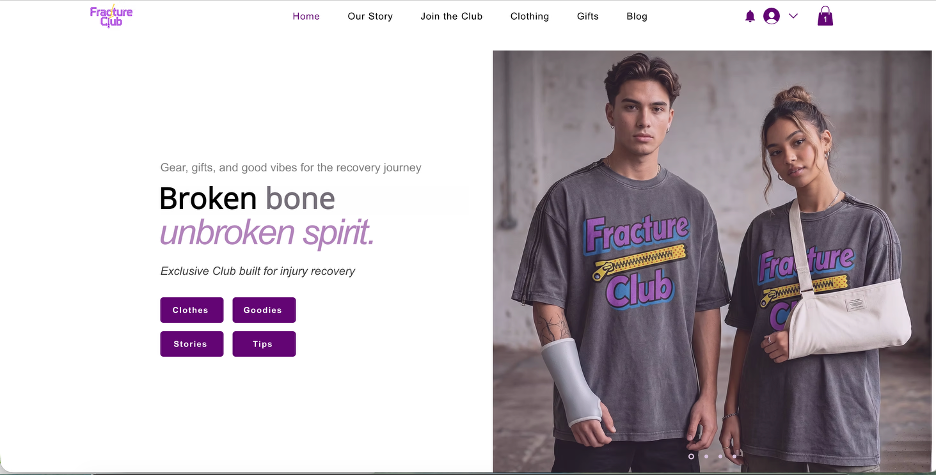
Recovery is hard enough without clothes that fight you. Fracture-club’s adaptive recovery wear is designed for exactly where you are right now: healing, moving carefully, and still wanting to feel like yourself. Our easy-on/off adaptive recovery sweatshirt and adaptive recovery pants with magnetic zippers are built for casts, braces, and the reality of getting dressed when your body is still mending. Visit Fracture-club to find recovery wear that meets you where you are.
Sources
These are the primary sources behind this guide, each worth bookmarking for different reasons:
This article is general information, not a substitute for advice from a qualified doctor. Consult a qualified healthcare professional about your own circumstances before acting on anything here.
Recommended
Comments