
Collagen and Bone Strength: Benefits You Need to Know
- T. Armstrong

- Jul 18
- 8 min read

Collagen is the most abundant protein in the human body and the primary structural component of bone tissue. The benefits of collagen bone strength are now backed by a growing body of clinical evidence, including a 2026 umbrella review of 113 randomized controlled trials covering 7,983 patients, which confirmed that collagen supplementation improves bone mineral density and bone turnover markers in postmenopausal women. Collagen forms the organic matrix that gives bone its flexibility and fracture resistance, working alongside calcium and vitamin D to create tissue that is both strong and resilient. If you are working to protect your bones or recover from a fracture, understanding what collagen actually does inside bone tissue is the right place to start.
1. Benefits of collagen bone strength: what the science shows
Collagen makes up roughly 90% of bone’s organic matrix. That matrix is the scaffold onto which minerals like calcium phosphate are deposited, giving bone its characteristic combination of hardness and flexibility. Without a healthy collagen matrix, bone becomes brittle even when mineral density appears adequate.
The 2026 umbrella review drawing on 16 systematic reviews confirmed that collagen consistently improves bone density and bone turnover markers. That finding matters because bone turnover markers reflect how actively your body is building new bone tissue. Improved markers signal that collagen supplementation shifts the balance toward bone formation rather than breakdown.

A separate 4-week pilot trial in endurance-trained premenopausal women found that collagen peptides increased the bone formation marker P1NP and reduced the inflammatory cytokine IL-6. P1NP is one of the most reliable indicators of active bone building. Seeing it rise after collagen supplementation confirms a direct biological effect on bone remodeling.
2. How collagen supports bone health at the cellular level
Collagen peptides are absorbed into the bloodstream as bioactive compounds rich in three amino acids: glycine, proline, and hydroxyproline. These amino acids act as direct signals to osteoblasts, the cells responsible for building new bone. When osteoblasts receive these signals, they stimulate bone matrix synthesis and accelerate extracellular matrix formation.
This process is distinct from what calcium and vitamin D do. Minerals handle the hardening phase of bone formation. Collagen handles the structural scaffolding phase. Both are necessary, and neither fully substitutes for the other.
Glycine supports the triple-helix structure of collagen fibers, which gives bone its tensile strength.
Proline stabilizes the collagen strand and contributes to the density of the bone matrix.
Hydroxyproline is unique to collagen and serves as a direct marker of collagen turnover in clinical blood tests.
Pro Tip: When reading supplement labels, look for “hydrolyzed collagen peptides” rather than gelatin or whole collagen protein. Hydrolyzed peptides have smaller molecular weights and are absorbed more efficiently into the bloodstream, where they can reach bone tissue.
3. Who benefits most from collagen for bone strength?
Not every person responds to collagen supplementation equally. The clearest benefits appear in populations under the highest mechanical or metabolic stress on their bones.
Postmenopausal women. This group has the strongest and most consistent evidence. Estrogen loss after menopause accelerates bone resorption. The 2026 umbrella review confirmed that collagen benefits are most pronounced in this population, with measurable improvements in bone mineral density across multiple studies.
Premenopausal women who train for endurance sports. High training loads create metabolic stress that can outpace bone repair. The pilot trial in endurance athletes showed collagen peptides stabilized the sRANKL/OPG ratio, a key marker of the balance between bone breakdown and bone formation.
Adults over 50 with low bone density. This group overlaps with postmenopausal women but also includes men with osteopenia. Evidence for men is less established, though the biological mechanisms are the same.
People recovering from fractures. Collagen plays a direct role in bone repair after injury, as the body relies on collagen synthesis to rebuild the bone matrix at the fracture site.
Younger active adults. Evidence here is limited and inconsistent. Collagen supplementation may support bone quality in athletes, but the magnitude of benefit is smaller than in older or postmenopausal populations.
Individual risk profiles, hormonal status, and mechanical stress levels all influence how much benefit you will see from collagen. The higher your baseline risk, the more likely you are to notice a meaningful effect.
4. What current research says about collagen dosing
Dosing is the most unsettled area of collagen research. A 2026 scoping review of 15 studies found substantial heterogeneity in dosing protocols, with no standardized recommended daily dose established for bone health specifically. That is not a reason to avoid collagen. It is a reason to be thoughtful about how you use it.
Most clinical studies cluster around 5g per day of hydrolyzed collagen peptides. Some trials use higher amounts, but the evidence does not clearly show that more is better for bone outcomes. The 5g range appears to be the practical starting point for bone-focused supplementation.
Co-supplementation with calcium and vitamin D is common in the strongest trials. This combination makes biological sense: collagen builds the matrix, and minerals fill it in. Separating these nutrients reduces the synergistic effect.
Dose range in studies: Primarily around 5g/day of hydrolyzed collagen peptides.
Duration: Most trials run 12 weeks or longer before meaningful bone density changes appear.
Form: Hydrolyzed peptides outperform whole protein sources for bioavailability.
Pairing: Combining collagen with calcium and vitamin D produces the best outcomes in clinical trials.
Standardization gap: No universal collagen dose exists, so consumer products vary widely in actual peptide content.
Pro Tip: Choose supplements that list the specific collagen type (Type I or Type II) and provide third-party testing certificates. Products without these details may contain lower peptide concentrations than their labels suggest.
For more guidance on selecting the right supplement, the Fracture-club guide on choosing bone health supplements breaks down what to look for in 2026.
5. How collagen fits into a complete bone health strategy
Collagen supplementation works best as an addition to proven bone health practices, not as a replacement for them. Experts in clinical nutrition and sports medicine consistently position collagen as an adjunct to calcium, vitamin D, and resistance exercise, based on clinical consensus and meta-analyses.
The distinction between collagen’s role and minerals’ role matters here. Calcium and vitamin D drive mineralization, the process that makes bone hard. Collagen drives matrix quality, the process that makes bone flexible and fracture-resistant. You need both working together.
Calcium: Aim for dietary sources first. Dairy, leafy greens, and fortified foods provide the mineral base that collagen matrix needs to mineralize properly.
Vitamin D: Supports calcium absorption and bone remodeling. Most adults in northern climates are deficient, which limits the effectiveness of every other bone health intervention.
Resistance exercise: Weight-bearing exercise applies mechanical load to bone, which directly stimulates osteoblast activity. Collagen supplementation appears to amplify this effect.
Protein intake: Adequate total protein supports collagen synthesis. Low-protein diets impair bone matrix repair even when collagen supplements are taken.
Sleep and stress management: Cortisol from chronic stress accelerates bone resorption. Sleep is when the majority of bone repair occurs.
Collagen supplementation also shows promise for reducing fracture risk when combined with these lifestyle factors, particularly in adults over 50 who are already managing bone density concerns.
Key takeaways
Collagen improves bone strength by building the organic matrix that holds minerals in place, and its effects are most consistent in postmenopausal women and active adults under high metabolic stress.
Point | Details |
Collagen builds the bone matrix | It forms the organic scaffold that calcium and vitamin D then mineralize for full bone strength. |
Postmenopausal women benefit most | A 2026 umbrella review of 113 RCTs confirmed consistent bone density improvements in this group. |
5g/day is the common clinical dose | Most studies cluster around this amount, often paired with calcium and vitamin D for best results. |
Collagen enhances bone formation | It stimulates osteoblasts and raises P1NP, a key marker of active bone building. |
Collagen is an adjunct, not a replacement | It works alongside calcium, vitamin D, and resistance exercise, not instead of them. |
What I’ve learned about collagen after years in bone recovery
The most common mistake I see is people treating collagen as a standalone fix. They start a supplement, skip the resistance training, and wonder why their bone density scan barely moves. Collagen does not work in isolation. It works because it gives your osteoblasts the raw materials they need to build matrix, and those osteoblasts need mechanical stimulation from exercise to do their job.
The research gap that frustrates me most is the lack of standardized dosing. Consumers are navigating a market where one product might deliver 2g of actual peptides and another delivers 10g, both labeled as “collagen supplements.” Until the industry standardizes peptide content and third-party testing becomes the norm, you are partly guessing. That is why I always recommend looking for products with specific peptide concentration data and independent lab verification.
The populations I feel most confident recommending collagen to are postmenopausal women and people actively recovering from fractures. The evidence is clearest there. For younger adults and men, the biological rationale is sound, but the clinical proof is thinner. That does not mean it will not help. It means you should set realistic expectations and track your own markers over time.
One thing the research consistently gets right: collagen supplementation enhances bone formation pathways without directly suppressing bone resorption. That asymmetry is important. It means collagen is building, not just slowing breakdown. For anyone in recovery or working to rebuild bone density, that distinction is worth understanding.
— Fracture
Recovery wear that supports your bone health routine
Healing from a fracture is physically and emotionally demanding. The right nutrition, including collagen supplementation, is one piece of the picture. The other piece is making daily life manageable while your body does the work of rebuilding.
[
](fracture-club.com)
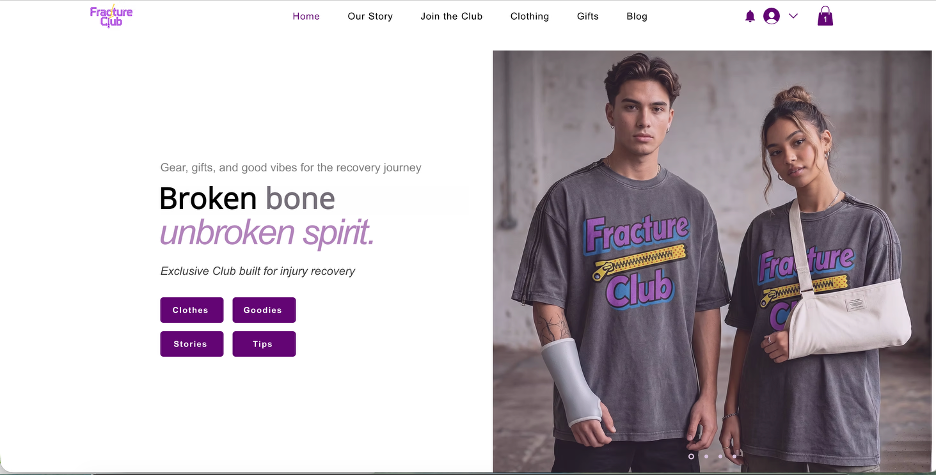
Fracture-club designs adaptive recovery clothing specifically for people healing from bone injuries. The adaptive recovery pants feature magnetic side zippers that make dressing possible with a cast or brace, so you spend less energy on logistics and more on recovery. Fracture-club also supports the Bone Health & Osteoporosis Foundation, so every purchase contributes to broader bone health awareness. If you are in recovery and looking for practical support, the easy-on recovery sweatshirt is built for upper limb fractures and designed to move with you, not against you.
FAQ
Is collagen good for bones?
Collagen is the primary structural protein in bone and directly supports bone matrix quality. Clinical research confirms it improves bone mineral density and bone formation markers, particularly in postmenopausal women.
How much collagen should you take for bone strength?
Most clinical studies use approximately 5g per day of hydrolyzed collagen peptides, often combined with calcium and vitamin D. No universal recommended dose has been established, so consult a healthcare provider for personalized guidance.
Does collagen help with bone repair after a fracture?
Collagen plays a direct role in bone repair by providing the matrix framework that new bone tissue grows into. Adequate collagen intake supports the rebuilding phase of fracture healing alongside proper nutrition and medical care.
Who sees the most benefit from collagen supplementation for bones?
Postmenopausal women show the strongest and most consistent benefits based on current evidence. Premenopausal endurance athletes and adults over 50 with low bone density also show meaningful responses, while evidence for younger adults and men remains limited.
Can collagen replace calcium and vitamin D for bone health?
Collagen cannot replace calcium or vitamin D. It supports bone matrix quality while minerals handle mineralization. Both are necessary, and they work best when used together alongside resistance exercise.
Recommended
Comments