
Dress Without Lifting Arms: Recovery Clothing for Broken Ribs

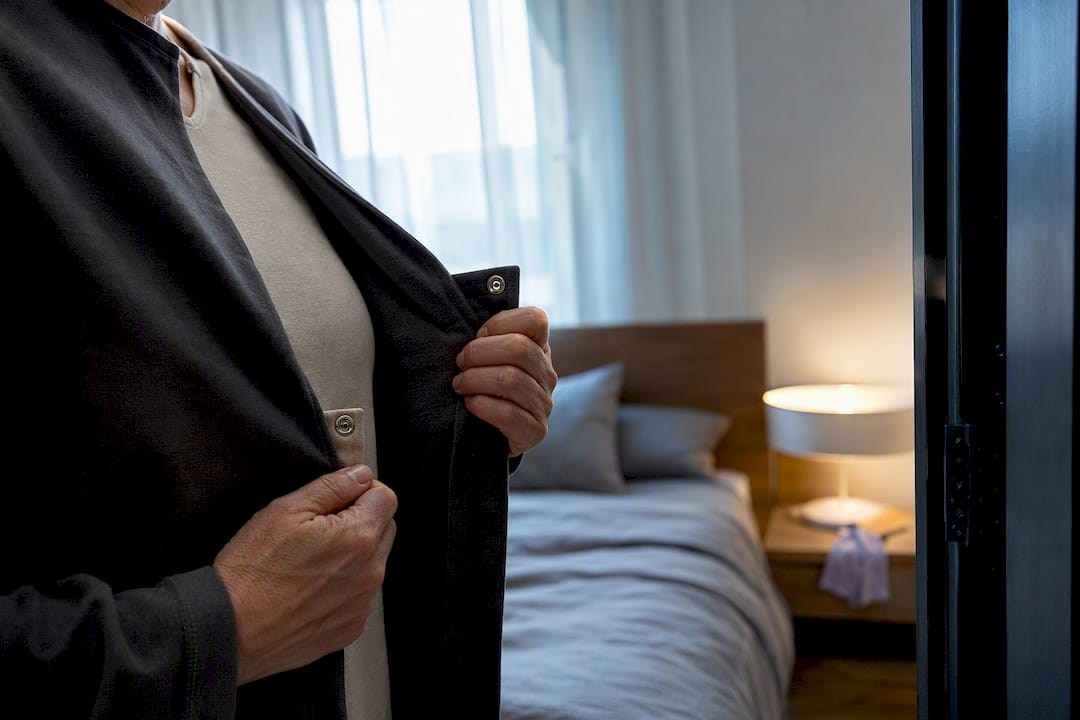
Right now, reach for front-opening tops, soft breathable fabrics, and loose bottoms with an elastic waist. Skip anything you have to pull overhead. If you’re considering a rib belt or compression wrap, check with your clinician first, and never tighten anything to the point where breathing feels restricted. If you’re struggling to catch your breath at any point, call your doctor before you try any garment or support again.
TL;DR:
Front-opening tops with wide necklines made of soft, lightweight fabrics are essential to minimize movement and reduce pain during dressing.
Compression belts can alleviate sharp pain from coughing or shifting but must be used with medical advice and loosened if breathing becomes restricted.
Always dress the injured side first, sit down to put on clothing, and avoid overhead reaches to prevent triggering intense rib pain.
Loose, relaxed-fit clothing such as oversized shirts and elastic waist pants decrease the tugging and pressure on fractured ribs during breathing.
Modifying existing clothes with side zippers or larger buttons can help maintain comfort and independence without purchasing specialized recovery garments.
Table of Contents
What Clothing Helps Most With Broken Ribs?
That first sentence is the whole strategy: reduce movement, reduce friction, reduce pressure. Every rib fracture hurts a little differently depending on which rib broke and how you’re built, but the clothing math stays the same. You’re managing pain that spikes with twisting, reaching, and deep breaths, so your wardrobe’s job is to get out of the way of your lungs and your arms.
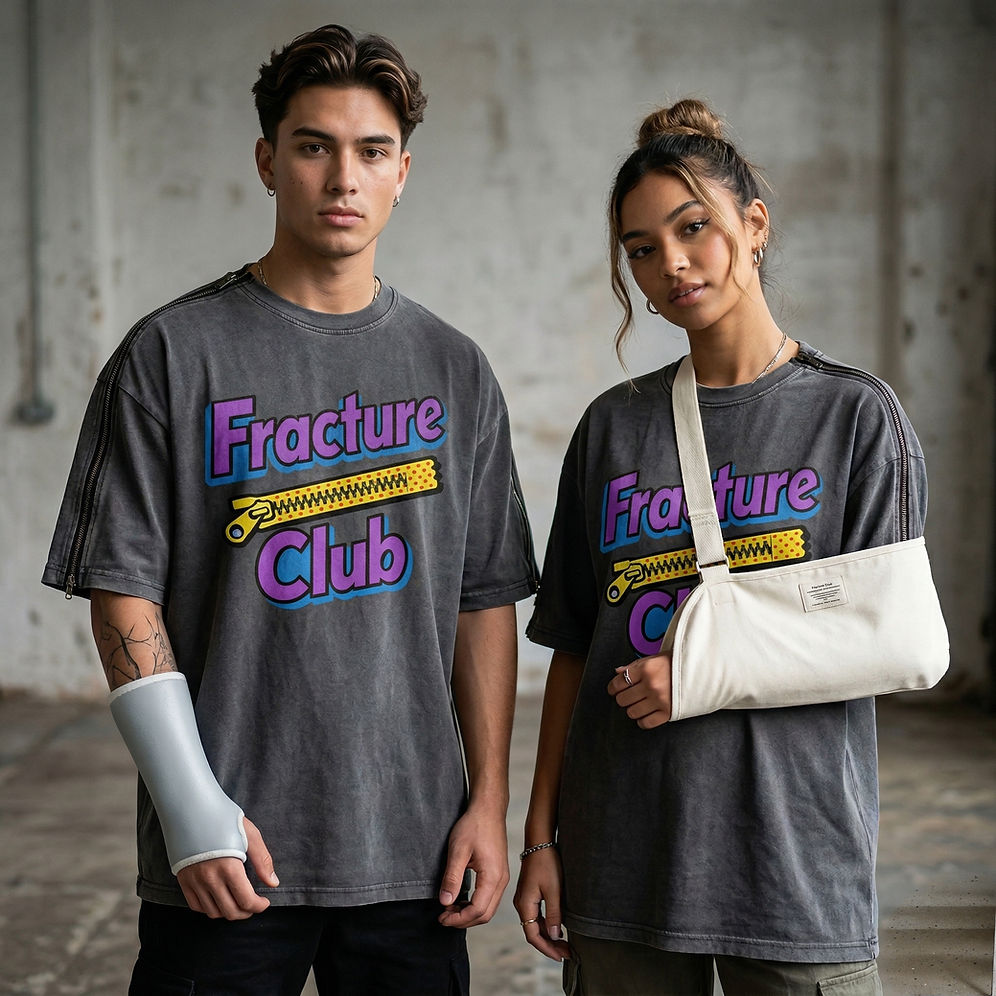
Front-opening tops do the heaviest lifting here. Button-downs, zip-up hoodies, and shirts with magnetic closures let you dress without raising your arms over your head, which is exactly the motion that makes a cracked rib scream. A wide neckline matters too, since even a stretchy pullover can require an awkward twist to get your head through.
[
](https://fracture-club.com/product-page/fracture-club-magnetic-shoulder-zip-tee-injury-recovery-wear)
Fabric choice affects pain more than people expect. Soft jersey, cotton, modal, and bamboo blends move with your body instead of fighting it, and they don’t trap heat against sore skin the way stiffer synthetics do. Coarse seams, thick side tags, and rigid waistbands can dig into a bruised rib cage every time you sit, bend, or roll over in bed.
Here’s what to look for when you’re shopping or digging through your own closet:
Front-zip or button tops instead of anything pulled overhead
Wide or stretchy necklines that don’t require twisting your shoulders
Tagless labels or printed tags to avoid a scratchy pressure point
Soft jersey, cotton, or modal fabrics with minimal seam bulk
Loose, lightweight layers for sleep that won’t bunch or rub during the night
Sleepwear deserves its own thought. A snug T-shirt that felt fine before your injury can become unbearable once you’re lying on your side at 2 a.m. Loose sleep shirts with a front opening reduce the number of times you shift, twist, or hold your breath just to get comfortable.
Do Rib Belts and Compression Wraps Actually Help?
A rib belt works by limiting how far your rib cage expands, which can meaningfully cut the sharp pain that comes with coughing, sneezing, or shifting position. Compression therapy can offer targeted stabilization and pain relief for chest wall injuries when it’s used appropriately and for the right person.
That “right person” part matters. If you have a recent fracture with significant pain, ask your clinician whether a belt fits your recovery plan. If you have COPD, asthma, or any condition that already makes breathing harder, a rib belt may do more harm than good by restricting the chest expansion your lungs need. This is a conversation for your doctor, not a guess you make alone in a pharmacy aisle.
Skin care is the part people skip and regret. Prolonged or overly tight compression can cause skin irritation, so look for flannel-lined or breathable options and check your skin daily for redness, chafing, or blistering. Compression garments can support healing and reduce movement-related pain, but only when they fit correctly and let your skin breathe.
Pro Tip: If you can’t take a full, comfortable breath with the belt on, it’s too tight. Loosen it a notch and reassess. A rib belt should feel supportive, never suffocating.
Quick safety checklist before you use any wrap:
Never tighten a belt to the point of restricting a full breath
Check skin under the belt daily for redness or breakdown
Choose flannel-lined or breathable materials over stiff neoprene
Stop and call your doctor if you feel dizzy, short of breath, or lightheaded
How Do You Get Dressed Without Hurting Your Ribs?
The core rule of dressing with broken ribs is simple: always dress the injured side first. Feeding the injured arm or side into a garment before the uninjured side minimizes the twisting and reaching that trigger sharp pain.
Sit down before you start. Standing while dressing adds balance demands your ribs don’t need right now.
Put the injured side into the sleeve or pant leg first, then bring the garment around your back and slide your unaffected side in second.
For front-opening tops, drape the shirt over your shoulders like a cape, feed the injured arm through, then the other, and button or zip from the bottom up to avoid overreaching.
For rib belts, wrap the belt around your torso while seated, secure the injured side loosely first, then adjust the closure directly in front of you rather than reaching around your back.
For bottoms, sit on the edge of a bed or chair, gather elastic-waist pants or shorts, and step in one leg at a time rather than standing and pulling up.
Stop if pain spikes sharply or you feel your breath catch. That’s your body telling you to ask a caregiver for help or pause and reset.
If someone is helping you dress, they should support the garment at shoulder height so you never have to lift your own arms above chest level. That one adjustment removes most of the pain caregivers see during morning routines.
How Do You Choose the Right Fit for Recovery Clothing?
Closures matter more than style right now. Front zips, large buttons, and side magnetic zips let you dress one-handed or with minimal shoulder movement, and adjustable fastenings let you loosen a garment on a bad-pain day without buying a new size.
Fit should feel supportive, not restrictive. Test any new top or bottom by taking a full breath while wearing it and reaching slightly forward, the way you would to grab a coffee cup. If either motion feels tight across your ribs, size up or choose a stretchier fabric.
A short buying checklist:
Prefer front zips, buttons, or side magnetic closures over pullover styles
Choose fabrics with washable, low-shrink care instructions since you’ll be doing laundry often during recovery
Look for flat or covered seams that won’t sit directly on a bruised rib
Check the return policy before buying, since fit needs can change week to week as swelling goes down
Favor hypoallergenic or tagless linings if your skin is sensitive from tape, wraps, or bandages
Measure yourself before you shop rather than guessing your usual size. Swelling and bracing can change how a garment fits by a full size in either direction during the first few weeks.
Fracture-club’s Approach to Rib Recovery Clothing
Some companies build recovery wear around the problems this article covers: garments that open at the side or front, use magnetic zips instead of buttons where grip strength is limited, and skip stiff seams that dig into healing ribs. The goal isn’t just function. It’s making the six to eight weeks of rib fracture recovery feel less like a hospital gown and more like your own clothes.
A few ways that shows up in practice:
Adaptive tops and layers designed around easy dressing after a fracture or surgery rather than standard retail cuts
Community stories from people navigating the same dressing challenges, shared through Fracture-club’s recovery resources
A portion of proceeds supporting the Bone Health & Osteoporosis Foundation, tying every purchase to a broader mission around bone health
Can You Modify Clothes You Already Own?
You don’t need to replace your whole wardrobe to make dressing easier. A few simple modifications turn regular clothes into recovery-friendly ones.
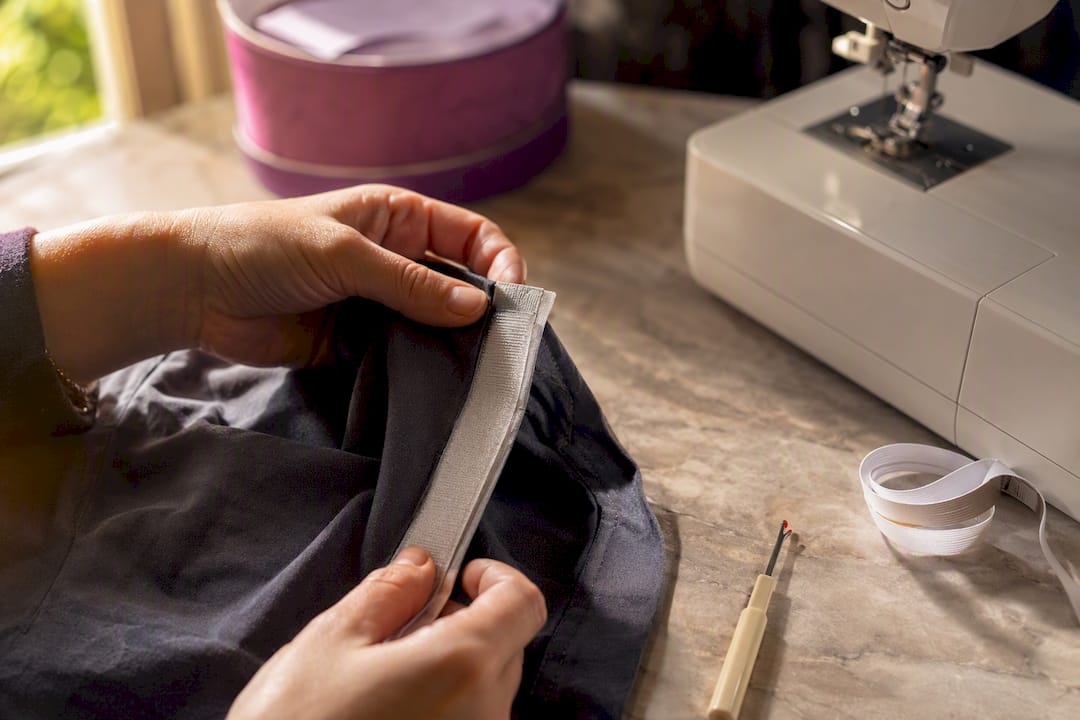
Cutting a slit up the side seam of an old T-shirt and adding a few strips of hook-and-loop tape turns a pullover into a side-opening top you can step into rather than pull overhead. Swapping shirt buttons for larger, easier-to-grip versions helps if your range of motion is limited by pain rather than a cast. If a waistband feels tight or digs in when you sit, a seam ripper and a length of soft elastic can loosen it in minutes.
For sleepwear, an oversized button-down (even borrowed from a partner or from the back of your own closet) often works better than anything marketed as pajamas, since the extra room means less fabric pulling across your ribs when you roll over. Removing scratchy tags entirely, rather than just cutting the visible loop, prevents the leftover stub from becoming its own irritation point against tender skin.
If you’re handy with a sewing machine, adding a strip of soft jersey behind an existing zipper track can quiet the metal-on-skin contact that some zip-up hoodies create. None of this needs to be perfect. The point is buying yourself a few extra weeks of comfort out of clothes you already have while you decide whether to invest in adaptive pieces built for the job.
Which Garment Types Actually Take Pressure Off Your Ribs?
Loose-fitting shirts consistently outperform fitted ones during rib recovery, not because loose automatically means comfortable, but because fitted fabric follows your rib cage’s every expansion and contraction when you breathe. A snug shirt essentially fights your lungs all day. An oversized or relaxed-fit shirt drapes instead of clinging, so a deep breath doesn’t translate into fabric tugging against a fracture line.
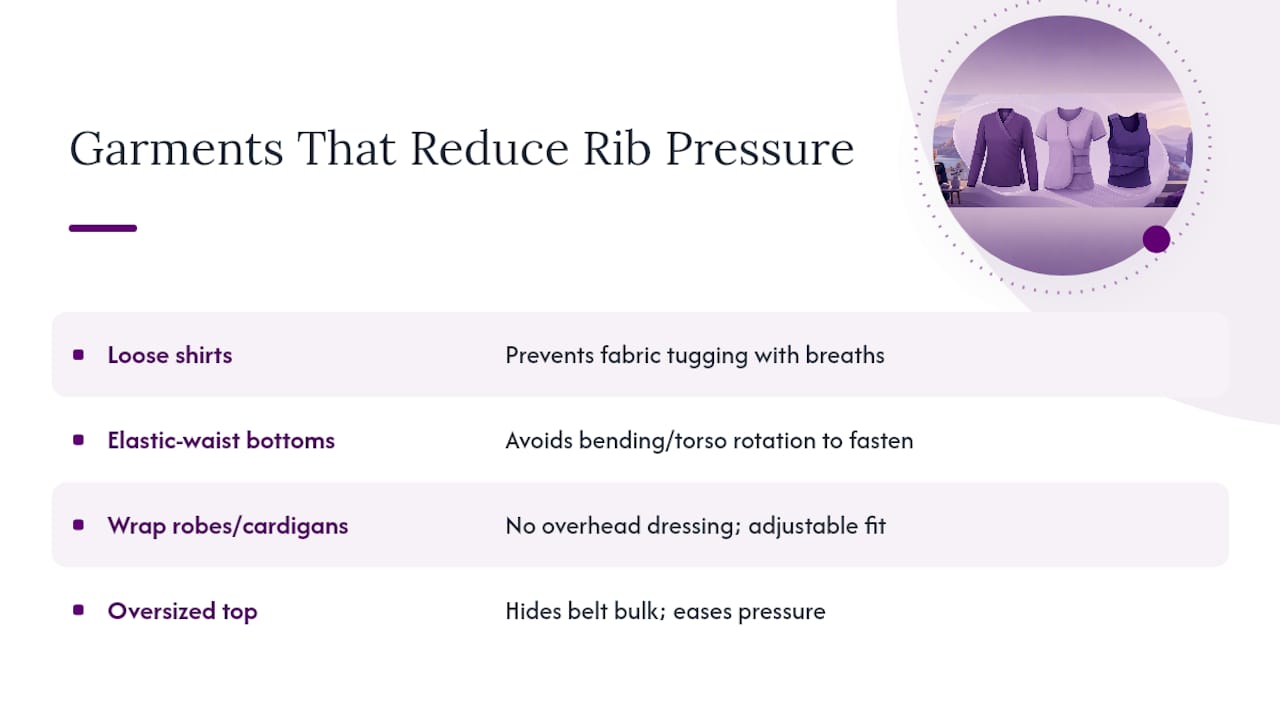
Elastic waistbands solve a problem most people don’t think about until they’re wincing through it: buttoning or zipping pants requires exactly the kind of forward bend and torso rotation that hurts most with broken ribs. Pull-on joggers, soft knit pants, and drawstring bottoms with a wide, forgiving waist remove that step entirely.
Wrap-style robes and cardigans beat pullover sweaters for the same reason front-opening shirts beat T-shirts: nothing goes over your head, and you can adjust how tight or loose it sits without redressing. For anyone still using a rib belt underneath, a slightly oversized layer on top also hides the belt’s bulk, which matters more to comfort and confidence than people expect once they’re back around coworkers or extended family.
What Mistakes Make Rib Pain Worse While Dressing?
The single most common mistake is reaching overhead to pull on a T-shirt out of habit, before remembering the injury. That reflex motion, done fast and without thinking, is often what causes the sharpest pain spikes during an otherwise calm day. Building a new habit of reaching for front-opening layers first, even at home alone, prevents the accidental overhead reach.
The second mistake is overtightening a rib belt in an attempt to get more pain relief. More compression is not automatically better. A belt cinched too tight restricts the chest expansion your lungs need for a full breath, which can leave you feeling short of breath or dizzy on top of the original rib pain.
Other frequent errors worth avoiding:
Standing to put on pants instead of sitting, which adds balance strain to an already painful twist
Ignoring skin irritation under a belt or wrap until it becomes a blister or rash
Choosing fashion-forward fitted clothes over function during the first few weeks of healing
Skipping the “injured side first” rule out of habit, especially when rushed in the morning
Wearing the same rib support for days without loosening it to let skin breathe and check for redness
A Daily Checklist for Dressing With Broken Ribs
Each morning, check three things: can you breathe comfortably, is your skin under any support clear of redness, and does your support need loosening before you head out the door? Dress your injured side first, every time, without exception. Keep a spare front-opening top within reach for warm afternoons or spills. If pain worsens, breathing becomes difficult, or you notice skin breakdown, call your clinician the same day.
— Fracture
Fracture Club’s Easy-On Recovery Wear
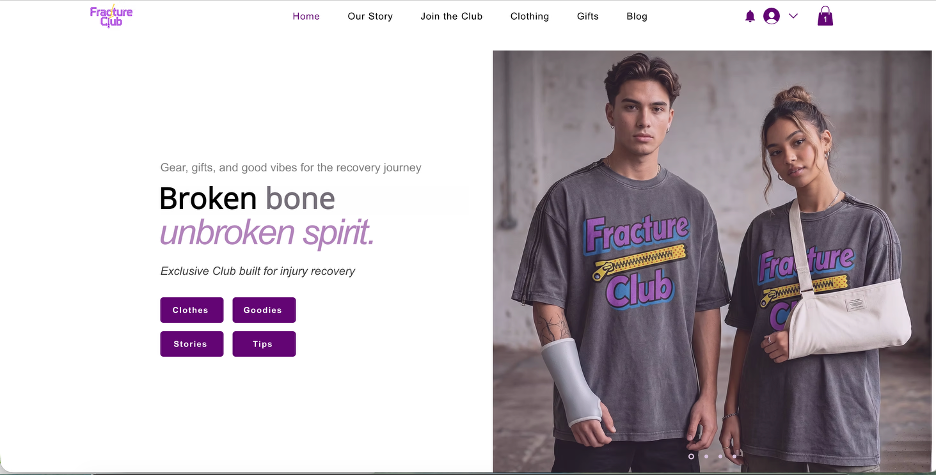
Everything above points to the same short list of features: front or side openings, soft breathable fabric, and closures you can adjust without a fight. Fracture-club’s adaptive recovery pants with side magnetic zippers are built around exactly that list, so you can sit down, step in, and zip up the side without twisting your torso or bending forward.
[
](fracture-club.com)
The fabric is soft against healing skin, the fit is adjustable as swelling changes week to week, and the magnetic closures mean you’re not fighting a button with sore ribs and stiff fingers. If you’re unsure which size fits your current frame, or your body has changed since the injury, reach out through Fracture-club’s inquiry and sizing help page before you order. Check the product page for sizing and return details, and pick the pair that gets you dressed in under a minute, pain permitting.
This article is general information, not a substitute for advice from a qualified doctor. Consult a qualified healthcare professional about your own circumstances before acting on anything here.
Sources
Recommended
Comments