
Cast-Friendly Tops Comparison 2026: Best Easy-On Picks

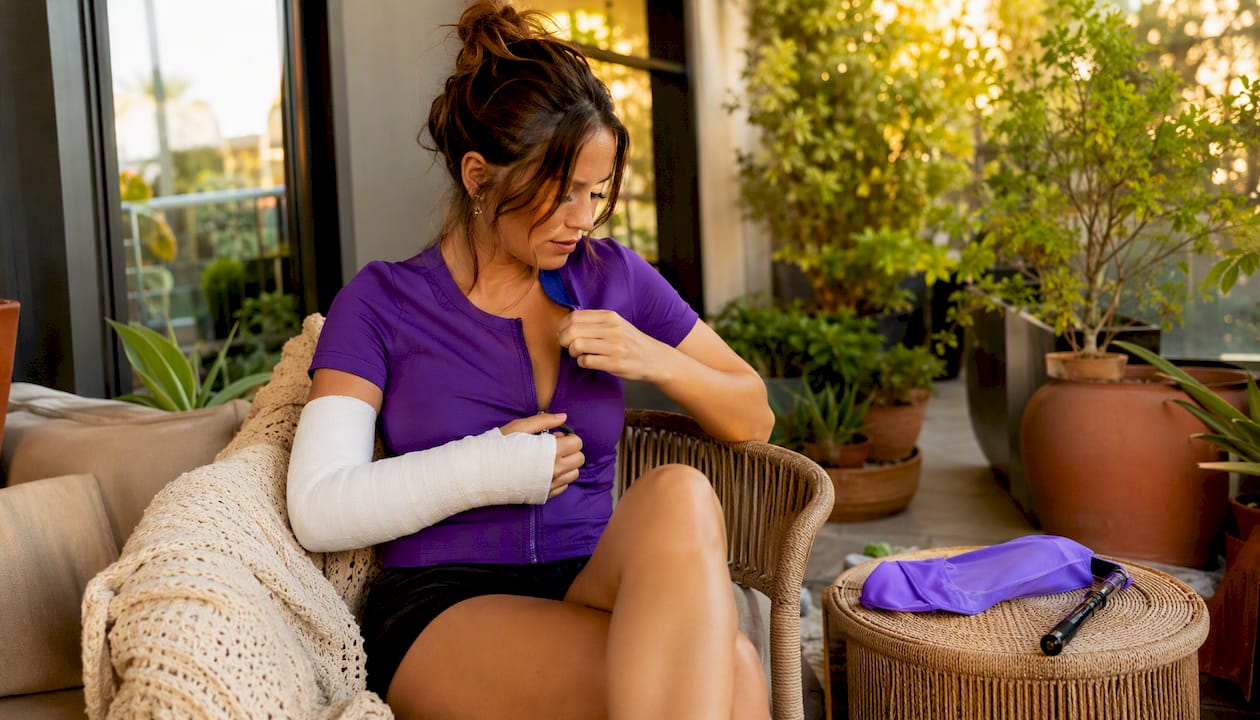
The best cast-friendly top for most arm-cast wearers right now is the Fracture-club Unisex Easy-On/Off Sweatshirt. Three reasons it works when other tops fail:
Easy on/off closure: Magnetic zipper or side-zip panel means you never wrestle fabric over a bulky cast.
Roomy arm opening: The front-panel design gives the casted limb a clear, wide entry path with zero forcing.
Breathable fabric: Recovery-focused material keeps skin comfortable under and around the cast all day.
Fracture-club donates a portion of every sale to the Bone Health & Osteoporosis Foundation, so your purchase supports bone health research beyond your own recovery. For shower protection, pair any top with a waterproof cast cover like DryCAST, which comes in adult and pediatric sizes with a watertight seal.
Table of Contents
What should you look for in a cast-friendly top?
Getting dressed with a cast is genuinely hard. The right top makes it manageable. The wrong one makes mornings miserable. Here is the checklist that cuts through the noise.
The six evaluation axes
Ease of putting on with a cast: Front zips, magnetic side zips, snap or Velcro front panels, and wrap styles all remove the need to lift a rigid cast overhead. Adaptive clothing specialists consistently rank front-opening shirts and magnetic snaps as the fastest, most independent options.
Best for (injury type/location): Wrist and forearm casts need wide sleeve entries. Shoulder or upper-arm injuries need open-shoulder or cape-style cuts. Elbow casts need the most room of all.
Style/look: Recovery wear does not have to look clinical. Dolman silhouettes, elevated loungewear, and structured ponchos all read as intentional outfits.
Material and breathability: Cotton blends, modal, and technical knits breathe well and stay soft against skin that may be sensitive near cast edges.
Care and washability: Machine-washable, cold-cycle fabrics hold up best. Magnetic closures need a mesh laundry bag to protect the hardware.
Price and value: Adaptive tops typically run $35–$75. Anything engineered specifically for cast clearance is worth the premium over a stretched-out regular tee.
Sleeve styles that work and ones that don’t
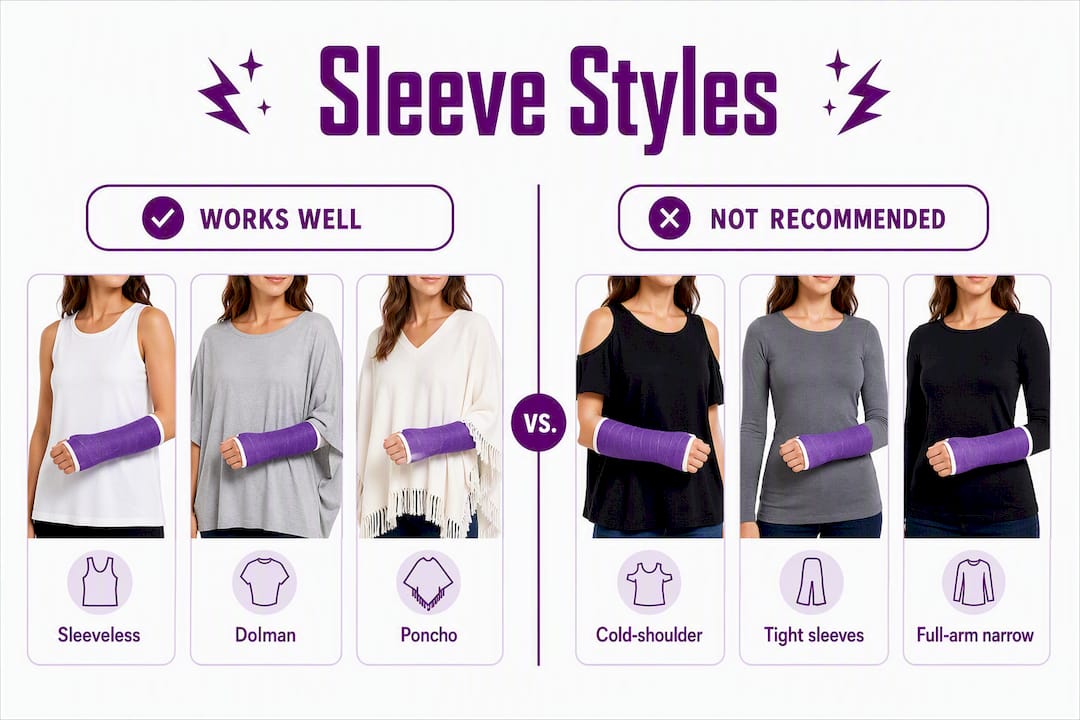
Sleeveless, dolman, and poncho cuts give the casted arm a continuous, wide opening. Oversized drop-shoulder and batwing styles work for wrist casts. Cold-shoulder designs look appealing but usually fail: the cutout is too small and too high to clear a full arm cast. Narrow-sleeved tops are the worst choice regardless of how stretchy the fabric claims to be.
Sizing rules
Go one size up from your usual. Measure the widest point of your cast circumference and your shoulder-to-elbow length, then compare those numbers to the brand’s size chart before ordering. When in doubt, choose an open-sided or wrap style that adjusts to fit rather than relying on a fixed sleeve diameter.
Pre-purchase checklist:
Does the top open fully at the front or side without overhead lifting?
Is the arm opening at least 2 inches wider than your cast’s widest point?
Is the fabric machine-washable and free of delicate embellishments near closures?
Does the vendor provide a size chart with sleeve circumference measurements?
Can you put it on and take it off with one hand in under 60 seconds?
Pro Tip: Measure your cast at its widest point, then add 2 inches. That number is your minimum sleeve opening. Compare it directly to the brand’s fit chart before clicking “add to cart.”
Fracture-club picks: which adaptive tops actually work for cast wearers
Fracture-club designs its tops specifically around one-handed dressing and easy-on/off engineering, not as an afterthought to a standard cut. The magnetic zipper and side-entry panel on the sweatshirt are the two features that separate it from generic oversized tops.
Feature | Fracture-club Easy-On/Off Sweatshirt |
Ease of putting on | Magnetic zip panel; no overhead movement needed |
Best for | Upper limb injuries: wrist, forearm, elbow fractures |
Style/look | Clean, unisex athletic silhouette |
Material | Soft recovery-focused blend; breathable and cast-edge friendly |
Care/washability | Machine wash cold; close zip before washing |
Price/value | Mid-range adaptive pricing; purpose-built vs. generic alternatives |
Key specs worth knowing:
Closure: Magnetic zipper panel on the side seam allows one-handed fastening without fumbling.
Opening design: Front panel construction gives the casted limb a clear, unobstructed entry path.
Fabric: Soft knit blend that stays comfortable against sensitive skin near cast edges.
Washing: Machine wash cold, tumble dry low; close the magnetic closure before placing in the wash.
Sizing: Order one size up if your cast is at the elbow or above.
For readers who want coordinated recovery wear, Fracture-club’s adaptive recovery pants with magnetic side zippers pair directly with the sweatshirt and follow the same one-handed closure logic.
How do you get dressed with a top when you have a cast?
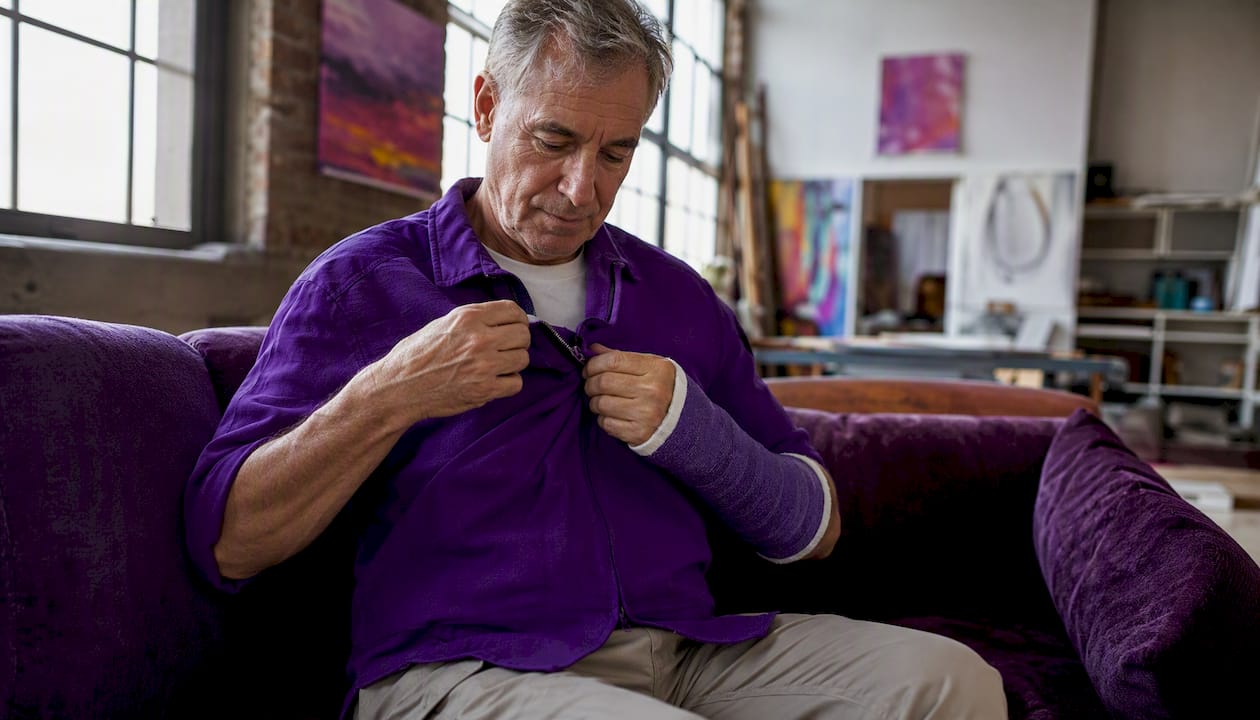
Always insert the casted arm first, then use your mobile arm to arrange the rest of the garment. That single rule prevents most of the fabric-catching and cast-banging that makes mornings painful.
For front-opening tops (zip or snap):
Open the front panel or zip fully before picking up the garment.
Slide the casted arm into its opening first, keeping the arm relaxed.
Bring the garment around your back with your mobile hand.
Insert the mobile arm into its sleeve.
Fasten the zip or snaps from bottom to top with one hand.
For ponchos and caftans:
Lay the poncho flat on a surface or bed.
Lower your head through the neck opening first.
Let the fabric fall; guide the casted arm through the side opening if there is one.
For oversized pull-on tops:
Bunch the fabric up to the neck opening.
Insert the casted arm into the sleeve first, then duck your head through.
Pull the mobile arm through last.
Pro Tip: Keep a dressing stick or long-handled hook nearby for pulling fabric over the cast. Non-slip pads on your dressing surface stop the garment from sliding while you work. Before showering, put on a waterproof cast cover and remove it before dressing to keep the cast dry and the fabric clean.
If pain increases or you feel pressure on the cast during dressing, stop and ask for help. No outfit is worth a setback.
How to care for your cast-friendly tops
Adaptive tops with magnetic closures and engineered openings last longer with a little extra care. The fabric and hardware both need attention.
Materials that hold up well:
Cotton-modal blends and technical knits stay soft wash after wash.
Avoid delicate knits, lace trim near closures, or rigid structured fabrics that can snag on cast edges.
Washing guidance:
Machine wash cold on a gentle cycle; hot water degrades elastic fibers and can weaken magnetic closure adhesion over time.
Use a mild, fragrance-free detergent to protect sensitive skin.
Place tops with magnetic closures in a mesh laundry bag to prevent the magnets from catching on other garments.
Tumble dry low or air dry flat to preserve the garment’s shape and closure integrity.
Quick maintenance checklist:
Check seams at the arm opening after every few washes; reinforced stitching is the first thing to loosen with repeated use.
If snap tape loosens, re-sew the anchor points before the snap pulls free entirely.
Enlarged arm openings that stretch out of shape can be taken in by a tailor with a simple seam adjustment.
Remove any cast cover or accessory before washing the top.
What’s trending in 2026 for cast-friendly tops?
The clearest shift in 2026 adaptive fashion is away from decorative cutouts and toward engineered openings with real function. Cold-shoulder designs had a long run, but they simply don’t provide the continuous, wide opening a bulky cast needs. The trends that actually work this year:
Adaptive-engineered closures: Magnetic zips and side-entry panels are moving from medical supply catalogs into mainstream recovery wear.
Utility-inspired silhouettes: Structured ponchos, oversized utility shirts, and relaxed blazers with open-front designs look intentional, not improvised.
Elevated loungewear: Soft, recovery-friendly fabrics in neutral and bold colorways that work for both home recovery and going out.
Versatile ponchos and caftans: Ponchos eliminate restrictive armholes entirely, making them particularly effective during early recovery when pain limits overhead movement.
Sustainable technical fabrics: Recycled cotton blends and low-impact dyes are appearing in adaptive lines, adding an ethical dimension to the purchase.
Cold-shoulder tops fail because the cutout sits at the wrong height and width for most cast profiles. A full-arm cast extends well below the shoulder, so the cutout provides no clearance where it actually matters.
Key Takeaways
For most arm-cast wearers, the single most important purchase decision is the closure type: a magnetic zip or front-panel opening removes the need to lift the casted arm overhead and makes independent dressing possible from day one.
Point | Details |
Closure type is the priority | Choose magnetic zips, front snaps, or wrap styles; avoid pullover tops with narrow sleeves. |
Sleeve opening clearance | Your sleeve opening should be at least 2 inches wider than the widest point of your cast. |
Sizing up is standard | Order one size larger than usual to accommodate cast bulk without straining seams. |
Care protects closures | Machine wash cold in a mesh bag; tumble dry low to preserve magnetic hardware and fabric shape. |
Fracture-club recommendation | The Fracture-club Easy-On/Off Sweatshirt is the top-rated pick for upper-limb fractures, with magnetic zip closure and recovery-focused fit. |
Pair your top with a waterproof cast cover for showers and a dressing stick for fully independent mornings.
Why Fracture-club builds tops this way
Recovery wear should reduce friction, not add to it. Fracture-club designs adaptive tops around one core idea: getting dressed should not require help, pain, or a 20-minute struggle. The magnetic zip panel and engineered arm opening on the Easy-On/Off Sweatshirt came directly from that principle, not from adapting a standard athletic cut.
The brand’s commitment extends beyond the garment. A portion of every purchase goes to the Bone Health & Osteoporosis Foundation, connecting individual recovery to broader bone health advocacy. The community side of Fracture-club, including shared recovery stories and practical dressing guidance, reflects the same belief: healing is easier when you feel like yourself, not like a patient.
If you’re unsure about sizing or which top fits your specific cast type, Fracture-club’s support team is there to help you get it right before you order.
Ready to order your Fracture-club adaptive top?
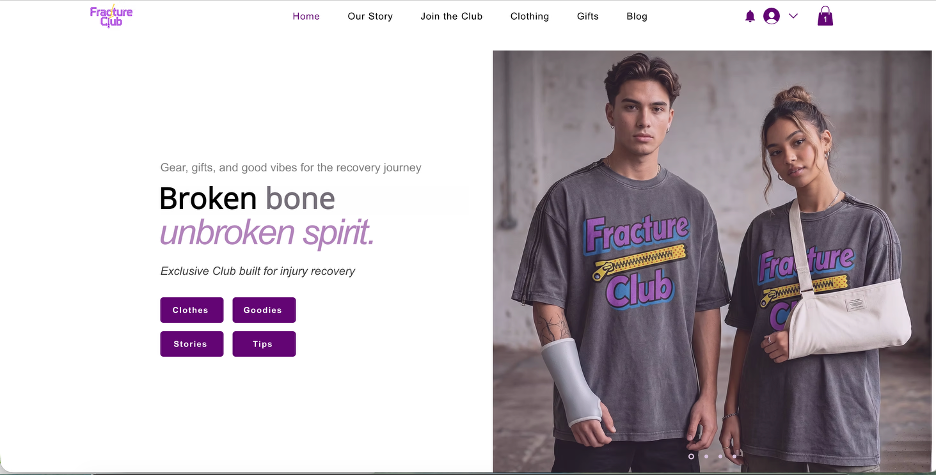
Recovery is hard enough without fighting your clothes every morning. Fracture-club’s Easy-On/Off Sweatshirt is purpose-built for upper-limb fractures, with a magnetic zip closure that works with one hand and a fit designed around cast clearance, not just “oversized.”
[
](fracture-club.com)
One-handed magnetic zip closes and opens without lifting the casted arm.
Recovery-focused fabric stays soft against sensitive skin near cast edges.
Donation included: every purchase supports the Bone Health & Osteoporosis Foundation.
Community resources and sizing guidance are available for every order.
Measure your cast at its widest point, check the size chart, and order one size up if you’re between sizes. Need help with a specific measurement or a custom sizing question? Visit the inquiry page and the team will get back to you quickly.
Sources and further reading
What To Wear When You Have a Broken Arm: 5 Tops to Wear – Fabulous after 40
Fracture Recovery Clothing: What to Wear With Casts, Slings, and Braces – Fracture-club
Style Tips for Wearing a Recovery Cast With Confidence – Fracture-club
The Best Way to Get Dressed After a Broken Bone or Surgery – Fracture-club
Always check the manufacturer’s size chart and your care provider’s cast-care instructions before purchasing. This article provides general information, not medical advice; confirm specific recovery needs with your healthcare provider.
Recommended
Comments