
Care Package Checklist for Orthopedic Recovery

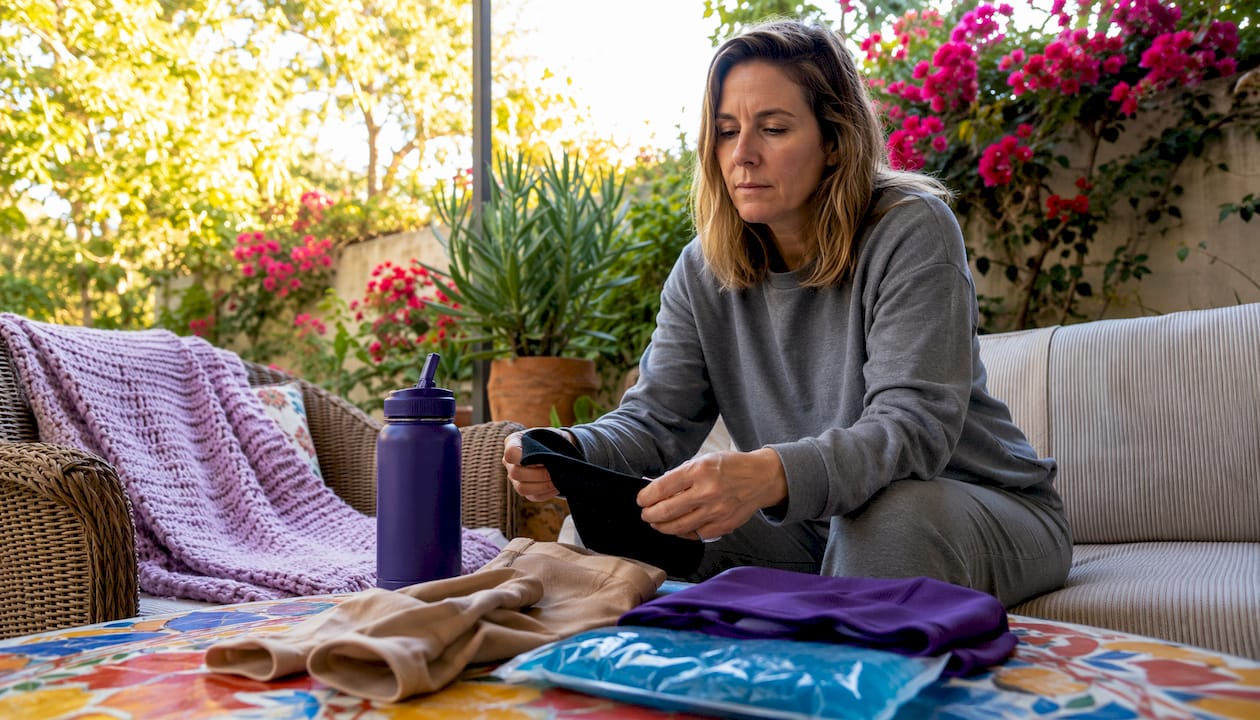
What belongs in your orthopedic recovery care package?
The most effective care package for orthopedic recovery covers five categories: medical supplies, adaptive clothing, comfort aids, mental health support, and nutrition. Getting all five right means the difference between a package that sits unused and one that genuinely makes the first weeks easier. Here is a practical checklist to guide you.
Core categories at a glance:
Medical essentials: cold and compression therapy, compression stockings, mobility aids, hygiene tools
Adaptive clothing: front-opening tops, loose-fit bottoms, non-skid socks, sock aids
Comfort aids: cushions, satin sheets, moisturizer, lip balm
Mental health support: audiobooks, puzzles, coloring books, streaming gift cards
Nutrition and hydration: water bottle with straw, protein-rich snacks, easy meals
Table of Contents
1. Cold and compression therapy devices
Cold and compression therapy is the top priority in the first weeks after orthopedic surgery. These devices apply steady cooling while delivering pneumatic compression that actively moves fluid away from the injury site, something a basic ice pack simply cannot do. Swelling peaks in the first 72 hours, so having this ready on day one matters.
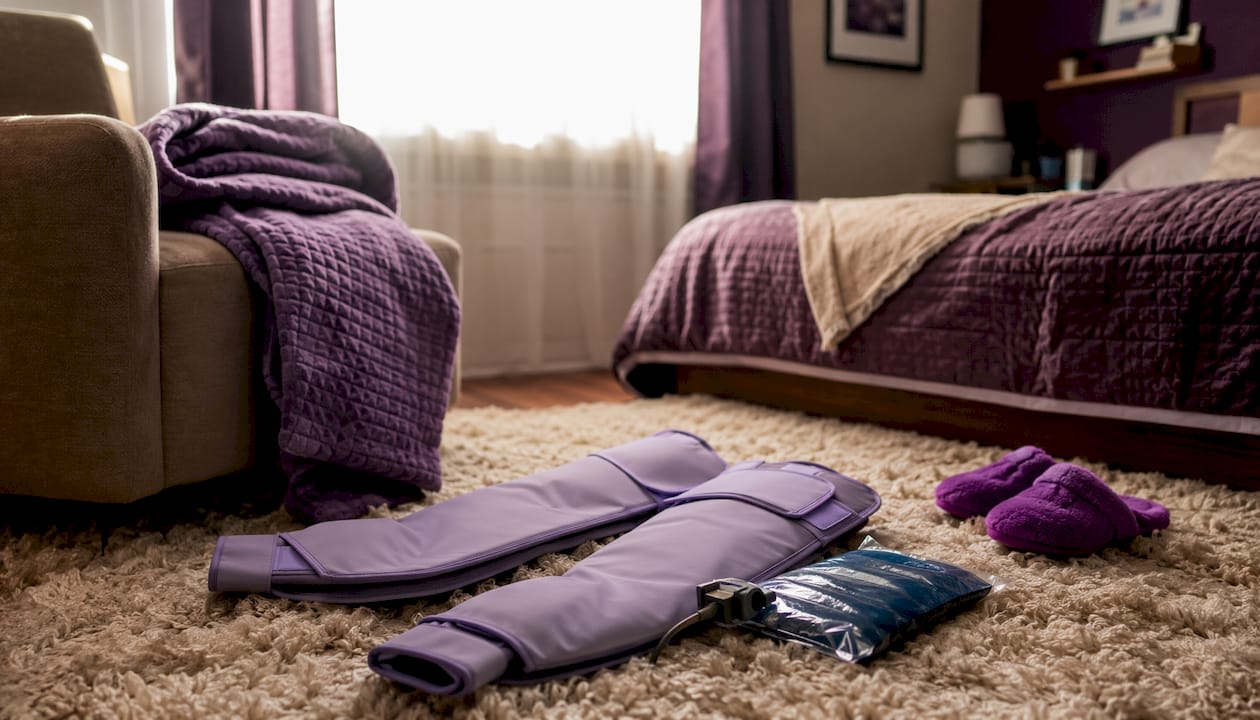
A simple gel pack works as a backup when you are away from home, but wrap it in a thin towel and keep sessions to 15–20 minutes. Cold therapy overuse can damage skin, so always follow your surgical team’s timing instructions.
2. Medical-grade compression stockings
Compression stockings reduce fluid buildup and lower the risk of blood clots during the weeks when movement is limited. Surgeons often recommend wearing them day and night in early recovery. Choose a pair that fits snugly without pinching, and ask your care team how long to wear them daily.
3. Mobility aids and reacher tools
A walker, cane, or crutches give you stability while strength returns to the operated area. Most patients start with a walker, then transition to a cane around weeks two to three. Set the height correctly so you are not hunching over. A reacher or grabber tool lets you pick things off the floor and dress with far less strain. Practice with it before surgery so it feels natural once you are home.
4. Hygiene and bathroom safety aids
Lower-limb surgery creates real bathroom challenges. A shower bench, grab bars, and a raised toilet seat reduce the strain of getting up and down. According to MedlinePlus, a raised seat keeps you from flexing the knee too much and a non-slip bath mat outside the tub prevents falls. A long-handled shower sponge and a sock aid round out the essentials.
Pro Tip: Practice using your shower bench and toilet safety rails before surgery day. Getting familiar with them while you still have full mobility makes the first days home much less stressful.
5. Adaptive clothing for casts and braces
Adaptive clothing with front openings, loose fits, and elastic waists prevents strain while dressing and reduces fall risk. These designs accommodate casts, braces, and reduced mobility in the early weeks of recovery. Front-opening tops are especially useful after shoulder or arm surgery, since pulling anything over your head is painful and risky.
Look for adaptive recovery pants with side openings that slide on without bending or twisting. Pair them with non-skid socks, which add grip on hard floors and cut the risk of slipping during those first unsteady steps.
Pro Tip: Lay out your clothing the night before each day. Choosing front-opening pieces and placing them within arm’s reach of your recovery chair saves energy and frustration when mornings feel hard.
6. Comfort essentials for rest and positioning
Satin sheets make getting in and out of bed easier by letting you slide into position rather than fighting the fabric. A firm cushion on a low chair or sofa helps you sit down and stand up without straining the surgical site. Pillows for leg elevation are worth including too. Keeping the leg slightly above heart level helps drain swelling faster, especially when paired with cold therapy.
Moisturizer and lip balm belong in every orthopedic recovery package. Hospital air and pain medications both dry out skin and lips quickly, and dry, cracked skin is uncomfortable when you are already dealing with enough.
7. Hydration and nutrition support
A water bottle with a straw is one of the most practical items in any post-surgery kit. Pain medication commonly causes constipation, and staying well hydrated helps counteract that. High-protein snacks support tissue repair. Think cheese, nuts, whole grain crackers, and fruit rather than processed options that offer little healing value.
Meal delivery gift cards are worth adding for the first two to three weeks, when cooking is genuinely difficult. They give the person recovering the freedom to order what sounds good without any effort.
8. Mental health and entertainment items
Recovery brings long, slow days. Audiobooks are especially helpful for patients recovering from arm or shoulder surgery who cannot hold a book easily. Puzzles and coloring books work well for seated recovery from knee or hip procedures. Streaming gift cards let someone choose what they want to watch without any setup burden.
Stagger the entertainment gifts if you can. An audiobook credit or streaming card helps in the first foggy week, while a puzzle or coloring set becomes more appealing once the initial disorientation lifts. For more ideas, bone fracture recovery gifts that support mental well-being are worth exploring.
9. Safety considerations and allergen awareness
Check for fragrance sensitivities before including candles, essential oils, or scented lotions. Avoid foods that could interact with medications, and always label any food items with ingredients. Keep packaging simple: easy-open bags over heavy wrapping, and no bulky boxes unless the item needs protection. The goal is a package the person can open and use independently, not one that requires help to unpack.
10. How caregivers should assemble and time delivery
Consulting your surgeon or physical therapist before purchasing specific aids prevents over-gifting and keeps everything aligned with the actual recovery protocol. Recovery needs vary widely, and some items may be unnecessary or even contraindicated depending on the surgery type.
Send immediate essentials before or on the day of discharge: the water bottle, compression stockings, and comfort items. Save stimulation gifts like puzzles and books for the end of the first week, when the fog of anesthesia has lifted. A follow-up check-in a week later, asking what they actually need now, often matters more than the original package.
Pro Tip: Before the patient comes home, remove loose rugs and clear walking paths between the bedroom, bathroom, and main living area. Set up a recovery chair with a side table, charger, water bottle, and remote within arm’s reach. A safe, clear environment is the most practical gift a caregiver can give.
How Fracture-club supports orthopedic recovery with adaptive wear
Fracture-club was built specifically for people who are stuck between feeling like a patient and feeling like themselves. The adaptive recovery wear addresses the real frustration of getting dressed when a cast, brace, or surgical site makes every shirt and pair of pants feel like an obstacle.
The adaptive recovery pants feature side magnetic zippers that open fully, so you never have to bend, twist, or pull. The upper limb recovery sweatshirt is designed for arm and shoulder injuries, with an opening that accommodates a sling without any overhead pulling. Both pieces are built for real recovery days, not just hospital visits.
Fracture-club also contributes a portion of proceeds to the Bone Health & Osteoporosis Foundation, connecting individual recovery to a broader community of people who understand what healing actually looks like.
Pro Tip: Fracture-club’s adaptive wear works best when paired with the other checklist items above. Pair the recovery pants with non-skid socks and a reacher tool for a complete dressing routine that protects the surgical site from day one.
Magnetic side zippers for full, no-bend access
Designs that fit over casts, braces, and splints
Soft, comfortable fabrics for all-day wear during recovery
Available for both upper and lower limb injuries
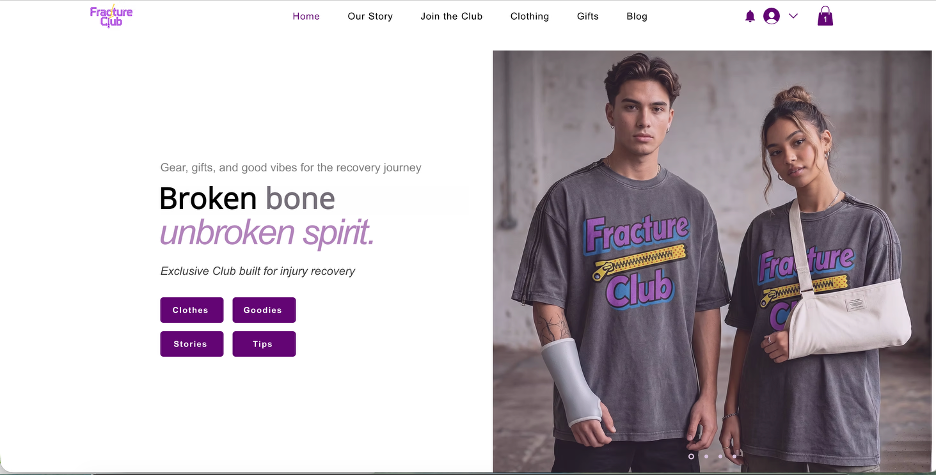
Fracture-club: recovery wear built for real healing
[
](fracture-club.com)
When you are putting together a care package for orthopedic recovery, adaptive clothing is often the item people forget until the first morning home makes it obvious. Fracture-club fills that gap with recovery wear designed from the ground up for people healing from fractures, joint replacements, and orthopedic procedures.
The magnetic zipper pants and adaptive sweatshirts let you get dressed without asking for help, without straining the surgical site, and without the frustration of fighting fabric that was never designed for recovery. That independence, even in something as small as getting dressed, genuinely lifts morale during a long healing process.
Visit Fracture-club to find the right adaptive wear for your recovery, or reach out through the inquiry page if you have questions about which pieces fit your specific injury.
Key Takeaways
A complete orthopedic recovery care package combines medical essentials, adaptive clothing, comfort aids, mental health support, and nutrition to cover every stage of healing.
Point | Details |
Medical supplies first | Cold and compression therapy, compression stockings, and mobility aids are the highest-priority items. |
Adaptive clothing matters | Front-opening designs and non-skid socks reduce fall risk and make dressing possible without assistance. |
Mental health needs attention | Audiobooks, puzzles, and streaming cards ease the long, slow days of recovery and support emotional well-being. |
Timing and personalization | Consult the surgical team before purchasing; send essentials at discharge and entertainment gifts after the first week. |
Fracture-club adaptive wear | Magnetic zipper pants and adaptive sweatshirts from Fracture-club let patients dress independently during orthopedic recovery. |
Recommended
Comments