
Up to 400 mg of Caffeine Is Generally Safe for Bones in U.S. Data

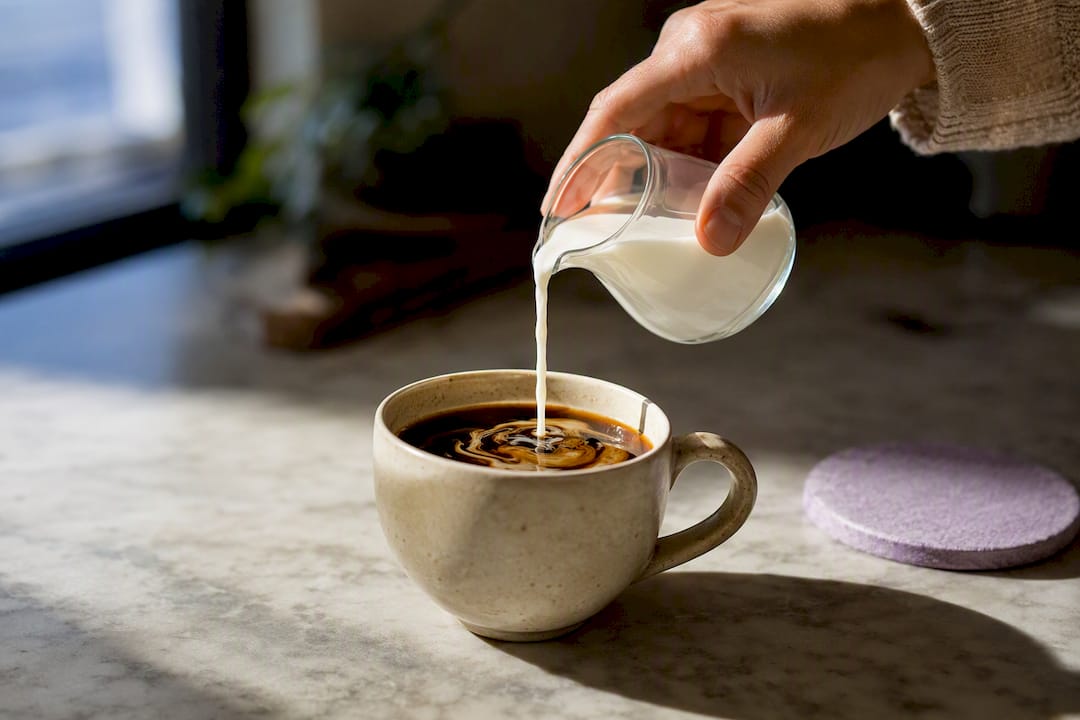
For most people, moderate caffeine intake does not meaningfully increase bone loss when calcium intake is adequate. The caveat: very high daily intake or a chronically low-calcium diet can tip the balance. Check your calcium intake, and if you drink a lot of coffee, stir in a splash of milk. That’s the fix.
TL;DR:
Moderate caffeine intake has no meaningful harmful effect on bone health when calcium intake is adequate, and the small effects can be easily offset with added milk.
Large population studies and genetic research show caffeine may have a neutral or even protective association with bone density, especially at low to moderate doses.
Individuals with low calcium intake, postmenopausal women, heavy caffeine users, smokers, or those with poor sleep should pay closer attention to their bone health and calcium levels.
The best approach involves maintaining sufficient calcium and vitamin D intake, engaging in weight-bearing exercise, quitting smoking, and limiting high-sugar energy drinks.
Drinking coffee or tea with added milk is the simplest way to counteract caffeine’s minor calcium absorption effects.
Table of Contents
Caffeine and Bone Health: What the Best Evidence Actually Shows
Practical Steps to Protect Your Bones Without Giving Up Caffeine
Vitamin D and Magnesium: The Nutrients Caffeine Doesn’t Work Alone Against
What Clinical Guidelines Actually Say About Caffeine and Your Bones
Fracture-club’s Take: Focus Your Energy Where It Actually Counts
Caffeine and Bone Health: What the Best Evidence Actually Shows
If you’ve spent any time worrying about your coffee habit and your bones, you’re not alone, and you’re also working from outdated information. The strongest recent evidence on caffeine and bone health points away from harm, not toward it.
A 2025 systematic review and meta-analysis of 14 studies covering 562,838 participants found coffee consumption associated with a reduced risk of osteoporosis in pooled analysis. No consistent evidence of harm turned up across the pooled data. That’s a striking reversal from decades of smaller studies that seemed to suggest coffee drinkers had weaker bones.
So why did older research point the other way? Confounding. Heavy coffee drinkers in many of those studies also tended to consume less dairy, smoke more, and exercise less. A clinical review on confounding in caffeine and bone research makes the case plainly: strip out the lifestyle noise, and caffeine’s own contribution to bone loss shrinks to something close to negligible.
Metabolic balance studies, which measure calcium going in and calcium going out under controlled conditions, tell a more nuanced story. They do find a small effect. Caffeine can nudge calcium absorption down and urinary calcium loss up. But that effect is:
Small enough to be reversed by adding roughly 1 to 2 tablespoons of milk to your coffee or tea
Not consistently reproduced at the population level once diet is accounted for
Dwarfed by other lifestyle factors like smoking and inactivity
Quick stat: Older review literature concluded that in populations with adequate calcium intake, caffeine shows no meaningful harmful effect on bone status. The word “adequate” is doing a lot of work in that sentence, and it’s exactly why your calcium intake matters more than your caffeine intake.
How Caffeine Actually Interacts With Your Bones
To understand why the headlines about coffee and bone loss don’t hold up, it helps to know what caffeine is actually doing inside your body.
Caffeine has a mild, transient effect on your gut and kidneys. It can slightly reduce how much calcium your intestines absorb from a meal, and it can slightly increase how much calcium your kidneys let escape into urine. Neither effect is dramatic, and both are short-lived, lasting a few hours after you drink a caffeinated beverage rather than compounding all day.
At the cellular level, caffeine blocks adenosine receptors, the same mechanism that keeps you alert. Some lab and animal studies suggest this receptor blockade can shift the balance between osteoblasts (the cells that build bone) and osteoclasts (the cells that break it down), theoretically tilting things toward bone breakdown. Here’s the catch: those effects show up in petri dishes and rodent models at doses far higher, relative to body weight, than a human coffee habit produces. Animal data hints at a mechanism. It does not prove human harm.
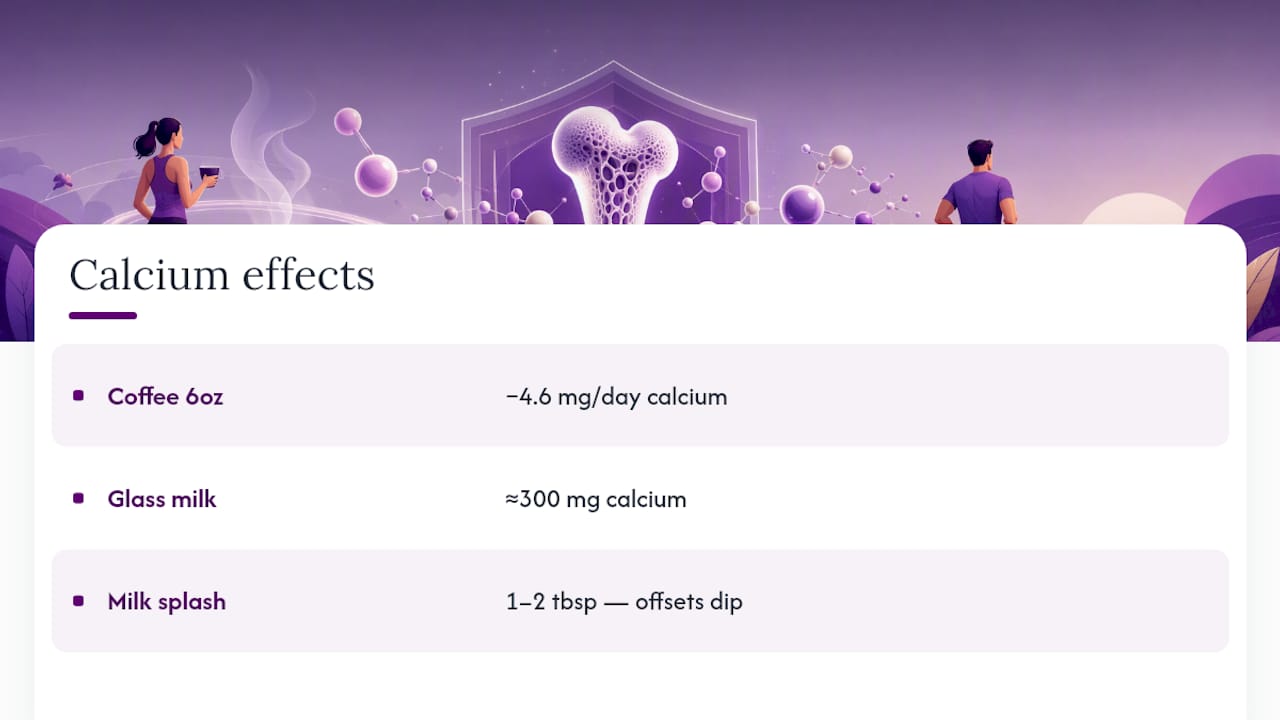
The real-world magnitude comes from balance studies rather than lab dishes. A pooled analysis of calcium balance studies found that every 6-ounce serving of caffeinated coffee shifted calcium balance by about negative 4.6 milligrams a day. To put that in perspective, a single glass of milk contains roughly 300 milligrams of calcium. The math tells you everything: this is a rounding error you can correct at breakfast, not a slow leak draining your skeleton.
Pro Tip: Splash 1 to 2 tablespoons of milk into your coffee or tea. That small amount supplies enough calcium to offset the mild absorption dip caffeine causes, according to balance studies. It’s the simplest fix in this entire article.
What the Epidemiology Shows About Caffeine and Bone Density
Population studies are where the caffeine-and-bones question gets settled, or at least gets as close to settled as nutrition science allows. The picture that emerges is more reassuring than most people expect, and more complicated than a single headline can capture.
Start with the big one: that 2025 meta-analysis of 14 studies and 562,838 participants found pooled results showing no increased osteoporosis risk from coffee consumption, with some pooled analyses landing closer to a protective association. Fourteen studies and over half a million people is a large enough sample to smooth out the quirks of any single dataset.
Genetic evidence adds another layer, and it’s arguably the most convincing kind. Mendelian randomization studies use genetic variants tied to caffeine metabolism to sidestep the confounding problem entirely. People don’t choose their genes, so this approach avoids the “heavy coffee drinkers also skip milk” bias that plagued older observational work. The result: genetically higher caffeine intake from tea or coffee associates with higher total body bone mineral density and lower fracture risk in some age groups. That’s a causal signal pointing toward neutral-to-protective, not harmful.
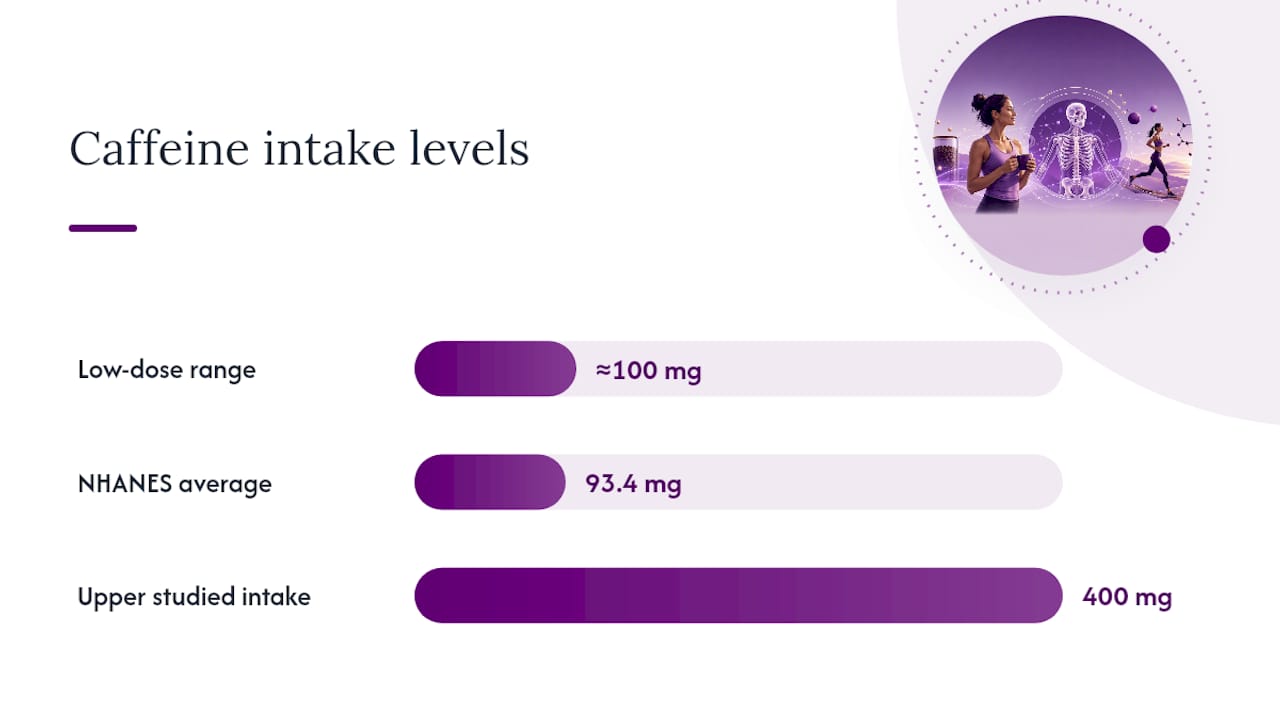
A large NHANES analysis of 13,457 participants adds a dose-response wrinkle worth knowing. Bone mineral density tended to rise with caffeine intake in the low-dose range, roughly 0 to 200 milligrams a day, which covers most regular coffee and tea drinkers. The average intake in that dataset was about 93.4 milligrams a day, roughly one cup of coffee. Stratified results weren’t always statistically significant across every subgroup, but the overall pattern was non-linear rather than a straight line down.
A few honest caveats belong here:
Self-reported caffeine intake is notoriously imprecise; people underestimate or overestimate their own cups
Residual confounding from diet, smoking, and activity level can never be fully eliminated in observational data
Effects at very high intakes (well above 400 milligrams a day) are less studied and less clear
Age and existing calcium status shift how much any effect matters for an individual
Put together, the epidemiology and the genetic data tell a consistent story: moderate caffeine intake, layered on top of adequate calcium, isn’t the bone villain it was once made out to be.
Who Should Actually Worry About Caffeine and Bone Loss
Most readers of this article can stop worrying about their coffee habit and start worrying about something more consequential. But a few groups genuinely need to pay closer attention.
People with chronically low calcium intake. If you rarely eat dairy, fortified plant milk, or leafy greens, caffeine’s small absorption effect has less buffer to work against. This is the single biggest modifier in the entire caffeine-and-bone-density conversation.
Postmenopausal women and older adults. Estrogen decline already accelerates bone turnover, so any additional strain on calcium balance, however small, matters more in this group than in a 30-year-old with strong dietary habits.
Very heavy caffeine users. The balance studies that first flagged concerns generally involved intakes well above typical coffee habits, often approaching or exceeding 400 milligrams a day, the upper limit MedlinePlus cites as generally safe for most adults.
People who smoke. This is the risk that deserves your attention far more than caffeine ever will. Smoking has a well-documented negative effect on bone healing, and current smokers face roughly double the risk of delayed or non-union fractures compared to non-smokers. If you’re managing a fracture and weighing which habit to change first, this is the one.
People with poor or insufficient sleep. Sleep duration is an emerging, modifiable factor tied to bone density, and it’s one most people overlook entirely while fixating on their coffee cup.
Pro Tip: Want a fast gut check on your own calcium intake? Count your daily servings of dairy, fortified plant milk, calcium-set tofu, or leafy greens. Fewer than two or three servings a day likely means you’re under the recommended range, and that’s the number worth fixing before you touch your coffee habit.
Practical Steps to Protect Your Bones Without Giving Up Caffeine
You don’t need to quit caffeine to protect your bones. You need to make sure the rest of your habits are pulling in the right direction.
Start with calcium and vitamin D targets. Most adults need around 1,000 to 1,200 milligrams of calcium daily from dairy, fortified foods, or leafy greens, alongside adequate vitamin D from sunlight, fortified foods, or a supplement. Fracture-club’s calcium-rich diet guide breaks down food sources that make hitting that number simple rather than a math project.
Next, neutralize caffeine’s small effect at the source. Adding 1 to 2 tablespoons of milk to each cup of coffee or tea supplies enough calcium to offset the mild absorption dip balance studies have identified. If you drink your coffee black, a glass of milk alongside breakfast accomplishes the same thing.
Beyond diet, prioritize the habits with bigger payoffs:
Weight-bearing and resistance exercise several times a week, which builds bone density more reliably than any dietary tweak
Quitting smoking, given its clear, well-documented link to slower bone healing
Consistent, adequate sleep
Limiting sugary sodas and energy drinks, since sugar and excess phosphoric acid in cola-type beverages are more strongly tied to bone concerns than plain caffeine is
Quick stat: Up to 400 milligrams of caffeine a day is generally considered safe for most healthy adults, roughly four 8-ounce cups of coffee. Staying near or under that range keeps you well clear of the intake levels where older balance studies saw any signal at all.
If diet alone doesn’t get you to your calcium target, a supplement can help. Fracture-club’s bone health supplements checklist walks through when supplementation makes sense and how to choose one worth taking.
When to Talk to Your Doctor About Bone Health
Most caffeine drinkers don’t need a workup. But certain signs warrant a conversation with your doctor:
A low-trauma fracture (breaking a bone from a minor fall or bump)
A family history of osteoporosis
Long-term corticosteroid use
A very low body weight or BMI
If any of these apply, ask about a DEXA scan for bone mineral density, plus bloodwork for 25-OH vitamin D, serum calcium, and parathyroid hormone if indicated.
Vitamin D and Magnesium: The Nutrients Caffeine Doesn’t Work Alone Against
Caffeine rarely acts in isolation, and its bone effects can’t be understood without looking at the nutrients standing next to it in your diet.
Vitamin D governs how efficiently your gut absorbs calcium in the first place. If your vitamin D levels are already low, caffeine’s mild absorption dip has less of a buffer to work against, and the combined effect on calcium balance becomes more noticeable than either factor alone would suggest. This is part of why the “adequate calcium intake” caveat threaded through this entire article matters so much. Adequate calcium doesn’t help much if your body can’t absorb it efficiently.
Magnesium plays a quieter but real role too. It’s involved in activating vitamin D and in regulating how calcium moves into bone tissue rather than staying in the bloodstream. Diets low in magnesium, common in people who eat few nuts, seeds, whole grains, or leafy greens, can compound the effects of low calcium or low vitamin D, even if caffeine intake stays modest.
The practical takeaway isn’t to obsess over any single nutrient. It’s to recognize that bone health runs on a small team of nutrients working together, and caffeine’s minor effect on calcium only becomes meaningful when that team is already short-staffed. Cover your vitamin D and magnesium bases through diet, sunlight, or a discussion with your doctor about supplementation, and caffeine’s role shrinks even further into the background.
Coffee vs. Tea vs. Energy Drinks: Does the Source Matter?
Not all caffeinated beverages carry the same bone-health story, even at equivalent caffeine doses.
Coffee has the deepest research base, and it’s the beverage behind most of the reassuring findings in this article, including the meta-analysis showing a reduced osteoporosis association and the NHANES data showing rising bone density at low-to-moderate intake. Coffee also contains polyphenols and antioxidants that may contribute to some of coffee’s neutral-to-positive population signal, independent of its caffeine content.
Tea tends to look even more favorable. The Mendelian randomization research specifically examined caffeine from tea alongside coffee and found a similar positive association with bone mineral density. Tea also delivers fluoride and other compounds that some researchers think support bone mineralization, on top of typically containing less caffeine per cup than coffee.
Energy drinks are the outlier, and not because of caffeine alone. They often pack caffeine doses far higher than a typical cup of coffee into a single can, and they’re frequently loaded with added sugar. Sugar and bone health have a more direct, less debated relationship than caffeine and bone health: high sugar intake is linked to worse calcium balance and higher fracture risk in some populations, likely compounding whatever mild effect the caffeine itself contributes. If you’re going to worry about a beverage category, energy drinks deserve more scrutiny than your morning coffee.
What Clinical Guidelines Actually Say About Caffeine and Your Bones
No major health authority singles out caffeine as a primary bone-health threat, and that consensus is telling.
MedlinePlus frames up to 400 milligrams of caffeine daily as generally safe for most healthy adults, without a specific bone-related restriction below that threshold. Notably, the WHO’s widely used FRAX fracture-risk calculator, the tool clinicians use to estimate a patient’s 10-year fracture risk, doesn’t include coffee or caffeine intake as an input at all. It does include smoking status, alcohol use, and corticosteroid use. That omission reflects where the clinical evidence actually points.
Health-charity guidance for osteoporosis prevention consistently centers on calcium intake, vitamin D status, weight-bearing exercise, and avoiding smoking and excess alcohol. Caffeine, when it comes up, is treated as a minor dietary factor worth moderating in extreme cases, not a primary lever. The consensus, in short, matches what the balance studies, the meta-analyses, and the Mendelian randomization data all point toward: caffeine is a footnote in bone health, not a headline.
Fracture-club’s Take: Focus Your Energy Where It Actually Counts
If you’re recovering from a fracture right now, we’d rather see you spend your mental energy on the habits that move the needle. Smoking cessation is one of them, given how clearly it slows healing and raises non-union risk. Getting enough calcium, vitamin D, and protein while your body rebuilds bone is another. Sleep, movement as your recovery allows, and staying connected to people who understand what you’re going through round out the list.
Caffeine didn’t make our list of recovery priorities, and the evidence backs that call. Fracture-club’s uplifting habits guide and community resources are built around what actually helps you heal, not around restrictions that sound responsible but don’t move the science.
— Fracture
Recovering from a fracture comes with enough to manage without adding coffee guilt to the list. If you’re navigating a cast, brace, or the awkward in-between stage of healing, adaptive clothing can make daily dressing easier and a little more like yourself again. Browse the easy-on recovery pants with side magnetic zippers or the adaptive sweatshirt built for upper-limb injuries, and if you have questions about what fits your specific recovery, reach out to our team. A portion of proceeds from purchases supports the Bone Health & Osteoporosis Foundation, so choosing adaptive recovery products can offer both comfort and contribute to the broader fight against bone disease.
This article is general information, not a substitute for advice from a qualified doctor. Consult a qualified healthcare professional about your own circumstances before acting on anything here.
Sources
Recommended
Comments