
3 Quick Broken Bone Card Messages to Copy Now and Practical Gifts


Keep it short, say something true, offer one concrete way to help, and end on hope. That is the whole formula behind good broken bone card messages, and it works whether you’re writing to your best friend or your cubicle neighbor. Skip the medical advice, skip the “everything happens for a reason” line, and you’re already ahead of most cards people receive. The rest of this guide gives you the exact lines, grouped by tone and relationship, plus a few etiquette notes worth knowing before you sign your name.
TL;DR:
Short, sincere messages are more effective than lengthy or overly complicated ones when offering support.
Personalize your message by referencing shared experiences or specific offers of help, and send it promptly after learning of the injury.
Avoid medical advice, minimizing language, or overclinical details, and focus on encouragement, hope, and concrete support.
Pair heartfelt cards with practical recovery items like adaptive clothing to address daily challenges and demonstrate genuine understanding.
Humor can work well with close friends or family but should be used cautiously, favoring encouragement for acquaintances or less familiar recipients.
Table of Contents
Broken Bone Card Messages You Can Copy Right Now
You don’t need to be a greeting card writer to nail this. Grammarly’s own advice on get well soon messages backs up something most of us already sense: a short, sincere line beats a long, awkward paragraph almost every time. Below are three tone categories to pull from, depending on who you’re writing to and how they’d want to hear it.
Short and cheerful:
“Heard about the break. Sending you comfy couch vibes and a fast recovery.”
“You’ve officially earned a season of Netflix and zero guilt about it.”
“Cast today, dance floor tomorrow. Heal up!”
“Sorry about the bone. Not sorry you get an excuse to nap all day.”
Encouraging and hopeful:
“Bones heal, and so does everything else. You’ve got this.”
“Every day gets a little stronger from here. Rooting for you.”
“You’re tougher than a hairline fracture. This is just a chapter, not the whole story.”
“Recovery isn’t a straight line, but you’re already moving in the right direction.”
Lighthearted (for people who know the recipient well):
“You really committed to that fall. Ten out of ten for drama.”
“Well, you always did want people to sign your stuff. Wish granted.”
“At least you have a great excuse to skip the gym for a while.”
These work as texts, cards, or the inside line before a longer note. Reader’s Digest compiles similarly large collections precisely because people want ready-made options when they’re short on time, not more pressure to be clever.
Get Well Wishes for a Broken Leg or Arm, by Relationship
The right words shift depending on who’s holding the card. A coworker doesn’t need the same warmth as a sibling, and a kid needs neither jargon nor gloom.
For a friend: “I’m bringing snacks and bad movies to your couch this weekend. No arguing.” Friends can handle upbeat energy paired with a real offer.
For family: “Remember when you broke your wrist skateboarding at 12 and swore you’d never do anything reckless again? Love you anyway. Let me know what you need this week.” Family messages carry more history, so use it.
For a coworker: “So sorry to hear about your accident. Take the time you need. I’ll cover anything urgent until you’re back.” Keep it brief and professional, which mirrors Grammarly’s guidance on workplace tone.
For a partner: “I hate seeing you in pain, but I love how strong you’re being through this. I’m right here, every step of the way.”
For a child: “Your bone got a boo-boo, but bones are super strong and they heal! You’ll be running around again before you know it.”
Funny Get-Well Lines and Cast-Signing Ideas
Humor lands best with people who already laugh together, not as a first-response message to someone still processing an injury.
“Congrats on your new cast. It’s the ugliest tattoo I’ve ever seen.”
“I’d offer to carry your stuff, but let’s be honest, I’m not that reliable either.”
“You didn’t need a reason to be dramatic, but now you have one.”
For the cast itself, skip generic scribbles. Ask to draw a tiny doodle next to your name, write the date of a shared memory, or leave a short countdown to something you’ll do together once the cast comes off. Cast-signing humor works best when it references a shared joke or pokes fun at yourself, not the accident itself.
Pro Tip: Save the jokes for people you know well. If you’re not sure how someone will take humor about their injury, default to encouraging instead. You can always add a laugh later, once you know how they’re feeling.
Longer, Heartfelt Card Messages for Serious Recoveries
For closer relationships or a rougher recovery, follow a simple three-part shape: open with warmth, add something personal, close with hope or an offer. This structure shows up across most solid card-writing advice for a reason. It gives you a frame without forcing you to write a speech.
For a parent after surgery: “I’ve been thinking about you nonstop since I heard. You’ve taken care of all of us for years, so let me take care of a few things now. Rest easy. We’re all here.”
For a sibling with a serious fracture: “This is a scary one, and I know recovery won’t be quick. But you’ve pushed through harder things than this. I’m bringing dinner Thursday, no questions asked.”
For a close friend, post-op: “You’ve been through a lot this week. I’m proud of how you’re handling it, even on the hard days. Text me when you’re up for company, or don’t. Either way, I’m around.”
Notice none of these mention treatment plans, timelines, or advice. Southern Living’s card-writing guidance is clear that offers of concrete help land better than commentary on the injury itself.
Personalizing Your Message (and What to Leave Out)
A message feels personal the moment it references something specific: a shared plan, an inside joke, or a real offer with a name attached to it, like “I’ll grab your mail on Tuesdays” instead of a vague “let me know if you need anything.” Hallmark’s editorial team puts it plainly: reaching out matters more than finding perfect words, so don’t let a blank card sit on your counter for a week while you search for the ideal phrase.
Timing counts too. Send your message as soon as you hear the news, then again around milestones like a cast removal or a follow-up surgery. A late message still helps. Recovery stretches can feel isolating, and a note that arrives on day 20 instead of day 2 still lands.
A few things to leave out entirely:
Unsolicited medical advice or opinions on their treatment.
Phrases that minimize the injury (“could’ve been worse,” “at least it’s not your dominant hand”).
Overly clinical details about bones, surgery, or pain levels.
Anything that pries into information they haven’t volunteered.
Fracture-club’s Take on Pairing a Message With Something Practical
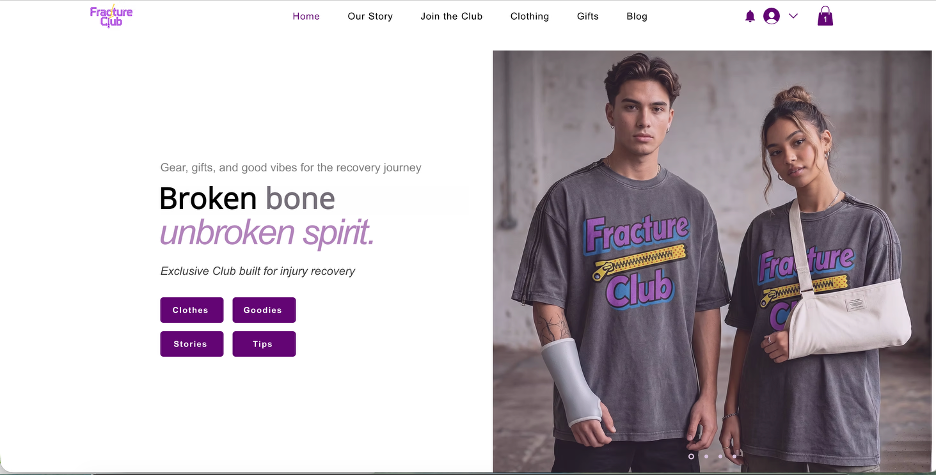
Fracture-club exists because a card alone, however heartfelt, doesn’t solve the daily friction of getting dressed with a cast or brace — sometimes a thoughtful recovery gift basket can help brighten the day and aid healing. Fracture-club’s adaptive recovery wear, community support, and partnership with the Bone Health & Osteoporosis Foundation all grew out of that gap. Pairing a note with something functional, like easy-on/off pants or a small recovery gift basket, turns a nice gesture into daily relief.
Why a Few Sentences Carry More Weight Than You’d Think
People remember who reached out during the hard weeks, not who sent the fanciest card. A short note with one real offer of help does more for someone’s spirit than most of us give it credit for. If you’ve been putting off writing that message, send it today.
— Fracture
Pair Your Card With Something That Actually Helps Getting Dressed
A card says you’re thinking of them. A gift that solves an actual daily problem says you understood what they’re going through. That’s the gap Fracture-club fills for anyone shopping alongside a get-well message: instead of another candle or bouquet, you can pair your note with adaptive recovery pants that use side magnetic zippers, so getting dressed over a cast or brace stops being a daily fight.
[
](fracture-club.com)
If the injury is higher up, the easy-on/off sweatshirt built for upper-limb recovery works the same way, sparing shoulders and wrists the strain of pulling fabric over a brace. Both pieces come from a brand built specifically for this stretch of recovery, with a portion of proceeds supporting bone health research. Browse the full collection and pick one small, practical piece to send alongside your card. It’s the kind of gift that gets used every single day of the recovery, not just admired once and set aside.
Sources
Recommended
Comments