
10 Ways to Stay Positive During Injury Recovery


Staying positive during injury recovery is defined as the active practice of maintaining emotional resilience, motivation, and mental well-being throughout the physical rehabilitation process. Recovery is not just a physical event. The psychological side of healing directly shapes how quickly and completely you return to full function. Research from University of Utah Health confirms that 44% of female student-athletes feel constantly overwhelmed during recovery, and that number reflects a broader truth: the mental game of rehabilitation is just as demanding as the physical one. The good news is that specific, research-backed strategies can protect your mindset and keep your recovery on track.
1. Ways to stay positive in injury recovery start with realistic goal setting
Setting small, achievable goals is the single most reliable way to maintain motivation during a long recovery. When you face weeks or months of rehabilitation, the finish line can feel impossibly far away. Breaking that distance into daily and weekly milestones makes progress visible and keeps discouragement at bay.
Effective goal setting during rehab looks like this:
Daily process goals: Complete your prescribed exercises, drink enough water, sleep eight hours.
Weekly milestone goals: Increase range of motion by five degrees, walk an extra block, reduce pain medication by one dose.
Monthly outcome goals: Return to light activity, attend a social event, resume a hobby you enjoy.
A 2025 review found that mood swings and loneliness are common during rehab, yet structured goal setting gives you a daily anchor that stabilizes your emotional state. Hitting even a small target releases a sense of accomplishment that compounds over time.
Pro Tip: Track your progress in a dedicated journal or use an app like Bearable or Visible to log symptoms, energy, and milestones. Seeing a week of consistent effort in writing is genuinely motivating on hard days.
2. Build a support network before you need it
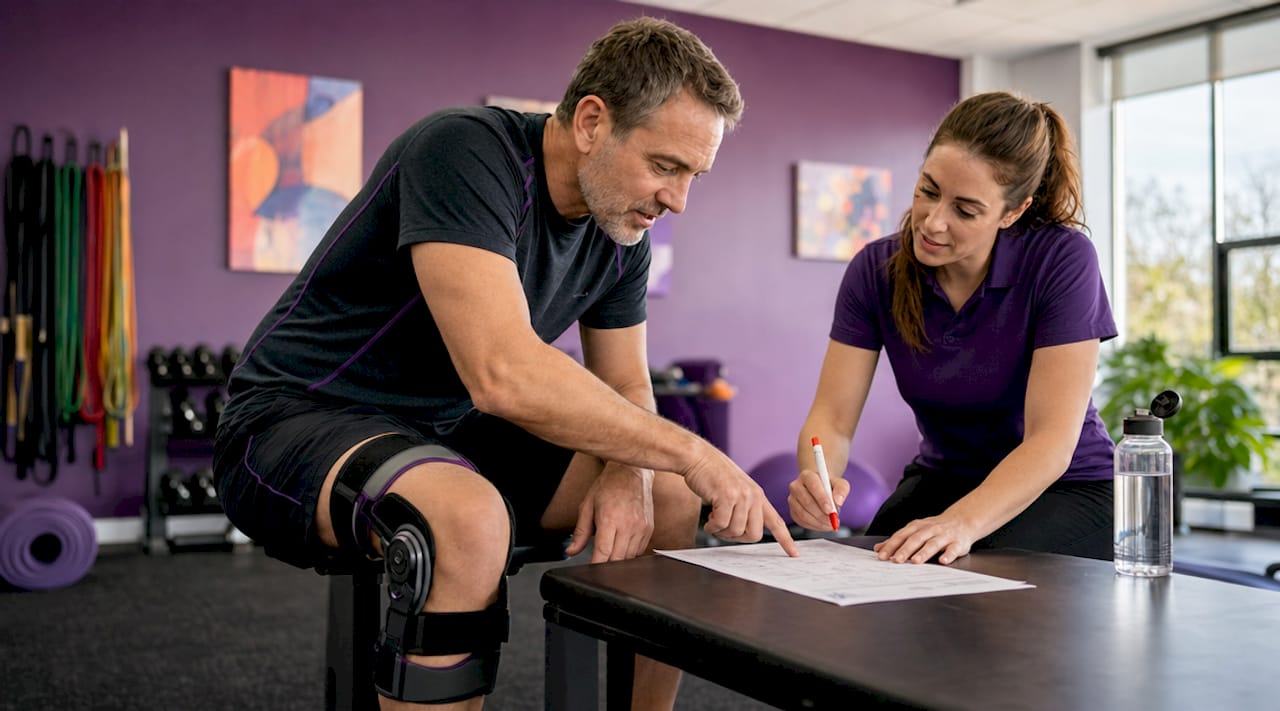
Social support is not a luxury during injury recovery. It is a clinical factor. Positive encouragement from family, friends, and rehab staff directly buffers stress and reduces the risk of burnout during rehabilitation. The people around you shape your emotional environment every single day.
Your support network should include multiple layers:
Close family and friends: For daily emotional check-ins and practical help with tasks.
Rehabilitation staff: Physical therapists, occupational therapists, and nurses who understand your specific injury.
Mental health counselors: Especially valuable if anxiety, depression, or fear of re-injury surfaces.
Peer support groups: Online communities or local groups of people recovering from similar injuries.
Isolation is one of the most underestimated risks in long recovery. When you withdraw from social contact, negative thoughts fill the space. Proactively scheduling visits, calls, or group check-ins prevents that spiral before it starts. If you want to maintain your identity during recovery, staying connected to the people who know you beyond your injury is one of the most direct ways to do it.
Pro Tip: Search for condition-specific Facebook groups or Reddit communities (r/ACL, r/brokenbone) where members share real experiences. Knowing others have navigated the same frustrations is genuinely reassuring.
3. Replace negative self-talk with constructive framing
The language you use about your injury is not just emotional expression. It is a biological signal. Describing your injury as “broken” primes your nervous system to interpret your body as a threat, which amplifies pain signals and slows healing outcomes. Shifting your language shifts your physiology.
Constructive framing means replacing catastrophic statements with recovery-focused ones. “My leg is broken and I’ll never be the same” becomes “My leg is healing and I’m building back stronger.” This is not toxic positivity. It is accurate framing. Bones repair. Muscles rebuild. Tissue regenerates.
One particularly effective technique is third-person self-talk, where you use your own name when coaching yourself through a hard moment. Instead of “I can’t do this,” you say “Sarah, you’ve handled hard things before. You can get through today’s session.” This creates psychological distance from the emotional intensity and shifts your brain from reactive to analytical. It sounds unusual, but the cognitive shift is real and immediate.
4. Practice mindfulness to reduce anxiety and stay grounded
Mindfulness is the practice of directing your attention to the present moment without judgment. During injury recovery, where anxiety about the future and frustration about the past are constant companions, mindfulness gives you a reliable way to regulate your emotional state without medication or willpower alone.
You do not need a meditation cushion or a 30-minute practice. Start with five minutes of focused breathing before your morning physical therapy exercises. Apps like Calm, Headspace, and Insight Timer offer guided sessions specifically designed for pain management and recovery. The goal is not to eliminate difficult feelings. It is to observe them without being controlled by them.
Guided visualization is a related tool worth adding to your routine. Spend five minutes each day mentally rehearsing yourself moving freely, returning to your sport or activity, or simply walking without pain. Psychological readiness is now recognized as a critical factor in return-to-activity success, and visualization builds that readiness in parallel with your physical progress.
Pro Tip: Choose a short healing mantra and repeat it during your hardest moments. Something like “I am healing. I am stronger than yesterday.” Simple phrases anchor your attention and interrupt catastrophic thinking before it escalates.
5. Give yourself permission to have bad days
Patients who allow themselves to have bad days without catastrophizing experience better recovery outcomes than those who treat every setback as evidence of failure. This finding runs counter to the “stay positive at all costs” advice you often hear, and it matters. Forced positivity that denies real pain creates its own form of psychological strain.
A bad day in rehab is data, not a verdict. Your energy fluctuates. Pain levels vary. Motivation comes and goes. Acknowledging that a session was hard, that you felt frustrated or sad, and then returning to your plan the next day is exactly what resilience looks like in practice. It is not weakness. It is honest self-management.
The risk to avoid is catastrophizing, which means interpreting one bad day as proof that recovery is failing. Separate the event from the meaning. “Today was hard” is a fact. “I’ll never recover” is a story. You get to choose which one you act on.
6. Protect your physical health to support your mental health
Physical self-care and emotional well-being are not separate tracks during recovery. They run together. Gentle movement, proper nutrition, and quality sleep each directly influence your mood, cognitive function, and motivation to keep going.
Self-care habit | Impact on mental health | Practical starting point |
Gentle exercise | Releases endorphins, reduces depression risk | 10-minute daily walk or approved PT exercises |
Nutrition | Supports tissue repair and stabilizes blood sugar | Prioritize protein, omega-3s, and anti-inflammatory foods |
Sleep | Restores emotional regulation and pain tolerance | Set a consistent bedtime, limit screens after 9 PM |
Hydration | Reduces fatigue and cognitive fog | Aim for 8 glasses of water daily |
One risk worth naming is the push-crash cycle, where you overexert on a good day and then spend the next two or three days recovering from the effort. Energy budgeting, doing slightly less than you think you can on good days, protects your consistency and prevents the emotional crash that follows physical overexertion.
7. Shift your recovery goal from speed to strength
University of Utah Health advises patients to shift focus from “How fast can I return?” to “How strong and stable can I be?” This single reframe changes the entire emotional texture of recovery. Speed is a race you can lose. Strength is a direction you can always move toward.
When your goal is speed, every delay feels like failure. When your goal is building a stronger, more resilient version of your body, every week of consistent rehab is a win. This shift also reduces the risk of re-injury, because patients who rush return-to-activity before they are psychologically ready have higher re-injury rates and reduced performance outcomes. Patience is not passive. It is strategic.
8. Integrate professional mental health support early
18% of rehabilitation patients report suicidal ideation, particularly near discharge, which is a statistic that demands attention. Mental health challenges during recovery are not rare edge cases. They are a predictable part of the experience for a significant portion of patients, and early professional support changes outcomes.
You do not need to be in crisis to benefit from speaking with a psychologist or licensed counselor. Sports psychologists, in particular, specialize in the intersection of physical injury and mental performance. They can help you work through fear of re-injury, identity disruption, and the grief that often accompanies losing your physical capabilities, even temporarily. Ask your rehabilitation team for a referral. Building emotional resilience is a skill you can learn, and working with a professional accelerates that process significantly. A practical guide on how to build emotional resilience can also supplement what you work on in sessions.
9. Maintain your identity outside of your injury
One of the most underreported challenges in recovery is identity loss. If your sense of self is closely tied to physical activity, athletic performance, or a job that requires physical capability, an injury can feel like it has taken away who you are. That feeling is real, and it deserves direct attention.
Actively protect the parts of your identity that are not defined by your physical state. Continue engaging with your interests, your relationships, and your values. If you are an athlete, stay connected to your team as a supporter, analyst, or mentor. If you are a professional, find ways to contribute within your current limitations. Recovery does not have to mean disappearing from your own life. Staying present in the roles that matter to you keeps your sense of purpose intact while your body heals.
10. Use your recovery as a chance to build new habits
Recovery creates an unusual window of time and attention that most people never have in ordinary life. You are forced to slow down, pay attention to your body, and reconsider what matters. That is genuinely hard. It is also a real opportunity.
Many people who have navigated serious injuries report that the recovery period led them to better sleep habits, stronger relationships, improved nutrition, and a more sustainable relationship with physical activity. These are not consolation prizes. They are outcomes that outlast the injury itself. Approach your recovery with curiosity rather than resentment, and you may find that the person who comes out the other side is more self-aware and better equipped than the one who went in.
Key takeaways
Staying positive during injury recovery requires combining goal setting, social connection, mindset techniques, and physical self-care into a consistent daily practice.
Point | Details |
Set small, trackable goals | Daily and weekly milestones create visible progress and stabilize mood during long recovery. |
Build your support network | Family, rehab staff, and peer groups buffer stress and reduce isolation throughout rehabilitation. |
Reframe your language | Replacing catastrophic self-talk with constructive framing reduces pain signals and improves rehab adherence. |
Protect physical self-care | Sleep, nutrition, and gentle movement directly support emotional regulation and motivation. |
Seek mental health support early | Professional counseling alongside physical therapy improves outcomes and reduces re-injury risk. |
What I’ve learned about recovery that most articles won’t tell you
Most recovery content focuses on what to do. Very little of it addresses the emotional permission you need to do it imperfectly. After working closely with people navigating injury rehabilitation, the pattern I see most often is not a lack of effort. It is a lack of self-compassion when effort does not immediately produce results.
The patients who recover best are not the ones who never have a bad day. They are the ones who have a bad day, acknowledge it honestly, and show up again the next morning. That sounds simple. It is not. It requires a specific kind of mental discipline that is different from the discipline required to push through physical pain.
I also think the medical community underestimates how much identity disruption contributes to poor mental health in injury recovery. When someone loses their ability to do the thing that defines them, whether that is running, working with their hands, or caring for their family, the grief is real and it needs to be named. Treating it as a side effect rather than a central challenge of recovery is a mistake that delays healing.
The most honest advice I can offer is this: treat your mental health during recovery with the same seriousness you give your physical therapy appointments. Schedule it. Show up for it. Track it. The two are not separate processes. They are the same process, and the research backs that up completely.
— Fracture
Recovery wear that makes the hard days a little easier
Physical recovery is demanding enough without fighting with your clothes every morning. Fracture-club designs adaptive recovery wear specifically for people healing from fractures, surgeries, and injuries, so getting dressed does not become its own source of frustration.
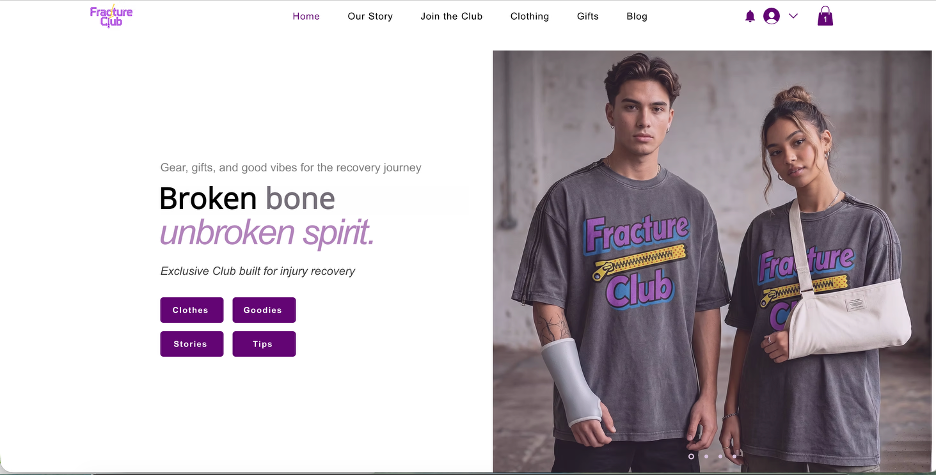
The adaptive recovery pants from Fracture-club feature magnetic side zippers that make dressing possible with a cast or brace, without needing help from someone else. That independence matters more than it sounds. When you can manage your own morning routine, you start the day feeling capable rather than dependent. Pair that small daily win with the mindset strategies in this article, and you have a recovery environment that supports both your body and your morale. A portion of every purchase also benefits the Bone Health & Osteoporosis Foundation, so your recovery contributes to something larger than yourself.
FAQ
How does mindset affect physical injury recovery?
Mindset directly influences nervous system state, pain perception, and rehab adherence. Negative self-talk primes the body for threat, which amplifies pain signals and slows healing, while constructive framing supports tissue repair and consistent effort.
What are the best ways to stay positive during a long recovery?
The most effective strategies combine small goal setting, active social support, mindfulness practice, and professional mental health care. Research confirms that patients with structured emotional support experience fewer setbacks and better overall outcomes.
Is it normal to feel depressed or anxious during injury recovery?
Yes. A 2025 review found mood swings, loneliness, and anxiety are common during rehabilitation, yet psychological support is often minimal. Recognizing these feelings as a normal part of recovery, rather than a personal failure, is the first step toward managing them.
When should I seek professional mental health support during rehab?
Seek support as early as possible, not only when symptoms become severe. Sports psychologists and licensed counselors can help with fear of re-injury, identity disruption, and motivation well before those challenges escalate into crisis.
How can I support a loved one recovering from an injury?
Consistent emotional check-ins, practical help with daily tasks, and thoughtful gestures make a measurable difference. Exploring gifts for recovering loved ones is one concrete way to show support during a difficult period.
Recommended
Comments