
Why Prevention Beats Fracture Treatment for Bone Health

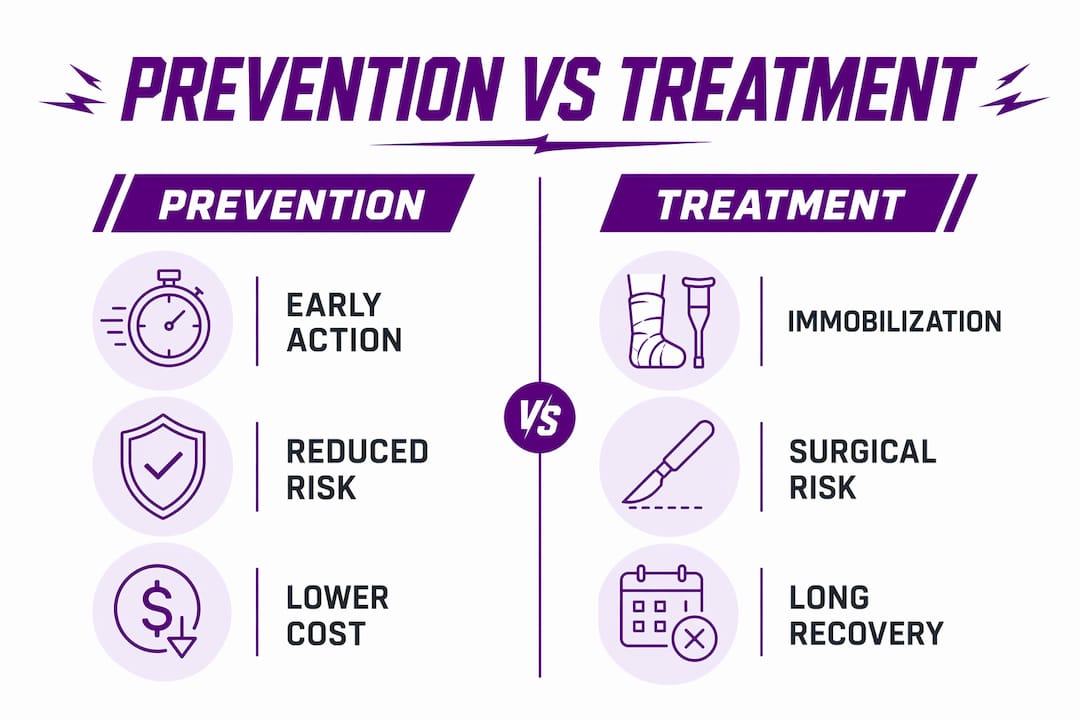
Fracture prevention is defined as the set of proactive measures that reduce the likelihood of bone breaks before they occur, and the evidence is clear that it outperforms treatment on every meaningful measure. Why prevention beats fracture treatment comes down to a simple reality: avoiding a fracture spares you weeks of immobilization, surgical risk, and a significantly elevated chance of breaking another bone. A 2026 meta-analysis in Osteoporosis International found that secondary hip fractures occur in roughly 10.63% of older adults after an initial break. That number alone makes the case for getting ahead of the problem rather than managing the aftermath.
Why prevention beats fracture treatment: the core evidence
Prevention works because it targets the conditions that cause fractures, not the fractures themselves. The benefits of injury prevention include stronger bones, better balance, reduced fall frequency, and lower lifetime healthcare costs. These outcomes are measurable, and the clinical tools to assess your personal risk exist right now.
The two most widely used risk assessment tools are FRAX™ (Fracture Risk Assessment Tool) and DXA (dual-energy X-ray absorptiometry). Clinical guidelines recommend using both FRAX™ and DXA to guide primary and secondary prevention decisions. Getting a DXA scan tells you your bone mineral density; FRAX™ translates that data into a 10-year fracture probability. Together, they give you and your doctor a clear picture of where you stand before a fracture ever happens.
Here are the most effective, evidence-backed fracture prevention strategies:
Resistance training: Weight-bearing and resistance exercises directly stimulate bone remodeling. Programs like strength training two to three times per week build both bone density and the muscle mass that protects bones during a fall.
Balance training: Practices such as tai chi and single-leg standing exercises reduce fall frequency by improving proprioception (your body’s sense of position and movement).
Home hazard assessment: Removing loose rugs, improving lighting, and installing grab bars in bathrooms are among the highest-impact, lowest-cost fall prevention steps available.
Diet quality over supplementation: Prioritize calcium-rich whole foods like dairy, leafy greens, and fortified cereals rather than relying on supplements. A review of 69 randomized trials covering 153,902 participants found that calcium and vitamin D supplements offer little to no clinically meaningful reduction in fracture incidence. Food-based nutrition, combined with exercise, delivers what pills alone cannot.
Clinical screening: Ask your doctor about FRAX™ scoring and DXA scanning, particularly if you are a woman over 65, a man over 70, or anyone with a family history of osteoporosis.
Pro Tip: If you have already had one fracture, request a referral to a Fracture Liaison Service (FLS). These specialized programs identify patients who need osteoporosis medication and follow-up care, and they catch cases that standard post-fracture discharge often misses.
What are the real challenges of treating fractures after they occur?
Fracture treatment is not a simple fix. It is a process that carries its own risks, costs, and long-term consequences that most people underestimate until they are living through it.
According to the Cleveland Clinic, bone fracture treatment typically requires splinting for 3 to 5 weeks or casting for 6 to 8 weeks, with more complex fractures requiring surgery. That window of immobilization affects muscle strength, cardiovascular fitness, mental health, and independence. For older adults especially, six weeks of reduced mobility can trigger a decline that outlasts the fracture itself.
Surgical treatment carries additional risks that vary significantly by where you receive care. A large analysis of 164,961 patients found that reoperation risk after hip fracture surgery sits at approximately 3.4% within 120 days but climbs as high as 9.4% depending on the hospital. That variability is not a minor footnote. It means your outcome after a hip fracture is partly determined by which facility treats you, not just the severity of your injury.
Treatment challenge | What it means for you |
Immobilization (3 to 8 weeks) | Muscle loss, reduced mobility, and dependency during recovery |
Surgical reoperation risk (up to 9.4%) | Hospital-dependent variability adds unpredictability to outcomes |
Secondary fracture risk (10.63%) | One fracture significantly raises the probability of another |
Quality of life impact | Depression, loss of independence, and reduced physical function are common post-fracture |
Pro Tip: If surgery is unavoidable, ask your surgical team specifically about their facility’s reoperation rate for hip fractures. This is a legitimate quality metric, and knowing it helps you make an informed decision about where to receive care.
The emotional cost of fracture treatment is real too. Many people describe feeling stuck between being a patient and feeling like themselves. That experience is valid, and it reinforces why preventing fractures effectively is not just a medical goal. It is a quality-of-life goal.
How does secondary fracture risk show why prevention is crucial?
The fracture cascade is one of the most underappreciated concepts in bone health. It describes how one fracture dramatically raises the probability of a second, and then a third. Understanding this cycle is central to grasping why prevention is crucial at every stage of life.
The lifetime risk of osteoporotic fractures is approximately 50% for women and 20% for men over the age of 50. After an initial fracture, risk can be up to five times higher in the first two years. That two-year window is not a passive waiting period. It is the most critical time to act.
Secondary hip fractures are more common in women, with a secondary fracture rate of 14.94% in females compared to 9.89% in males. Osteoporosis and calcium or vitamin D deficiency are identified risk factors, though muscle density loss carries a larger population-level impact. This is why fracture prevention strategies must address muscle strength, not just bone density.
“Secondary fracture risk peaks within two years after the first fracture, emphasizing early intervention and continuous prevention rather than one-time measures.” — Osteoporosis International, 2026
Fracture Liaison Services (FLS) exist precisely to close this gap. These coordinated care programs assess patients after a fracture and connect them with osteoporosis treatment, fall prevention programs, and follow-up monitoring. FLS evaluations recommend osteoporosis medication for 51% to 71% of fracture patients, a range that reflects how many people leave standard fracture care without the treatment they need. If you or someone you care for has had a fracture, FLS is not optional. It is the standard of care.
How to integrate fracture prevention strategies into everyday life
Knowing the evidence is one thing. Building prevention into your daily routine is another. The good news is that the most effective fracture prevention strategies do not require expensive equipment or complex programs. They require consistency.
Here is a practical framework you can start this week:
Move with purpose every day. Aim for at least 30 minutes of weight-bearing activity, such as walking, dancing, or light resistance training. Bone responds to mechanical load, and even moderate daily activity maintains density over time.
Audit your home for fall hazards. Walk through each room and identify loose rugs, poor lighting, cluttered pathways, and bathroom surfaces without grip support. The Centers for Disease Control and Prevention (CDC) identifies home modifications as one of the most cost-effective fall prevention interventions available.
Eat for bone health, not just supplementation. Focus on whole food sources of calcium (dairy, almonds, broccoli, fortified plant milks) and get sensible sun exposure for vitamin D. Reserve supplements for cases where your doctor confirms a deficiency through blood testing.
Schedule a bone health conversation with your doctor. If you are over 50, ask about FRAX™ scoring. If you have already had a fracture, ask for a DXA scan and an FLS referral. These conversations take minutes and can redirect years of bone health management.
Monitor and follow up. Prevention is not a one-time action. Revisit your risk factors annually, especially after any fall, fracture, or significant change in physical activity level. Bone health is a process, not a checkbox.
Preventing fractures effectively also means recognizing that your risk profile changes with age, medication use, and health status. Medications like corticosteroids and certain antidepressants affect bone density. If you take any long-term medications, ask your pharmacist or physician whether bone health monitoring is warranted.
Key takeaways
Prevention is the most effective strategy for bone health because it eliminates the personal, medical, and financial costs of fractures before they accumulate.
Point | Details |
Supplements alone are insufficient | A review of 153,902 participants found calcium and vitamin D supplements offer minimal fracture reduction. |
Treatment carries real risks | Hip fracture reoperation rates reach up to 9.4% depending on hospital quality. |
Secondary fracture risk is high | After an initial fracture, risk is up to five times higher in the first two years. |
Clinical tools exist now | FRAX™ and DXA scans provide personalized fracture risk data to guide prevention decisions. |
FLS improves post-fracture outcomes | Fracture Liaison Services recommend osteoporosis medication for 51% to 71% of fracture patients missed by standard care. |
What I’ve learned about prevention after seeing recovery up close
After spending years working alongside people navigating fracture recovery, one pattern stands out clearly. The people who struggle most are not those with the most severe fractures. They are the ones who had no idea their bones were at risk until something broke.
The biggest misconception I see is the belief that taking a calcium supplement every morning is a bone health plan. It is not. A large-scale BMJ review confirmed what many clinicians already suspected: supplements without lifestyle change produce minimal real-world benefit. The people who genuinely protect their bones are moving, eating well, and getting assessed by their doctors.
The second thing I have observed is that prevention is not a single decision. It is a series of small, consistent choices made over years. A person who starts resistance training at 55 and gets a DXA scan at 60 is in a fundamentally different position than someone who waits for a fracture to prompt action. That gap in outcomes is not luck. It is the direct result of early, sustained effort.
If you have already had a fracture, that does not mean prevention is behind you. The post-fracture window is actually one of the most important times to act. Getting connected with an FLS program, addressing fall hazards at home, and exploring recovery tips that support safe movement can all reduce the chance of a second break. The goal shifts from avoiding the first fracture to making sure it is the last one.
Prevention is not about fear. It is about staying in control of your own health story.
— Fracture
How Fracture-club supports your recovery and reduces future risk
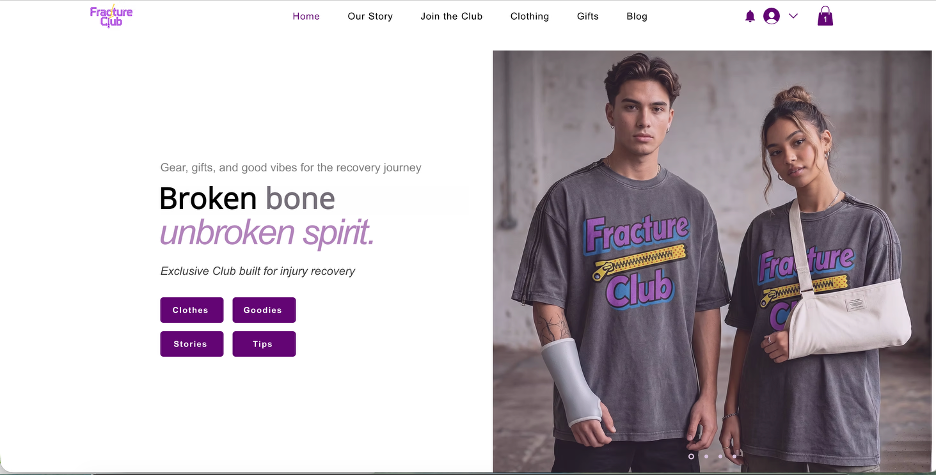
Recovery after a fracture is hard enough without struggling to get dressed every morning. Fracture-club designs adaptive recovery clothing specifically for people healing with casts, braces, or surgical dressings. The adaptive recovery pants feature side magnetic zippers that make dressing and undressing manageable without straining healing limbs. For upper body injuries, the easy-on sweatshirt removes the daily frustration of pulling clothing over a sling or cast. Comfortable, functional clothing during recovery is not a luxury. It supports the safe, independent movement that helps prevent falls and secondary injuries during the most vulnerable phase of healing. A portion of every purchase benefits the Bone Health & Osteoporosis Foundation.
FAQ
What is the strongest argument for why prevention beats fracture treatment?
Prevention eliminates the recovery burden entirely, including weeks of immobilization, surgical risk, and a sharply elevated chance of a second fracture. Treating a fracture after it occurs addresses the consequence, not the cause.
Are calcium and vitamin D supplements enough to prevent fractures?
No. A review of 69 randomized trials covering 153,902 participants found that calcium and vitamin D supplements provide little to no clinically meaningful reduction in fracture incidence. Exercise, fall prevention, and dietary quality deliver stronger results.
How long does fracture treatment typically take?
The Cleveland Clinic reports that bone fracture treatment requires splinting for 3 to 5 weeks or casting for 6 to 8 weeks, with complex fractures requiring surgery and longer recovery timelines.
What is a Fracture Liaison Service and why does it matter?
A Fracture Liaison Service (FLS) is a coordinated care program that assesses patients after a fracture and connects them with osteoporosis treatment and follow-up monitoring. FLS evaluations recommend osteoporosis medication for 51% to 71% of fracture patients who would otherwise leave standard care without it.
When is fracture risk highest after an initial break?
Fracture risk is up to five times higher in the first two years following an initial fracture. This makes early intervention and continuous prevention the most critical response after any bone break.
Recommended
Comments