
Injury Recovery Caregiving Explained: A Caregiver's Guide

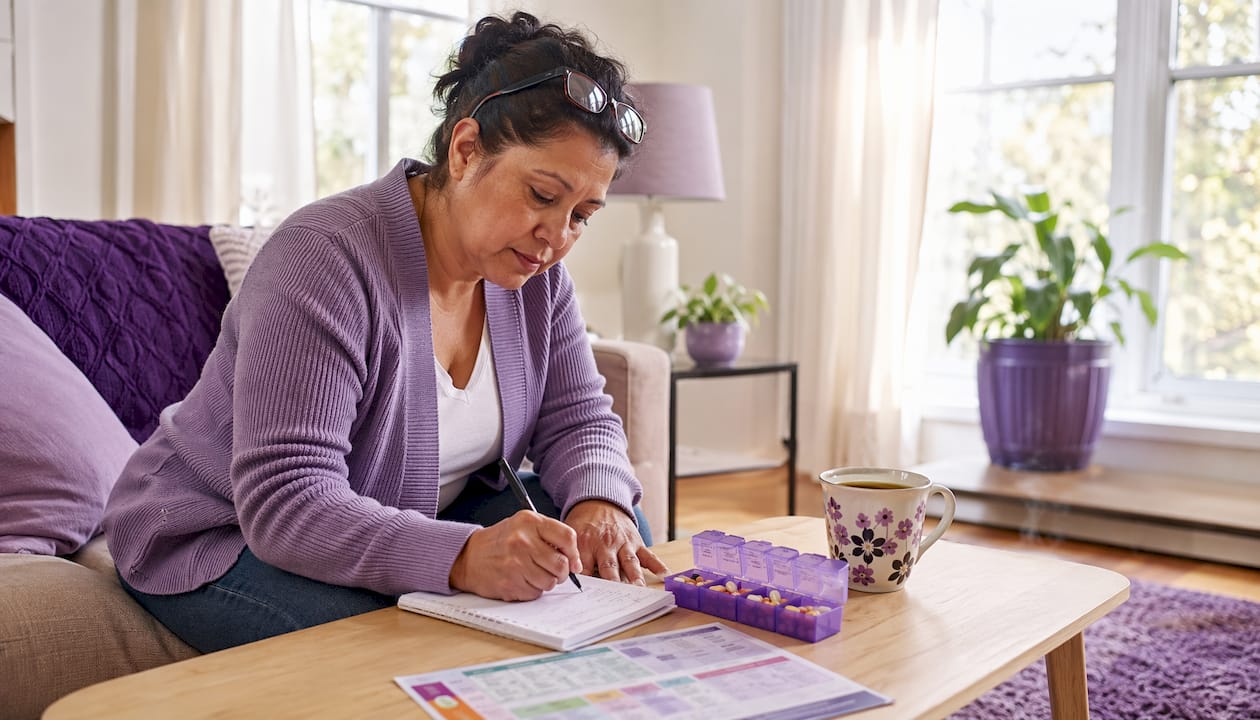
Injury recovery caregiving is structured, time-limited support provided after an acute injury or surgery, with one clear goal: restore Activities of Daily Living (ADLs) and help the person you’re caring for reclaim their independence. Organizations like the Caregiver Action Network, clinical platforms like Medbridge, and recovery communities like Fracture-club all point to the same starting point. Here are two things you can do in the first 48 hours:
Set up a recovery hub. Gather medications, wound care supplies, therapy instructions, emergency contacts, and a symptom log in one accessible spot before the patient arrives home.
Confirm discharge instructions. Review the pain management schedule, medication timing, and any weight-bearing restrictions directly with the discharging clinician before you leave the facility.
Pro Tip: Write down every medication name, dose, and timing before discharge. Verbal instructions get fuzzy fast when you’re tired and managing a lot at once.
Table of Contents
What does injury recovery caregiving actually involve day to day?
Recovery caregiving is not the same as long-term chronic care. It is milestone-driven and time-limited, tied to specific clinical markers like wound closure, independent ambulation, and return to daily function. That distinction matters because it shapes how you plan: you’re working toward an exit, not an indefinite commitment.
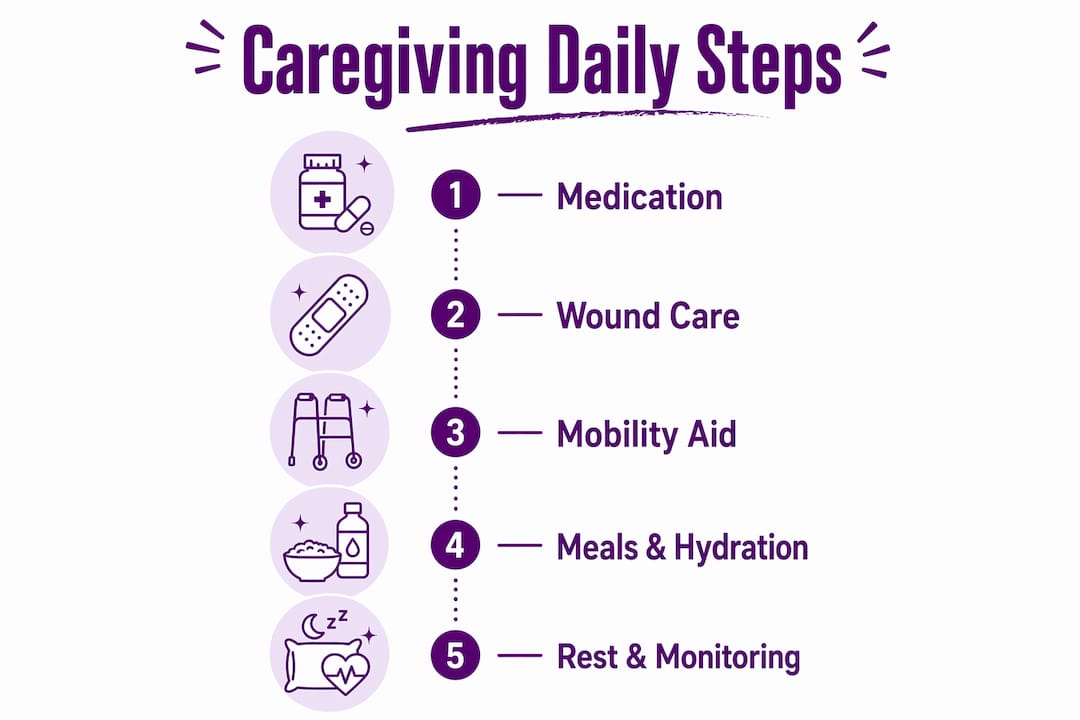
Family caregivers often become the primary support within 24 hours of discharge, sometimes without any real preparation. The daily task list is broader than most people expect:
ADLs: Dressing, bathing, grooming, and toileting assistance
Wound care: Daily checks for redness, drainage, or swelling
Medication management: Tracking doses, timing, and side effects
Mobility and transfers: Helping safely move from bed to chair, chair to bathroom
Appointment logistics: Scheduling, transportation, and follow-up coordination
Nutrition and meal prep: Preparing meals that support healing
Red flag monitoring: Watching for signs that require a clinician call
Pro Tip: In the first 72 hours, focus on safety and medications above everything else. Delegate meals and errands to friends or family so you can stay focused on the clinical tasks only you can manage.
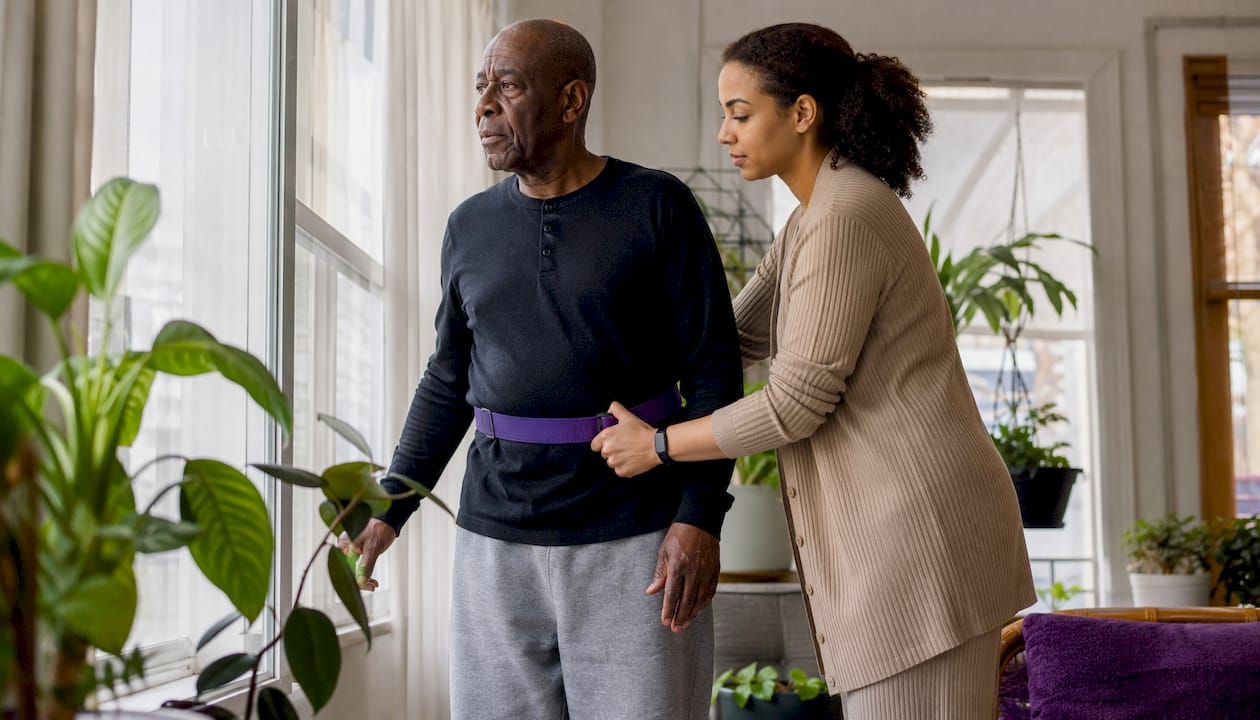
Why caregiving is really a form of clinical coaching
Effective caregiving isn’t just domestic help. Clinicians at Medbridge frame it as a clinical coaching role that must stay aligned with the therapy plan. When that alignment breaks down, recovery stalls. Medella’s guidance reinforces this: the caregiver’s job is to support independence, not replace it. Doing too much for a patient creates learned helplessness and slows the return to ADLs.
Practical ways to stay clinically consistent:
Share a daily symptom log with the physical or occupational therapist at each visit
Confirm exercise prescriptions in writing so home practice matches clinic goals
Use a simple medication checklist and appointment tracker (paper or an app like CareZone)
Set ADL milestones tied to the therapy timeline, not just comfort level
Readmission risk is real. Pooled data show unplanned readmission rates can be high in some post-critical illness populations, and caregiver strain correlates directly with poorer patient outcomes.
Experienced caregivers also watch for cognitive “energy debt,” especially in weeks 1–6. Short, taxing interactions can exhaust a patient and cause setbacks. Pacing visits, therapy sessions, and social contact is part of the clinical role, not a soft preference.
Your daily caregiving checklist and a sample schedule
A printed checklist reduces errors and decision fatigue. Adapt this to your situation:
[ ] Morning medications given on schedule
[ ] Wound site checked (no new redness, warmth, or drainage)
[ ] Mobility assistance provided safely (transfers, walking aid)
[ ] Hygiene and dressing completed (with adaptive clothing where possible)
[ ] PT/OT home exercises completed per prescription
[ ] Adequate nutrition and hydration confirmed
[ ] Rest windows protected (no back-to-back activities)
[ ] Symptom log updated
Sample daily schedule:
Time | Task |
morning | Morning medications + wound check |
early morning | Assisted dressing and hygiene |
morning | Breakfast and nutrition |
mid-morning | PT/OT home exercises |
midday | Rest window |
early afternoon | Lunch + afternoon medications |
afternoon | Light activity or appointment |
evening | Dinner + evening medications |
late evening | Symptom log update + wound check |
For transfers and mobility, always follow the clinician’s specific instructions. If a transfer feels unsafe or the patient reports sudden pain, stop and call the care team before continuing.
Adaptive clothing and products that make caregiving easier
The right clothing isn’t a luxury during recovery. Magnetic closures, side zippers, and breathable fabric placements function as clinical aids: they let patients participate in their own dressing, which directly supports ADL recovery and reduces infection risk by making hygiene more frequent and less painful.
Features to prioritize when buying adaptive recovery wear:
Magnetic or snap closures on shirts and jackets for one-handed or limited-grip dressing
Side-zip pants with wide leg openings that fit over casts and braces without removing orthoses
Roomy seams that don’t compress swollen limbs or irritate surgical sites
Breathable, soft fabrics that reduce skin irritation under casts
Elastic or adjustable waistbands for easy on/off without bending
Fracture-club designs specifically for this. Their adaptive recovery sweatshirt is built for upper-limb injuries and bone fractures, and their side-zip adaptive pants are sized to work with leg casts and braces. For detailed dressing strategies, the guide on getting dressed after a broken bone is worth bookmarking.
Buying tips: Size up one size to accommodate casts or braces. Look for brands with a clear exchange policy in case sizing needs adjustment after swelling changes. Budget roughly $30–$60 for adaptive tops, $40–$80 for adaptive pants, and $15–$30 for dressing aids like sock aids, long-handled sponges, and dressing sticks.
Pro Tip: Order adaptive clothing before discharge, not after. Trying to manage dressing with standard clothing on day one is exhausting for both you and the patient.
How caregivers avoid burnout: boundaries, delegation, and respite
Caregiver wellbeing isn’t separate from patient outcomes. The Caregiver Action Network is direct: sustaining long-term support requires setting boundaries, delegating tasks, and prioritizing your own mental health. When caregivers burn out, patients lose their most consistent support.
Delegation checklist:
Friends and neighbors: grocery runs, meal drop-offs, pet care, yard tasks
Extended family: transportation to appointments, overnight stays to give you a break
Professionals: wound care, medication management, physical therapy (don’t absorb clinical tasks you’re not trained for)
Respite options:
Short-term in-home professional care through a home health agency
Community volunteer programs (check local Area Agency on Aging)
Brief skilled nursing facility stays for complex post-surgical cases
Emergency backup contacts established before you need them
Burnout warning signs to watch for: persistent exhaustion that sleep doesn’t fix, resentment or emotional withdrawal, neglecting your own health appointments, and feeling like there’s no end in sight. If you recognize these, contact the Caregiver Action Network at caregiveraction.org or call 211 to connect with local support services.
When to escalate care, red flags, and a simple recovery timeline
Some changes require a clinician call the same day. Others are emergencies. Know the difference before you need it.
Red flags requiring immediate contact or urgent care:
Fever above 100.4°F
Increasing pain despite medications
Spreading redness, warmth, or drainage at the wound site
Numbness or tingling in the injured limb
Sudden shortness of breath or chest pain (call 911)
New swelling in a calf or limb (possible DVT)
For fever, worsening wound signs, or new swelling, call the surgeon or care team first. For chest pain or sudden breathing difficulty, go directly to the emergency department.
Typical recovery timeline (individual variation is significant):
Phase | Timeframe | Primary Goals |
Acute | first week | Pain control, protection, reduce swelling |
Repair | Weeks 1–6 | Tissue healing, restore basic mobility and ADLs |
Remodeling | 6+ weeks | Strength, full function, return to activity |
These phase-based timelines come from physiotherapy guidance for soft-tissue injuries. Surgical or complex fracture cases may follow different milestones set by the treating clinician.
Key Takeaways
Injury recovery caregiving works best when it’s treated as structured clinical coaching, not improvised domestic help, with adaptive tools and clear boundaries built in from day one.
Point | Details |
Caregiving is clinical coaching | Align daily tasks with the therapy plan; share symptom logs with the care team at every visit. |
Safety and ADLs come first | Prioritize medications, wound checks, and safe transfers before any other task in the first 72 hours. |
Adaptive clothing speeds independence | Magnetic closures and side-zip designs let patients dress themselves, directly supporting ADL recovery. |
Caregiver health protects patient outcomes | Readmission rates can be substantial in high-risk groups; caregiver strain is a documented contributing factor. |
Fracture-club offers purpose-built recovery wear | Their adaptive sweatshirts and side-zip pants are designed for casts and braces, supporting both function and morale. |
The part most caregiving guides skip
Recovery caregiving is framed almost everywhere as a support role. You’re the helper. The patient is the one doing the work. That framing is wrong, and it leads to a specific failure pattern: caregivers do too much, patients do too little, and independence stalls.
The shift that actually works is moving from “doing for” to “coaching through.” That means handing someone their adaptive shirt and waiting while they put it on, even when it takes three times as long. It means resisting the urge to fix every difficulty the moment it appears. Small wins, like managing their own dressing or completing a transfer with minimal help, are clinical progress. They’re not just nice moments.
Adaptive clothing is one of the most underused tools in this shift. When getting dressed doesn’t require a caregiver’s hands, patients practice independence multiple times a day without even thinking of it as therapy. That’s the kind of low-effort, high-frequency repetition that actually builds function back.
The other thing guides skip: it’s okay to find this hard. Caregiving for someone you love after an injury is emotionally complicated. You’re managing their frustration, your own fear, and a schedule that wasn’t yours to begin with. Protecting your own energy isn’t selfish. It’s what keeps you in the role long enough to matter.
Recovery wear that works as hard as you do
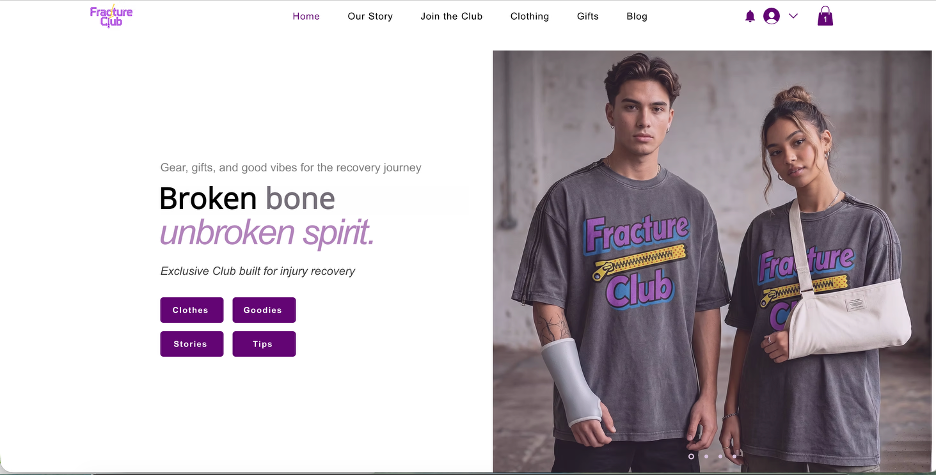
Recovery is hard enough without fighting your clothes every morning. Fracture-club builds adaptive recovery wear specifically for people healing from fractures, surgeries, and orthopedic injuries. Their easy-on/off adaptive pants feature side magnetic zippers sized to fit over casts and braces, and their sweatshirts are designed for one-handed dressing with upper-limb injuries. Every piece is made to reduce caregiver workload while giving patients back a piece of their daily independence.
[
](fracture-club.com)
A portion of proceeds supports the Bone Health & Osteoporosis Foundation. Fracture-club also offers exchanges if sizing needs to change as swelling shifts during recovery. If you need help choosing the right size or have questions about a group order, their inquiry page is the fastest way to get a direct answer. Browse the full collection and find the right fit for where you are in recovery.
Useful sources and where to read more
These are the primary references used throughout this guide:
PMC: Family Caregivers in Critical Illness Recovery — Qualitative and pooled research on caregiver burden, readmission risk, and the scope of the family caregiver role post-discharge. Essential reading for understanding why caregiver preparation matters.
Caregiver Action Network — Practical guidance on setting boundaries, delegation, and preventing burnout. The go-to resource for caregiver self-care and respite planning.
National Caregiver Authority: Post-Surgical Caregiving — Defines recovery caregiving as milestone-driven and time-limited; covers the transition from hospital to home and the first 24 hours.
Medbridge: Why Recovery Falls Apart at Home — Clinician-focused analysis of why home recovery fails and how caregivers can function as clinical coaches. Covers the recovery hub concept and energy pacing.
Medella: Supporting a Parent After an Injury — Practical physio-backed guide on empowering independence through ADLs and adaptive solutions, including clothing and dressing aids.
PhysioWorks: Soft Tissue Injury Healing — Source for the acute/repair/remodeling phase timeline and physiotherapy-based recovery expectations.
PostCare: Sports Injury Recovery Guide — Covers the POLICE protocol and phase-based rehabilitation for sports and acute injuries; useful for understanding staged return to activity.
Fracture-club — Adaptive recovery clothing, community resources, and guides for people healing from fractures and orthopedic injuries.
Recommended
Comments