
The Role of Community Awareness in Bone Health
- T. Armstrong

- Jul 19
- 8 min read
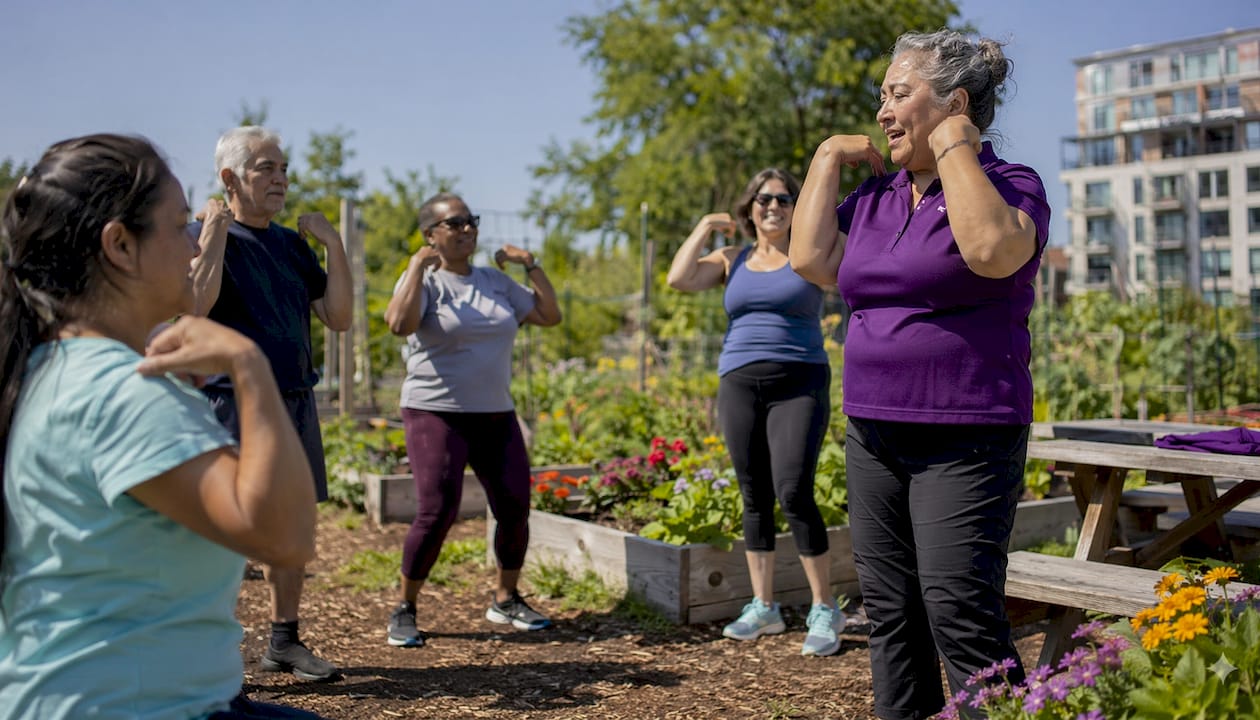
Community awareness is the primary driver of osteoporosis prevention at the population level. Osteoporosis affects approximately 54 million Americans, costing over $57 billion annually, with projected costs exceeding $95 billion by 2030. Those numbers reflect a disease that most people do not think about until a fracture forces the conversation. The role of community awareness in bone health is to change that timing. When education, screening, and peer support reach people before the first break, fractures become preventable rather than inevitable. The Bone Health and Osteoporosis Foundation (BHOF) has made this the center of its public health mission, and the evidence backs the approach.
How does community awareness improve bone health outcomes?
Public awareness of bone health works through three connected mechanisms: it raises knowledge, it increases screening uptake, and it shifts daily behavior. Each step builds on the last. Without the first, the other two rarely happen.
The knowledge gap is real and measurable. A co-designed osteoporosis education program produced a mean increase of 2.03 points on the Osteoporosis Knowledge Assessment Tool (OKAT) among participants. That gain matters because people who understand bone density loss are far more likely to ask their doctor about a DEXA scan before a fracture occurs.
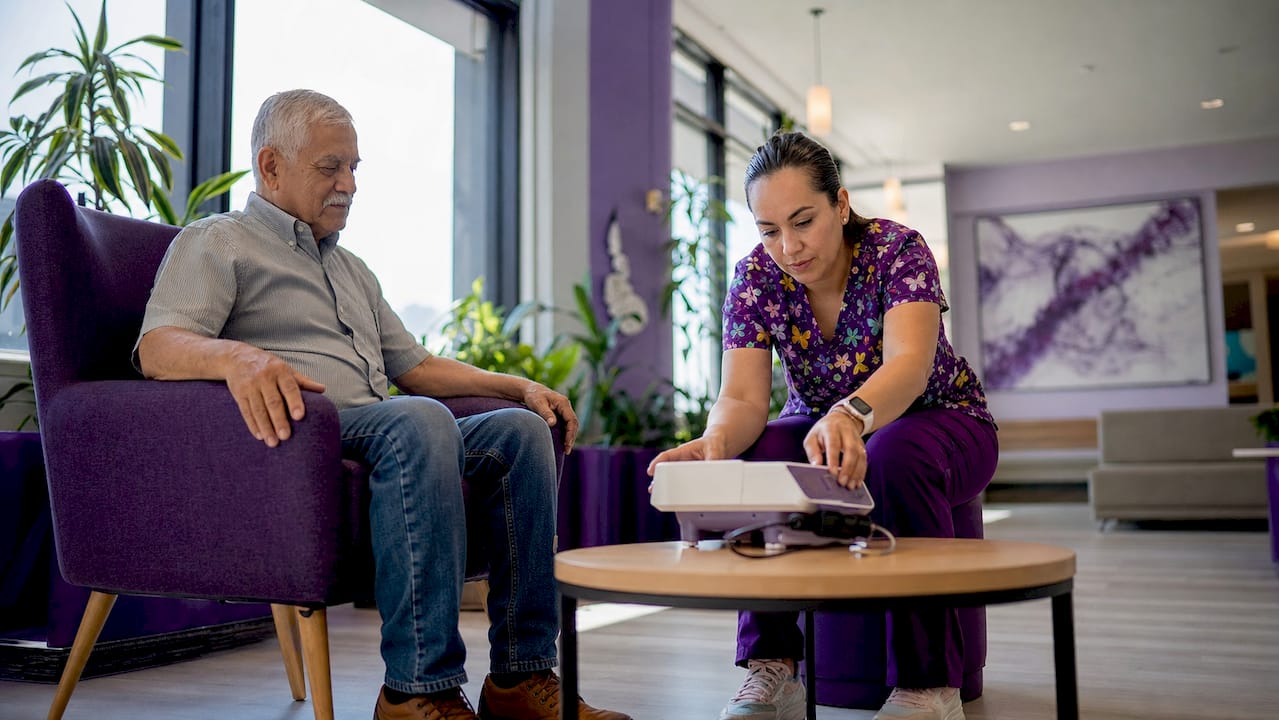
Screening is where awareness converts into clinical action. Bone health screening catches low bone density years before a fracture, giving people time to act through medication, diet, and exercise. Community programs that pair education with on-site screening remove the two biggest barriers: not knowing the risk and not knowing where to go.
Behavior change is the hardest link in the chain. Research shows that public health campaigns motivate only 20.73% of participants to change behavior. That figure is sobering. It means awareness alone is not enough. Structured follow-up, peer accountability, and access to resources all amplify what education starts.
The demand for more programs is clear. In the same research, 88.08% of surveyed women said they want more preventive education programs for osteoporosis. That gap between desire and delivery is exactly where community organizers can make the biggest difference.
Key outcomes linked to strong community health education programs include:
Earlier identification of high-risk individuals through community-based screening events
Increased calcium and vitamin D intake among participants who complete structured education
Higher rates of follow-up medical appointments after community outreach
Greater social support networks that sustain long-term preventive behavior
Reduced stigma around bone density testing, particularly among men and younger adults
What do successful bone health community initiatives look like?
The strongest programs share two features: they are co-designed with the communities they serve, and they involve multiple sectors working together. Neither element is optional.
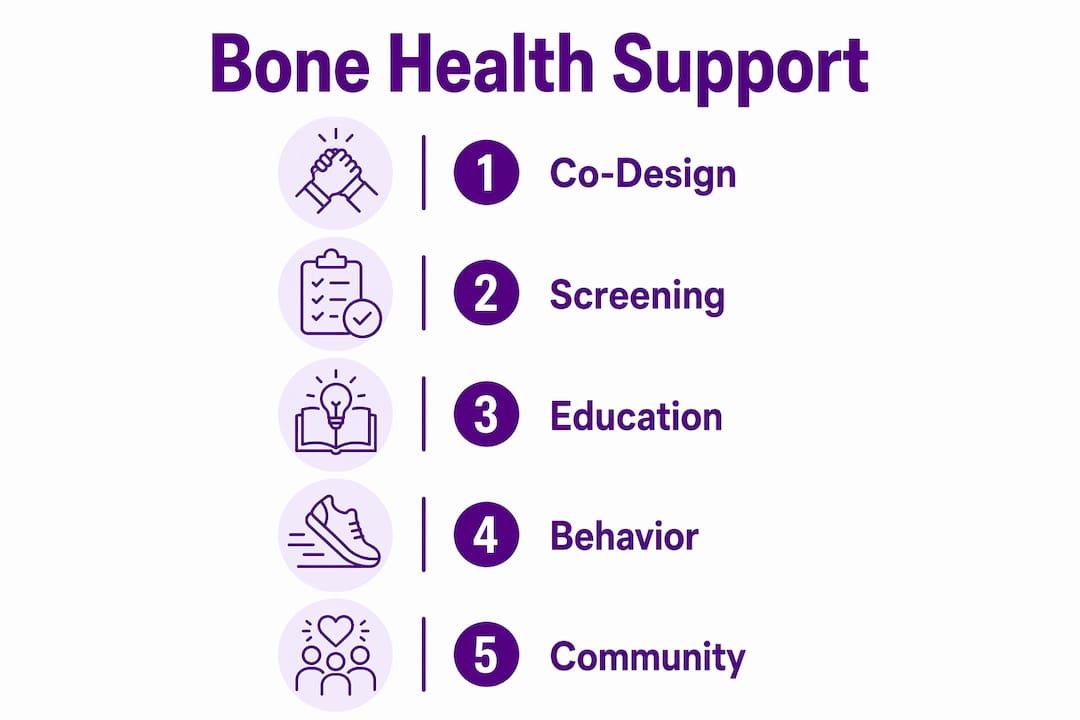
Co-design means that people with lived experience of osteoporosis help shape the content, language, and delivery of education. Co-design methodologies address cultural barriers, literacy gaps, and accessibility challenges that outside experts routinely miss. A program built in a clinic boardroom rarely lands the same way as one built at a community center with input from the people who will use it.
The MINDSET program is a strong example. This multicultural, co-designed osteoporosis toolkit produced a 90% participant recommendation rate alongside measurable knowledge gains. Participants felt the content was relevant to their lives, not just medically accurate. That distinction drives engagement.
Municipal-level commitment produces the most durable results. The Kure Project in Kure, Japan, combined local government involvement with multidisciplinary clinical collaboration. The outcome was a drop in vertebral fracture incidence to a ratio of 0.76 and hip fracture incidence to 0.85 by 2021. Those reductions represent thousands of avoided hospitalizations and a measurable drop in healthcare costs.
Identify community partners early. Recruit local clinics, pharmacies, faith communities, and senior centers before designing the program. Their networks multiply your reach.
Co-design content with participants. Run focus groups with people who have personal experience of osteoporosis or fracture recovery. Their feedback shapes language, format, and delivery.
Integrate screening into every event. Education without a clear next step loses momentum. On-site bone density screening or referral pathways keep participants moving toward clinical care.
Secure policy support. Programs backed by municipal health departments or regional health authorities receive sustained funding and institutional credibility.
Measure and report outcomes. Track OKAT scores, screening rates, and follow-up appointments. Data sustains funding and motivates continued participation.
Pro Tip: Time your program launch to coincide with Osteoporosis Awareness and Prevention Month in may. Thirty-three states have passed resolutions supporting this month, giving community organizers a built-in platform for media attention and partner recruitment.
What misconceptions make bone health awareness harder?
The single biggest obstacle to effective bone health education is the belief that osteoporosis is a normal part of aging. When people accept bone loss as inevitable, they stop looking for ways to prevent it. Shifting perception of osteoporosis from an inevitable aging consequence to a preventable condition is the foundational challenge for every awareness campaign.
This misconception has a direct clinical cost. Many patients first learn they have osteoporosis after a fracture, not before. That reactive pattern means the window for low-cost prevention has already closed. Proactive prevention requires reaching people before the first break, which demands community-level outreach rather than individual clinical encounters.
A second misconception is that awareness campaigns alone produce lasting change. The data does not support that. Vitamin D and calcium supplement use correlates with knowledge, but broader preventive practices like weight-bearing exercise and sun exposure remain low even among educated populations. Awareness opens the door. Structural support, accessible resources, and professional guidance are what keep people walking through it.
Common barriers that community programs must address directly include:
Fatalism about aging. Many adults believe bone loss is unavoidable, so they do not seek screening or make dietary changes.
Low perceived personal risk. Osteoporosis is often seen as a condition affecting elderly women, leaving men and younger adults unaware of their own vulnerability.
Access gaps. Rural and low-income communities face limited access to DEXA scanning, specialist care, and affordable supplements like plant-based calcium options.
Short-term program design. One-time awareness events produce short-term knowledge gains that fade without follow-up.
Physician awareness gaps. Patients cannot act on information their doctors do not provide. Coordinated education for both patients and providers produces stronger results.
Practical steps for organizers to promote bone health in communities
Building a bone health awareness program does not require a large budget. It requires the right partnerships, a clear structure, and a commitment to follow-through. The most effective programs are those that embed bone health into existing community infrastructure rather than creating parallel systems.
Start with a community needs assessment. Survey local residents about their knowledge of osteoporosis, their access to screening, and their dietary habits. That data tells you where to focus and gives you a baseline to measure progress against. Bone health advocacy organizations can provide survey tools and program templates that reduce the time needed to get started.
Pro Tip: Partner with local pharmacies to offer free bone health risk assessments. Pharmacists are trusted community figures, and their locations are accessible to people who rarely visit a clinic.
Practical steps for community organizers include:
Co-design your curriculum. Recruit five to ten community members with lived experience of osteoporosis or fracture to review and shape your educational materials before launch.
Use Osteoporosis Awareness Month in may as a launch window. The existing media attention and state-level proclamations give your program visibility at no cost.
Partner with local health departments. Municipal backing provides funding pathways, liability coverage, and access to clinical partners for screening events.
Offer multilingual materials. Communities with diverse populations see significantly higher engagement when content is available in their primary language.
Create a referral pathway. Every participant who completes your education program should leave with a clear next step, whether that is a scheduled DEXA scan, a follow-up appointment, or a written action plan for diet and exercise.
For aging adults specifically, pairing community education with bone health best practices gives participants a concrete framework to apply what they learn. Education without application rarely changes behavior long-term.
Key Takeaways
Community awareness is the most cost-effective tool for reducing osteoporosis-related fractures, but it requires structured programs, co-designed content, and policy support to produce lasting results.
Point | Details |
Awareness drives early screening | Community education increases DEXA scan uptake before the first fracture occurs. |
Co-design improves outcomes | Programs built with lived-experience input achieve higher engagement and knowledge gains. |
Policy support sustains programs | Municipal involvement, as seen in the Kure Project, produces measurable fracture reductions. |
Awareness alone is not enough | Structural support and professional follow-up are required to convert knowledge into behavior change. |
Misconceptions are the core barrier | Reframing osteoporosis as preventable, not inevitable, is the first step every campaign must take. |
What I’ve learned about community awareness and bone health
The gap between knowing about osteoporosis and doing something about it is wider than most public health professionals expect. I have seen well-funded awareness campaigns produce impressive knowledge scores and almost no change in screening rates. The reason is almost always the same: the program ended when the event did.
What actually works is sustained, embedded engagement. When bone health education lives inside a community, whether at a senior center, a faith community, or a local pharmacy, it becomes part of the conversation people already have. That is where behavior shifts. Not at a one-day health fair, but in the repeated, trusted interactions that happen in familiar spaces.
The Kure Project taught me something specific: government involvement is not a bureaucratic add-on. It is the mechanism that keeps programs funded, staffed, and connected to clinical care after the initial enthusiasm fades. Community organizers who build those relationships early give their programs a much longer runway.
The most underused resource in bone health awareness is the person who has already lived through a fracture. Their story carries more weight than any brochure. Co-design is not just a methodology. It is a way of honoring the knowledge that comes from experience and putting it to work for the people who come next.
— Fracture
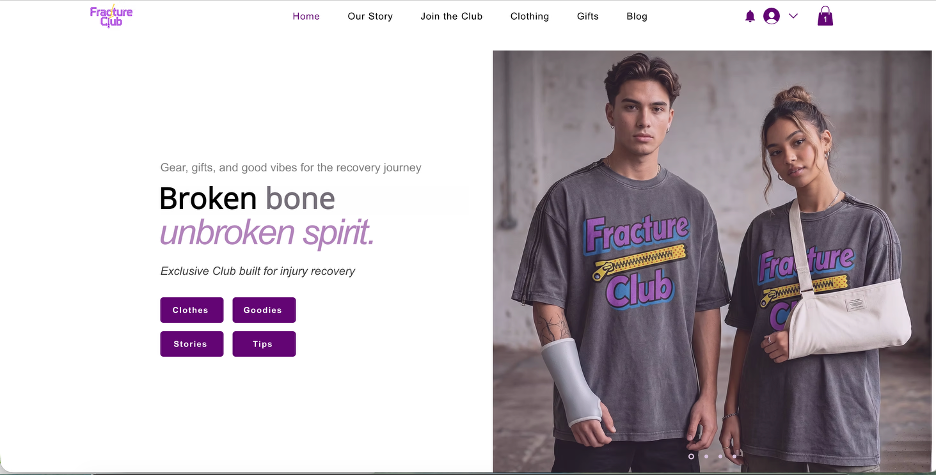
Fracture-club and the community behind bone health recovery
Fracture-club was built on the belief that recovery is easier when you feel supported, not sidelined. Every product and resource connects back to that idea.
[
](fracture-club.com)
For people healing from bone fractures, the physical and emotional weight of recovery is real. Fracture-club’s adaptive recovery pants with magnetic side zippers make dressing possible with a cast or brace, without asking for help every morning. The recovery sweatshirt does the same for upper limb injuries. A portion of every purchase benefits the Bone Health and Osteoporosis Foundation, so buying gear also funds the awareness work that prevents the next fracture. If you want to learn more about how Fracture-club supports recovery, the inquiry services page is the right place to start.
FAQ
What is the role of community awareness in bone health?
Community awareness in bone health refers to organized efforts to educate populations about osteoporosis risk, prevention, and screening before a fracture occurs. These programs increase knowledge, improve screening rates, and support preventive behavior at the population level.
How many Americans are affected by osteoporosis?
Osteoporosis affects approximately 54 million Americans, with annual costs exceeding $57 billion and projections above $95 billion by 2030. Those figures make it one of the most costly preventable conditions in the United States.
What makes a bone health community program effective?
The most effective programs combine co-designed educational content, on-site screening, and policy-level support from local government or health departments. The Kure Project and MINDSET program both demonstrate that multidisciplinary collaboration produces measurable fracture reductions.
Why is osteoporosis often diagnosed too late?
Many patients learn they have osteoporosis only after a fracture, because the condition causes no symptoms in its early stages. Community awareness programs that promote proactive screening change this pattern by reaching people before bone loss becomes severe.
How can community organizers get started with bone health education?
Start by assessing local knowledge gaps, recruiting community members with lived experience to co-design materials, and partnering with local health departments for funding and clinical support. Launching during Osteoporosis Awareness Month in may provides built-in visibility and media support.
Recommended
Comments