
Reading Bone Health Lab Results: A Patient's Guide


Reading bone health lab results means interpreting measurements like DEXA T-scores, blood panel markers including calcium, phosphate, albumin, and alkaline phosphatase, and bone turnover markers like CTX and P1NP that together reflect your bone density and metabolic bone activity. Whether you are recovering from a fracture, managing osteoporosis, or monitoring your bone health proactively, understanding these numbers gives you real power in your own care. This guide walks you through every major test, what the values mean, and what to do next. You do not need a medical degree to read these results. You need a clear map, and this is it.
What are the main bone health tests and markers in your lab results?
Bone health lab results typically fall into three categories: bone density scans, bone profile blood tests, and bone turnover markers. Each measures something different, and together they give your doctor a picture of both your bone structure and how actively your body is building or breaking down bone tissue.
A bone profile blood test includes adjusted calcium, phosphate, alkaline phosphatase (ALP), and albumin. These markers reflect the chemical environment your bones live in. Abnormal values in any of these can point to metabolic conditions affecting bone health, though they do not directly measure bone density.
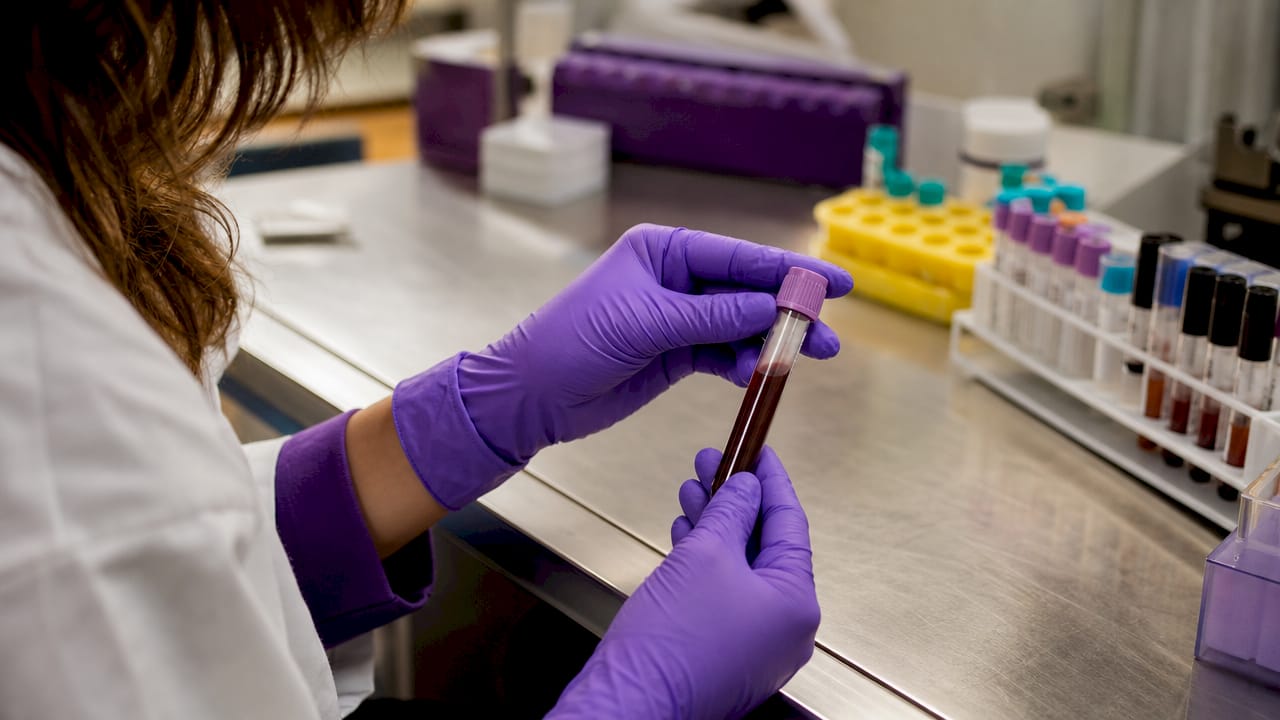
Bone turnover markers are blood or urine tests that measure the rate of bone remodeling. The two most clinically relevant are CTX and P1NP: CTX reflects bone resorption (breakdown), and P1NP reflects bone formation (building). Their pattern together shows whether your body is breaking down more bone than it is building, or vice versa.
Here is a quick reference for the main markers:
Marker | What It Measures | Clinical Significance |
T-score (DEXA) | Bone density vs. young adult average | Classifies normal, osteopenia, or osteoporosis |
Adjusted calcium | Free calcium in blood, corrected for albumin | Detects hypercalcemia or hypocalcemia |
Phosphate | Phosphate levels in blood | Reflects kidney function and bone metabolism |
ALP | Alkaline phosphatase enzyme activity | Elevated levels can indicate active bone remodeling or disease |
CTX | Collagen breakdown products | Measures bone resorption rate |
P1NP | Procollagen type 1 N-terminal propeptide | Measures bone formation rate |
Pro Tip: Ask your doctor for a printed copy of your results with reference ranges included. Labs set their own cutoff values, so a number that looks alarming on one lab’s report may be within normal range on another’s.
How to interpret your DEXA scan results: T-scores and Z-scores explained
The DEXA scan is the gold standard for measuring bone mineral density (BMD). It scans your lumbar spine and hip, then generates a T-score that compares your bone density to that of a healthy young adult at peak bone mass.
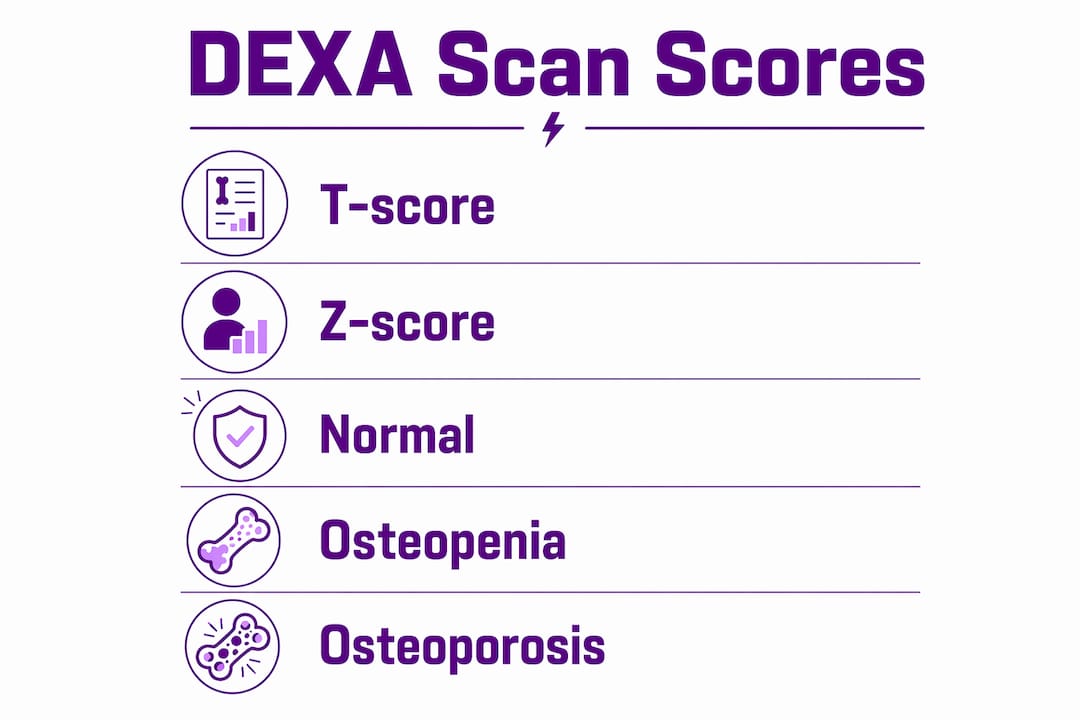
The World Health Organization defines three categories based on DEXA T-score thresholds:
T-score of −1.0 or above: Normal bone density
T-score between −1.0 and −2.5: Osteopenia, meaning lower than average density but not yet osteoporosis
T-score of −2.5 or below: Osteoporosis
Each full point drop in T-score roughly doubles fracture risk, which is why even a result in the osteopenia range deserves attention and follow-up.
The Z-score works differently. It compares your bone density to others of your same age and sex rather than to a young adult peak. Z-scores are more appropriate for premenopausal women, men under 50, and children. A Z-score at or below −2.0 is considered below the expected range for your age group and warrants further investigation.
One important nuance: lumbar spine DEXA values can read artificially high in older adults due to degenerative changes like arthritis or calcified discs. In those cases, hip or femoral neck measurements are more reliable. Your radiologist’s report should note which site was used.
Pro Tip: A T-score alone does not predict fracture certainty. Bone quality, fall risk, medication history, and clinical context all factor into your actual fracture risk. Ask your doctor about FRAX, a validated fracture risk assessment tool that combines T-score with clinical risk factors.
It is also worth knowing that patients can sustain fractures even with T-scores that do not meet the osteoporosis threshold. Bone quality deficits and silent vertebral fractures are real possibilities that a density number alone will not capture.
How to read common blood test results related to bone health
A bone profile blood panel does not diagnose osteoporosis, but it reveals whether your body’s chemical environment supports healthy bone metabolism. Understanding each value helps you ask better questions and catch issues early.
Calcium and adjusted calcium are the most closely watched values. Total calcium is affected by albumin levels in your blood, so labs calculate an adjusted calcium figure to reflect the true amount of free, active calcium. Low albumin can mask true calcium abnormalities without this correction, making adjusted calcium the more clinically meaningful number. Hypercalcemia (high calcium) can indicate hyperparathyroidism or malignancy. Hypocalcemia (low calcium) may signal vitamin D deficiency or malabsorption.
Phosphate works closely with calcium in bone mineralization. Low phosphate can indicate poor nutrition or kidney issues. High phosphate often points to kidney disease, which directly impairs bone health over time.
Alkaline phosphatase (ALP) is an enzyme produced by bone cells and the liver. When ALP is elevated and liver function tests are normal, the excess ALP is likely coming from bone. Elevated ALP with normal liver function can indicate active bone remodeling, Paget’s disease, healing fractures, or bone metastases. A single elevated ALP reading is not a diagnosis. It is a signal to investigate further.
Here is a simplified reference for blood panel values:
Blood Marker | Low Value May Suggest | High Value May Suggest |
Adjusted calcium | Vitamin D deficiency, malabsorption | Hyperparathyroidism, malignancy |
Phosphate | Poor nutrition, kidney tubule issues | Chronic kidney disease |
ALP | Rarely clinically significant alone | Active bone remodeling, Paget’s disease, fractures |
Albumin | Malnutrition, liver disease | Dehydration |
Blood tests alone do not confirm or rule out osteoporosis. They provide metabolic context. Your doctor uses them alongside your DEXA results and clinical history to build a complete picture of your bone health. If your results show abnormalities, that is not a reason to panic. It is a reason to follow up with the right specialist.
What bone turnover markers reveal and how to interpret their results
Bone turnover markers give you a real-time window into how actively your skeleton is remodeling itself. Unlike a DEXA scan, which is a static snapshot of density, these blood tests reflect the dynamic process of bone breakdown and formation happening right now.
CTX measures the byproducts of collagen breakdown during bone resorption. P1NP measures proteins released during new bone formation. Their pattern together tells a more complete story than either marker alone. If CTX is high and P1NP is low, your body is breaking down bone faster than it is building it. That imbalance is clinically significant, especially during fracture recovery or when monitoring osteoporosis treatment.
Timing matters enormously with these tests. CTX levels follow a circadian rhythm, peaking in the early morning and dropping throughout the day. Food intake also suppresses CTX. A blood draw taken at 2 PM after lunch will produce a very different CTX reading than one taken at 8 AM fasting, even in the same person on the same day.
Always schedule your bone turnover marker blood draw in the morning, ideally before 10 AM
Fast for at least 8 hours before the draw
Try to have repeat tests done at the same time of day and under the same conditions
Avoid strenuous exercise the day before, as it can temporarily affect marker levels
Monitoring bone turnover markers over time with consistent sample timing tracks treatment effectiveness much faster than waiting for a follow-up DEXA scan. A DEXA scan typically shows meaningful changes only after 1 to 2 years of treatment. Turnover markers can show a response to medication within 3 to 6 months.
Pro Tip: If you are recovering from a fracture, ask your doctor whether bone turnover markers are part of your follow-up plan. Post-fracture patients benefit from monitoring remodeling state to guide recovery management, not just from tracking density.
What to do after getting your bone health lab results
Getting your results is the beginning of a conversation, not the end of one. Here is a practical sequence for moving forward after you receive your bone health test results.
Write down your specific numbers. Record your T-score or Z-score, your adjusted calcium, ALP, and any turnover marker values. Note the reference ranges your lab used.
Compare to established thresholds. Use the WHO T-score categories and your lab’s reference ranges to place each value in context. Highlight anything outside the normal range.
Request a follow-up appointment. Do not interpret results in isolation. Your doctor combines your lab values with your fracture history, medications, family history, and lifestyle to determine actual risk.
Ask about lifestyle interventions. Weight-bearing exercise, calcium and vitamin D intake, smoking cessation, and fall prevention are evidence-based first steps regardless of your result category. Early intervention is consistently more effective than treating fractures after they occur.
Understand the monitoring schedule. DEXA scans are typically repeated every 1 to 2 years for people on treatment or with osteopenia. Bone turnover markers may be checked more frequently to assess treatment response.
“Low bone density detected through labs is an opportunity for early intervention and prevention, not just a diagnosis to fear. Patient education at this stage changes long-term outcomes.”
Caregivers play a real role here too. If you are supporting someone through fracture recovery or osteoporosis management, helping them track results over time and prepare questions for appointments makes a measurable difference. Post-fracture nutrition is one area where caregiver involvement directly supports bone remodeling and healing speed.
Key takeaways
Accurate interpretation of bone health lab results requires combining DEXA T-scores, bone profile blood values, and bone turnover markers with full clinical context rather than reading any single number in isolation.
Point | Details |
T-score thresholds matter | Normal is ≥−1.0, osteopenia is −1.0 to −2.5, and osteoporosis is ≤−2.5 per WHO criteria. |
Adjusted calcium is the reliable figure | Total calcium without albumin correction can miss true deficiencies or elevations. |
CTX timing is critical | Always draw CTX fasting before 10 AM to get results that are comparable over time. |
Turnover markers track treatment faster | P1NP and CTX show treatment response within months, well before a DEXA scan would. |
No single result tells the whole story | Bone quality, clinical history, and lifestyle factors all shape fracture risk beyond density alone. |
What I have learned from watching people read their bone results
Most people receive their bone health lab results and immediately focus on the single worst-looking number. I understand that instinct. When you see a T-score of −2.3 or an elevated ALP, it is hard not to fixate on it. But that reaction, while completely human, misses the point of what these tests are actually for.
The most common misconception I see is treating a DEXA T-score as a verdict. It is not. A T-score tells you where your bone density sits on a population curve. It says nothing about your bone quality, your fall risk, your muscle strength, or whether you have already had a silent vertebral fracture. Two people with identical T-scores can have very different actual fracture risks based on everything else going on in their lives.
The second thing I would tell anyone reading these results: bring a list of questions to your appointment, not just the printout. Ask your doctor what your results mean for you specifically, not just in general terms. Ask whether bone turnover markers are part of your monitoring plan. Ask what a realistic improvement looks like over the next year.
And if you are a caregiver helping someone navigate this, your presence in that appointment matters more than you might think. You remember things the patient misses when they are anxious. You ask follow-up questions. You help connect the dots between what the lab says and what daily life looks like at home.
Understanding your results is not just reassuring. It is the first step toward doing something about it.
— Fracture
How Fracture-club supports you through recovery
Understanding your bone health lab results is one part of recovery. Feeling comfortable and supported while you heal is another. Fracture-club designs adaptive recovery wear specifically for people healing from fractures and bone injuries, so that getting dressed does not become its own obstacle. The adaptive recovery pants feature magnetic side zippers that make dressing possible even with a cast or brace in place. A portion of every purchase supports the Bone Health & Osteoporosis Foundation, connecting your recovery to a larger mission. Explore the full range at Fracture-club and find gear that meets you where you are in your healing process.
FAQ
What does a T-score of −2.5 mean on a DEXA scan?
A T-score of −2.5 or below meets the WHO definition of osteoporosis, meaning your bone density is significantly lower than that of a healthy young adult at peak bone mass. This result warrants a clinical follow-up to assess fracture risk and discuss treatment options.
What blood tests are included in a bone health panel?
A standard bone profile includes adjusted calcium, phosphate, albumin, and alkaline phosphatase. Some panels also include bone turnover markers like CTX and P1NP to assess the rate of bone remodeling.
Why does the time of day matter for bone turnover marker tests?
CTX, a key bone resorption marker, follows a diurnal rhythm and is highest in the early morning. Drawing blood after eating or later in the day produces lower readings that are not comparable to fasting morning samples, making consistent timing critical for accurate monitoring.
Can you have a fracture with a normal T-score?
Yes. Patients can fracture bones even with T-scores above the osteoporosis threshold due to bone quality deficits, silent vertebral fractures, or high fall risk. Bone density is one factor in fracture risk, not the only one.
How often should bone health lab results be repeated?
DEXA scans are typically repeated every one to two years for people on treatment or with osteopenia. Bone turnover markers can be rechecked every three to six months to assess whether treatment or lifestyle changes are producing a measurable response.
Recommended
Comments