
Maintaining Identity During Injury Recovery

Recovery is hard on your body. What surprises most people is how hard it hits your sense of self. Maintaining identity during injury recovery, what psychologists often call identity reconstruction, is one of the most overlooked challenges in rehabilitation. You wake up one day unable to do the things that define you. Your role at work, your athletic routines, your independence. All of it feels suspended. This guide walks you through why that happens, what the research says about managing it, and exactly what you can do to protect your sense of self while your body heals.
Table of Contents
Key Takeaways
Point | Details |
Identity loss is real and recognized | Injury disrupts psychological well-being, not just physical function, and addressing it early speeds overall recovery. |
Fear and readiness are separate | Reducing fear of reinjury and building psychological readiness require different strategies at different phases of rehab. |
Routine and support rebuild stability | Daily structure, trusted support people, and small goals protect your identity when everything else feels uncertain. |
Adaptive tools preserve dignity | Clothing and assistive resources that work with your injury help you feel like yourself, not just a patient. |
Progress needs to be tracked | Monitoring your emotional health alongside physical milestones helps you catch setbacks before they become bigger problems. |
Maintaining identity during injury recovery: the psychological reality
You probably expected physical pain. You may not have expected to feel like a stranger in your own life. Injury recovery triggers identity-related emotional shifts including loss of identity, fear of reinjury, self-doubt, frustration, depression, and performance anxiety. These are not signs of weakness. They are predictable psychological responses to a disrupted life.
The clinical term for what you are experiencing is identity disruption, and it works on two levels. First, there is loss: the roles, abilities, and routines you can no longer access right now. Second, there is reconstruction: the slower, less visible process of figuring out who you are while healing. Identity stabilizes when experience becomes predictable, which explains why early recovery feels so destabilizing. Nothing is predictable yet.
Research on ACL rehabilitation shows that psychological readiness increases progressively across all rehab phases, while fear of reinjury, known as kinesiophobia, decreases mostly in the middle phase. This matters because fear and readiness are not the same thing. One is about threat reduction. The other is about confidence building. Treating them as identical is one reason so many people feel psychologically stuck even when they are physically progressing.
“Physical healing, nervous system regulation, psychological adaptation, and identity reconstruction occur simultaneously. Addressing only the physical dimension leaves the others to chance.”
Mental health care should start on day one of your recovery, not after your cast comes off. The two processes are inseparable.
Building your identity preservation toolkit
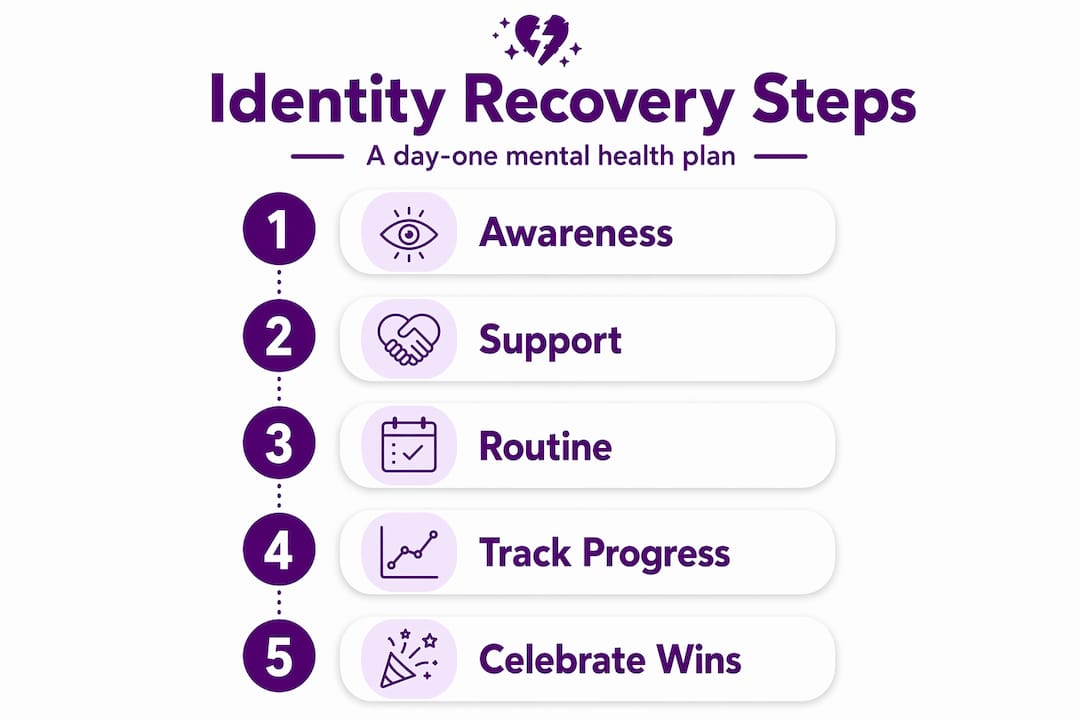
Before you can protect your sense of self, you need to put a few things in place. Think of these as the foundation your recovery sits on.

Your support network
The people around you matter more than any single strategy. Family, close friends, a physical therapist you trust, and when needed, a counselor or psychologist. Self-awareness significantly impacts identity adjustment after injury, and talking regularly with people who reflect your real self back to you accelerates that self-awareness. Be specific with what you need from them. “Help me feel normal” is more useful than “just be supportive.”
Your daily structure
Routine does something powerful when your world has been upended. It makes tomorrow predictable. Even small rituals, like a morning coffee at the same time or a short evening walk, create psychological anchors. Emotional strain can slow physical healing and complicate return to work, so protecting your emotional stability through structure is not optional. It is part of the treatment.
A practical comparison: common recovery support tools
Tool | What it supports | Best suited for |
Mindfulness apps | Stress reduction, present-focus | Early recovery, high anxiety periods |
Journaling | Self-reflection, meaning-making | All phases, especially mid-recovery |
Goal-tracking sheet | Motivation, measurable milestones | Ongoing through all rehab phases |
Adaptive clothing | Dignity, independence, self-image | From day one through full recovery |
That last row matters more than people realize. What you wear affects how you feel about yourself. Struggling into clothing that was not designed for your cast or brace is a daily reminder that you are limited. Dressing after a broken bone does not have to be a frustrating ordeal. When clothing works with your body, you start your day feeling capable instead of defeated.
Pro Tip: Pair adaptive apparel with a consistent morning routine. Getting dressed without a struggle is a small win, and those small wins add up to a real sense of agency.
Step-by-step strategies to rebuild your sense of self
These steps work best when applied consistently across your recovery. They are not a one-time checklist. They are ongoing practices.
Name what you are feeling. Labeling emotions reduces their intensity. Instead of sitting inside a fog of “bad,” try identifying whether you are grieving a role, afraid of pain, or frustrated by dependency. Reflective practices like journaling help you discover what disruptions reveal about your values and relationships. That knowledge becomes the foundation of a stronger post-recovery identity.
Set goals that are achievable this week. Not this year. Not when you are “back to normal.” This week. Walking to the mailbox. Making your own breakfast. Reading for 20 minutes. Small wins build the psychological readiness research shows increases steadily across rehab phases.
Gradually approach feared activities. Avoidance feels safe but deepens fear. This is especially relevant for fear of reinjury. Discuss a graduated exposure plan with your physical therapist, starting with very low-risk activities that feel related to what you have been avoiding.
Use social media strategically. Social media can help people rebuild self-identity by connecting with others and forming new identity spaces, though it also carries risks. Choose communities that are supportive and recovery-focused. Mute or block content that makes you feel worse about your progress.
Journal for 10 minutes daily. Not about pain levels. About who you are, what you value, and one thing that went well today. Over weeks, this practice builds a narrative of continuity, the sense that you are still you, even through disruption.
Communicate with your care team regularly. Tell them about mood changes, not just physical symptoms. Predictable communication with consistent providers reduces the uncertainty that, according to research, destabilizes identity reconstruction more than almost anything else.
Pro Tip: Schedule a five-minute “identity check-in” each evening. Ask yourself: What did I do today that felt like me? Even one honest answer keeps your self-concept intact through the hardest weeks.
Recognizing when identity loss becomes a deeper problem
There is a difference between the normal emotional turbulence of recovery and something that needs professional attention. Knowing that difference protects you.
Watch for these warning signs:
Persistent isolation, withdrawing from friends, family, and social activities for more than two weeks
Significant mood changes, including sadness, irritability, or emotional numbness that does not lift
Complete loss of motivation, where even activities you once cared about feel pointless
Disrupted sleep or appetite with no clear physical cause
Feeling that your “real self” is permanently gone, not just temporarily on hold
Signs like difficulty sleeping, mood changes, and isolation should not be ignored. They are the nervous system asking for more support than routine habits alone can provide.
One underappreciated risk is misdiagnosis. Commonly used fear assessment tools may be poorly suited for certain injury populations, potentially misclassifying psychological readiness and fear. If a mental health screening result does not feel accurate to your experience, speak up. Ask your provider whether the tool they used is appropriate for your specific injury type.
“The goal is not to return exactly to who you were before. Post-injury identity growth is about building a stronger, more honest self that integrates the adversity you have experienced.”
Managing social media deserves its own caution here. Even supportive communities can turn harmful if you encounter bullying, comparison, or content that makes your recovery feel inadequate. Set clear boundaries on how much time you spend in those spaces and what content you engage with.
Tracking your progress and sustaining your recovered identity
Knowing you are getting better is not enough. You need to see it. Visible, measurable progress reinforces the identity work you have been doing.
Milestone type | What to track | How often |
Physical function | Range of motion, strength, pain levels | Weekly with care team |
Emotional health | Mood, motivation, sleep quality | Daily in journal |
Social engagement | Conversations, outings, community time | Weekly self-check |
Fear reduction | Activities attempted vs. avoided | Bi-weekly review |
Identity markers | Roles reclaimed, personal goals met | Monthly reflection |
Celebrate what you reclaim, not just what you have lost. Wore real clothes today instead of pajamas? That counts. Made it to a friend’s dinner? That counts. These small reclamations are not trivial. They are the proof that you are still you.
Pro Tip: At the end of each month, write down three ways you showed up as yourself this month, things that had nothing to do with injury. That list becomes your evidence of continuity.
Preparing for transitions back to work, sports, or full social roles requires the same graduated approach as physical rehab. Do not assume you will just slot back in. Communicate your needs, start with reduced load, and give yourself permission to need adjustment time. The goal is not returning to who you were. Post-injury growth means building a self that is stronger for having been through this.
My honest take on identity and recovery
What I have learned watching people move through injury recovery is this: the ones who struggle most are rarely the ones with the most severe injuries. They are the ones who were never given permission to treat identity loss as a real medical concern.
Physical rehab gets a plan, a timeline, a clear protocol. Psychological recovery gets a pamphlet, maybe. That gap is not acceptable, and it produces real harm. Fragmented care, where the physiotherapist does not know what the psychologist said and neither knows how the patient is actually doing emotionally, creates exactly the kind of unpredictability that destabilizes identity reconstruction.
My advice: be the one who integrates your own care if your providers are not doing it. Share notes between your practitioners. Tell your physical therapist when your mood is low. Tell your counselor when physical progress stalls. The connection between those two things is not a soft concern. It is core to recovery.
I have also seen people exhaust themselves trying to return to exactly who they were before. That goal is understandable but often painful. A better goal is an evolved identity: one that includes the resilience, self-knowledge, and perspective that only adversity can build. That version of you is not lesser. It is richer.
— Fracture
Recovery wear that supports how you feel, not just how you heal
When you are working hard on maintaining your sense of self, the last thing you need is clothing that fights you every morning. Fracture-club was built on a simple idea: that how you dress during recovery affects how you feel about yourself, and you deserve both comfort and dignity throughout that process.
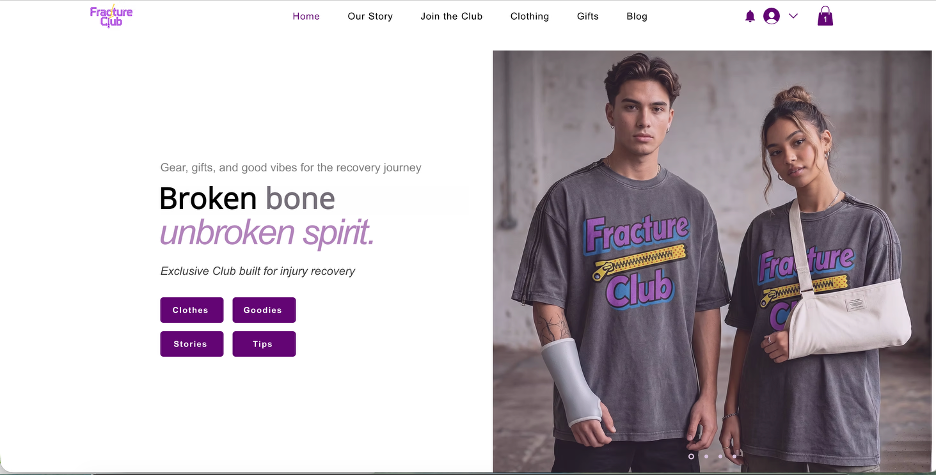
Fracture-club’s adaptive recovery pants feature side magnetic zippers designed specifically for people with casts, braces, or limited mobility. Getting dressed independently, without a 10-minute struggle, is a real identity win. Pair them with the adaptive recovery sweatshirt for upper limb injuries and you have a full outfit that works for your body as it actually is today. For personalized guidance on which products fit your specific situation, the Fracture-club inquiry service is there to help you find the right fit. Because recovery should feel like you, even on the hard days.
FAQ
How does injury affect your sense of self?
Injury disrupts the roles, routines, and abilities that form your identity, triggering emotional shifts like self-doubt, frustration, and loss of confidence. These responses are normal, recognized psychological reactions, not personal failures.
When should you start working on mental health in injury recovery?
Mental health support should begin on day one of recovery, running alongside physical rehabilitation rather than waiting until physical healing is complete. Research from the University of Utah Health confirms that mindset, sleep, stress, and pain all affect each other throughout the process.
Can social media help with identity preservation during rehab?
Yes, when used carefully. Research shows social media can help people reconnect with their sense of self and form new identity spaces, though risks like bullying and negative comparison require active management through strategic use and clear boundaries.
What are the warning signs that identity loss is worsening?
Persistent isolation, lasting mood changes, complete loss of motivation, and the feeling that your real self is permanently gone are key warning signs. If these persist beyond two weeks, seeking professional support is the right call.
Does recovering from injury mean returning to your old self?
Not exactly. Post-injury identity growth is about building an evolved self that integrates the experience of adversity rather than erasing it. That process, supported by reflective practices and consistent care, often produces a stronger, more self-aware identity than before.
Recommended
Comments