
How Bone Fracture Care Responsibilities Differ

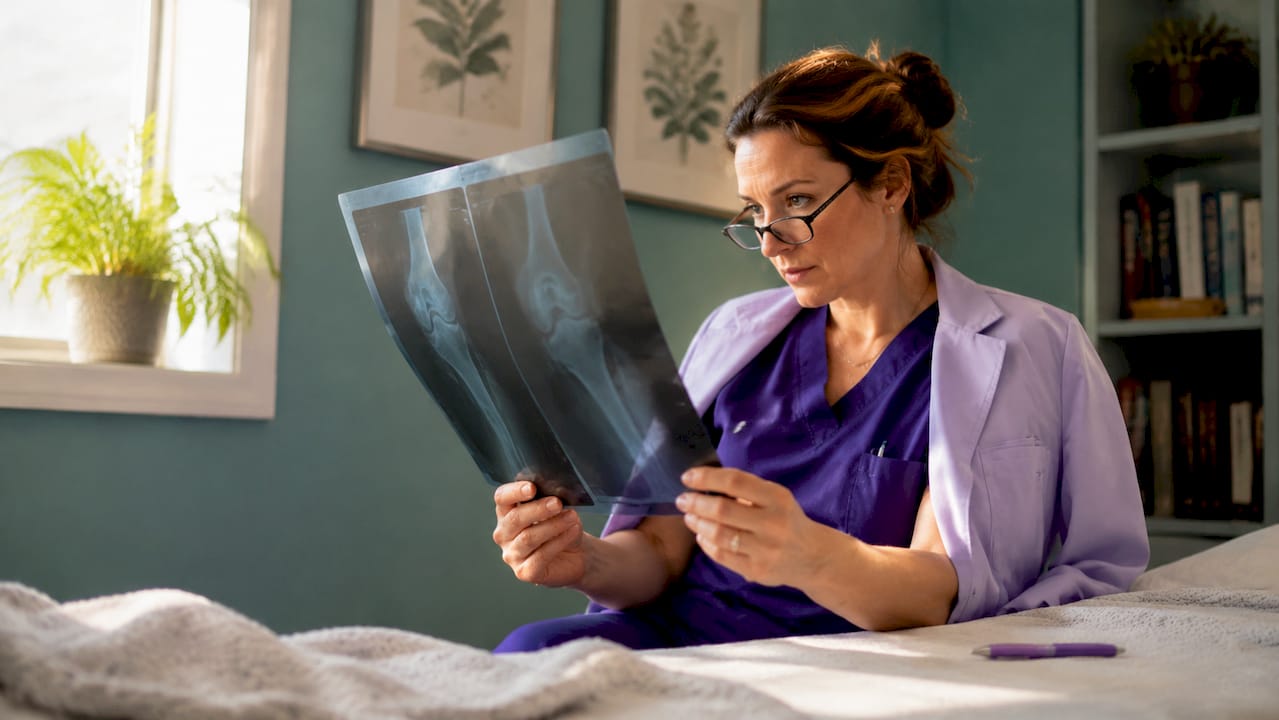
Bone fracture care responsibilities differ based on who is providing care and at what stage of recovery. Clinical teams own diagnosis, imaging, and immobilization application. Family caregivers own the daily monitoring, medication support, and rehabilitation reinforcement that happens between appointments. Understanding this division is not just reassuring. It is the foundation of a recovery that actually works. When you know your role, you stop second-guessing every decision and start acting with purpose.
How bone fracture care responsibilities differ between clinical teams and caregivers
The clearest way to understand fracture management roles is to separate them by phase and setting. Clinical professionals handle everything that requires medical training and equipment. Caregivers handle everything that requires presence, consistency, and vigilance at home. These roles are complementary, not interchangeable, and multidisciplinary fracture care consistently produces better outcomes when both sides understand their lane.
The bone fracture care differences start at the very first moment of injury. A physician or emergency clinician orders X-rays, CT scans, or MRI imaging to confirm the fracture type, displacement, and any associated soft tissue damage. That assessment determines whether the fracture can be managed conservatively or requires surgical intervention. No caregiver can replicate that step, and no caregiver should try.
What are the clinical team’s responsibilities in fracture care?
Clinical staff carry the diagnostic and procedural weight of fracture treatment duties. Their responsibilities are defined, sequential, and require licensed expertise.
Diagnosis and imaging: Physicians confirm fracture type, location, and severity using X-rays as the standard first step, with CT or MRI ordered when soft tissue or joint involvement is suspected.
Immobilization application: Orthopedic clinicians apply splints for acute swelling phases and transition to casts once swelling stabilizes. Splints typically last 3 to 5 weeks, while casts run 6 to 8 weeks for most non-displaced fractures. That timeline directly shapes how long caregivers will be managing immobilization at home.
Escalation and surgical referral: Open, displaced, intra-articular, or unstable fractures require urgent specialist referral. Clinical teams make that call based on imaging and neurovascular assessment, not patient comfort level.
Early mobilization in hospital: For hip fractures and post-surgical patients, clinical teams target mobilization within 24 hours of surgery. Orthogeriatric nursing programs have reduced prolonged immobility from 30.2% to 13.1% in elderly patients. That early movement sets the baseline that caregivers then maintain at home.
Multidisciplinary coordination: Complex fractures involve orthopedic surgeons, physical therapists, occupational therapists, and social workers. The clinical team coordinates that network. Caregivers plug into it.
Pro Tip: Ask the clinical team to write down the specific immobilization rules before discharge. Verbal instructions are easy to misremember under stress, and written guidance gives you something concrete to follow during the first 48 hours at home.
How do caregiver responsibilities differ during immobilization and home recovery?
Once the patient leaves the clinical setting, the weight of daily fracture care shifts to you. The responsibilities in fracture care at home are less technical but no less critical. Mistakes here, like allowing a cast to get wet or missing early signs of complications, can set recovery back by weeks.
Here is what effective home immobilization management looks like:
Maintain immobilization adherence. Keep the splint, cast, or brace on exactly as instructed. Families typically manage immobilization support through the initial 10 to 14 day reassessment window, which is when the fracture is most vulnerable to displacement.
Support pain management. Administer prescribed medications on schedule, not just when pain peaks. Consistent dosing prevents pain from getting ahead of the medication, which makes the patient more likely to move and less likely to guard the limb in ways that cause secondary stiffness.
Prevent falls and assist mobility. Clear pathways of rugs, cords, and low furniture. Set up a temporary sleeping area on the ground floor if stairs are involved. Assist with transfers from bed to chair using the technique the discharge team demonstrated.
Monitor for neurovascular warning signs. Caregivers are taught to watch for worsening pain, numbness, color changes, and reduced movement distal to the cast or splint. These are signs of tissue ischemia or compartment syndrome, both of which are medical emergencies. Do not wait until the next scheduled appointment if these appear.
Prepare the home environment. Install grab bars in the bathroom, raise toilet seat height if needed, and position frequently used items within easy reach. UPMC HealthBeat notes that caregivers attend discharge meetings specifically to learn these preparation tasks before the patient arrives home.
Pro Tip: Do not rely on the patient saying they feel fine as your only safety check. Objective symptom monitoring for numbness, tingling, and color changes is required even when the patient reports comfort. Subjective comfort can mask early neurovascular compromise.
When should caregivers escalate care or arrange follow-up?

Knowing when to call the doctor versus when to manage at home is one of the most practical fracture care responsibilities a caregiver holds. The threshold for escalation is lower than most people think.
Contact the clinical team immediately if you observe any of the following:
Increasing pain inside the cast or splint, especially pain that is out of proportion to the injury or that wakes the patient from sleep
Numbness, tingling, or a pins-and-needles sensation in the fingers or toes below the fracture site
Color changes in the skin distal to the cast, including pallor (white), cyanosis (blue), or mottling
Temperature changes, where the limb below the cast feels significantly colder than the opposite limb
Swelling that causes the cast to feel tight, or visible skin breakdown at cast edges
Fever above 101°F, which can signal infection, particularly in open fractures or post-surgical cases
Beyond emergencies, variations in fracture care also include scheduled follow-up. The 10 to 14 day reassessment imaging window is standard for most fractures managed conservatively. Missing that appointment is not a minor inconvenience. It is the point where the clinical team confirms the fracture has not shifted and decides whether the current immobilization plan continues. Your job as a caregiver is to coordinate transportation, confirm the appointment, and bring a written list of any symptoms or concerns you have observed since discharge.
What are caregivers’ responsibilities in rehabilitation and long-term recovery?
Rehabilitation is where the bone fracture care differences between clinical and caregiver roles become most visible over time. Physical therapists design the program. Caregivers make sure it actually happens.
The table below shows how clinical and caregiver rehabilitation duties split across the recovery timeline:
Recovery phase | Clinical team’s role | Caregiver’s role |
Hospital discharge | Prescribe PT program, set mobility goals | Attend discharge briefing, learn exercise protocols |
Weeks 1 to 4 | Monitor progress at follow-up visits | Assist with prescribed exercises, track adherence |
Weeks 4 to 12 | Adjust PT plan based on healing | Accompany PT sessions, reinforce exercises at home |
3 months and beyond | Assess functional recovery, clear for activity | Motivate, monitor for regression, support ADLs |
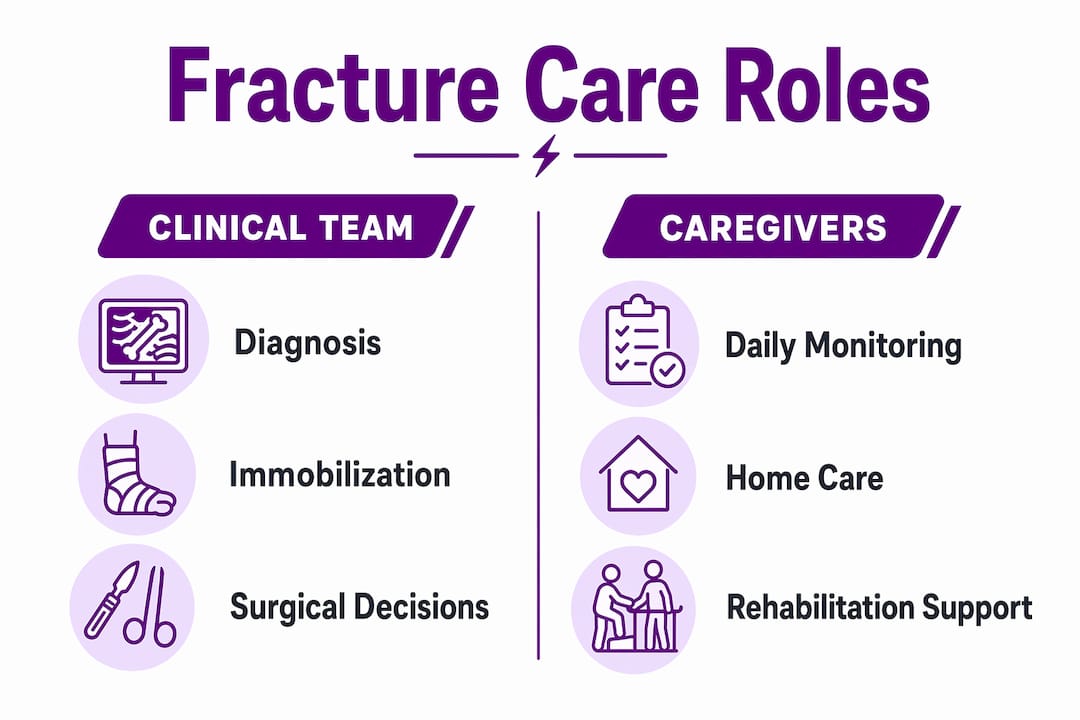
For elderly patients recovering from hip fractures, the caregiver role in rehabilitation is especially demanding. Research shows that family members are instructed to accompany rehabilitation training at least twice per week for three months post-surgery. That is a significant time commitment, and it reflects how much recovery depends on consistent reinforcement outside the clinic.
Caregivers also manage adaptive equipment during this phase. Reaching tools, shower chairs, dressing aids, and adaptive clothing all reduce the physical strain on both the patient and the caregiver. Learning how to get dressed after a broken bone is a practical skill that saves time and prevents the frustration that erodes motivation. Emotional support matters here too. Recovery is slow, and patients who feel encouraged by the people around them are more likely to stay consistent with their rehabilitation plan.
Key takeaways
Fracture care responsibilities divide clearly between clinical professionals and family caregivers, with each role being non-negotiable for a full recovery.
Point | Details |
Clinical teams lead diagnosis and immobilization | Physicians apply casts, order imaging, and make surgical referral decisions that caregivers cannot replicate. |
Caregivers manage the immobilization window | Families support cast and splint adherence through the critical 10 to 14 day reassessment period. |
Objective monitoring is a caregiver duty | Watching for numbness, color changes, and pain out of proportion is required even when the patient feels comfortable. |
Escalation thresholds are lower than expected | Fever, color changes, or disproportionate pain require immediate contact with the clinical team, not a wait-and-see approach. |
Rehabilitation success depends on caregiver consistency | Family members who accompany PT sessions and reinforce exercises at home directly improve long-term functional outcomes. |
What I’ve learned about the gap between clinical handoff and home reality
The hardest part of fracture recovery is not the injury itself. It is the moment the patient walks out of the hospital and the caregiver realizes the clinical team is no longer in the room. That gap between discharge and the first follow-up appointment is where most problems develop, and most of them are preventable.
What I have seen, working alongside the Fracture-club community, is that caregivers consistently underestimate how much the first 48 hours at home matter. The discharge paperwork feels overwhelming, the patient is tired and in pain, and the instructions blur together. The caregivers who do best are the ones who ask one specific question before leaving the hospital: “What is the one thing I must not miss in the first two days?” That single question cuts through the noise.
I also think the medical system sets caregivers up to over-rely on patient feedback. When someone you love says they feel okay, it is natural to relax. But comfort is not a reliable indicator of safety after a fracture. Neurovascular compromise can develop quietly, and the window to act is short. Caregivers who understand that objective monitoring is their job, not just a backup check, catch problems earlier.
The other thing worth saying plainly: asking for help is part of the job. Fracture-club exists partly because recovery is a community effort. Connecting with others who have been through it, whether through shared stories, recovery tips and resources, or practical product support, makes the caregiver role more sustainable. You are not supposed to figure this out alone.
— Fracture
How Fracture-club supports caregivers and patients through recovery
Recovery wear is one of the most overlooked parts of fracture management roles at home. Getting dressed with a cast, brace, or sling is genuinely difficult, and struggling with clothing every morning drains energy that should go toward healing.
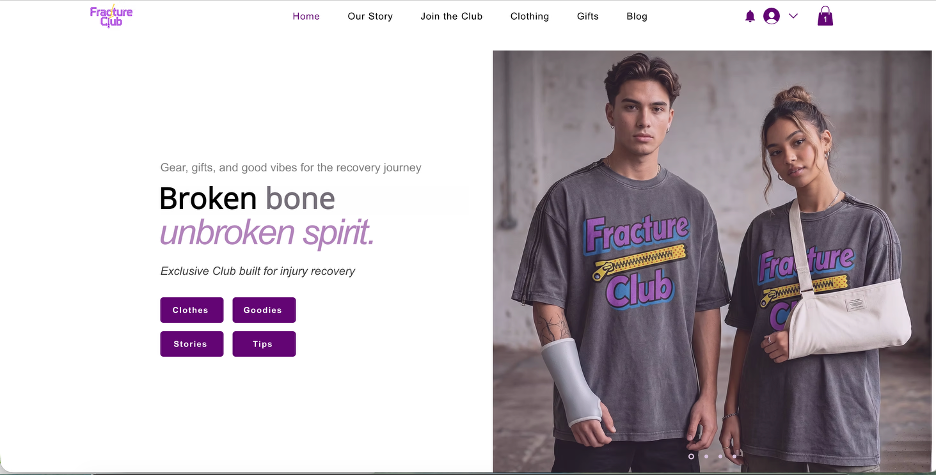
Fracture-club designs adaptive recovery clothing specifically for this challenge. The adaptive recovery pants feature magnetic side zippers that allow easy on and off without bending, twisting, or removing a cast. For upper limb fractures, the easy-on recovery sweatshirt accommodates slings and limited shoulder mobility. These products reduce the daily friction that wears caregivers and patients down, and a portion of every purchase supports the Bone Health & Osteoporosis Foundation.
FAQ
What is the main difference between clinical and caregiver fracture responsibilities?
Clinical teams diagnose, apply immobilization devices, and manage surgical decisions. Caregivers manage daily adherence, medication support, home safety, and monitoring for complications between medical appointments.
How long do caregivers typically manage immobilization at home?
Splints last approximately 3 to 5 weeks and casts run 6 to 8 weeks for most non-displaced fractures, meaning caregivers are actively managing immobilization support for the majority of that period.
What warning signs should caregivers watch for after a fracture?
Caregivers should monitor for numbness, tingling, color changes, temperature differences, and pain out of proportion to the injury. These are signs of neurovascular compromise and require immediate medical contact.
When is the first follow-up appointment after a fracture?
Most fractures managed without surgery require a reassessment within 10 to 14 days, which typically includes repeat imaging to confirm the fracture has not shifted and the immobilization plan is working.
How involved should caregivers be in rehabilitation?
For hip fractures in elderly patients, family members are instructed to accompany rehabilitation sessions at least twice per week for three months post-surgery. Consistent caregiver involvement directly improves functional recovery outcomes.
Recommended
Comments