
What to Write in a Surgery Card: Messages That Help


Write a surgery card in three short parts: say you’re thinking of them, add one warm and specific line, and offer one concrete piece of help or a promise to check in. Keep it short, keep the focus on them, and skip advice and comparisons. A few honest sentences in your own voice will mean more than a perfect quote.
Most people stall at the card aisle because they fear saying the wrong thing. The good news is that the bar is lower than you think. Someone facing surgery, or stuck at home afterward, mostly wants to know they are not forgotten. Below you’ll find the formula, messages you can copy and adapt, and the small mistakes that make a kind card land badly.
TL;DR
Use three parts: “thinking of you,” one personal line, and one specific offer or promise to check in.
Short is fine. “Thinking of you as you recover” beats a long message that tries too hard.
Skip clichés, “at least” statements, timelines like “you’ll be fine in a few weeks,” and stories about your own surgery.
Match the warmth to the relationship: a close friend can get a joke or a promise of company, a coworker gets encouragement without questions.
Pair the card with something useful, such as easy-to-wear clothing or a care package, and send a second, shorter note a few weeks later.
Table of Contents
The three-part formula for any surgery card
When the page is blank, build the message from three pieces. You can write each in one sentence.
Connection. Tell them they are on your mind. “I’m thinking of you today.”
Something personal. A quality you admire, a memory, or a plain statement of what you hope for. “You handle hard things with so much grace, and I know you’ll do that again.”
Support. A specific offer or a promise to stay in touch. “I’ll drop off dinner on Thursday. No need to answer.”
That is a complete card. Here is the same formula in full:
Thinking of you this week. You’ve always made the people around you feel looked after, and now it’s your turn. I’ll bring dinner Thursday and leave it on the porch, no need to reply. Rest up.
It takes thirty seconds to write and says everything a person needs to hear.
What to write before surgery
Before the operation, your reader is often nervous, tired of being asked how they feel, and focused on logistics. A card at this stage should steady them, not analyze the procedure. Keep medical detail out of it. Mention the surgery only lightly, hope for a smooth recovery, and tell them to take the time they need.
Copy and adapt any of these:
“Thinking of you today. Wishing you a calm morning and a smooth recovery.”
“You’ve got a great team and a lot of people in your corner. I’m one of them.”
“No pep talk, just this: I’m with you, and I’m only a text away.”
“Rest, let people help, and don’t worry about anything on your list. It will all be there later.”
“Sending strength for the big day. I can’t wait to hear you’ve come through it.”
Notice what these do. They give the person permission to rest and remind them they have company. None of them predict how it will go.
What to write after surgery
After the operation, the mood shifts. The relief may be mixed with pain, boredom, and the odd feeling of being stuck between feeling like a patient and feeling like yourself. A card now can be warmer and a little more practical.
Short messages that work
When you only have room for a line or two, these are enough:
“Thinking of you as you recover.”
“Take it easy. Your only job right now is to heal.”
“Wishing you a smooth recovery.”
“Feel better soon. We miss you.”
“Give your body time to mend. We’ll be here when you’re ready.”
Warmer messages for people you love
“I know these first weeks are slow and frustrating. You don’t have to be positive for me. Just rest, and let me know what would make today easier.”
“I’m so proud of how you’ve handled all of this. Whenever you feel up to company, I’ll be there with coffee and bad TV.”
“You’re stronger than you feel right now. I’ll keep checking in, and you never have to answer.”
Messages that name a specific kindness
The most useful cards offer something concrete. A vague “let me know if you need anything” puts the work back on the person who is already tired. Name the help and the day.
“I’m making a double batch of soup this weekend. Can I leave one on your porch Sunday?”
“I’m free Tuesday afternoon for a ride to your follow-up appointment, if you want one.”
“I’ll walk the dog every morning this week. Consider it handled.”
Match the message to the relationship
The closer you are, the more you can offer and the more personal you can be. The further away, the lighter the touch. AARP’s guidance on what to say to someone who is sick makes the same point: cards are a low-pressure way to show you care, and the more intimate the relationship, the more you can offer.
Who it’s for | Tone | Example |
Close friend or partner | Warm, personal, can include humor | “I’m bringing snacks and a very dumb movie when you’re ready. Until then, rest.” |
Family member | Loving, steady, practical | “We’re all thinking of you. I’ll handle dinner Wednesday so you can just heal.” |
Neighbor or extended family | Kind and simple | “Thinking of you as you recover. Let us know if we can pick anything up.” |
Coworker | Encouraging, no questions | “Wishing you a smooth recovery. Everything here is covered, so focus on you.” |
Group card from a team | Friendly and short | “Wishing you a smooth recovery. We’ll be glad to see you whenever you’re back.” |
Writing to a coworker
With a colleague, keep it encouraging and leave out anything that pries. They may not want the office to know the nature of the procedure or the recovery, a point AARP makes about purely business relationships. “Take all the time you need” is kind. “What exactly did they do?” is not.
Writing to a friend you’re close to
With a close friend, you can be more direct about how hard this is. “This stinks, and I’m sorry you’re dealing with it” often feels better than forced cheer. You can also lean on shared history: an inside joke, a memory, a promise of what you’ll do when they’re back on their feet.
Writing to someone after a new baby or a C-section
Recovery after a cesarean is surgery, and new parents are healing while caring for a newborn. A card here should celebrate the baby and still acknowledge the person who just had major surgery. If you want to understand what those first weeks involve before you write, this week-by-week C-section recovery guide is a good place to see why practical offers, like a meal or a load of laundry, matter so much.

What to leave out of a surgery card
Most card mistakes come from good intentions. Grammarly’s guide to writing get-well messages recommends empathy and encouragement and warns against clichés, downplaying the situation, comparing the person’s experience to your own, pity, and assumptions about the recovery timeline. Here is how that plays out in practice.
Timelines. “You’ll be back to normal in a few weeks” may turn out to be wrong, and then the card becomes a small weight. Say “take all the time you need” instead.
“At least” sentences. Marriage and family therapist Jenn Kennedy, quoted by AARP, says sentences that begin with “at least” can feel like you’re trying to find the good in the situation. “At least it’s not worse” tells the person their feelings are too big.
Your own story. An AARP expert, Maidenberg, warns against comparing experiences even if you’ve had something similar, because it can shut down communication. Save “my cousin had the same thing” for a later conversation, and only if they ask.
Pity. “Poor you” makes someone feel smaller. “I’m thinking of you” keeps them whole.
Pressure to be positive. Phrases like “stay strong” and “think positive” can leave no room for a hard day. “It’s okay to have bad days” does.
Demands for a reply. Say outright that they don’t need to answer. It removes one more task.
Is humor okay in a surgery card?
Often, yes, if you know the person well and it sounds like you. A little levity can lift a long, dull recovery. Think “Hurry up and heal so I can lose to you at cards again” rather than jokes about pain or the procedure itself. If you’re unsure how the person is feeling, a gentle, warm line is the safer choice, and you can save the jokes for a text once they are feeling better.

Add one small, specific offer of help
Words are a start. What most people recovering from surgery need is hands. MedlinePlus, the U.S. National Library of Medicine’s patient resource, notes that after knee or hip surgery, people may need help with bathing, cooking, errands, appointments, and exercise, and that keeping needed items within easy reach and stocking supplies ahead of time makes the early weeks smoother.
That gives you a natural way to finish a card. Choose one thing you can actually do:
Deliver a meal on a specific day.
Offer a ride to a follow-up appointment.
Pick up groceries or a prescription.
Take the dog out, take the trash out, or tackle one chore.
Sit with them for an hour so a caregiver can rest.
Putting a day on the offer makes it easy to accept. “I’ll be by Thursday around five” is easier to say yes to than “call me.”
Send the card at the right time, and send a second one
Many people send one card before the surgery and then go quiet. The harder stretch is often weeks two through six, when visitors thin out and the novelty of the recovery has worn off. A second, even shorter note then can be the one that matters most:
“Checking in. No reply needed. Hope today is a little easier than yesterday.”
“I was thinking about you this morning and wanted to say hi. Want company Saturday?”
If you’re not sure when to send the first card, a day or two after they are home from the hospital works well, once the first rush of flowers and calls has passed. A card that arrives in the middle of the recovery says you were paying attention.
Pair the card with something practical
A card plus a small, useful gift shows you thought about their actual days. Think about what recovery looks like: sitting for long stretches, struggling to get dressed over a cast or brace, wanting something comfortable and something to look forward to. Good pairings include a book or puzzle, a cozy blanket, snacks they can eat one-handed, and clothing that’s easy to get on and off.
If you want ideas, we’ve put together some guides:
A care package checklist for orthopedic recovery covers what to include and why.
Thoughtful gifts for loved ones recovering from injury offers ideas at different stages of healing.
For a card after a broken bone, see our quick broken bone card messages.
If you want more wording to borrow, 70+ encouraging words for injury recovery pairs messages with small actions.
Recovering from a hip operation? Read what to wear after hip replacement surgery.
A quick checklist before you seal the envelope
Does it say you’re thinking of them?
Is there one personal line that could only come from you?
Does it offer one specific thing, or promise to check in?
Have you avoided timelines, “at least,” and your own surgery story?
Does it tell them they don’t have to reply?
Is the handwriting legible and the note signed with your name? A card with no name is a puzzle for someone on pain medication.
We started Fracture Club because the person who founded it knows what it is like to be hurt and still have to get dressed. Recovery is physical, but it is also emotional: you can feel stuck between being a patient and being yourself. The cards that help most are the ones that treat the person as the whole person they still are. That’s why we design recovery wear with magnetic fastenings and zippers, so putting on a shirt or pants over a cast or brace is simpler and you can feel like yourself in modern, everyday style. And it’s why we care about community: shared stories and a bit of encouragement make the long middle of healing lighter. A portion of our proceeds benefits the Bone Health & Osteoporosis Foundation. So when you write that card, think about the days after it arrives. A kind sentence says you care. A kind sentence plus something that makes the day easier says you understand. Fracture
Why we write for the recovery, not just the surgery
A gift to send alongside your card
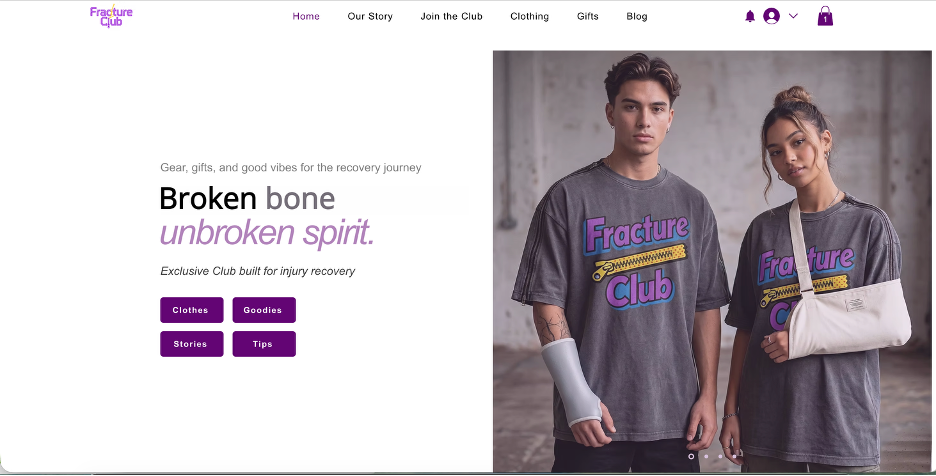
If you’d like your card to arrive with something that makes recovery easier, our recovery wear is made for people healing from injuries, with easy-on, easy-off designs that use magnetic and zipped closures to work with casts and braces. Our unisex adaptive recovery pants with side magnetic zippers are one place to start, and you can browse the full range of recovery wear and positive-themed gifts on the Fracture Club homepage.
[
](fracture-club.com)
Add a handwritten line to the gift note, using the formula above, and you’ve sent both comfort and care.
FAQ
What do you write in a card for someone having surgery?
Keep it short and calm. Say you’re thinking of them, wish them a smooth recovery, and offer one specific bit of help. “Thinking of you today. Wishing you a smooth recovery. I’ll bring dinner Thursday” says everything it needs to.
What are good get-well messages after surgery?
Short and warm works best: “Thinking of you as you recover,” “Take it easy,” or “Give your body time to mend.” For someone close, add a personal memory or promise of company. Avoid timelines and comparisons to your own experience.
How do I support a friend after an injury besides a card?
Offer help on a specific day, such as a meal, a ride to an appointment, an errand, or a chore. MedlinePlus lists bathing, cooking, errands, appointments, and exercise as common needs after knee or hip surgery. A follow-up text or second note a few weeks later also helps, since support tends to fade after the first week.
Is it okay to joke in a surgery card?
It can be, when you know the person well and the joke is about being impatient to see them rather than about their pain. If you’re unsure, keep the tone warm and gentle and save the humor for later.
What should I write to a coworker having surgery?
Be encouraging without asking about the medical details. “Wishing you a smooth recovery. Take all the time you need” is respectful and kind, and it lets them decide how much to share.
Sources
Recommended
Comments