
Petite Adaptive Clothing for Injury Recovery: Fit Guide


Petite adaptive clothing is clothing built for easier dressing, with wider openings, magnetic or zip closures and soft fabrics, in proportions made for a shorter frame. If you are petite and healing in a cast, sling or brace, the combination matters. Standard adaptive pieces are often cut long, so sleeves swallow your hands and hems drag under your heel. This guide shows you what to look for, how to measure, and how to put together outfits that feel like you.
TL;DR
Choose closures and openings first (magnetic, zip, side-split), then check length. A garment that opens over your cast but is two inches too long still frustrates you.
Loose tops that slide over the injured limb first make dressing easier, according to hospital recovery instructions.
Measure your inseam, sleeve length and the widest point of your cast or brace before ordering, and compare with the size chart.
Tall wearers and unisex shoppers need the same logic in reverse: check for enough length and enough room at the opening.
Skin comfort counts: flat seams, no scratchy tags and a clean base layer under a brace.
Table of Contents
What petite adaptive clothing is, and why it helps during recovery
Adaptive clothing changes how a garment goes on, not how good it looks. Think openings along a seam, closures you can work with one hand, stretch fabric and room around a cast or brace. Adaptive fashion can use closures, adjustable features and breathable stretch fabrics to make dressing easier and to fit around braces or casts.
Petite sizing adds a second layer. It generally means shorter sleeves, a shorter inseam and proportions adjusted for a smaller frame. Many adaptive lines are designed around one standard length, so petite readers often end up rolling cuffs, which adds bulk right where a cast or brace already sits.
Why does that matter for healing? Dressing is one of the first daily tasks an injury takes from you. Vanderbilt’s adaptive clothing resource guide describes dressing in non-adaptive clothes as time-consuming and exhausting. When you are already tired from pain and rest breaks, a garment that fits is one fewer fight in your day.
It is also about feeling like yourself. Many people tell us they feel stuck between being a patient and being themselves. Clothes that fit your body, not a hospital gown, help close that gap.

Features that make dressing easier with a cast or brace
Start with the injury, not the label. Different injuries need different features.
Tops
For an arm, shoulder or upper-body injury, hospital guidance is consistent. UCSF’s instructions after surgery for a proximal humerus fracture recommend loose-fitting or button-up tops. They also advise dressing the surgical arm first and the other arm second, then reversing that order when you undress. Follow the instructions from your own surgeon or therapist, since they know your injury.
After spinal surgery, UW Medicine’s patient education advises loose-fitting tops and avoiding twisting your upper body while you dress. It also suggests planning rest breaks in early recovery. A top with a front opening or a wide neckline lets you skip the twist entirely.
For petite frames, check three things:
Sleeve length. Sleeves that run long catch on a sling strap or cast edge. Sleeves that are too short leave a cold gap above a cast.
Shoulder seam position. If it sits below your shoulder, the garment will slip and pull on a sling.
Armhole depth. Deep armholes are roomy but can gape on a smaller frame.
Pants and shorts
For leg casts, side-opening pants are the practical answer. Children’s of Alabama notes, in its guidance on spica casts, that large-leg pants or shorts can be split at the side and secured with Velcro or ties. That page is about children, but the principle applies to any cast: open the seam so you never have to pull fabric over a cast.
Our unisex easy-on/off recovery pants with side magnetic zippers follow this idea. They open along the side, so you can dress the injured leg first and close the garment around it. For more on the technique, see our guide to leg cast clothing solutions.
Closures
Closure | Best for | Watch for |
Magnetic | One-handed dressing, limited grip | Keep away from implanted devices unless your doctor says it is fine |
Side zipper | Pants over a cast or boot | Zip pull needs to be easy to reach |
Velcro | Adjustable fit over swelling | Can snag knits |
Elastic waist | Hip, knee or abdominal injuries | Check it does not press on a brace edge |
If you use a pacemaker or another implanted medical device, ask your care team about magnets near your chest before choosing magnetic closures.
How to get a petite fit that works over a cast
Fit is the hard part. The University of Delaware study on adaptive clothing consumers notes that families often buy larger or looser clothes, then hem pant and sleeve lengths to get a workable fit. That study looks at children with Down syndrome, yet the workaround will sound familiar to anyone petite: buy big enough to fit the cast, then fight the length.
A better method is to measure first.
Measure your inseam from the crotch to where you want the hem to fall. With a boot or cast, measure to the ankle bone and allow extra for the cast.
Measure sleeve length from the shoulder point to your wrist bone, then add room if you wear a sling or cast.
Measure the widest part of the cast or brace around the limb. A cast on a forearm can add a lot of circumference, and a pant leg or sleeve must clear it.
Measure your usual bust, waist and hip, as you would for any garment, and compare them with the size chart.
Choose the size for the injured area, then adjust the rest. Many people need a regular width through the cast and a petite length elsewhere.
Standard size labels do not always match across makers, so measurements beat labels. If you want a refresher on taking body measurements and translating them into sizes, this guide to converting clothing sizes by body measurements walks through the basics. For a deeper walkthrough on casts specifically, read our post on how to size clothes over a cast.
Comfort details worth checking
Vanderbilt’s guide recommends looking at seam placement, tag removal, pressure-point reduction, accessible openings and adjustable lengths, and notes that proper fit can reduce tenderness and potential sores. On a petite frame, a seam that is a half inch off can land directly on a brace strap or pressure point.
If you wear a spine brace, Gillette Children’s guidance says to change the snug shirt or body sock daily, wipe the brace at least once a day with rubbing alcohol and check your skin often for pressure changes. That means owning a few thin, smooth base layers in your size. Our post on hiding a brace under clothes compares fabrics for that layer.
Petite cast outfit ideas
You do not need a whole new wardrobe. A few well-chosen pieces cover most days.
Arm or wrist cast
A loose button-up or a front-zip top in a petite length, with the sleeve on the cast side left open or rolled once.
A soft knit cardigan that drapes over the cast rather than gripping it.
A scarf or wrap on cooler days, since a cast can feel cold when a sleeve stops short.
Shoulder or sling
A wide-neck or button-front top in a stretchy fabric. Dress the injured side first, as the UCSF instructions suggest.
A petite-length tunic that covers the sling strap without bunching at the hip.
Leg cast or boot
Side-zip or side-magnetic pants, with the open side on the injured leg.
A knee-length skirt or dress in a soft knit, if your doctor is fine with it. Check for a hem that clears the cast without dragging.
A wide-leg short for hot weather. Our ideas for summer outfits with a cast cover staying cool.
Brace days
Layer a smooth, snug base under a loose outer piece. Our seven brace layering outfits show how.
Quick tips
Pick one neutral color that works with your cast and your sling.
Keep a pair of lounge pants with a side opening by the bed for early mornings.
Lay out tomorrow’s outfit the night before, so dressing is not the first battle of the day.
If you want a faster routine, our post on dressing in under two minutes with limited mobility shares tips from an occupational therapy angle.
Tall recovery clothing: the same logic, reversed
If you are tall, the problem flips. Sleeves stop above the wrist, hems ride up over a boot, and a side opening may sit too high or too low on the leg. Use the same measuring steps, then:
Look for sizes labeled tall or long, or garments with generous hem allowances you can let down.
Check that the closure runs the full length of the cast. A side zip that ends at the knee will not help a full-length leg cast.
Choose stretch fabrics that give a little at the shoulder and hip, so a sling or brace does not pull the garment up.
A longer frame also means a bigger cast or brace in absolute terms, so check circumference at the widest point rather than assuming your usual size will do.
Unisex recovery clothing: what makes it practical
Unisex pieces work well in recovery because the priority is function. A relaxed cut leaves room for a cast, a brace or swelling, and it means you can share or borrow pieces with a partner or family member. The features to look for are simple:
A cut that is roomy through the hip and thigh without being shapeless.
Closures placed along a side seam, not at the back, so you can reach them yourself.
A size chart with real measurements, so you can pick by inches instead of guesswork.
Soft fabric with flat seams for skin that is already stressed.
Because unisex sizing often skews broader, petite readers should compare the chart’s length measurements with their own before ordering. Pants that fit at the waist and cast may still need a hem.
Our perspective
We started Fracture Club because getting dressed with an injury is harder than anyone tells you, and most clothing you can buy does not help. Our recovery wear is designed by someone who has lived through injury, so it starts with the small things: a closure you can work one-handed, an opening that clears a cast, a fabric that does not irritate. We think fit and feeling good belong together. When you are petite, tall or somewhere in between, the question should not be whether you can get your cast into the garment. It should be whether you like what you see in the mirror. That is why we focus on magnetic fastenings and zippers, modern everyday style and a community that shares what worked for them. A portion of our proceeds supports the Bone Health & Osteoporosis Foundation, because healing is bigger than one person’s recovery. Fracture
Where to start
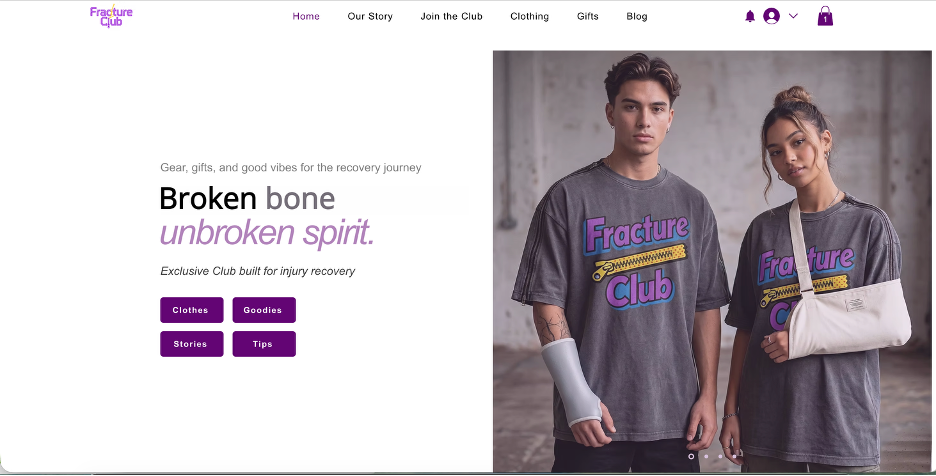
If you are ready to shop, begin with the piece you struggle with most, usually pants or a top. Our recovery wear collection is designed around easy-on, easy-off dressing with magnetic and zip closures, and the unisex recovery pants with side magnetic zippers are a good first piece if a leg cast or brace is your challenge.
[
](fracture-club.com)
If you are choosing a gift for someone healing, our merch and gifts are made to celebrate resilience. Not sure what size or style fits the person you are shopping for? Our inquiry page is the place to ask. To plan your budget, see our guides on what adaptive clothing costs and adaptive clothing prices for recovery.
Caregivers may also find it useful to read about how adaptive clothing compares with regular clothes when you help someone dress.
FAQ
Does petite adaptive clothing exist for short-term injuries?
Yes. Adaptive features are not only for permanent disability. Magnetic closures, side zips and roomy openings help during weeks or months in a cast or brace. For a short recovery, you may only need one or two key pieces, such as pants and a loose top.
Should I size up for a cast?
Often you need extra room only at the cast, not everywhere. Measure the widest part of the cast or brace and compare it with the garment’s opening. Then pick the size that clears the cast and check that the length still works for your height.
What should I wear under a brace?
Choose a thin, smooth, snug layer with flat seams. Gillette Children’s guidance on spine braces says to change the snug shirt or body sock daily and check your skin often for pressure-related changes. Ask your orthotist or doctor which layer suits your brace.
Can tall or unisex shoppers use the same guide?
Yes. The method is the same: measure your length and the widest part of the cast or brace, then compare with the size chart. Tall wearers should check that closures and sleeves are long enough. Unisex shoppers should check the length measurements as well as the width.
Sources
Recommended
Comments