
Open Side Shirts: Types, Fit and Adaptive Options


Open side shirts are tops with the sides left open, slit or fastened shut with snaps, zips or magnets. For fashion and gym wear, that means split-seam tees, muscle tanks and side-slit tunics. For injury recovery, it means a shirt that opens somewhere you can reach, so you never have to lift a hurt arm overhead. This guide covers both, so you can tell the styles apart and choose one that fits your day.
TL;DR
“Open side” covers three different things: fashion split-seam tops, gym tanks with deep armholes, and adaptive shirts that open and close at the side or shoulder.
Split and tank styles give you airflow and movement. They do not give you a closure, so they rarely help with a cast or sling.
For recovery, choose by closure first: match the fastener to your hand strength, and place the opening where your injury needs it.
Soft knits, tag-free seams and room over a cast or brace matter more than the look of the cut.
Our shoulder-zip tee with magnetic fastenings is built for getting dressed without raising an injured arm.
Table of Contents
What people mean by open side shirts
The phrase is loose. Shoppers use it, along with “open side tops” and “side snap shirts,” for several garments that look nothing alike.
Split-seam tops. These are shirts with slits running up the sides. Fashion writers describe them as everything from long, ground-skimming versions with the sides exposed to tunic-length tops with subtle three- to four-inch cuts. The front and back stay joined at the shoulders and usually at the hem or a few inches above it.
Open side tanks. These are sleeveless tops with the sides cut away. A standard tank has shoulder straps and an open neckline. A muscle tank goes further, with much larger armholes that run down the sides and expose more of the torso. Some gym versions are cut so deeply that they are barely attached at the bottom, a style the press has been teasing since the Spicoli tank era.

Side-slit tunics. A casual tunic is a hip-length top, usually made with side-seam slits. It keeps full front and back coverage, so “side-slit tunic” describes it better than “open side tank.”
Side-snap and adaptive shirts. These have a real closure along the side seam or shoulder. You open the shirt flat, position it around your body or injured limb, then fasten it. This is the group that matters if you are healing.
If you remember one thing, make it this: the first three are open in the sense of cut, and the fourth is open in the sense of function.
Open side tanks versus split-seam tees
The differences show up in coverage, movement and layering.
Style | Coverage | Best for | Closure |
Split-seam tee | Full shoulders and sleeves, open or slit sides | Casual wear, layering | None |
Muscle or open side tank | Sleeveless, deep armholes | Gym, warm weather | None |
Side-slit tunic | Hip length, slits at the hem | Everyday wear over leggings | None |
Side-snap or magnetic adaptive shirt | Full coverage when closed | Recovery, casts, braces, slings | Snaps, zips or magnets |
A muscle tank is made to keep fabric out of the way during overhead pressing and wide-grip pulling. Its narrow straps and open sides can shift during explosive moves, which is part of the look and part of the trade-off. It is a good gym shirt. It is not designed around getting an arm through a cast.
If your taste leans toward relaxed, flowing layers, a side-slit openwork cover-up shows how slit sides change the drape of a sleeveless piece worn over another top.
When an open side actually helps with an injury
A pullover shirt asks a lot from a healing body. You raise both arms, twist, and pull fabric over your head. With a cast, a sling, a brace or a sore shoulder, each step can hurt or be impossible.
An opening at the side or shoulder changes the sequence. You slide the injured arm in first, bring the shirt around, and close it with the hand that works. Nothing has to go overhead. That is the real benefit: independence, in a moment of the day you used to do without thinking.
An open side or shoulder helps most in these situations:
Casts and rigid braces. The sleeve has to pass over bulk. A shirt that opens flat lets you place the arm instead of threading it. Our guide to sizing clothes over a cast explains how much room to build in.
Shoulder surgery and slings. You want the least movement possible on the operated side. Read our notes on what to wear after shoulder surgery with a sling.
Limited mobility. If reaching or twisting is hard, a front, side or shoulder opening shortens the whole routine. See how to get dressed in under two minutes.
Torso braces. A brace sits against the body, and the layer under it matters for comfort and discretion. Our piece on hiding a brace under clothes compares fabrics.
A pure fashion split-seam tee will not do any of this, because there is nothing to open and close. Loose sides can make a shirt easier to pull on over a brace, but they do not hold the shirt in place when you are using one hand.
How side snaps, zips and magnets work
A side-snap shirt has a row of snaps along the side seam, usually from the underarm down to the hem. You unfasten the row, lay the shirt open, and close it once the injured arm is inside. Zips and magnets do the same job with a different fastener.
Which fastener is right depends on your hands, not on what looks best. Occupational therapy students at Vanderbilt put it plainly in their adaptive clothing resource guide: consider whether the fastener suits the wearer’s hand strength. A few practical points follow from that.
Snaps hold firmly but take finger strength and a steady pinch to press shut. They suit people with good dexterity in one hand.
Zippers work well with a pull tab large enough to hook a finger through. A zipper that runs from the hem toward the shoulder lets you close it with one hand.
Magnets line up and close with a light touch, which helps when fine finger control is limited. The same guide notes that magnets can affect medical devices and that you should choose them only if the wearer can manage them. If you have a pacemaker or another implanted or worn device, ask your doctor or the device maker before wearing magnetic closures near it.
Hook-and-loop is quick to use, but it can attract lint and lose grip after repeated wear, according to the same guide.
Test your own grip honestly. If you can only use your non-dominant hand for a few weeks, you need a fastener that works without a perfect pinch.
What to check before you buy
A good open side shirt for recovery is judged less on cut than on comfort and ease. Run through this list.
Opening position
Pick the side your injury needs. An opening on the injured side lets you slide the arm in first. If both shoulders hurt, look for a longer opening that lets the shirt lay flat. The Vanderbilt guide also advises placing openings to give access for medical devices, so think about ports, braces or monitors if you have them.
Fabric
Choose a soft knit that stretches, and cut out anything scratchy. The same resource points to soft knits and removing irritating tags. After an injury your skin may be sensitive from swelling, bruising or a brace rubbing at the edges. A stiff seam against it will bother you all day.
Fit and room
Size for the bulk you are wearing, not for the body you had before. A cast, a sling pillow or a brace changes what fits. Two guides can help: our adaptive clothing sizing guide and the shorter advice on sizing over a brace.
Coverage and warmth
Open-sided tanks leave a lot of skin exposed. That is fine in a warm gym and less fine in a cool waiting room. If you are wearing a sling, think about whether you want a full-sleeve base layer under an open top.
Look
This one counts too. Many people recovering say the hardest part is feeling stuck between being a patient and feeling like themselves. A shirt that looks like everyday clothing, not medical gear, helps you walk out the door feeling like yourself.
A simple way to choose
Name the limit. Is it a cast, a sling, a brace, limited reach, or weak grip? The answer decides the opening position.
Match the fastener to your hands. Zip or magnet for weaker grip, snaps for strong pinch.
Check for devices. If you use a medical device, confirm that magnets are safe near it before you wear them.
Choose soft fabric. Seams should sit away from sore spots, and tags should come out or be tagless.
Size for the bulk. Add room for your cast, brace or sling, then check a guide before ordering.
Plan the full outfit. A top is half the story. Pants with side openings and a shirt you can fasten one-handed make dressing quicker.
Our perspective
We started Fracture Club because getting dressed was one of the hardest parts of healing from an injury. The founder lived it. Ordinary shirts were a fight, and “medical” clothing looked like it belonged to someone else. So we design around the moment you stand there trying to put a shirt on with one working hand. We think that moment should take seconds, not a struggle. Magnetic fastenings and zippers are how we get there. They let you open the garment, place the arm, and close it, without lifting anything overhead. We also think recovery wear should look like clothes you would choose anyway. When you feel like yourself, the day goes a little lighter. That is why we pair function with everyday style, and why we build a community where people share stories and encourage each other. A portion of our proceeds supports the Bone Health & Osteoporosis Foundation, because we care about what happens before and after a fracture too. Fracture
Recovery wear built around the opening you need
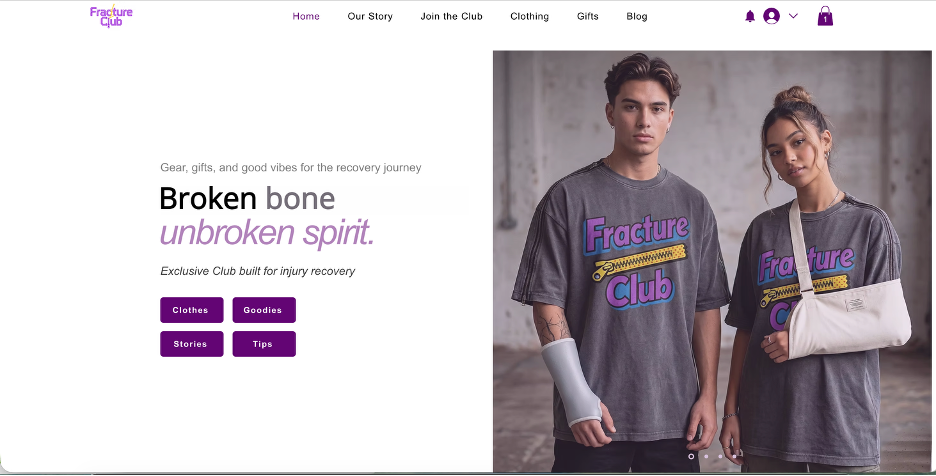
If you are shopping for a shirt because of a cast, a sling or a sore shoulder, our Magnetic Shoulder Zip Tee is made for injury recovery. It uses magnetic fastenings and a zipper at the shoulder, so you can dress without raising your arm. For the lower half, the unisex easy-on/off recovery pants with side magnetic zippers follow the same idea.
[
](fracture-club.com)
Buying for someone else? Browse the full range of recovery wear and gifts for items that celebrate resilience, and read how adaptive clothing helps caregivers. If you are comparing your options by type, our guide to dressing without raising your arm after surgery walks through what to look for.
Wearing open side styles day to day
A few small habits make any opening shirt easier.
Lay it out first. Put the shirt on the bed, open side up, before you start. Slide in the injured arm, then draw the rest around you.
Fasten from the bottom. Starting at the hem keeps the garment from shifting while you work up.
Pair with a seamless base layer if the shirt is open or sleeveless and you want warmth or modesty.
Keep a spare. Casts and braces mean washing is frequent. Two or three tops let you rotate without panic.
Ask your care team. An occupational therapist can show you dressing techniques for your specific injury and recommend what suits your limits.
Academic work backs up the need for that guidance. A 2021 capstone study found limited research and programs defining occupational therapy’s role in adaptive clothing, and called for broader access to adaptive apparel. Until that catches up, your therapist and your own experience are the best guides.
Using open side styles for workouts and layering
Once you are cleared to move again, open side tanks and split-seam tees have a place. Wide armholes give your shoulders room and keep fabric off sensitive skin, which can feel good during gentle exercise. Check with your physical therapist about what movement is safe first, and pick a snug tank over a flapping one so nothing catches on a brace edge.
For layering, a side-slit tunic over leggings or a split-seam tee under a cardigan gives you the relaxed shape without a closure. It will not replace an adaptive shirt on the days you most need help, but it fills out a wardrobe while you rebuild your routine.
FAQ
What are open side shirts called?
People call them open side tops, split-seam or side-split shirts, muscle tanks, side-slit tunics, and, when they fasten, side-snap shirts. The names overlap, so look at the product photos to see whether the sides are simply cut or have a real closure.
Are open side shirts good after a broken arm?
Only if they open and close. A shirt with cut sides but no fastener still has to go over the cast. A shirt that opens at the side or shoulder lets you place the arm first, then fasten with your free hand, which is why adaptive styles suit casts and slings better.
Are magnetic closures safe for everyone?
Not necessarily. Magnets can affect medical devices, and they should only be chosen if the wearer can manage them, according to the Vanderbilt adaptive clothing guide. If you use a pacemaker or similar device, ask your doctor before wearing magnetic fastenings near it.
What is the difference between an open side tank and a muscle tank?
They are close relatives. A muscle tank has deep, wide armholes and narrow straps, sometimes cut nearly to the waist, and was designed to stay out of the way during lifting. “Open side tank” is the broader shopping term for any sleeveless top with exposed sides.
What fabric is best for an open side shirt during recovery?
A soft, stretchy knit with tags removed or tagless seams is the gentlest choice for sensitive, swollen or bruised skin. Keep seams away from sore spots and size up enough to fit over a cast or brace comfortably.
Sources
Recommended
Comments