
Dresses After Foot Surgery: What to Wear and How


A dress is one of the easiest things to wear after foot surgery, because it drops over your hips and never has to travel down a leg and over a boot or bandage. The best ones are loose, soft, mid-length and easy to open or pull on while you sit. For the days you want something with a bit more structure, our adaptive recovery pants with side magnetic zippers open along the leg so nothing has to squeeze past the dressing.
If you feel stuck between feeling like a patient and feeling like yourself, clothes are a good place to start winning that back. This guide covers what to look for in a dress, how to put it on safely, what to do about shoes, and how the weeks usually unfold.
TL;DR
Choose a loose, knee-length or longer dress in soft, stretchy or breathable fabric. It skips the problem of fitting a pant leg over a boot, cast or bandage.
Look for wide or front openings, a relaxed skirt and no tight hem or waistband, and measure the widest part of your boot or cast before you buy.
Sit down to dress, put the surgical foot in first and take it out last, and use a reacher or dressing stick instead of bending.
Footwear matters as much as the dress: follow your surgeon’s timeline, which commonly includes a surgical shoe or boot for weeks, and avoid narrow shoes and high heels for months.
On days a dress is not practical, easy-on/off pants with magnetic or zipped closures are a comfortable second option.
Table of Contents
Why a dress works after foot surgery
Pants and leggings ask your foot to do a lot. You have to lift the surgical leg, thread a bulky dressing through a narrow tube of fabric and then hold your balance on one foot. That is exactly when most people feel least steady.
A dress, skirt or tunic changes the order of things. It goes on over your head or wraps around you, and it settles at your hips. As one clothing guide puts it, anything that drops over the hips rather than stepping up a leg tube skips the negotiation with a boot or cast altogether.
There is a comfort benefit too. Surgeons advise loose-fitting clothing that is easy to put on and does not constrict the affected area, and a relaxed dress does that by design. Swelling can also change from morning to evening, so a garment with room in it keeps working when your foot does not.
None of this replaces your surgeon’s instructions. Your care team knows your procedure, so ask them about anything that touches the dressing, the swelling or the weight you are allowed to put on the foot.

What the first weeks look like
Knowing what is ahead helps you pick clothes that will still work in week three, not just day one.
After bunion surgery, for example, MedlinePlus notes you may need to wear a surgical shoe or cast for up to 8 weeks and use a walker, cane, knee scooter or crutches to stay off the foot. That means your hands are often busy, and your balance is not what it was.
A typical progression described by a Michigan podiatry practice is a surgical shoe or walking boot for weeks 1 to 6, a supportive athletic shoe with an insole for weeks 6 to 12, then regular footwear with arch support. Your own timeline can differ with the type of surgery, so treat this as a rough map and not a schedule.

Swelling is the other thing to plan for. The same guide says postoperative swelling usually peaks at 48 to 72 hours, improves over 2 to 6 weeks, but can fluctuate for 3 to 6 months, and it is worse in the evening. A dress with a forgiving skirt and no snug hem handles those shifts better than anything fitted.
What makes a dress easy to wear with a boot or cast
Not every dress is equally friendly. Here is what to check, in order of how much difference it makes.
Skirt width and length
A full or A-line skirt that falls to the knee or below lets you move a boot or crutch without catching. Very narrow pencil or bodycon styles fight you every time you take a step on crutches or shift on a scooter. A longer hem also covers a boot or dressing more fully if you prefer that, while a knee-length hem keeps fabric away from your crutch tips and scooter wheels.
Measure before you buy
Take two measurements over the boot or cast: the widest circumference and the length. A five-minute measurement helps you avoid the hopeful near-fit and the shapeless oversize. For a dress, what matters is that the skirt opening and hem are comfortably wider than the widest point, with a little ease so the fabric does not press on the edge of the padding.
Openings that do the work for you
Look for these features:
Front zips or wrap fronts so you can dress sitting down without raising your arms high.
Stretch or jersey fabric that gives when you reach or twist.
Elastic or drawstring waists you can adjust as swelling and comfort change.
Pockets, which are useful for a phone when your hands are on crutches.
Short sleeves or wide armholes if you are also managing crutches, which can rub under the arms.
Fabric and care
Soft cotton blends are a sensible default. They are breathable and gentle on skin and handle the frequent laundering that comes with recovery. Choose things you can throw in the wash without a second thought, since dressings, ice packs and showering all create extra laundry.
Test the fastener against your real setup
Fastener features sound simple, but they need to suit how you actually move. A design team featured by PBS NewsHour found that magnets stuck to a wheelchair and made a wrap dress hard to manage, so they had to remove them. The lesson applies to crutches, scooters and walkers as well: picture how the dress will behave when your hands and lower body are busy.
How to put on a dress safely
The routine below helps keep you steady and keeps your foot from being bumped.
Sit first. Use a sturdy chair or the edge of the bed with your crutches or scooter in reach. Do not try to dress standing on one foot.
Put the surgical side in first. When a garment has to pass the foot, put the injured limb in first, and take it out last, so you do not have to maneuver it while the fabric is tight.
Gather the skirt. Bunch the hem in your hands, slip it over the boot or cast and let it fall, instead of pulling it up from the floor.
Use a reacher or dressing stick. A long-handled tool lets you catch the hem without bending down, which protects your balance and your foot.
Stand only when ready. Stand with your support in hand, then adjust the dress while holding on. Wait a moment if you feel dizzy.
Mind the shower. Hospital instructions typically say to cover a bandage, splint or cast with a plastic bag when showering. Take your dress off before you get into position, and keep a towel and a fresh dress where you can reach them sitting.
If you are helping someone else dress, let them lead. They know what hurts, and doing as much as they can themselves matters for independence.
Do not forget what goes on your feet
A dress solves the leg problem, but footwear is the part your surgeon will care about most. Choosing the wrong shoes too early is described as a common cause of delayed recovery and swelling setbacks.
Here is what the published guidance says, in plain terms:
Stage | What is typical | Source |
First weeks | Surgical shoe, boot or cast, with a walker, cane, scooter or crutches. After bunion surgery this can last up to 8 weeks. | |
Around weeks 6 to 12 | Supportive athletic shoe with an insole, as your surgeon allows | |
Around 3 months | Soft leather or athletic shoes with plenty of toe room after bunion surgery | |
Around 3 to 4 months | Flat dress shoes with a wide toe box can often be introduced | |
4 to 6 months | Low heels of 1 to 2 inches may be possible after stable forefoot procedures | |
6 months and beyond | Heels above 2 inches are avoided for at least 6 months |
Two practical points. First, swelling is worse later in the day, so try shoes on in the afternoon and keep a half-size-larger pair available, preferably with adjustable closures. Second, when you do start wearing dress shoes, begin with 1 to 2 hours at a time and go back to supportive shoes if you notice pain, swelling or numbness. Call your surgeon if those symptoms persist.
For your unaffected foot, a slip-on, flat shoe is the easiest option. It also helps your hips and back stay level when you walk in a boot, so ask your care team whether a shoe leveler or similar is recommended for you.
Finding your style again as shoes come back
Once your surgeon clears regular footwear, you can start playing with outfits again. If your style leans toward boots and a bit of edge, these outfit ideas with combat boots show how a dress can be dressed up or toughened up. Keep the footwear guidance above in mind: wide toe room, soft materials and ankle comfort come first, and anything narrow or heeled waits until your surgeon agrees.
When a dress is not the right answer
Some days a dress is not practical. It is cold, you are heading to a physical therapy session, or you want more coverage while moving between a car and a clinic. You may also want something that feels like your normal clothes.
That is where adaptive pants come in. Our unisex easy-on/off recovery pants have side magnetic zippers so you can open the leg and bring it around a cast or brace instead of pulling it over. The idea is the same as a dress: nothing has to squeeze past the part of you that is healing.
If you want more on how to dress around different injuries, these guides go deeper:
What to wear under and around the dress
The dress is only one layer, so think about the rest.
Compression socks. If your surgeon recommends them, they are meant to promote circulation and reduce swelling. Wear them as directed.
Soft underlayers. Choose seamless or stretchy options that will not dig in when you sit for long stretches with your leg raised.
A light cardigan or wrap. It is easy to take on and off when you are shifting between warm rooms and cold waiting rooms.
A cover for the boot. If you want, a long skirt or a pair of loose, wide-leg pants worn over the boot can keep things warm. Keep the opening wide enough that nothing presses on the dressing.
Elevation is part of recovery, too. Discharge guidance advises sitting or lying down with a pillow or two under the heel so your foot sits above heart level, and icing the bandaged foot for no more than 20 minutes at a time, up to three times a day. A loose skirt is easy to arrange over a raised leg, which is one more reason dresses suit these weeks.
Before surgery: pack and prepare
Dress choices start before the operation. Your surgeon’s office will likely say to wear comfortable, loose-fitting clothes on the day, and to bring your crutches or other assistive devices if you have them. A front-opening or wrap dress that you can step into easily makes the trip home simpler, because you will leave with a bulky dressing on your foot.
Before the day, set up your space:
Move the dresses and tops you plan to wear to waist height, so you do not need to reach or bend.
Put a chair or stool where you will dress.
Lay out a reacher or dressing stick.
Wash a few soft, loose outfits so you have a rotation ready.
Our perspective
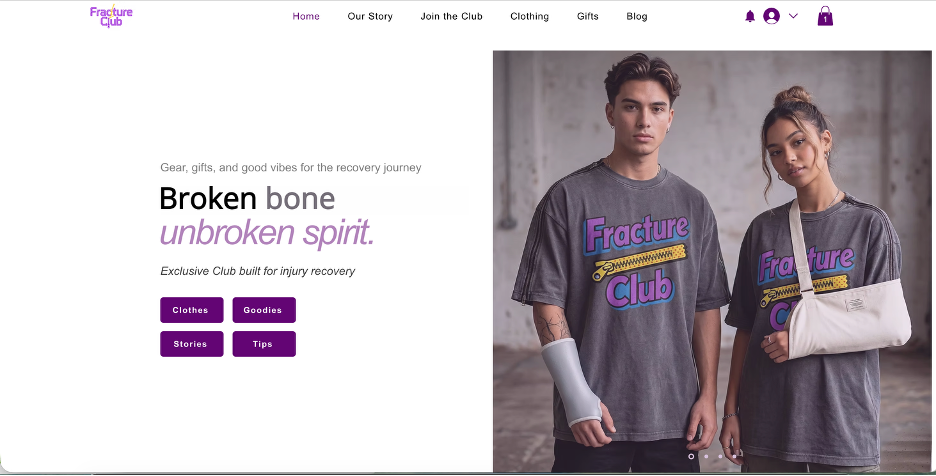
We built Fracture Club around a simple idea: getting dressed should not be one more hurdle when you are healing. Our recovery wear was designed by someone who has lived through an injury, so we focus on the small daily frustrations that other clothing ignores. A dress is a smart, kind choice for many foot-surgery days, and we love that it lets you feel like yourself. We would add one thing from experience: have an option for the days a dress will not do. That is why our adaptive pants use magnetic and zipped closures that open along the leg, so a cast or brace does not have to be forced through. Recovery is also emotional. We want you to feel supported, not sidelined, which is why we share stories from people who have been there and make gifts that celebrate resilience. A portion of our proceeds goes to the Bone Health & Osteoporosis Foundation, because every recovery matters. Fracture
Gifts for someone recovering from foot surgery
If you are shopping for a friend or family member, think about what removes effort from their day. A soft, loose dress is a thoughtful gift for a woman in a boot, as long as you check the hem width and choose a forgiving fabric. For anyone, easy-on/off clothing is practical, because it reduces the bending and balancing they have to do alone.
Pair it with something that lifts spirits. A small note, a recovery-themed gift or a promise to come by and help with laundry can mean as much as the item itself.
Wear something that works for your recovery
We make adaptive recovery wear with magnetic and zipped closures for people with casts and braces, along with positive-themed gifts for the people who support them. If you want pants that open instead of squeeze, start with our recovery wear and gifts, or see the easy-on/off recovery pants.
[
](fracture-club.com)
Part of every order supports the Bone Health & Osteoporosis Foundation, so getting dressed also gives something back.
FAQ
What should I wear after foot surgery?
Choose loose, soft clothing that fits over a bulky dressing or boot, such as a dress, a wide-leg pair of pants or a zip-front top. Comfortable, loose-fitting clothes that do not constrict the area are a good rule. Pair them with a slip-on shoe for your other foot.
Can I wear a dress with a walking boot?
Yes, and many people find it easier than pants. Pick a skirt that is comfortably wider than the widest part of the boot and gather the hem over it as you dress sitting down. Check with your surgeon if you are unsure about any garment touching the dressing.
How long do I need to avoid heels and tight shoes?
It depends on your procedure. After bunion surgery, MedlinePlus says to avoid narrow shoes or high heels for at least 6 months. Your surgeon will tell you when flats, low heels and other dress shoes are safe for you.
What fabric is best after foot surgery?
Soft, breathable cotton blends with some stretch are a sensible choice. They are gentle on skin and easy to wash often. Avoid anything with a tight hem, waistband or cuff that could press on swollen areas.
Is there an adaptive option if I do not want to wear a dress?
Yes. Our adaptive recovery pants have side magnetic zippers so they open around a cast or brace. You can see them on our product page.
Sources
Recommended
Comments