
Detachable Sleeves Explained: How They Work and Who Needs Them


Detachable sleeves are sleeves that zip, snap or button on and off, so one shirt can be long-sleeved, short-sleeved or sleeveless. Most people shop for them to handle changing weather. If you are healing from an injury, the same idea can matter for a different reason: getting a sleeve over a cast, brace or sling without a fight. This guide covers how the sleeves attach, how to care for them, and what to check when a cast is part of the picture.
TL;DR
Detachable sleeves connect to the shirt with a zipper, snaps, buttons or hook-and-loop tape, and come off to change coverage in seconds.
Zip-off styles are built for temperature swings. Whether they suit a cast depends on the opening size, the closure and the fabric.
Measure your cast at its widest point first, then choose an opening and sleeve with room for the cast and its padding.
Close hook-and-loop tabs before washing and follow the care label so the closures last.
If a cast or brace is the main reason you are shopping, easy-on/off shirts with magnetic or zipped closures are built around that need.
Table of Contents
What detachable sleeves actually are
A detachable sleeve is a separate sleeve piece joined to the shirt body at the shoulder seam, the armhole or a placket. Take it off and you have a sleeveless top or vest. Put it back and you have a long-sleeved shirt. Some designs convert only to a short sleeve, with the lower half of the sleeve unzipping at the elbow.
You will see the idea in a few places:
Outdoor and travel shirts. The sleeves come off when a cool morning turns into a warm afternoon.
Wedding and formal wear. Sleeves on a gown can come off between the ceremony and the reception. Most of the top search results for this phrase are about bridal looks.
Everyday shirts and jackets. Zip-off sleeves turn a jacket into a vest.
Adaptive clothing. Here the goal is a wider or easier opening, so the sleeve does not have to be pulled over an injured arm.
The idea is old. A U.S. patent filed in 1936 describes a removable sleeve extension with a hook fastener and a covering strip meant to keep the hardware away from the skin. That second detail still matters today. Wherever the fastener sits, it should not press on skin or on the edge of a cast.
How the sleeves attach
The attachment method decides how fast the sleeves come off, how they feel against the skin and how well they work with an injury.
Attachment | How it works | Best for | Watch for |
Zipper | A zipper runs around the armhole or across the sleeve | Fast, full conversion | A hard zipper edge near skin or a cast; small pulls are tough with one hand |
Snaps | Pairs of snaps along the seam | Quick on and off, a flat look | Many small fasteners to line up |
Buttons | Buttons at the shoulder or cuff | A classic look | Fiddly with limited hand mobility |
Hook-and-loop tape | Tape pressed together along the seam | Easy closing without precise movements | Needs closing before washing |
Magnetic closures | Magnets hold the closure together | Pulling apart or closing with minimal grip strength | Check the garment’s own care instructions |
A zipper can sit at the top of the sleeve or around the whole armhole. A zipper at the sleeve cap needs a flap or facing over it so the teeth do not rub, and that detail separates a comfortable zip-off shirt from an irritating one.
Why zip-off sleeves are popular
The appeal is simple. Sleeves on, you are covered and warm. Sleeves off, you have freedom of movement and a cooler torso. One shirt replaces two, which makes packing and layering easier. If that versatility is what you are after, activewear built for movement shows how lightweight, breathable fabric and stretch can make switching between layers feel effortless.
It is worth keeping expectations realistic about what the feature is. Detachable sleeves are a convenience and temperature tool. They are not a medical device. Product pages describe them in terms of changing conditions and arm mobility, not treatment. The same goes for other wearables: a 2019 scoping review of posture-correcting shirts found no good-quality evidence supporting them as treatment for musculoskeletal pain. A shirt can make a day more comfortable. It will not heal a bone. What it can do is make dressing less stressful, which counts for a lot when you are recovering.

Detachable sleeves when you have a cast, brace or sling
If you are in a cast, the question is not really whether the sleeves detach. It is whether your arm, the cast and its padding can get through the opening without pain, pulling or a second pair of hands.
Think about the moment of dressing. Normally you push your arm through the sleeve and the cuff slides past your wrist. With a cast, the widest part is often the hand end or the elbow bend, and the cast does not squash. A sleeve that is wide at the shoulder but narrow at the wrist will catch.
A detachable sleeve can help in one specific way. If you can take the sleeve off completely, you can slide it over the cast on its own, or leave it off for the cast arm and keep the other sleeve on. Dress the shirt body first, then deal with the sleeve. That is easier than threading a cast through a closed tube.
It can work against you in other ways:
Zipper pulls are small. One-handed zipping is hard unless the pull has a ring or loop.
Hard seams and cuffs. A rigid cuff or a stiff zipper can rub against the edge of a cast.
A narrow armhole. A detachable sleeve that fits a normal arm will not necessarily fit a cast with padding and swelling.
Measure before you choose
Before buying any sleeve style, measure your cast at its widest circumference and its length. Then compare those numbers with the sleeve opening and cuff, and add room for padding and edges. Our guide on how to size clothes over a cast walks through it step by step. If swelling is part of your recovery, read what makes dressing easier with arm swelling, because the opening that fits on day one may be tight on day three.
What the research says about dressing with limited arm use
The University of Delaware’s 2024 Adaptive Clothing Manual was developed from 41 interviews with people who have difficulty dressing because of arm or hand problems. Its general shirt suggestions include roomy shirts, slippery fabrics, dressing the affected arm first, dressing while seated, and swapping buttons for Velcro or magnetic closures.
The American Stroke Association gives similar dressing tips: dress the affected arm first, sit down, choose loose or slippery fabrics, and put rings or strings on zipper pulls. Use Velcro in place of buttons, snaps or grippers, or a button hook. Undressing reverses the order: take the unaffected side off first. These tips were written for stroke survivors, but the logic carries over to anyone dressing with one arm limited, whether by a cast, a sling or a brace. For a cast or sling, confirm anything specific with your doctor or occupational therapist.
A simple dressing routine for a shirt with removable sleeves
If you already own a zip-off shirt, here is a routine that makes it more workable during recovery.
Sit down. A chair with back support steadies you.
Detach the sleeve on your injured side. Open the zipper or snaps fully before you start.
Put the injured arm in first. Slide the sleeve over the cast, not the cast through the sleeve. Pull it up to the shoulder gently.
Reattach at the shoulder. Line up the zipper or snaps with your arm already in place if the design allows it, or do it with the shirt on the table.
Bring the shirt around and put the other arm in.
Close the front. Easier still if the shirt opens down the front.
To undress, reverse it: free the uninjured side first, then ease the injured side off. The one-handed dressing guide and our tips for dressing with an arm cast go deeper on order and technique.
If your injury is at the shoulder, the approach changes, because lifting and rotating the arm is the hard part. Read how to dress safely with a shoulder immobilizer before you try to pull a sleeve over a sling or strap. In that situation, ask your care team which movements to avoid.
What to look for in the fabric, closures and fit
Whether the sleeves detach or not, these details decide how a shirt feels over a cast.
A generous armhole and sleeve. Raglan and wide sleeves give a cast more room.
Soft, stretchy or slippery fabric. It glides over plaster or fiberglass instead of catching.
Flat, covered closures. The zipper edge should not touch skin or the cast rim.
Easy pulls. Large pulls, loops or magnets work better than tiny snaps if grip is limited.
A front opening. Reaching behind your head with a sore arm is a problem you can avoid.
A relaxed fit. Tight shirts pull on a swollen arm.
For a side-by-side look at tops designed around these points, see our cast-friendly tops comparison.
Looking like yourself while you heal
A lot of people in recovery feel stuck between feeling like a patient and feeling like themselves. Clothing is part of that. A hospital-style gown or a stretched-out sweatshirt does not help. An everyday shirt in a style you chose does.
If you work through your recovery, our guide to work outfits for an arm cast covers daily dressing. For ideas that are not about hiding anything, outfit ideas for an arm cast offer more options, and pajamas for an arm cast cover nights, when sleeping comfortably matters most.
Washing and caring for shirts with detachable sleeves
Closures are the part of a convertible shirt that wears out first, so care matters.
Read the care label first. It overrides anything general.
Close the hooks. The American Stroke Association says to close Velcro tabs before washing so lint does not collect on the hook surfaces.
Zip and snap before the wash. Closed zippers do not snag other items, and snapped sleeves do not get lost in the drum.
Use a gentle cycle. Cold water and a delicate setting are kinder to closures and stretch fabric.
Air-dry when in doubt. Heat can warp tape, magnets housings and trims.
Wash new fabric first. If you are modifying a shirt yourself, pre-wash the shirt and any tape or zipper to reduce uneven shrinkage later.
If you wear a shirt over a cast, wash it more often than you expect. Casts can shed fibers and padding bits, and sweat builds up at the cuff.
Do-it-yourself conversions
Some people adapt a shirt they already own. Common modifications include adding hook-and-loop tape along the shoulder so the shirt opens flat, or fitting a separating zipper down the front of a pullover so it can be put on while seated. These are useful ideas when your arm range of motion is limited. They need sewing confidence, a pre-washed shirt and a bit of patience. If you would rather not take apart seams while your arm is in a cast, ready-made adaptive pieces avoid the project entirely.
We started Fracture Club because getting dressed during an injury is more frustrating than most people expect. It is the small daily thing you can no longer do on your own. Detachable sleeves solve a real problem for travelers and layerers, and the instinct behind them, make the sleeve easy to deal with, is exactly right for recovery. Our recovery wear was designed by someone who has lived through an injury. We focus on ease: magnetic fastenings and zippers, everyday style and shapes that work with casts and braces. You should not have to choose between comfort and feeling like yourself, and you should not need help for something as basic as putting on a shirt. We also believe recovery goes better with encouragement. That is why we share stories from our community, and why a portion of our proceeds benefits the Bone Health & Osteoporosis Foundation. Fracture
Our perspective
Dressing made easier with Fracture Club
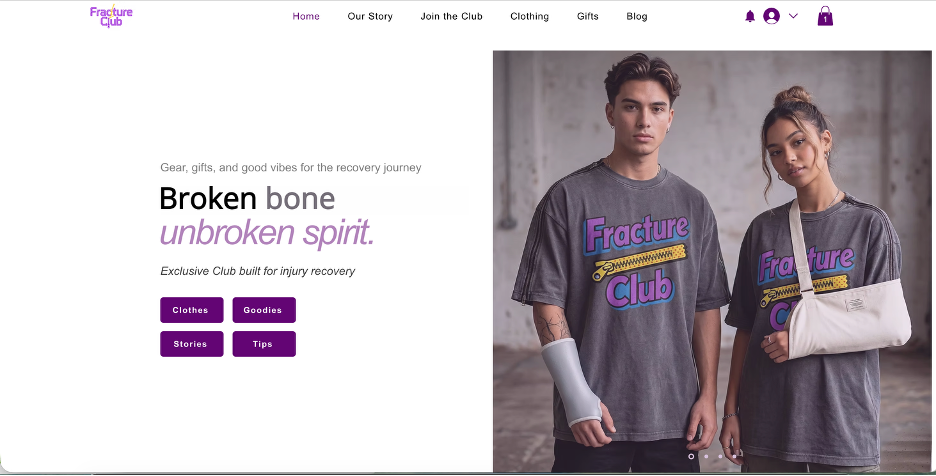
If the main reason you are reading about detachable sleeves is a cast or brace, start with the clothes designed for it. Fracture Club makes adaptive recovery wear with magnetic and zipped closures, so you can get dressed with a cast or brace without wrestling a sleeve or pant leg. The line also includes positive-themed gifts for someone you care about who is healing.
[
](fracture-club.com)
You can browse recovery wear and gifts or look at the adaptive recovery pants with side magnetic zippers. If you are not sure what to choose, the inquiry page is the place to ask. For quick routines, see our guide to dressing in under two minutes with limited mobility.
Gifts for someone who is recovering
If you are shopping for a friend or family member, think about what their day looks like. What do they struggle with most: shirts, pants or sleep? A practical piece that makes dressing easier, paired with something that makes them smile, says more than a generic get-well card. Keep sizing in mind: ask for the widest measurement of the cast or brace, or choose a roomy fit, and err toward soft fabrics.
[

](https://fracture-club.com/product-page/fracture-club-magnetic-shoulder-zip-tee-injury-recovery-wear)
FAQ
What are detachable sleeves on a shirt?
They are sleeves that connect to the shirt body with a zipper, snaps, buttons or hook-and-loop tape. You can remove them to change a long-sleeved shirt into a short-sleeved shirt or a vest, then put them back when you want coverage.
Can I wear a shirt with zip-off sleeves over a cast?
Sometimes, if the sleeve opening is big enough for the cast and its padding. Measure the widest part of the cast first. Detaching the sleeve lets you slide it over the cast separately, which can be easier than pushing the cast through a closed sleeve. Ask your doctor or therapist if you are unsure about movement limits.
How do I wash a shirt with detachable sleeves?
Follow the care label. In general, close zippers, snaps and hook-and-loop tabs before washing, use cold water and a gentle cycle, and air-dry if the label suggests it. Closing hook-and-loop tabs keeps lint off the hooks.
Do detachable sleeves have any health benefit?
They are a comfort and temperature feature, not a treatment. They let you adjust coverage and arm freedom during the day. For a recovery, their value is practical: easier dressing and one less thing to struggle with.
Sources
Recommended
Comments