
Dress in Under Two Minutes: OT Clothes for Limited Mobility


Choose garments made for seated dressing with front access and closures the wearer can operate. That single choice produces the biggest real-world gains in independence, more than fabric or style ever will. The VA’s stroke caregiving guidance and AARP both point in the same direction, and recovery-focused brands like Fracture Club build entire product lines around this.
TL;DR:
Front fastenings, Velcro, and zippers that do not require overhead arm movement are the most effective for seated dressing independence.
Garments with elastic waistbands and side zippers greatly facilitate easier donning and doffing, especially for toileting or managing casts.
Testing closures in the actual dressing position and environment ensures they work reliably on bad days, not just in ideal conditions.
Shoes with slip-on or Velcro closures, paired with a stable heel and tread, are safest for transfers and mobility.
Buyers should verify closure functionality, size flexibility, and return policies before purchasing adaptive clothing to avoid mismatched fit and usability issues.
Table of Contents
Core adaptive clothing features to prioritize
Not every “adaptive” label means the same thing. The feature only helps if the wearer can actually use it, and that depends on hand function, seating position, and the specific dressing routine.
Front fastenings beat anything pulled over the head because they do not require raising both arms or balancing without support. VA guidance recommends dressing while seated and avoiding overhead garments, along with Velcro closures and zipper pulls for anyone with reduced grip. Elastic waists remove the need for buttons or clasps entirely, which matters for anyone managing spasticity or a cast.

Magnetic closures sound like an easy win, but they are not universal. A 2023 wearable-design study found that magnets confused some participants, and that closures requiring finger insertion failed for people with contracted fingers, since 69% of participants in that study struggled to extend or insert fingers to don a glove. Novel closures look simple in a product photo and feel different in a shaking hand.
Before buying, run through a short mental test:
Can the wearer fasten this closure while seated, without help?
Does it rely on finger insertion, pinching, or two-handed coordination the wearer does not have?
Would this still work on a bad pain day, not just a good one?
Is the opening wide enough to avoid fighting the fabric at the shoulder or hip?
Wearable-design research backs this up directly: donning and doffing time dropped significantly once designers removed finger-insertion closures and problematic attachments, reducing it to under two minutes on average. That is not a small improvement. It is the difference between dressing becoming routine and dressing becoming something to dread.
Pro Tip: Try the closure in the exact chair, bed, or transfer position you dress in every day. A closure that works standing in a fitting room can fail completely once seated at a different angle.
Item-by-item guidance for tops, bottoms, underwear, and shoes
Each garment category has its own failure points, so treat them separately rather than assuming one adaptive feature solves everything.
Tops need to account for casts, slings, or limited shoulder rotation. Front-open shirts avoid the overhead reach that causes most dressing injuries, while wide sleeve openings let a cast or brace slide through without forcing the fabric. Open-back styles work well for people who dress lying down or who have a caregiver assisting from behind, but they are a poor fit for anyone dressing solo in a chair.
[

](https://fracture-club.com/product-page/fracture-club-magnetic-shoulder-zip-tee-injury-recovery-wear)
Bottoms benefit most from elastic waists or side zippers that avoid a button fight. AARP highlights pants with strategic front-opening zippers, sometimes called multi-zip designs, that make a real difference for both independence and caregiving speed, and notes that many adaptive vendors offer tailoring or sizing up to 3XL for a better fit, according to AARP’s adaptive clothing guide. Slip-on pants work for simple transfers; multi-zip designs matter more when toileting or brief changes happen several times a day.
[

Underwear and sleepwear come down to access and skin comfort. Side-opening briefs and seamless sleepwear reduce friction for anyone managing incontinence or spending long hours seated. Soft, tagless fabric matters more here than anywhere else in the wardrobe, since these garments sit against skin for the longest stretch of the day.
Footwear should combine Velcro or slip-on entry with a stable heel counter, since loose heels make transfers from bed to chair genuinely dangerous. Extra depth for orthotics and a tread that grips rather than slides rounds out a safe shoe choice.
For anyone recovering from shoulder surgery or an arm immobilizer, our guide to dressing without raising your arm walks through top and outerwear choices in more detail.
Practical dressing techniques and positioning that reduce strain
The garment matters, but sequence matters almost as much. Dressing seated, in a stable chair with arms, reduces fall risk and conserves energy that standing dressing burns fast.
Sit in a supportive chair before starting, never balance on the edge of a bed.
Dress the affected arm or leg first, then the stronger side, and reverse the order when undressing, which is the VA’s specific recommendation for stroke survivors and anyone with one-sided limitations.
For a shirt, guide the weaker arm through the sleeve first, then pull the garment over the head or across the front opening, then bring the stronger arm through.
For pants, cross the weaker leg over the stronger knee if possible, slide the pant leg on, then stand briefly or shift weight seated to pull them up.
For shoes, use a long-handled shoe horn or dressing stick rather than bending, which protects balance and joints.
For caregivers assisting with a quick change, the same affected-side-first order applies, just performed from the front or side rather than self-directed. A zipper pull or dressing stick turns a two-minute struggle into a ten-second task, and either tool costs far less than the frustration it prevents.
Pro Tip: Keep a dressing stick and a long-handled shoe horn within reach of the dressing chair, not stored elsewhere. The tool only helps if it is there when needed.
Our one-handed dressing walkthrough breaks this sequence down further with step-by-step photos for shirts, pants, and socks.
Caregiver-friendly features that speed up personal care
Caregivers juggle dignity and speed at the same time, and clothing choice can make both easier or much harder. Front-opening and multi-zip pants matter most here, since they allow access for toileting, catheter care, or brief changes without a full undress. AARP points to exactly this kind of design as one of the more useful adaptations for frequent changes.
When inspecting a garment before buying, caregivers can check for:
Seam placement that will not rub against a catheter, ostomy site, or brace.
Zipper pulls large enough to grip quickly, even one-handed.
Fabric with enough stretch to tolerate swelling or a brace without tearing.
Size tolerance that allows layering over compression garments or padding.
Balancing independence against caregiver efficiency usually means picking the largest, most forgiving opening that still looks like regular clothing. A garment that strips away all dignity in the name of speed tends to get resisted, while one that preserves some normalcy gets worn without a fight.
Sizing, fit, fabrics, and safety considerations
Fit problems cause more dressing frustration than closures ever do. Swelling changes shape throughout the day, so fabric with stretch and recovery, not just stretch, holds up better than rigid cotton. Soft knits with flat seams reduce pressure on skin that is already vulnerable, and breathable fabric matters for anyone wearing a cast or brace for weeks at a time.
A 2024 human-centered study on post-stroke mobility devices identified donning, doffing, and fit for women as primary design concerns, according to post-stroke mobility-device research, which lines up with what most caregivers already notice: standard sizing rarely accounts for asymmetry, orthoses, or a brace worn on one side only.
Safety deserves equal attention. Trailing hems and loose drawstrings create real fall and entanglement risk, especially for anyone using a walker or transferring between surfaces. Non-slip soles matter more than style on every pair of shoes. For people experiencing one-sided neglect after a stroke, closures and labels should sit somewhere visible and reachable on the neglected side, since that side is easy to forget entirely when dressing.
Choose fabric that stretches to accommodate swelling without losing shape.
Keep hems short enough to clear wheels, wheelchair footrests, or walker legs.
Avoid drawstrings or long ties that can catch during transfers.
Place closures where the wearer will actually see and reach them.
One-sided neglect after a right-brain stroke raises injury risk, since survivors may ignore an entire side of the body, including during dressing, according to VA stroke caregiving resources. Occupational and physical therapy can offer targeted strategies to reduce that risk, which is worth raising with a care team early rather than after a fall.
Where to buy adaptive clothing and how to verify fit before ordering
Product photos often hide the detail that matters most. Look closely for the closure type, not just the garment style, and check whether the opening runs the full length of the seam or only partway.
Before ordering, it helps to ask a few direct questions:
Does the closure run the full length of the opening, or stop partway?
What is the return policy if the garment does not work for this specific dressing routine?
Does the brand offer tailoring or expanded sizing, the way some adaptive vendors do up to 3XL?
Is there a photo or video showing the closure actually being operated, not just worn?
Try-on strategies matter more than browsing alone. Order one item first, test it in the real dressing chair, and only reorder in bulk once it proves out. A generous return policy removes most of the financial risk here, so check that before anything else.
Shoppers generally fall into three categories of sellers: specialty adaptive clothing brands built around dressing function, mainstream retailers that have added a small adaptive line, and medical supply catalogs focused on durability over style. Each has a place depending on budget and how much the garment needs to double as everyday clothing. For simple tailoring fixes, like adding a zipper pull at home, a basic sewing setup and a reliable foot control for a sewing machine can turn a standard garment into a workable one for far less than a specialty purchase.
Fracture Club perspective: how recovery-focused design changes everyday dressing
Recovery wear built around a cast or brace forces a different kind of design thinking than general adaptive clothing. Side magnetic zippers on pants map directly to seated dressing and quick caregiver assists, since the opening runs the full length of the leg rather than stopping at the waist. That single design choice removes the finger-insertion problem that trips up so many closures.
Some brands are built around that kind of real dressing workflow, with portions of proceeds sometimes supporting health foundations and communities built around shared recovery experiences. Run any product against the checklists above before buying: test the closure seated, check the seam placement, confirm the opening length. Starting with one small item and checking the return policy first is still the safer way to find out if a design actually fits a specific recovery.
— Fracture
How Fracture Club can help you dress with less effort
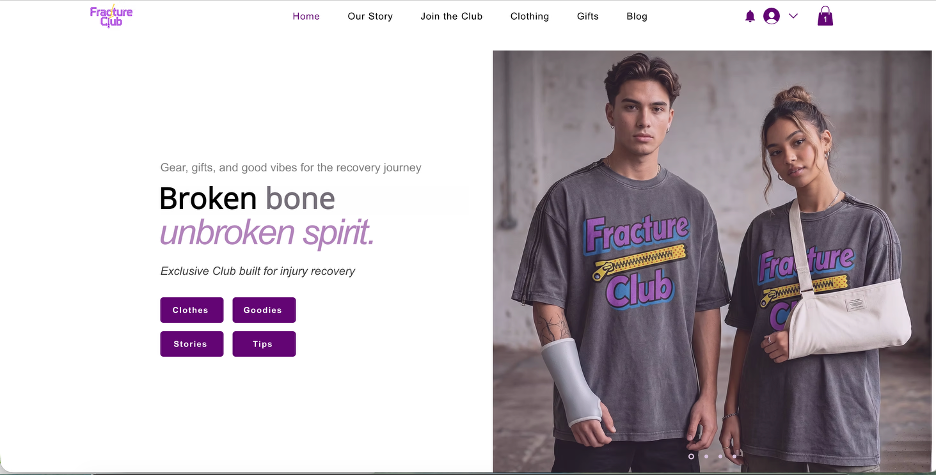
Dressing around a cast or brace should not mean fighting your clothes every morning. Fracture Club’s easy-on/off adaptive recovery pants with side magnetic zippers open the full length of the leg for seated dressing and caregiver-assisted changes alike, and the easy-on/off sweatshirt avoids the overhead reach that makes shoulder and arm injuries so hard to dress around.
[
](fracture-club.com)
These pieces fit anyone recovering from a fracture, surgery, or a long stretch in a brace who wants to feel like themselves again, not just a patient in a hospital gown. Browse the full recovery wear collection or reach out through our inquiry page if you need help finding the right fit.
Sources
FAQ
What is the 3-3-3 rule for clothes?
There is no established clinical or adaptive-clothing standard called the “3-3-3 rule.” Definitions circulating online vary widely and are not tied to any occupational therapy or caregiving guideline referenced in this article, so treat any specific claim about it with caution.
Where can I buy adaptive clothing for seniors?
Adaptive clothing is available through specialty adaptive brands, mainstream retailers with dedicated adaptive lines, and medical supply catalogs. AARP’s adaptive clothing guide recommends checking for tailoring options and expanded sizing before ordering, since fit varies significantly between vendors.
What features matter most for someone with limited hand function?
Front fastenings, Velcro closures, and zipper pulls matter most, since they avoid the fine motor demands of buttons or finger-insertion closures. VA caregiving guidance specifically recommends these features along with seated dressing to reduce strain and injury risk.
How does Fracture Club’s clothing support recovery dressing?
Fracture Club designs pants with side magnetic zippers and tops that open without an overhead reach, built specifically for people dressing around a cast or brace. The approach focuses on seated dressing and caregiver-assisted changes, with a portion of proceeds supporting the Bone Health & Osteoporosis Foundation.
Why do some adaptive closures fail even when they look easy to use?
Closures that look simple in marketing photos, like magnets or finger-insertion loops, can fail in practice because they require hand coordination some wearers do not have. A wearable-design study found that 69% of participants struggled to extend or insert fingers for one such closure, and that magnets confused several users entirely.
Recommended
Comments