
Brands That Give Back: How to Find Ones Worth Your Money


Brands that give back fund a cause through what you buy: a set dollar amount per sale, an item donated for each item purchased, a share of profits, or a yearly commitment. The best ones name the charity, state the amount and show a track record. This guide explains the main models, gives real examples from different industries, and walks you through checking a claim before you shop. That includes clothing brands with a cause.
TL;DR
Brands give back in four main ways: one-for-one gifts, a fixed amount per sale, a percentage of annual sales, and scheduled donation days.
A strong giving claim names the charity, states the amount or percentage, and shows results over time.
Vague wording such as “a portion of proceeds” is a cue to look for the charity’s name and any caps on the donation.
Certifications such as B Corp and programs such as 1% for the Planet add independent weight to a brand’s promise.
If you are shopping for someone healing from an injury, a giving brand that also makes their day easier is a gift that works twice.
Table of Contents
What “giving back” actually means
The phrase covers very different business models. Two brands can both say they “give back” and mean completely different things. One might donate a pair of socks per pair sold. Another might send a fixed yearly percentage to environmental groups, whether or not you shop that week.
A useful way to sort them is by what triggers the donation.
Model | What triggers the gift | Example |
One-for-one | Each purchase sends an item to someone in need | An apparel brand that donates an item to shelters for every purchase, through a network of over 3,500 giving partners |
Product-specific share | A named product sends a stated share of its price | A cosmetics maker whose charity product donates 100% of the price, minus taxes, to grassroots groups |
Annual percentage | The company commits a share of yearly sales | 1% for the Planet members give at least 1% of annual sales to approved partners |
Round-ups and add-ons | You choose to add a small amount at checkout | A convenience chain whose marked “Monthly Donation Item” products send gifts to St. Jude |
Donation days | A scheduled day sends a share of sales | A restaurant chain that runs 25% donation days with schools and local nonprofits |
None of these is automatically better. What matters is that you understand which one you are buying into.
The main ways brands give back
One-for-one giving
This model is the easiest to picture. You buy a shirt, socks or a notebook, and a matching item goes to someone who needs it. NBC News reported that one apparel company donates an item for every purchase to homeless shelters and people in need.
Its strength is that the gift is tangible. The question to ask is how the donated items reach people, and whether the brand names its distribution partners.

A set amount per sale
Some brands tie a dollar figure to a campaign or product. This is the most precise kind of promise because you can do the math yourself. If a brand says a specific amount from each qualifying sale goes to a named charity, you know exactly what your purchase contributes.
A percentage of annual sales
This model is quieter. Instead of linking each sale to a gift, a company commits to giving a share of yearly revenue. Under 1% for the Planet’s rules, members can meet the commitment through a mix of money, in-kind contributions, staff volunteering and approved promotional expenses, as the program’s FAQ explains. It also offers third-party certification through its logo.
Because the giving does not depend on a single campaign, it tends to be steadier. Sustainable retail commentators suggest favoring continuous giving commitments over limited-time promotions.
Donation days and community programs
Large retailers often let customers steer the money. Target Circle lets customers vote to nominate a local nonprofit for a grant, and Walmart’s Spark Good lets shoppers round up purchases or give items from a nonprofit wishlist, according to this overview of corporate giving programs. These programs are good if you care about causes in your own neighborhood.
Clothing brands that give back
Apparel is one of the most crowded corners of cause-driven shopping, and the reason is simple. People buy clothes often, and a shirt is a visible way to show what you care about. Clothing brands with a cause tend to fall into a few groups:
Donation-based brands send garments or other items to people in need.
Profit-sharing brands give most or all profits to a single research or relief cause.
Certified brands hold a recognized standard, such as B Corp, and report on their social and environmental performance. The B Corp network has published a roundup of ethical fashion B Corps giving through clothing donations, grants and social initiatives.
Condition-specific brands build both the product and the giving around one health community.
That last group is where the cause and the customer are the same people. Someone who has broken a bone or had surgery knows firsthand what a cast does to a wardrobe. A brand built around that experience can give back twice: through the clothing itself and through the cause it funds.
If you want a broader view of why shoppers choose this way, this guide to supporting ethical brands covers the thinking, including examples of giving that focuses on children and family well-being.
How to check a giving claim before you buy
Most brands that give back are sincere. Still, the wording of a claim tells you a lot, and a minute of checking is worth it. Here is a simple routine.
Look for the charity’s name. Naming the nonprofit is what lets you look up its tax status and filings. One retail commentary calls it the cheapest honesty a brand can offer.
Look for a number. The charity-watchdog Give.org says cause-marketing promotions should disclose the actual or anticipated amount that will benefit the charity, such as “5 cents for every box.”
Read the wording around “proceeds.” Give.org notes that promotions sometimes use vague terms like “proceeds” or “profits” instead of a figure. A Detroit Free Press column on cause shopping adds that you should be able to know the charity name, how much will be donated from your purchase and any overall donation limits.
Look for a track record. Purpose-washing means using vague language about making the world better without measurable data. Commentators advise looking for annual impact reports rather than one-off campaign marketing.
Note any independent certification. B Corp status requires a company to balance profit and purpose, which the same source calls a stronger signal than self-reported marketing.
Quick tips
Ask yourself whether the gift happens whether or not you buy. Annual commitments do. Campaign gifts often depend on sales.
Check whether the campaign has a cap or an end date.
Pick a cause you actually care about. You are more likely to keep supporting it.
Purchase-triggered giving also has its own rules. The professional advice on commercial co-ventures says these promotions must disclose a percentage or dollar amount to the customer. When a brand states one, that is a good sign it has thought the program through.
Choosing a brand that matches your cause
Start with the issue, not the product. Do you care most about the environment, children’s education, medical research or your own community? Once you know, the list of brands shrinks fast, and your choices get better.
Then run the checks above. A brand worth your loyalty names its charity, states its giving formula and keeps giving beyond a single holiday campaign.
A few examples of how causes differ in practice:
Fashion and lifestyle brands support causes including mental health, environmental protection and homelessness, according to one style roundup.
Some brands focus on children’s education, health and well-being through nonprofit partners. TOMS, for one, says its giving model has evolved since 2006.
Health-community brands fund research or care for the condition their customers face.
The last category matters if you are shopping for someone who is healing. A gift tied to bone health, for example, says something personal. It tells the person you understand what they are going through.
Our perspective
We started Fracture Club because recovery can leave you stuck between feeling like a patient and feeling like yourself. Getting dressed with a cast or brace is hard enough. Then the clothes you own don’t fit around it, and the ones that do feel like hospital gear. That is why our recovery wear was designed by someone with lived experience of injury. We use magnetic fastenings and zippers so dressing is easier, and we keep the style modern enough for everyday life. We think comfort and independence should not mean giving up how you look. Giving back is part of the same idea. A portion of our proceeds benefits the Bone Health & Osteoporosis Foundation, so a purchase that helps you recover also supports bone health care for others. We name our charity so you can look it up, and we share more about it in our guide to what the Bone Health Foundation does. We also see giving as more than money. Shared stories and encouragement from our community are part of what we offer. If you want to see how nonprofits help people through recovery, read our article on how nonprofits support bone health care. Fracture
Gifts that give back for someone in recovery
Gift shopping for a person with a broken bone or a brace is tricky. Flowers fade, and another get-well card goes in the pile. What people often want is something that makes daily life easier and lifts their mood.
Here is a simple way to choose:
Think about the injury. An arm in a cast needs easy sleeves. A leg in a brace or cast needs pants that open at the side.
Look for closures that work one-handed. Magnetic and zip fastenings save time and frustration.
Add something positive. Gifts that celebrate resilience can remind a person that healing is progress.
Pick a cause that fits. Bone-health giving makes a gift personal.
Caregivers benefit too. Easier dressing means less strain for the person helping. Our article on how adaptive clothing helps caregivers goes through four practical ways.
Shop recovery wear that gives back
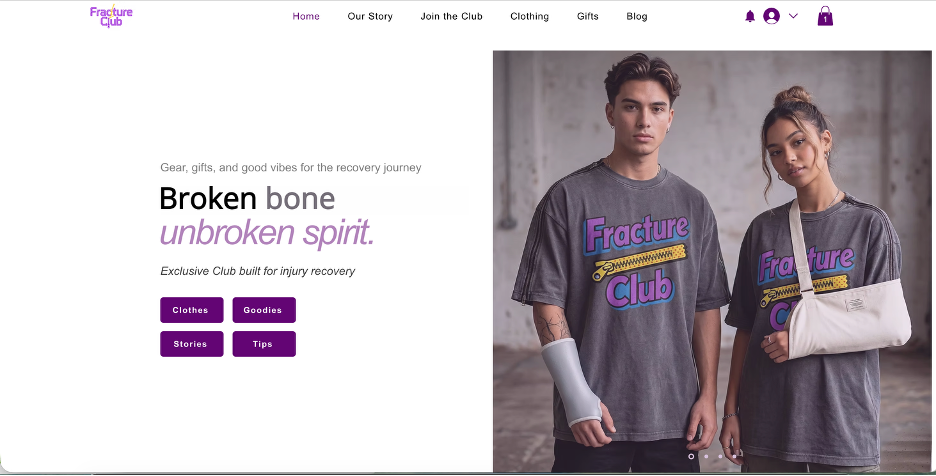
Fracture Club makes adaptive recovery clothing for people healing from injuries, plus gifts and merch that celebrate resilience. Our shirts and pants use magnetic or zipped closures so you can dress around a cast or brace with less struggle. A portion of proceeds benefits the Bone Health & Osteoporosis Foundation.
[
](fracture-club.com)
Browse our recovery wear and gifts, or start with the Magnetic Shoulder Zip Tee or the Easy-On/Off Adaptive Recovery Pants with Side Magnetic Zippers. Questions about an order or a gift? Use our inquiry page.
A short checklist to keep
Before you buy from any brand that says it gives back, run through this list:
Question | What a good answer looks like |
Who gets the money? | A named nonprofit you can look up |
How much? | A dollar amount, a percentage or a clear formula |
When does it happen? | Ongoing, or a campaign with clear dates |
Is there a limit? | Any cap is stated |
Who vouches for it? | A certification, a published report or both |
You don’t need to be an expert. A few honest answers are enough to tell you whether a brand’s giving is part of how it works or just a slogan.
FAQ
What does it mean when a brand gives back?
It means the company directs money, products or services to a cause as part of doing business. That might be a gift per purchase, a share of sales, or a yearly commitment. The details differ by brand, so look for the charity’s name and the amount.
How do clothing brands that give back usually donate?
Common models include donating an item for each one sold, sharing profits with a research cause, and funding nonprofit partners. Brands such as those in the B Corp apparel group give through clothing donations, grants and social initiatives. Check each brand’s own page for its formula.
How can I tell if a charitable claim is real?
Look for a named charity, a specific amount or percentage, and any limits. Give.org advises that promotions should disclose the amount that benefits the charity. Impact reports and certifications such as B Corp add confidence.
Is a gift that gives back a good choice for someone recovering from an injury?
Yes, especially when it is useful as well. Adaptive clothing makes dressing easier with a cast or brace, and a bone-health cause adds meaning. Our recovery wear is made with that in mind.
Sources
Recommended
Comments