
Radius Fracture Clothing: What to Wear With a Cast or Splint


The best clothing for a radius fracture is loose, stretchy and easy to open, with room for a bulky cast and closures you can manage with one hand. That means sleeves wide enough to pass over the cast, pants with an elastic or magnetic waist, and tops that open down the front or at the side. Our adaptive recovery wear is built around exactly that: easy-on/off shirts and pants with magnetic or zipped closures, designed by someone who has been through an injury herself.
If you are standing in front of your closet with one working hand, feeling stuck between feeling like a patient and feeling like yourself, this guide is for you. It is also for the friend, partner or caregiver trying to help.
TL;DR
A radius fracture is a break in the forearm bone on the thumb side, most often near the wrist. It usually means a cast or splint on your forearm for weeks.
Choose looser, stretchier clothing, and size up where the sleeve has to pass over the cast.
Dress the injured arm first and undress it last. Never force a sleeve over a cast.
Magnetic and zipped closures, elastic waists and side openings replace the fiddly parts of getting dressed.
For a gift, think comfort and independence: pieces that open easily, plus small helpers for one-handed days.
Table of Contents
What a radius fracture does to your wardrobe
The radius is one of the two bones in your forearm. When people say they broke their wrist, they often mean the distal radius, the end of that bone closest to the hand. It is a very common injury, and it changes how you dress more than you might expect.
Here is a typical timeline. One orthopedic group’s distal radius casting protocol describes four weeks in a cast, followed by a wrist-hand orthosis (a removable brace) until the fracture is clinically healed, around weeks 4 to 6. Your own surgeon sets your plan, and yours may differ. But expect roughly a month or more of dressing around something bulky and hard.
The everyday problems are predictable:
A cast does not compress, so a fitted sleeve simply will not go over it.
Buttons, snaps and small zippers need two hands.
Pulling a top over your head can bump or twist the injured arm.
Pants with a button and fly are a daily struggle.
Swelling can change how a sleeve fits from morning to night.
None of this is a sign you are doing it wrong. Clothes are made for two working hands, and you currently have one and a half.
Tops that fit over a radius fracture cast
Start with the sleeve, because that is where most people get stuck.
Measure before you shop
Wrap a soft tape around the widest part of your cast, usually around the forearm or the thumb area. Compare that number to the sleeve opening and upper sleeve width of a top. If the sleeve is narrower, it will either not go on or it will drag and press on the cast edge. Our guide to sizing clothes over a cast walks through this in more detail.
Cuts that work
For a cast that ends below the elbow, these shapes tend to give the most room:
Short or elbow-length sleeves. They stop before the widest part of the forearm cast, so there is less fabric to push over it.
Dolman or raglan sleeves. The sleeve is cut wide through the armhole, which leaves space for a cast.
Front-opening shirts and cardigans. You put the cast arm in first, then bring the shirt around your back.
Oversized or relaxed fits. Going up a size in a soft, stretchy fabric is often enough.
Professionals who work with hand and arm patients say much the same. A hand therapy practice recommends loose-fitting or elastic clothing for dressing with one arm, such as a larger shirt, or one with cuff buttons if a cast will not fit a small sleeve. They also suggest a tank top with snaps in the shoulder when shoulder motion is limited.
Fabrics matter too
Smooth, soft knits slide over a cast without catching. Rough seams, stiff cuffs and decorative trims can snag on the cast edge or rub the skin at the opening. If a top has a stiff elastic cuff, it is the wrong top for this month.
Why closures matter more than style
On a one-handed day, the closure decides whether you feel independent or frustrated. A magnetic closure snaps together when the two sides get close, so you do not have to line up a button and push it through a hole. That is why adaptive clothing with magnetic closures appears on a university health system’s list of everyday helpers for people with limited hand function. Our shirts use magnetic and zipped closures for this reason, so a cast can pass through and you can finish the job with one hand.
[

Bottoms: where the one-handed struggle really lives
Pants are often harder than shirts. You need to stand, balance, pull, fasten and zip, usually with one hand.
Look for:
Elastic or drawstring waists that you can push up with your forearm or the heel of your hand.
Side openings that let you step in and close the pants at your hip rather than at the front.
Magnetic or easy zippers rather than a button and fly.
Soft, stretchy fabric so you can bend and sit without wrestling the waistband.
A surgeon’s practice that treats hand injuries suggests baggy shorts or sweatpants and flip-flops or Velcro-closure shoes for people with an injured hand. Our unisex easy-on/off adaptive recovery pants with side magnetic zippers are made for this situation. They look like everyday pants rather than medical wear, so you can wear them to work, to appointments and out with friends.
For lower-body specifics, our leg cast clothing guide covers what to do when the injury is below the waist.
How to dress and undress with a radius fracture
The method matters as much as the clothes. The general rule from rehabilitation teams is the same across injuries: the injured arm goes in first and comes out last.
Putting on a front-opening top
Sit down, ideally on a bed or sturdy chair, with the injured arm resting on a pillow.
Open the top fully and lay it across your lap with the inside facing up and the collar toward your knees.
Slide the sleeve up over your injured arm first, keeping the arm relaxed. Do not push your hand through by force.
Bring the shirt up to your shoulder.
Wrap the top around your back and put your good arm into the other sleeve.
Close it with your good hand. This is where a magnetic closure saves the most effort.
Taking it off
Reverse the order. Free your good arm first, then slide the top down the injured arm. Take your time and keep the injured arm supported.
This is the same order one university sports rehabilitation clinic gives its patients: the surgical arm goes in first, and the other arm second, with undressing in reverse. That handout is written for a different fracture, but the principle of protecting the injured side holds for a wrist too.
If you are wearing a brace or sling
A national orthopaedic hospital’s guide to dressing in a brace says to sit with a pillow under the arm, never take the arm out of the brace, and thread the sleeve onto the injured arm before dressing the free one. Follow the instructions your own care team gave you if they differ.
Pants in four moves
Sit on the edge of the bed.
Step each foot in, then stand and pull the waist up with your good hand.
Lean on a wall or counter if you need balance.
Fasten the waist last. Magnetic or side closures make this a one-step job.
For more one-handed routines, see our guides to dressing with an arm cast and dressing one handed after hand surgery.
A quick fit and comfort checklist
Before you buy or wear anything over your cast, check:
Sleeve opening: wider than the widest part of your cast, with room to spare.
Fabric: smooth and stretchy, with no stiff cuffs at the cast edge.
Closure: one-handed, with no tiny buttons or hooks.
Waist: elastic, magnetic or side-closing.
Layers: easy to add or remove, since a cast can feel warm indoors and cold outdoors.
Swelling: a sleeve that fits at breakfast may be tight by evening, so allow extra room.
Call your doctor or the clinic that applied your cast if your fingers go numb, tingle, turn pale or blue, or swell, or if the cast feels too tight. Clothing should never be the reason you ignore those signs, and no garment is a substitute for your care team’s advice.
Protecting the fracture is the point of all this. The orthopedic protocol mentioned above frames the first weeks as protecting the healing fracture while controlling swelling and preventing stiffness in the joints that are not injured. Clothes that let you move without twisting or bumping the cast are part of that.
Weeks one through six: what changes
Your clothing needs shift as you heal.
Week 1: swelling and soreness. Your arm is at its puffiest. Choose the loosest tops you own and pants with an elastic or magnetic waist. Keep it simple.
Weeks 2 to 4: finding a rhythm. You are used to the cast now. This is when you start to miss your own style. Look for pieces that look like regular clothes but open easily. Our guide on style tips for wearing a recovery cast is full of ideas.
Weeks 4 to 6: brace or lighter support. If you move from a cast into a removable brace, sleeves can get a little narrower, but you will still want easy closures while your wrist is tender and stiff.

Back at work. If you return to the office before the cast comes off, you can often work with what you own. Our guide to work outfits that fit a cast shows how.
Gifts for someone with a broken wrist
If you are shopping for a friend or family member with a radius fracture, comfort and independence are the best themes.
Easy-on/off tops and pants. Clothing they can put on alone gives back a small piece of independence every morning.
Slip-on shoes and grip-sole socks. Laces are a daily obstacle, and the same university health list suggests easy slide-on shoes and no-tie laces.
Kitchen helpers. Wide jar openers and thick-handled mugs make a one-handed kitchen easier.
Something that makes them smile. Recovery can be lonely. A positive-themed gift that celebrates resilience tells them you see how hard it is.
Our merch and gifts are made for that last category, and part of our proceeds supports the Bone Health & Osteoporosis Foundation. That makes a gift a way to support someone you care about and bone health at once.
Perspective
When you break your wrist, the cast is not the hardest part. It is the first morning you cannot get your own sleeve on. Fracture Club was created by someone who has lived through an injury. We know how it feels to be stuck between feeling like a patient and feeling like yourself. Most clothes are designed for two working hands and a normal-sized forearm. They were never built for a cast. That is why we make recovery wear with magnetic and zipped closures, in everyday styles that do not look like medical equipment. We believe adaptive clothing should help you get dressed on your own and still feel like you. We also believe recovery goes better with company. That is why we share community stories, and why a portion of what we earn goes to the Bone Health & Osteoporosis Foundation. Your fracture is a chapter, not the whole story. Fracture
Dress easier with Fracture Club
If you want clothes that work with your cast instead of against it, start with our recovery wear: shirts and pants with magnetic or zipped closures that make getting dressed a one-handed job. Our adaptive recovery pants with side magnetic zippers are a good place to begin, and you can browse everything, including gifts for a loved one, on our shop.
[
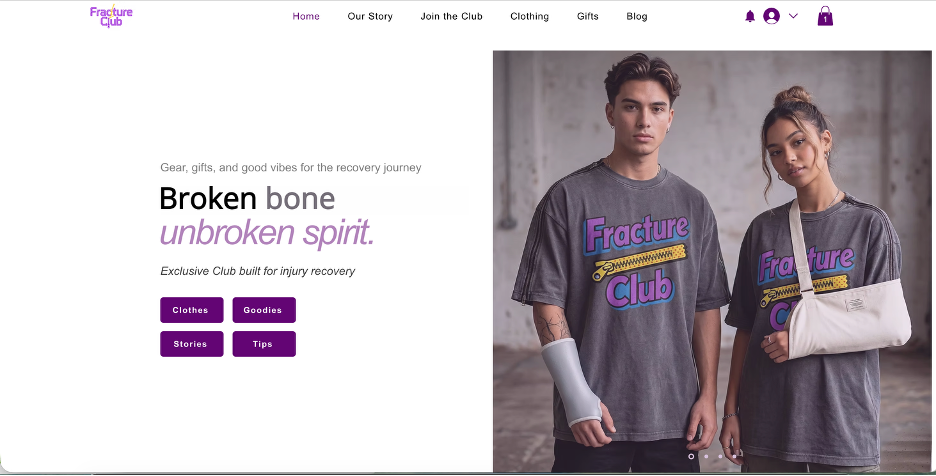
](fracture-club.com)
Have a question about what suits your situation? Reach us through our inquiry page.
FAQ
What are some easy clothes to put on with a broken arm?
Loose, stretchy clothing is the easiest. Front-opening tops, large short-sleeve shirts, elastic-waist pants and slip-on shoes all help. Adaptive pieces with magnetic closures remove the need to work buttons with one hand.
What size should I buy for a cast on my wrist or forearm?
Measure the widest part of your cast and choose a sleeve opening larger than that number. Going up a size in a soft, stretchy fabric usually gives enough room. Our guide to sizing over a cast has more detail.
Which arm goes in first when dressing?
Put the injured arm in first, then the good arm. To undress, take the good arm out first and the injured arm last. This keeps the injured arm still and supported.
Can I wear normal clothes over a radius fracture cast?
Sometimes, if they are loose and stretchy enough, such as oversized tees, short sleeves or cardigans. Fitted sleeves, stiff cuffs and tiny closures are what make normal clothes hard. If your regular wardrobe is not working, adaptive recovery wear is designed for this.
What is a good gift for someone with a broken wrist?
Easy-on/off clothing is a thoughtful choice because it helps them dress independently. Add slip-on shoes, a jar opener or a positive recovery-themed gift to lift their spirits.
Sources
Recommended
Comments